A car launch is more than the presentation of a new vehicle. It is an opportunity for automotive brands to introduce their latest models, highlight design features and create a strong first impression among customers, media representatives, dealers and invited guests.
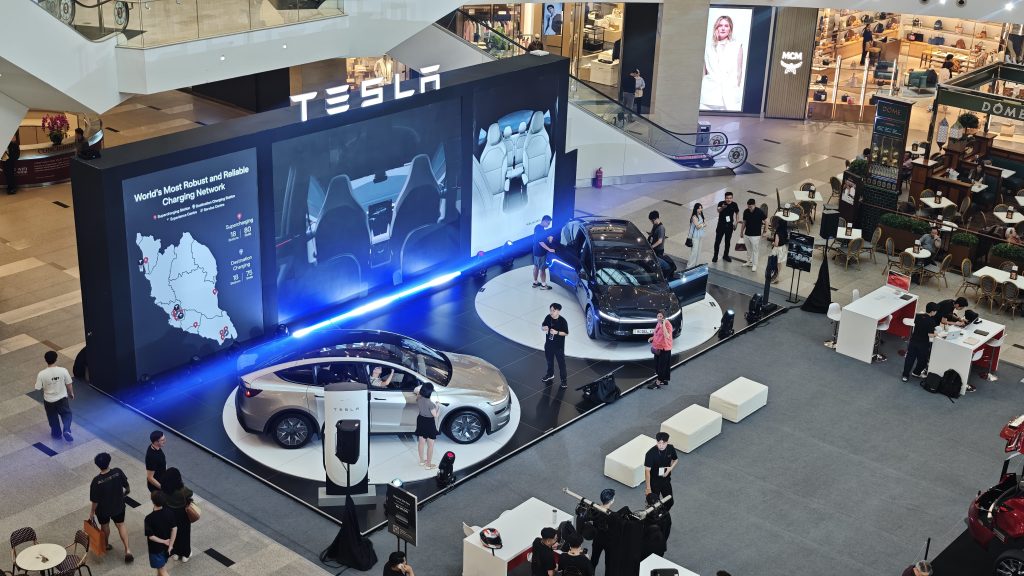
In Malaysia, car launches take place in different environments, including hotel ballrooms, convention centres, shopping mall atriums, showrooms and outdoor event spaces. Regardless of the venue, lighting plays an important role in how the vehicle is presented and how the audience experiences the launch.
Unlike conventional stage lighting, lighting for a car launch requires careful attention to the vehicle itself. The paint finish, body contours, glass surfaces, headlights and interior details all respond differently to light. Poorly positioned fixtures can create unwanted reflections or hide important design features, while a well-planned lighting setup can highlight the vehicle’s appearance and make the reveal more impactful.
For brands planning a car launch in Malaysia, professional event lighting should be considered from the early stages of production planning. This article explores the key lighting considerations, suitable equipment and how lighting contributes to a successful automotive launch.
Why Is Lighting Important for a Car Launch?
Lighting influences how the audience sees the vehicle and how the brand communicates its identity.
A new vehicle may feature distinctive headlights, sculpted body panels, a signature grille or a particular paint finish. These details need to be presented clearly, especially during the official reveal when the audience sees the car for the first time.
Professional lighting helps achieve several objectives:
- Highlight vehicle design: Carefully positioned lights can reveal body contours, exterior details and distinctive styling features.
- Create anticipation: Controlled lighting transitions can build excitement before the vehicle is unveiled.
- Strengthen brand identity: Colours and lighting effects can complement the automotive brand’s visual identity.
- Support photography and videography: Balanced illumination helps media representatives capture the vehicle and event presentation.
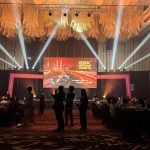
- Improve the overall atmosphere: Lighting can transform an ordinary venue into a more engaging launch environment.
The objective is not simply to make the venue brighter. It is to create a lighting design that presents the vehicle clearly while supporting the event’s overall concept.
Create an Impactful Vehicle Reveal with Lighting Effects
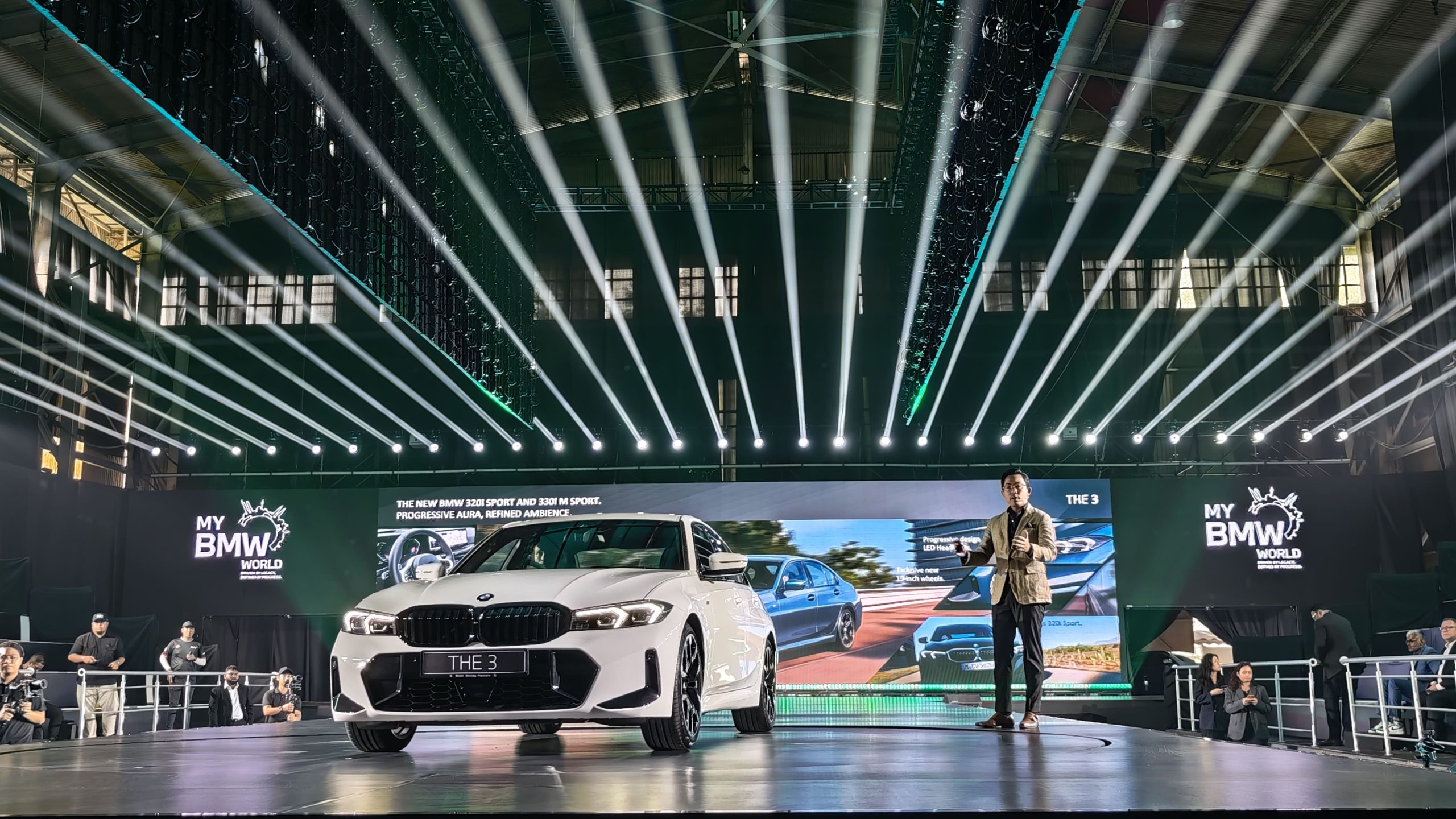 The vehicle reveal is often the main highlight of a car launch. It is the moment when the audience’s attention shifts towards the new model, making the lighting sequence particularly important.
A typical reveal may begin with reduced ambient lighting, followed by an opening video, countdown or introduction from the emcee. As the programme reaches the reveal moment, lighting cues can gradually direct attention towards the vehicle.
Moving-head spotlights, LED wash lights and other stage fixtures can be programmed to support the sequence. For example, beams may be directed towards the reveal area, followed by focused illumination on the vehicle once the covering is removed.
The timing of these effects should be coordinated with the music, video playback and reveal mechanism. If the lighting changes too early or too late, the presentation may lose its intended impact.
A rehearsed sequence allows the production team to coordinate each cue and create a more controlled unveiling.
Highlight the Vehicle’s Exterior Design and Body Contours
Automotive lighting requires a different approach from lighting a conventional stage performance.
A car has reflective surfaces, curved panels, glass windows and metallic finishes. These surfaces can produce reflections depending on the position, angle and intensity of the lighting fixtures.
Instead of directing every light straight towards the vehicle, lighting designers should consider how illumination interacts with its bodywork.
Side lighting and carefully positioned wash lights can help reveal the vehicle’s contours. Accent lighting can draw attention to selected design features, while controlled front illumination helps maintain visibility.
The objective is to create enough contrast to show the vehicle’s shape without producing distracting glare or harsh reflections.
Lighting tests should be conducted with the actual vehicle in position. This allows the technical team to assess how the paint finish and reflective surfaces respond before the audience enters the venue.
Use Moving Head Lights to Add Energy to the Presentation
Moving-head lights provide flexibility for automotive launches because their direction, movement, colour and beam effects can be controlled during the event.
They can be used to create dynamic lighting sequences during the opening performance, vehicle reveal and other major programme segments.
Different moving-head fixtures serve different purposes:
- Moving-head spotlights: Produce focused beams or patterns to highlight selected areas.
- Moving-head wash lights: Provide broader illumination across the stage or event space.
- Beam lights: Create narrow, concentrated beams for dramatic visual effects.
- Profile spotlights: Produce controlled illumination with defined edges, useful for highlighting selected areas.
The choice of fixture depends on the venue, stage design, vehicle position and desired visual effect.
Rental Supplier’s lighting catalogue includes several of these event lighting options, including moving-head spot, LED wash, beam and profile lighting equipment.
Coordinate Lighting with LED Screens and Stage Visuals
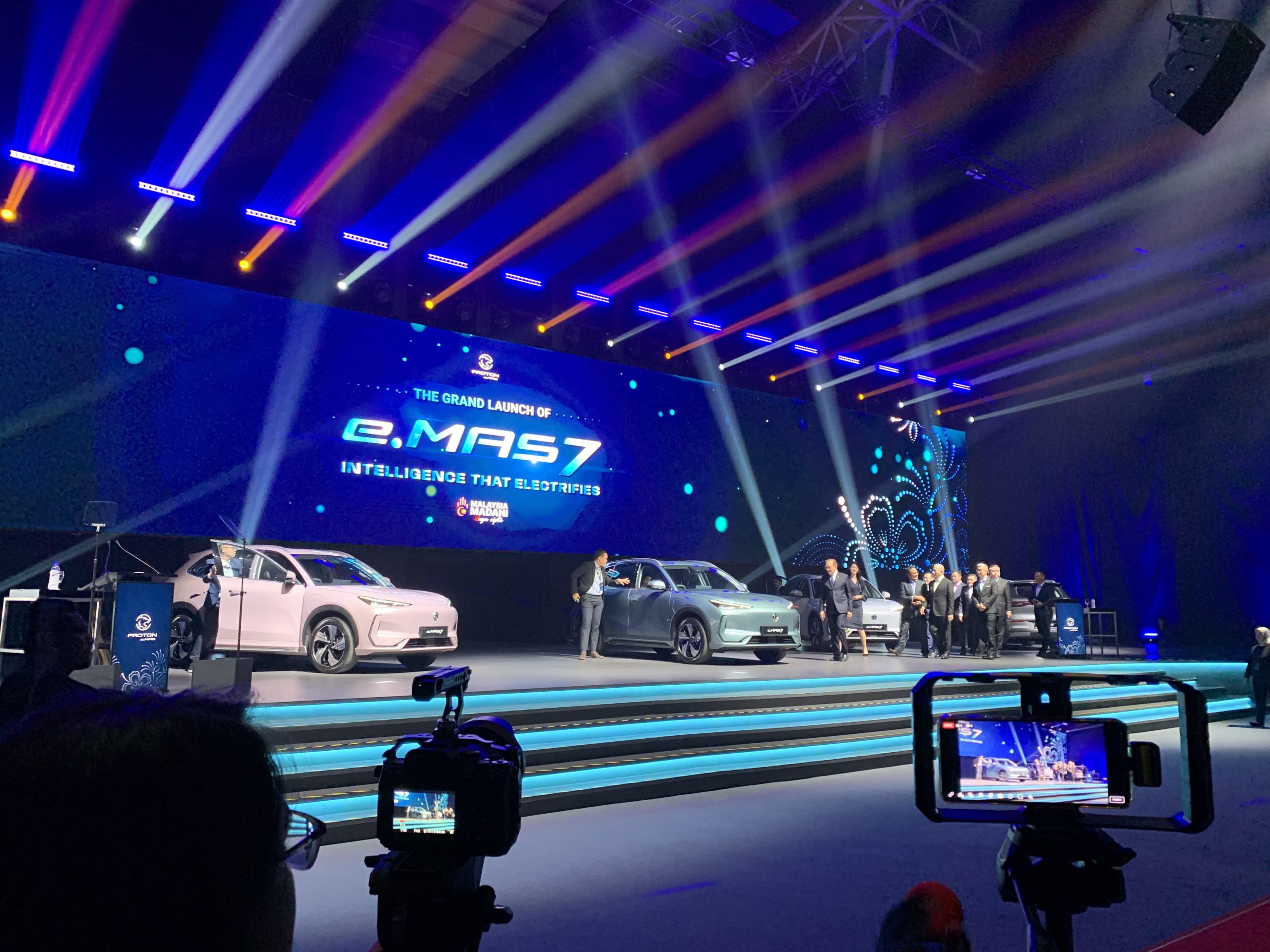
Many modern car launches use LED screens to display promotional videos, vehicle specifications, brand messages and animated graphics.
Lighting should complement these visual elements rather than compete with them.
For example, an opening video may introduce the vehicle’s design and features on the LED screen. As the video reaches its final sequence, the stage lighting can transition towards the physical vehicle to prepare the audience for the reveal.
The lighting design should also consider the brightness of the LED display. Excessive stage illumination may reduce the visual impact of screen content, while overly dark conditions can make the vehicle difficult to see.
A coordinated approach allows the screen, lighting and sound systems to work together throughout the programme.
This is particularly important when the launch includes multiple presentation segments, such as management speeches, product demonstrations, media announcements and entertainment performances.
Match the Lighting Design with the Automotive Brand
Every automotive brand has its own visual identity, design language and positioning. Lighting can help reinforce these elements throughout the launch.
For example, a premium vehicle launch may use a more controlled lighting design with elegant colour tones and focused highlights. A performance-oriented model may benefit from more energetic lighting transitions and stronger visual contrast.
An electric vehicle launch may adopt a contemporary concept using clean visual effects, coordinated LED colours and digital stage content.
However, brand colours should be applied carefully. The lighting should complement the vehicle rather than change how its actual paint colour appears.
Organisers should also consider the brand guidelines, event backdrop, stage structure and LED screen content when developing the lighting concept. Consistency across these elements creates a more professional presentation.
Plan the Lighting for Photography and Media Coverage
Media coverage is an important part of many automotive launches. Photographers and videographers need suitable lighting conditions to capture the vehicle, speakers and key moments of the event.
A lighting setup designed only for the audience may not always work well for cameras.
For example, strong backlighting can create silhouettes, while direct light towards reflective surfaces may produce unwanted glare. Uneven illumination can also make the vehicle appear different across photographs and video footage.
Professional lighting planning should consider:
- The position of media photographers and video cameras
- The direction of the main light sources
- The vehicle’s reflective surfaces and paint finish
- The brightness of LED screens and stage visuals
- The lighting requirements for speeches and interviews
If the event includes a dedicated media photography session, the lighting arrangement should accommodate that segment as well.
A technical rehearsal with the camera team can help identify issues before the launch begins.
Consider Ambient Lighting for the Entire Venue
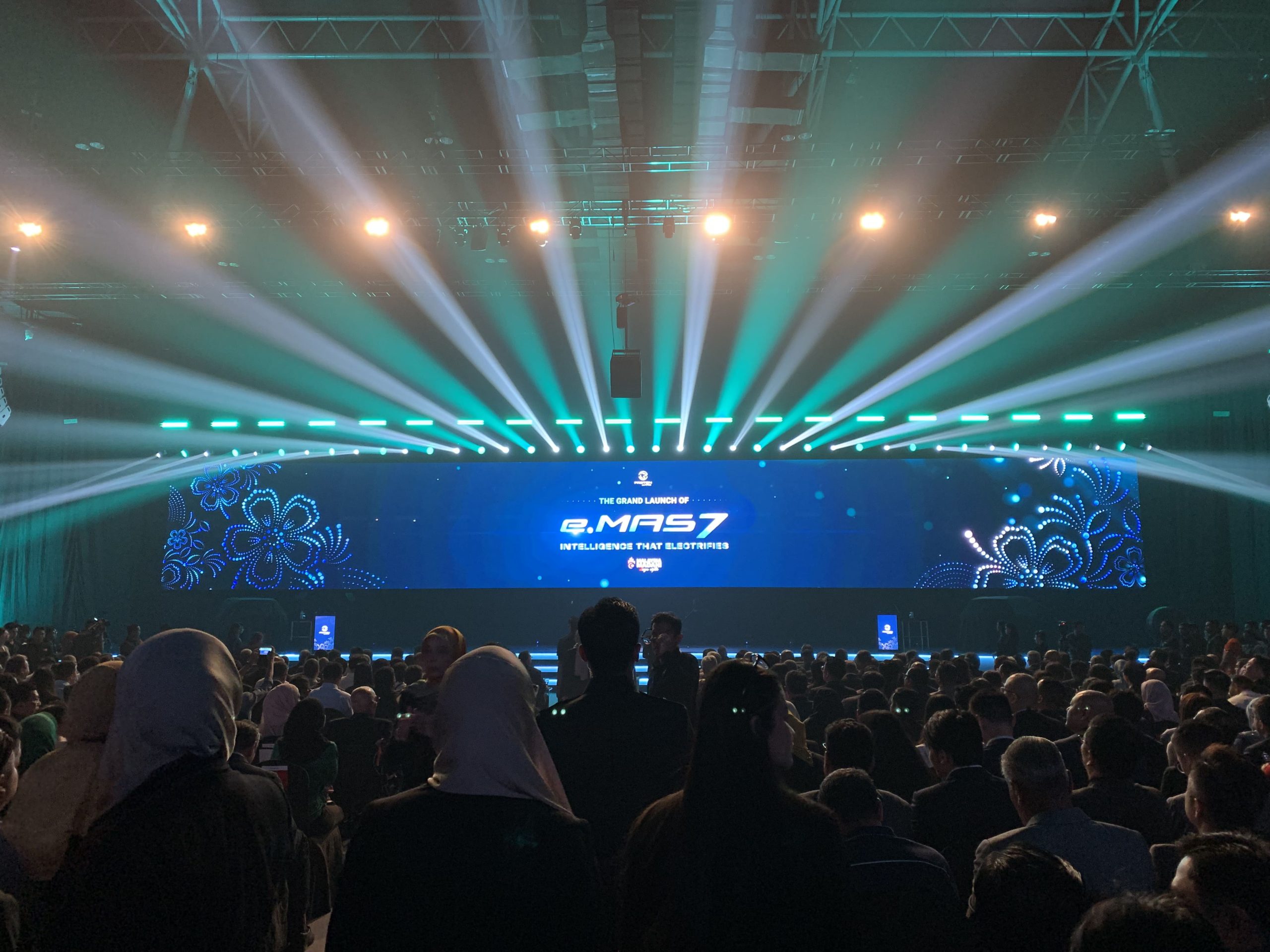 While the vehicle and main stage deserve special attention, the surrounding event environment also contributes to the overall presentation.
Ambient lighting helps establish the atmosphere in the entrance area, registration space, display zones and networking areas.
For example, architectural uplighting can add colour to venue walls and columns, while LED wash lights can create a consistent visual environment around the main stage.
If the event includes multiple display vehicles, each area may require a slightly different lighting arrangement to maintain visibility and avoid competing visual elements.
For shopping mall launches, the existing ambient lighting and surrounding retail environment should also be considered. The production team needs to balance the event’s lighting requirements with the venue’s existing conditions.
The objective is to create a connected environment where the vehicle display remains the main attraction without leaving the rest of the venue visually neglected.
Select Suitable Lighting Equipment for the Venue
The right lighting equipment depends on the event concept, venue dimensions, installation requirements and production budget.
Some common event lighting equipment includes:
| Lighting equipment | Common application |
|---|---|
| LED PAR lights | Colour washes and general stage illumination |
| LED wash lights | Broad illumination across the stage and event areas |
| Moving-head spotlights | Focused beams and selected highlights |
| Beam lights | Narrow beams and dramatic visual effects |
| Profile spotlights | Controlled illumination on specific areas |
| LED blinder lights | Short visual accents during selected programme moments |
| Outdoor wash lights | Illumination for suitable exterior event areas |
For a smaller showroom launch, a more focused lighting arrangement may be sufficient. A large-scale automotive launch with a substantial stage, multiple vehicles and a complex reveal sequence may require a more extensive lighting setup.
The number of fixtures alone does not determine the quality of the result. Their placement, control, programming and coordination are equally important.
Plan Lighting for Indoor and Outdoor Car Launches
The venue has a direct influence on lighting requirements.
Indoor car launches
Indoor launches commonly take place in ballrooms, exhibition halls, showrooms and shopping mall atriums. These environments may have existing ceiling lights, decorative lighting and other ambient sources.
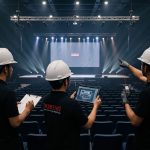
The technical team should assess the existing conditions before deciding how much additional lighting is required.
Ceiling height, available rigging positions, power supply, stage dimensions and audience arrangement are important considerations.
Outdoor car launches
Outdoor launches introduce additional challenges because lighting conditions can change depending on the time of day and weather.
Daytime events may require different illumination considerations from evening launches. Outdoor fixtures must also be appropriate for the installation environment, with suitable protection and secure mounting.
The lighting arrangement should account for the vehicle’s position, surrounding structures, audience viewing angles and any restrictions at the event site.
A site inspection helps the production team identify these requirements before installation begins.
Coordinate Lighting Programming with the Event Run Sheet
Even a well-designed lighting setup needs proper operation during the actual event.
A car launch typically includes several programme segments, such as guest arrival, opening performances, management speeches, product presentations, vehicle unveiling, photography sessions and networking.
Each segment may require a different lighting look.
For example, the lighting during guest arrival may focus on the overall venue atmosphere. During a management speech, the speaker needs clear and controlled illumination. During the reveal, the lighting sequence may become more dramatic before transitioning into a display setting for the vehicle.
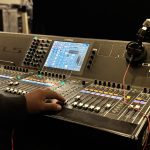
The production team should prepare a lighting cue sheet based on the event run sheet. This helps the lighting operator understand when each change should happen.
Rehearsals are particularly important for vehicle reveals because they involve coordination between the emcee, video playback, music, lighting operator and reveal mechanism.
Clear communication between the event organiser and technical team helps reduce mistakes during the live programme.
DOREMi’s Experience Supporting Automotive Launches
Automotive launches require careful technical coordination because the vehicle, stage presentation and audience experience must come together within a planned programme.
DOREMi has supported automotive launch events, including the e.MAS launch and the New Proton X50 launch. These projects reflect the importance of coordinating professional lighting with the wider event production requirements.
For the New Proton X50 launch, the event showcase records a production setup that included a P3 LED screen, sound system, lighting system, truss and television displays. These elements support different parts of the event presentation, from stage visuals and audio to the overall lighting environment.
For the e.MAS launch, DOREMi’s involvement also reflects experience supporting automotive brand presentations where technical production contributes to how a new vehicle is introduced to its audience.
Every launch has its own requirements. The appropriate lighting arrangement depends on the vehicle, venue, stage concept, reveal sequence and intended audience experience.
By considering these elements together, organisers can create a more controlled and visually engaging automotive presentation.
Planning Your Next Car Launch?
A successful car launch requires more than placing a vehicle on stage. The lighting design, sound system, LED displays, staging and technical operation all contribute to how the vehicle is presented to the audience.
At DOREMi, we provide event production solutions for automotive launches, product unveilings, showroom events and corporate presentations. Our services include professional lighting systems, sound systems, LED screens, staging structures, truss and audiovisual equipment.
Whether you are planning an indoor vehicle reveal, an outdoor automotive showcase or a large-scale product launch, our team can support the technical requirements needed to bring your event concept to life.
Explore our lighting system rental solutions and event production services to plan the technical setup for your next automotive launch.