A venue may look perfect in photographs, have the right capacity and offer an attractive location. However, choosing an event venue involves more than evaluating its appearance. Before confirming the event setup, organisers need to understand whether the space can accommodate the production requirements, technical equipment, event programme and guest experience.
This is where a site recce becomes important.
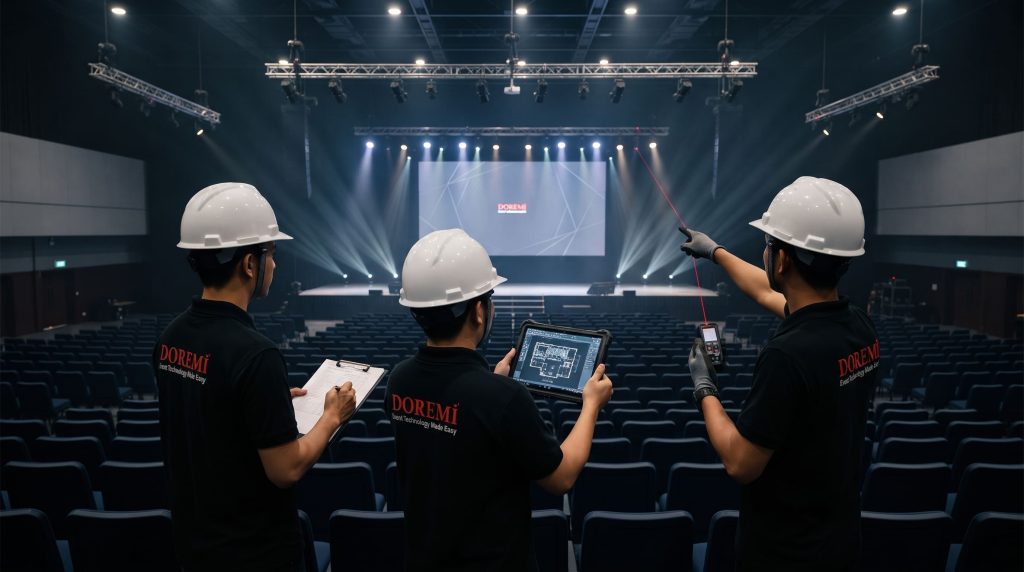
A site recce, also known as a site reconnaissance or venue inspection, is a physical visit to the event location before the actual event. It allows the event organiser, production team and relevant vendors to assess the venue, identify potential challenges and plan the necessary arrangements before installation begins.
For corporate events, product launches, conferences, annual dinners and large-scale productions, a proper site recce can make a significant difference to how smoothly the event is executed.
From checking the loading bay and electrical supply to assessing stage dimensions, LED screen placement and sound coverage, every detail contributes to a more organised production plan.
Here is what organisers can expect during a site recce before their event.
Understanding the Venue Layout and Available Space
One of the first things to assess during a site recce is the venue’s actual layout.
Although venue floor plans and photographs provide an initial understanding, a physical inspection helps the team see how the space works in reality. This includes identifying the usable event area, ceiling height, room dimensions, entrances, exits and existing structures that may affect the setup.
For example, a ballroom may have sufficient floor space for the expected number of guests, but the placement of pillars, chandeliers or fixed furniture could affect stage positioning and audience sightlines.
The team should also consider how the available space will be divided between different event requirements, such as:
- Main stage and presentation area
- Audience seating and tables
- Registration counters
- LED screens and display structures
- Technical control area
- Backstage and holding areas
- Catering and refreshment stations
Understanding the layout early helps the event organiser determine whether the venue can accommodate the intended design and programme.
It also allows the production team to identify possible adjustments before finalising the stage layout, equipment requirements and event floor plan.
Checking Loading and Unloading Access
 An important part of event production happens before guests even arrive.
Sound systems, lighting fixtures, LED panels, staging components, trussing and other production equipment must be transported from the supplier’s warehouse to the venue and moved into the designated event space.
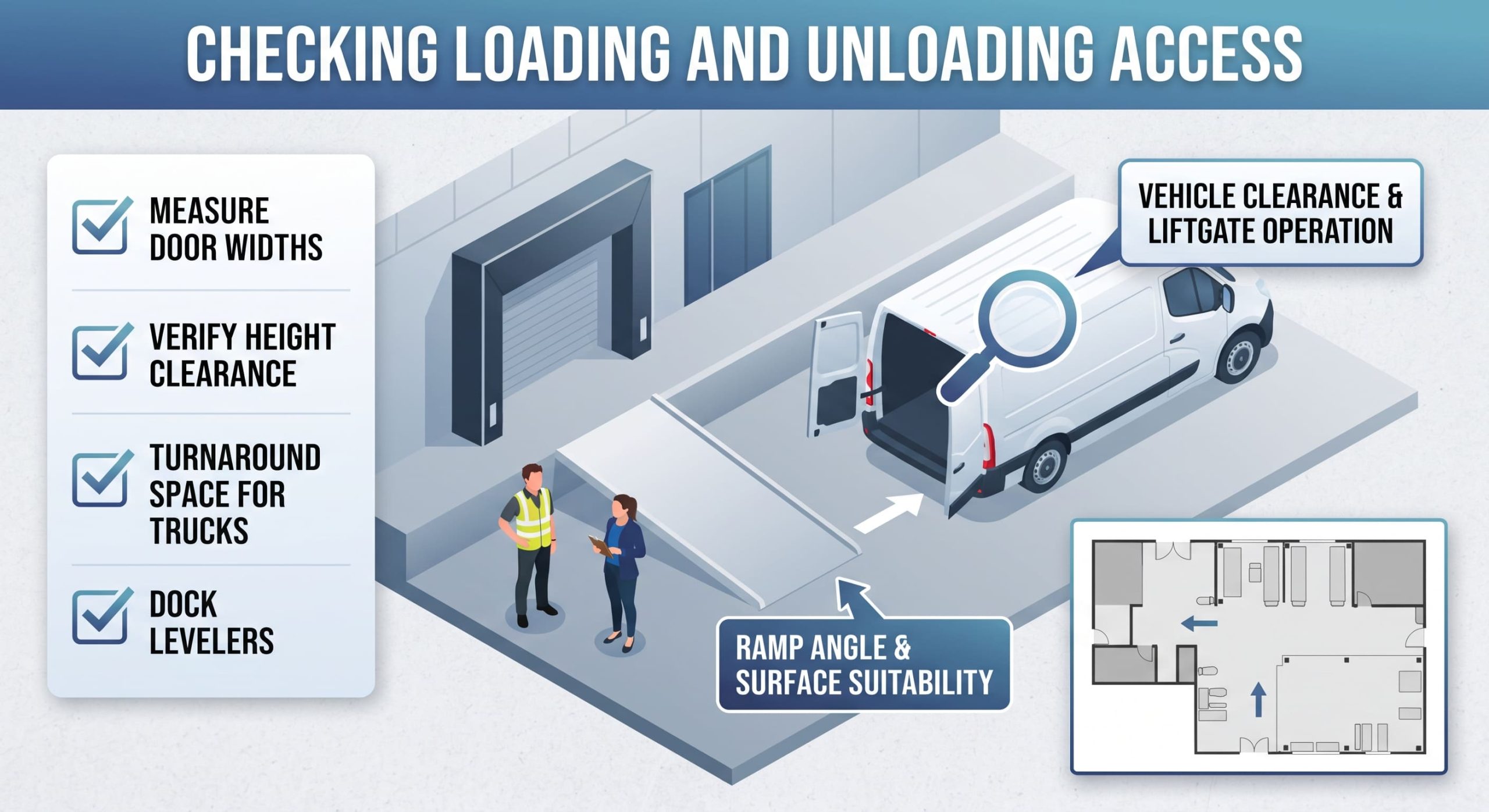
During a site recce, the team should inspect the loading and unloading arrangements to understand how equipment and materials can enter the venue.
Some important considerations include:
- Location of the loading bay and service entrance
- Truck access and vehicle height restrictions
- Loading and unloading time restrictions
- Freight lift availability and dimensions
- Corridor widths and access routes
- Distance between the loading area and event space
- Temporary storage areas for equipment
These details are particularly important for venues located inside hotels, shopping malls and convention centres, where service access may be shared with other operations.
For example, a large LED screen structure may be suitable for the ballroom, but the individual components still need to pass through the service lift, corridors and doorways.
Identifying these limitations during the site recce allows the production team to plan equipment transportation, delivery schedules and installation methods more effectively.
Assessing Stage Design and Production Requirements
The stage is often the main focal point of a corporate event. Whether it is a product launch, annual dinner, award ceremony or conference, the stage must be designed according to the event’s programme, venue dimensions and technical requirements.
During the site recce, the production team will assess the available stage area and determine the most suitable stage orientation, dimensions and layout.
Several factors need to be considered:
Stage dimensions: The stage should provide sufficient space for presenters, performers, product displays and other programme activities without obstructing audience movement.
Ceiling height: The venue’s ceiling clearance affects the height of stage backdrops, LED structures, lighting trusses and suspended installations.
Audience sightlines: Stage positioning should allow guests to view presentations and performances clearly from different seating areas.
Access and movement: Consider how presenters, performers and event crew will enter and exit the stage.
Structural limitations: Existing venue fixtures and restrictions may affect the installation of staging structures and other production elements.
For more elaborate productions, the team may also assess whether custom stage structures, extended platforms, LED walls or specialised launching equipment can be accommodated.
These considerations help ensure that the proposed stage design is practical, safe and suitable for the event.
Evaluating Sound System and Acoustic Conditions
Sound quality is another important consideration during a site recce.
A venue’s physical environment can influence how sound travels and how clearly the audience hears speeches, presentations, background music and live performances.
Large ballrooms, halls and outdoor spaces have different acoustic characteristics. Hard surfaces, high ceilings and reflective walls may contribute to sound reflections and reverberation, while unusual room shapes can create uneven sound coverage.
During the inspection, the technical team should consider:
- Overall venue dimensions and ceiling height
- Potential speaker placement locations
- Audience seating arrangement
- Existing sound equipment and connection points
- Microphone requirements
- Acoustic conditions and possible sound reflections
- Venue sound restrictions
For larger venues, additional speakers or delay systems may be required to achieve more consistent sound coverage throughout the audience area.
The programme also influences the sound system requirements. A corporate conference may prioritise speech clarity and wireless microphones, while a gala dinner with live entertainment may require a more comprehensive professional audio setup.
A site recce helps the technical team understand these requirements and recommend an appropriate sound system configuration before event day.
Checking Lighting and LED Screen Placement
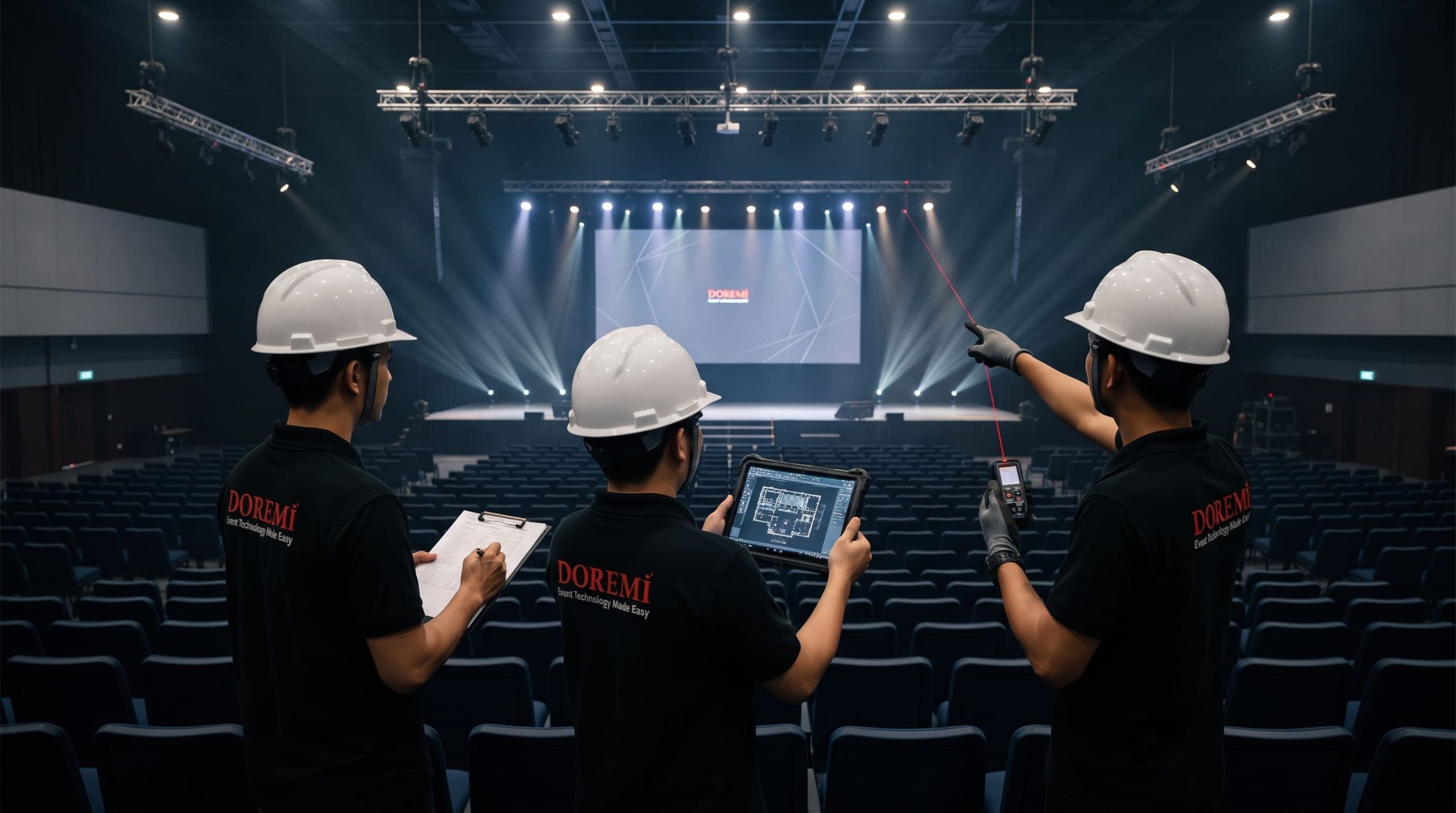 Lighting and LED screens play an important role in creating the visual experience of an event. However, their placement must be planned according to the venue’s physical conditions.
During the site recce, the production team should evaluate the available space, ceiling clearance, existing lighting fixtures and potential installation positions.
For event lighting, considerations include:
- Available positions for lighting fixtures
- Ceiling height and potential truss installation
- Existing venue lighting and chandeliers
- Lighting angles for stage presentations
- Potential shadows and obstructions
- Venue restrictions on rigging and installation
The objective is to determine how lighting can support the event’s programme, stage design and overall atmosphere.
For LED screens, the team should assess the available display area, viewing distance, audience positioning and screen orientation.
The selected LED screen size and pixel pitch should be suitable for the viewing environment and the type of content being displayed. The team should also consider how the screen integrates with the stage backdrop, lighting and presentation equipment.
These checks are particularly important for product launches, conferences and award ceremonies, where visual presentations and stage effects are central to the event experience.
Inspecting Electrical Supply and Technical Infrastructure
Modern event productions rely on multiple electrical and technical systems operating together.
LED screens, sound systems, lighting fixtures, control equipment and other event technology require suitable electrical infrastructure to operate reliably.
During a site recce, the technical team should identify the venue’s available electrical supply and understand where the connection points are located.
Important considerations include:
- Available power supply and distribution points
- Electrical capacity for the planned equipment
- Location of power outlets and distribution boards
- Cable routing and cable management
- Equipment connection requirements
- Backup power arrangements, where required
- Internet connectivity for presentations or hybrid events
The team should not assume that a venue has sufficient power simply because it regularly hosts corporate functions.
The electrical requirements must be assessed against the actual equipment planned for the event. Where necessary, additional arrangements should be discussed with the venue and qualified electrical personnel.
Identifying these requirements early helps reduce the risk of last-minute changes during installation and technical rehearsals.
Reviewing Guest Movement and Registration Areas
A successful event experience begins before guests enter the main event space.
During the site recce, organisers should walk through the venue from the perspective of an arriving guest. This helps identify potential congestion points and determine whether the available space can support the expected attendance.
The inspection should cover:
- Guest drop-off and parking areas
- Main entrances and event signages
- Registration counters and waiting areas
- Guest movement towards the event space
- VIP and special guest access
- Refreshment and networking areas
- Emergency exits and accessible routes
For example, an event expecting several hundred guests may require multiple registration counters to manage arrivals efficiently. If the registration area is too narrow or positioned too close to the ballroom entrance, queues could affect guest movement.
VIP arrangements should also be considered. Depending on the event, separate entrances, holding rooms or dedicated movement routes may be necessary.
Planning these arrangements during the site recce helps create a more organised arrival experience and reduces unnecessary congestion.
Understanding Backstage and Storage Requirements
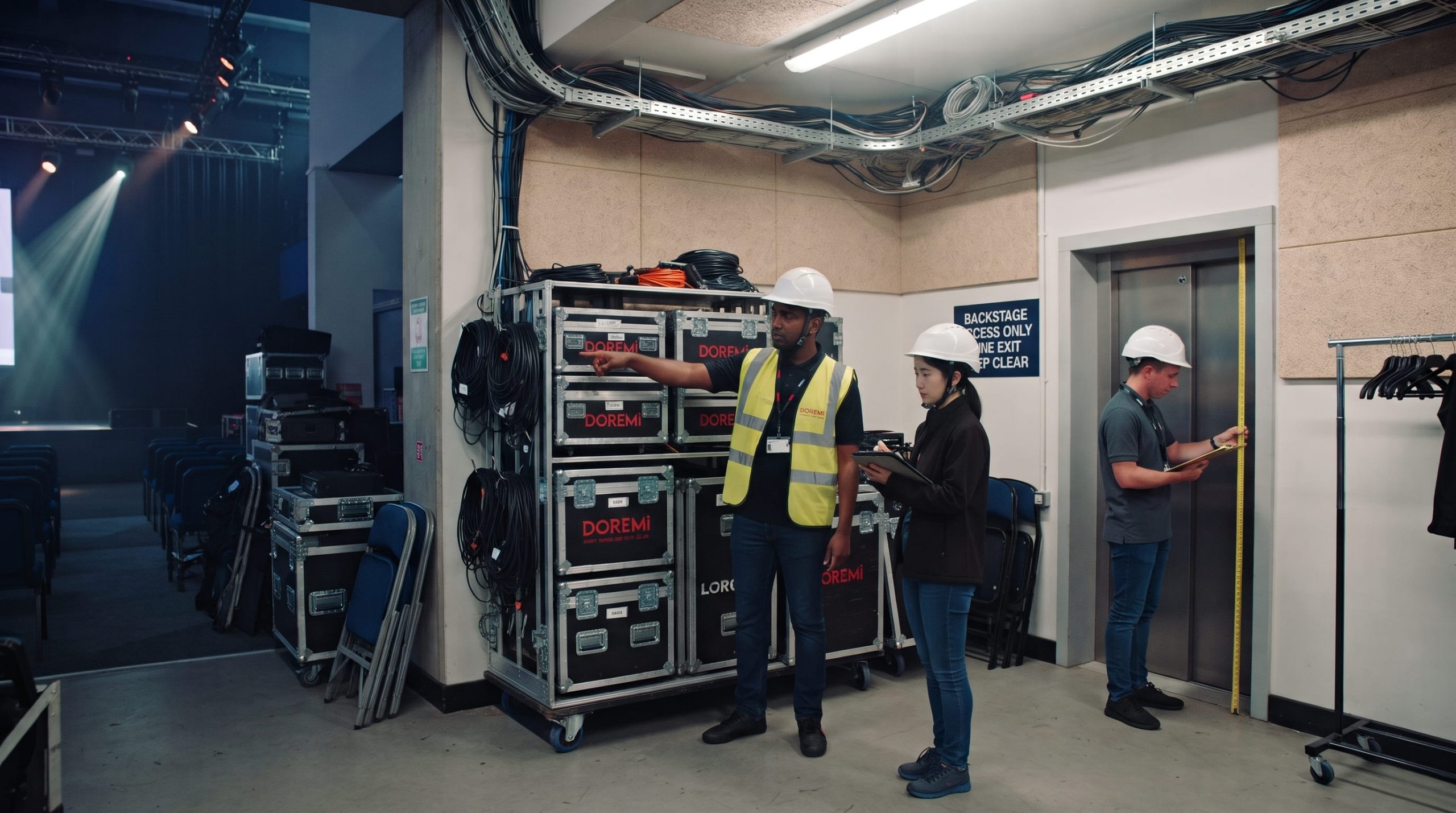 While guests focus on the main event, the production team must manage several activities behind the scenes.
Backstage space is required for presenters, performers, event crew and technical equipment. Depending on the programme, it may also be used for speaker preparation, artist holding, award storage and stage management.
During the site recce, the team should identify suitable areas for:
- Speaker and performer holding rooms
- Equipment storage
- Technical control positions
- Stage management and show coordination
- Crew movement and access routes
- Preparation areas for performers
It is also important to check whether backstage areas provide convenient access to the stage.
For example, performers should be able to move towards the stage without crossing the audience seating area. Similarly, technical crew should have sufficient working space to manage equipment and coordinate show cues.
A well-planned backstage arrangement supports smoother transitions between programme segments and helps the event team manage activities without disrupting the audience experience.
Confirming Venue Rules, Restrictions and Safety Requirements
Every event venue has its own operating procedures and restrictions. These requirements should be understood before the production plan is finalised.
Some venues may have specific rules regarding installation hours, sound levels, electrical work, rigging, branding materials and the use of external contractors.
During the site recce, organisers should discuss these requirements with the venue representative.
Key questions include:
- What are the permitted setup and dismantling hours?
- Are there restrictions on sound levels?
- Does the venue allow external production vendors?
- Are there approved contractors for electrical or rigging work?
- Are there restrictions on drilling, hanging or attaching materials?
- What fire safety requirements apply to temporary structures and materials?
- Where are the emergency exits and access routes?
These details can affect the production schedule, equipment selection and overall event budget.
Safety should also be considered throughout the inspection. Stage structures, trussing, electrical cables and equipment placement must be planned with appropriate safety measures and venue requirements in mind.
Understanding the rules early helps prevent unnecessary delays, additional costs and last-minute production changes.
Discussing Setup Timelines and Coordination
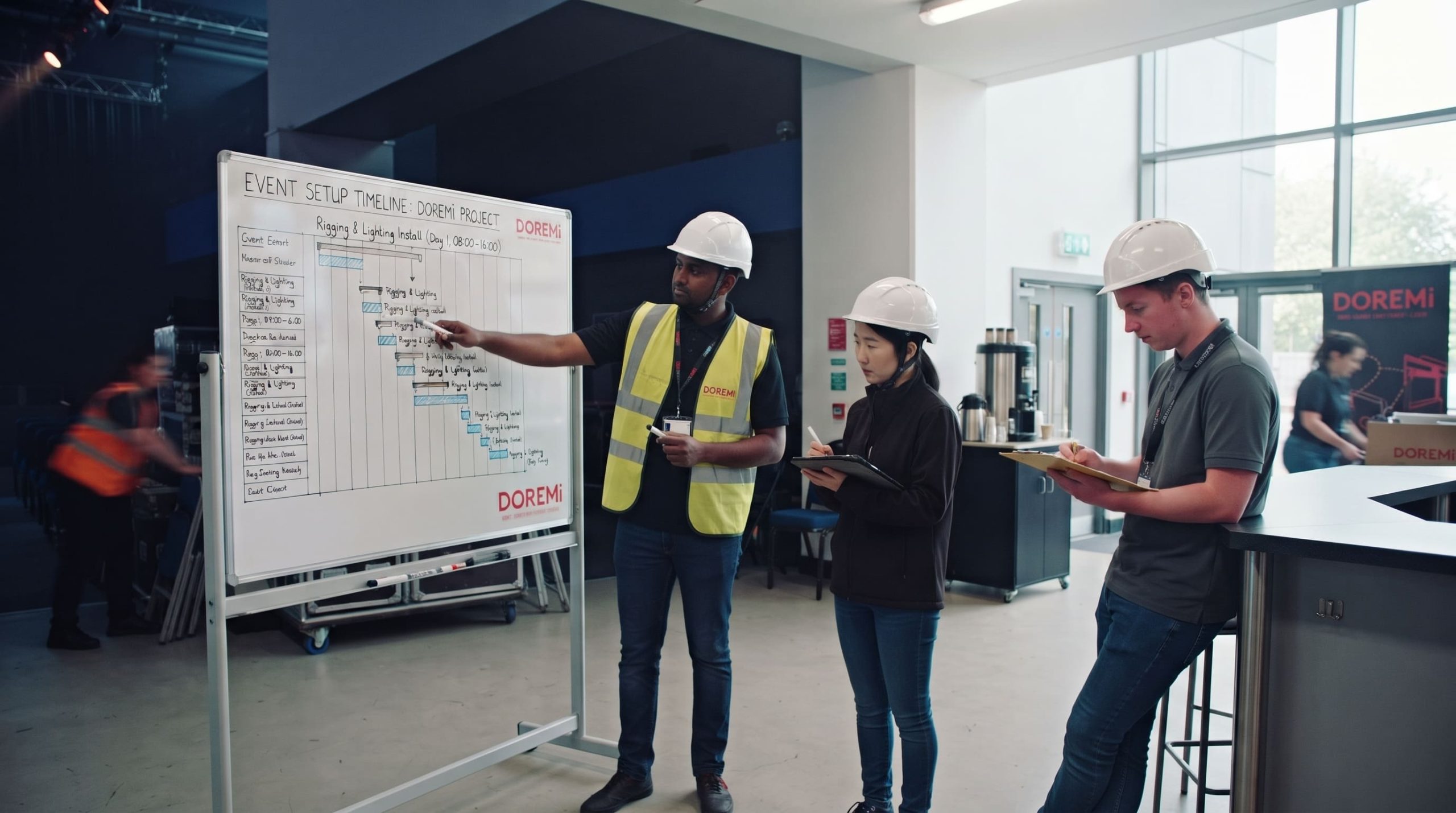 A site recce also helps the event organiser and production team establish a realistic setup schedule.
Different production elements require different installation times. Staging, LED screens, lighting, sound systems, backdrops and decorative structures may need to be installed in a particular sequence.
During the visit, the team should confirm the available access period and coordinate the proposed installation schedule with the venue.
For example, if an event takes place in a hotel ballroom, another function may be scheduled in the same space before the production team receives access. This can affect when equipment can be delivered, installed and tested.
The team should establish:
- Equipment delivery and unloading schedules
- Installation and fabrication timelines
- Technical testing and soundcheck periods
- Rehearsal arrangements
- Final venue inspection
- Event-day access and operational timings
- Dismantling and equipment collection schedules
Proper coordination helps ensure that all parties understand their responsibilities and that the event is ready before guests arrive.
What Happens After the Site Recce?
A site recce should result in more than photographs and measurements. The information gathered must be translated into practical decisions and an updated event production plan.
After the visit, the organiser and production team should review their findings, identify any unresolved issues and assign responsibility for the next steps.
The final documentation may include venue measurements, photographs, floor plans, equipment placement suggestions, access arrangements, electrical requirements and confirmed venue restrictions.
This information helps the production team refine the proposed setup and coordinate with other vendors.
It also provides a reference point for future discussions with the client and venue management.
If major changes are made to the event layout or technical requirements after the initial visit, another inspection may be necessary to confirm that the revised arrangements remain feasible.
Ultimately, the purpose of a site recce is to reduce uncertainty before the actual event begins.
Who Should Attend a Site Recce?
A site recce is most effective when the relevant people are involved in the inspection.
Depending on the event’s scale and requirements, the following individuals may participate:
- Event organiser: To review the venue layout, guest experience and overall programme requirements.
- Event production team: To assess staging, sound, lighting, LED screens and technical installation requirements.
- Venue representative: To explain venue facilities, operating procedures, restrictions and available infrastructure.
- Technical specialists: To evaluate specific requirements involving electrical supply, rigging, audio-visual systems and other technical equipment.
- Client representatives: To confirm that the proposed arrangements support the event’s objectives and expectations.
Having the right people present allows questions to be addressed earlier and helps different teams coordinate their requirements.
Final Thoughts: Plan Before You Produce
A site recce is an essential step in preparing for a successful event. It gives organisers and production teams the opportunity to understand the venue beyond its appearance and evaluate whether it can support the actual event requirements.
From checking loading access and stage dimensions to assessing sound coverage, lighting positions, electrical infrastructure and guest movement, every detail contributes to better preparation.
More importantly, a site recce allows potential challenges to be identified before they affect the production schedule or event experience.
The information gathered also helps the production team recommend suitable equipment, refine the event layout and coordinate installation requirements with the venue and other suppliers.
Ultimately, good event production starts long before the equipment arrives at the venue. It starts with understanding the space, asking the right questions and planning the execution carefully.
Further Reading
For additional insights into venue inspections and corporate event planning, explore:
– Event Venue Recce Checklist: Why Site Visits Matter – Triangular Dots – An in-depth look at venue access, production logistics, backstage planning and the importance of physical site inspections.
Planning Your Next Event Production?
A successful event requires careful planning, suitable equipment and reliable technical execution. From professional sound systems and lighting to LED screens, staging, trussing and complete event production services, DOREMi provides integrated solutions to support your event requirements.
With more than 45 years of industry experience and over 45,000 events and projects delivered, our team is ready to help bring your event plans to life.
Explore DOREMi’s Event Production Services and speak to our team about your next event.