The Power of Projection: Mapping Visuals onto Complex Surfaces
Projection mapping, often referred to as “spatial augmented reality,” has transformed the way audiences experience live events, performances, and branded activations. By using advanced projection technology to map visuals onto irregular or complex surfaces, event producers can turn ordinary architecture, objects, and stage designs into dynamic canvases. This technique blends artistry with engineering, creating immersive environments that captivate audiences and elevate storytelling.
In this article, we’ll explore the fundamentals of projection mapping, the technical challenges of working with complex surfaces, and practical strategies for event professionals who want to harness its full potential.
Fundamentals of Mapping
- Surface Geometry Analysis: Understanding the dimensions, angles, and textures of the target.
- Content Design: Creating visuals that complement or transform the surface’s features.
- Software Calibration: Using specialized tools to warp and align the projection accurately.
- Hardware Setup: Selecting projectors with the right brightness, resolution, and throw distance.
Why Complex Surfaces Matter
Flat screens are predictable, but complex surfaces—such as curved walls, textured sculptures, or multi-layered stage sets—introduce depth and intrigue. They allow event designers to enhance storytelling by turning a castle wall into a living canvas or animating a car prototype with dynamic branding. Unique surfaces ensure that each event feels distinctive and tailored to its setting.
Technical Challenges of Mapping onto Complex Surfaces
While projection mapping offers extraordinary creative potential, it also presents significant technical challenges:
- Surface Irregularities: Textures and curves can distort visuals; projecting onto brick or stone requires compensating for gaps.
- Perspective and Viewing Angles: Designers must ensure the illusion holds up across multiple audience vantage points.
- Light and Ambient Conditions: Projections must contend with weather outdoors and reflections/competing light sources indoors.
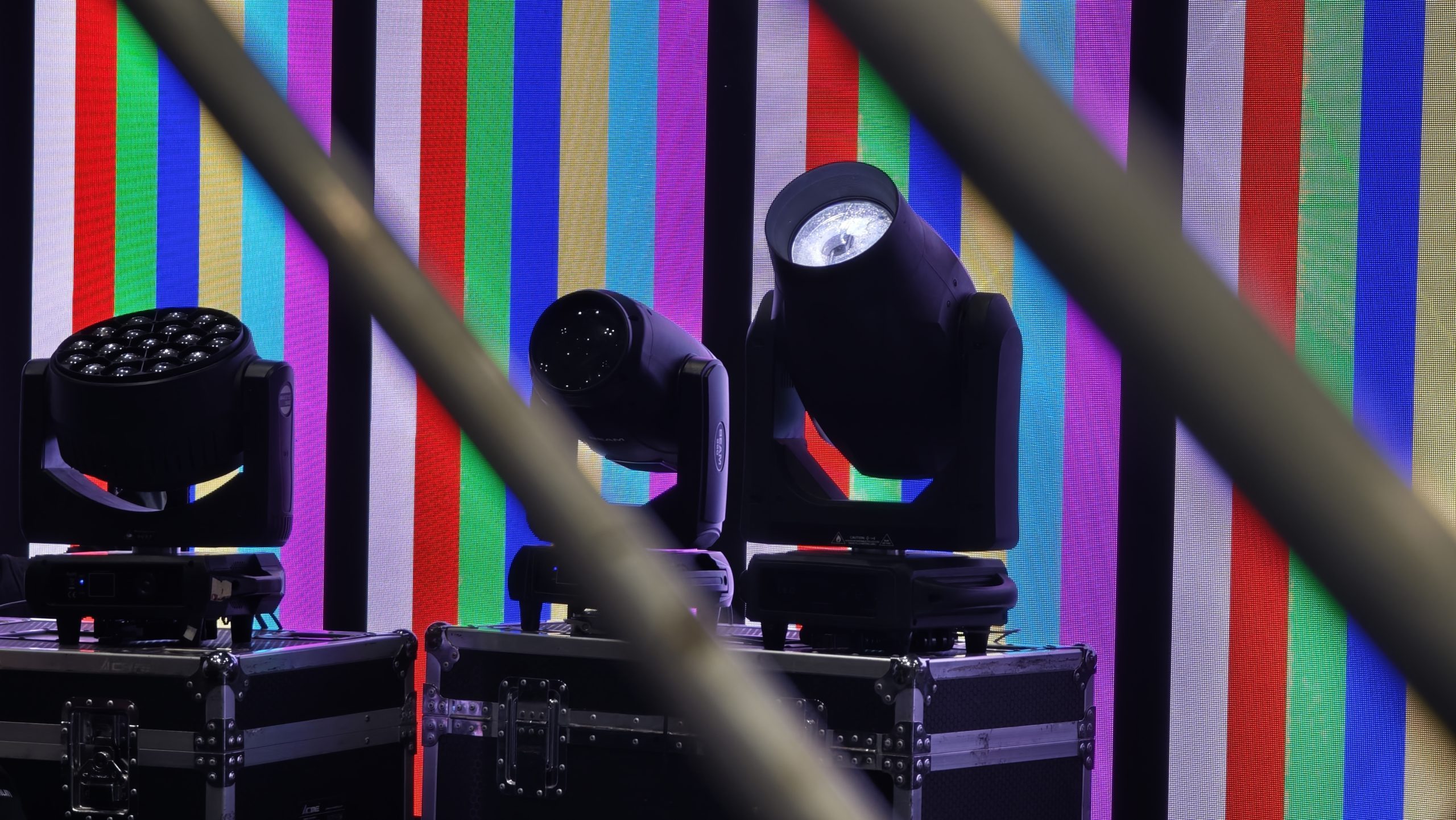
- Hardware Limitations: Projectors must deliver high lumens to overcome ambient light; multiple units often require careful blending.
- Content Complexity: Designing visuals requires advanced 3D modeling and animation skills to interact precisely with surface geometry.
Strategies for Successful Projection Mapping
 Event professionals can overcome these challenges with careful planning:
- Detailed Site Survey: Use 3D scanning or photogrammetry to document the surface before designing content.
- Projector Selection: Choose based on high-lumen brightness, high resolution, and lens flexibility.
- Specialized Software: Tools like Resolume Arena, MadMapper, or TouchDesigner allow for precise warping and blending.
- Surface-Aware Design: Animate architectural details and use shadows/textures to create depth rather than forcing generic visuals.
- Test and Iterate: Conduct extensive rehearsals under real conditions to refine calibration and integration.
Applications & Future Trends
Projection mapping is versatile across corporate events, concerts, product launches, and public installations. Looking forward, the industry is moving toward:
- Interactive Mapping: Integrating motion sensors for responsive visuals.
- AR/VR Integration: Combining projection with augmented reality for hybrid experiences.
- AI-Driven Content: Automating visual design to adapt in real-time to environmental changes.
- Sustainability: Reducing material waste by replacing physical sets with reusable digital assets.
Conclusion: Elevation Through Precision
Projection mapping onto complex surfaces is more than a technical feat—it’s a powerful storytelling tool. By merging precision engineering with creative artistry, event professionals can transform ordinary spaces into extraordinary experiences. Success lies in meticulous planning, thoughtful content design, and a deep understanding of both the surface and the audience.
As technology advances, projection mapping will continue to redefine how we engage, inspire, and immerse audiences in the world of live events.
Transform Your Venue Into a Living Canvas
From architectural mapping to immersive stage sets, DOREMi’s visual experts can bring your wildest concepts to life.