Inside the Rack: The Processors Powering Professional Stages
In the world of live events, audiences often marvel at the dazzling visuals, the clarity of sound, and the seamless flow of performances. Yet behind the curtain—or more accurately, inside the rack… lies the true engine of professional stage production: processors. These devices are the brains of modern AV systems, ensuring that every signal, whether audio or video, is managed with precision. For event professionals, understanding processors is not just technical knowledge; it is the foundation of delivering flawless experiences.
This article explores the role of processors in stage production, the types commonly used, the challenges they solve, and the strategies professionals employ to maximize their performance.
The Role of Processors in Stage Production
Processors are specialized devices that handle, manipulate, and distribute signals across a live event environment. Their importance can be broken down into several key functions:
- Signal Management: Ensuring audio and video signals are routed correctly to the right destinations.
- Optimization: Adjusting levels, equalization, and dynamics to suit the venue and performance.
- Synchronization: Keeping audio and video perfectly aligned, especially in large-scale productions.
- Reliability: Providing redundancy and stability so that events run without interruption.
Without processors, even the most advanced microphones, speakers, and screens would struggle to deliver consistent quality.
Types of Processors Found in Professional Racks
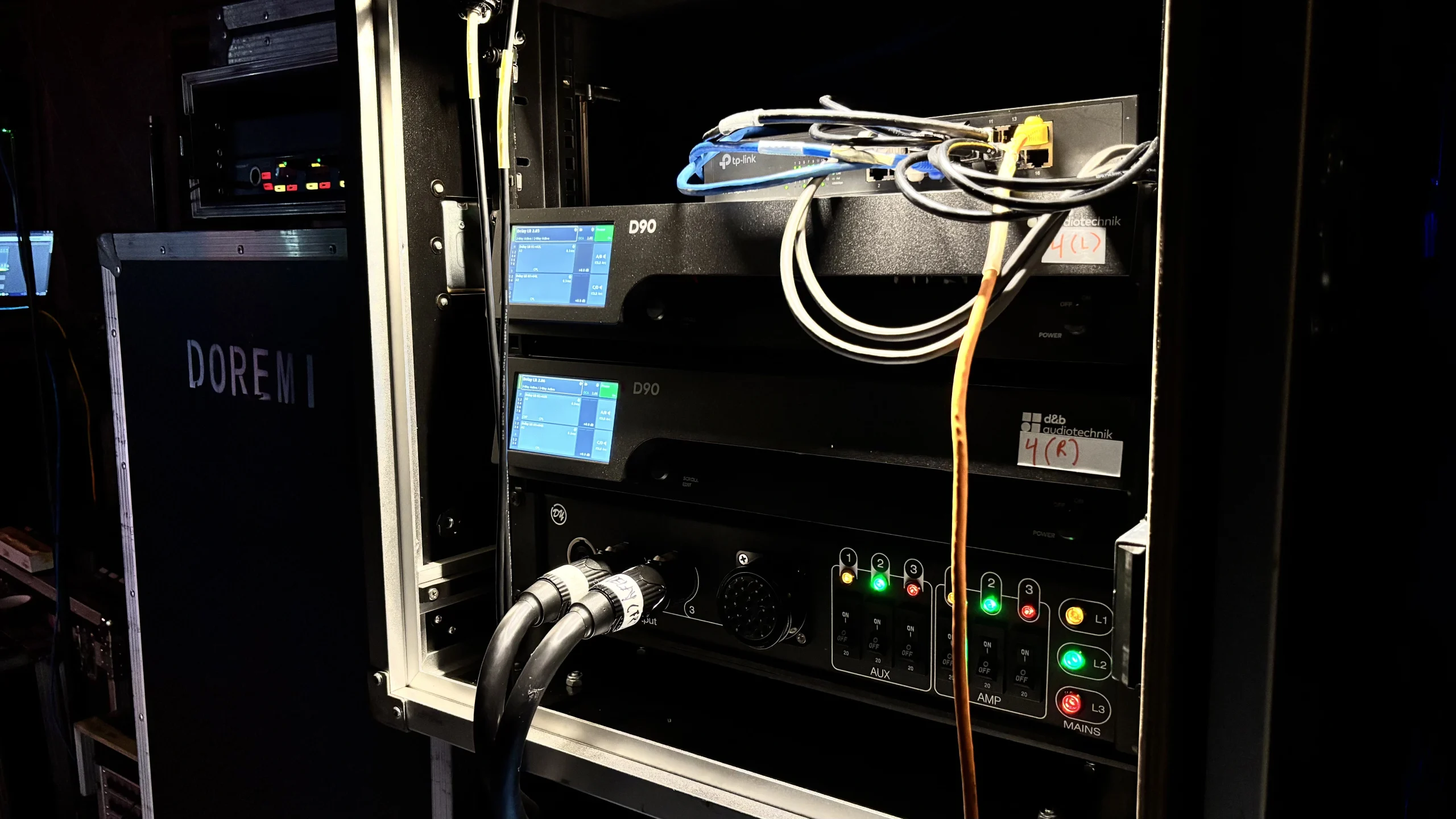
Different processors serve different purposes, and most professional racks contain a combination of these systems:
1. Audio Signal Processors
These are the backbone of sound management.
- Digital Signal Processors (DSPs): Handle equalization, compression, limiting, and feedback suppression.
- Crossovers: Split audio signals into frequency bands for distribution to subwoofers, midrange, and tweeters.
- Matrix Mixers: Route multiple audio sources to different outputs, essential for complex stage setups.
2. Video Processors
As visual elements become central to events, video processors ensure clarity and synchronization.
- Scalers: Adjust resolution and aspect ratios to match different screens.
- Switchers: Seamlessly transition between video sources during live events.
- Signal Converters: Translate formats (HDMI, SDI, DisplayPort) for compatibility across devices.
3. Lighting Control Processors
Lighting systems rely on processors to manage cues and effects.
- DMX Controllers: Standard protocol for controlling lighting fixtures.
- Media Servers: Handle complex visual effects, projection mapping, and synchronized lighting sequences.
4. Network Processors
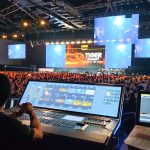
Modern events often run on AV-over-IP systems. Network processors manage data traffic, ensuring low latency and secure transmission. This is often managed via professional networking protocols.
Challenges Processors Solve in Live Events
- Feedback and Noise Control: DSPs suppress unwanted frequencies, preventing disruptive feedback.
- Latency Management: Ensuring audio and video signals reach audiences in sync, even across large venues.
- Scalability: Allowing systems to expand from small gatherings to stadium-sized productions without loss of quality.
- Compatibility: Bridging different formats and devices, ensuring seamless integration.
- Redundancy: Providing backup pathways so that if one processor fails, another takes over instantly.
Best Practices for Processor Setup
- Pre-Event Configuration: Conduct venue surveys and program DSPs with tailored presets.
- Signal Flow Mapping: Document every input and output; use color-coded cabling for efficiency.
- Redundancy Planning: Employ dual processors for critical functions and keep spares ready.
- Live Monitoring: Engineers monitor performance in real time, adjusting EQ or video scaling as needed.
- Post-Event Review: Analyze processor logs to identify issues and improve future setups.
Practical Applications and Future Trends

Processors have evolved from analog units to integrated digital powerhouses capable of remote control and AI-driven automation. Whether it’s managing clarity in religious gatherings or balancing simultaneous audiences in hybrid events, processors remain the hidden power behind the stage.
Inside the rack lies the unseen power that makes professional stages possible. Processors are not glamorous, but they are indispensable. They ensure that every note, every image, and every cue reaches audiences with precision. For event professionals, mastering processor technology is not optional; it is the key to delivering experiences that resonate.
Power Your Production with Precision
Ensure your next event is backed by the best processing technology in the industry. Contact DOREMi to discuss our professional rack solutions and AV integration.