Audio 101: Understanding Line Arrays vs. Point Source Systems
Ever been to an event where everything looked amazing but you could barely hear what was going on? Or maybe the sound was crystal clear in one spot, but muffled just a few steps away?
That’s where audio setup makes all the difference.
In live events, sound isn’t just important, it’s everything!! It’s what keeps your audience engaged, delivers your message clearly, and creates that immersive experience people remember. You can have stunning visuals and lighting, but if the audio falls flat, the whole event feels off.
When it comes to professional sound systems, two main setups are commonly used: line arrays and point source systems. They might sound technical, but understanding how they work—and when to use each—can completely change the quality of your event.
In this guide, we’ll break it down in a simple, practical way so you can choose the right system and make sure your audience hears every moment, exactly as it should be.
The Basics of Sound Reinforcement
Before diving into system types, it’s important to understand the goal of sound reinforcement: ensuring that audio is clear, balanced, and evenly distributed across the audience area. A well-designed system should minimize distortion, avoid dead zones, and deliver consistent coverage regardless of audience size or venue layout.
Two approaches dominate professional setups:
- Point Source Systems: Traditional loudspeakers designed to project sound from a single point outward.
- Line Arrays: Multiple loudspeaker elements arranged vertically to create controlled coverage over large areas.
Point Source Systems: The Traditional Approach
Point source loudspeakers are the most straightforward design. They radiate sound from a single cabinet, dispersing audio in a spherical or conical pattern. This makes them versatile and easy to deploy, especially in smaller venues.
Key Characteristics:
- Coverage Pattern: Typically wide, but less controlled over distance.
- Setup: Simple, requiring fewer components and less rigging.
- Cost: Generally more affordable than line arrays.
- Flexibility: Suitable for small to medium venues, corporate events, houses of worship, and portable applications.
Advantages:
- Simplicity: Quick to set up and operate, ideal for events with limited technical resources.
- Cost-Effective: Lower investment compared to line arrays.
- Natural Sound: In smaller spaces, point source systems often deliver warm, direct audio without complex tuning.
Limitations:
- Distance Coverage: Sound loses clarity and volume over longer distances.
- Uneven Distribution: Audience members closer to the speakers may experience excessive volume, while those farther away struggle to hear clearly.
- Scalability: Adding more point source speakers can lead to phase issues and uneven sound fields.
Line Arrays: The Modern Standard for Large Events
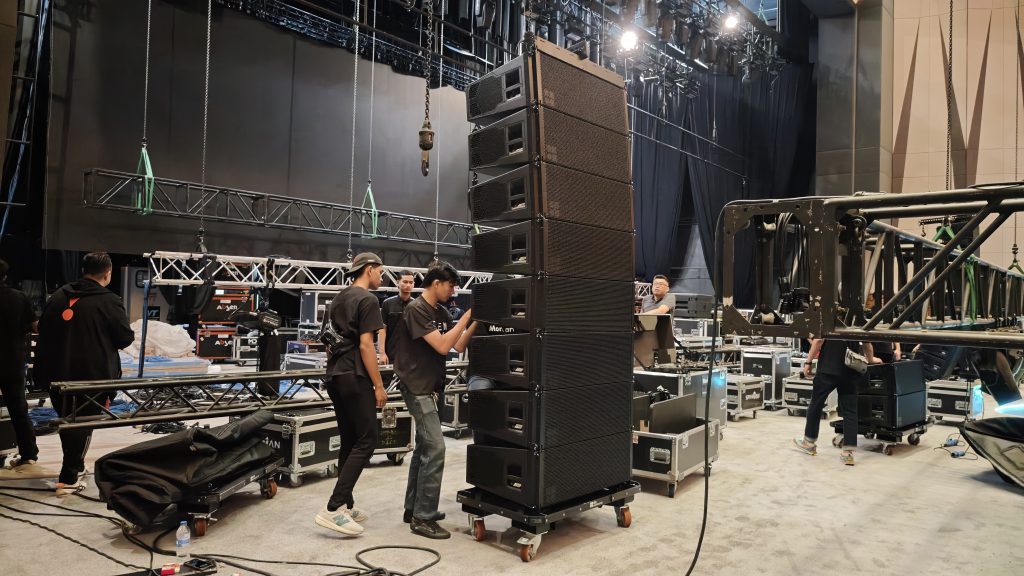
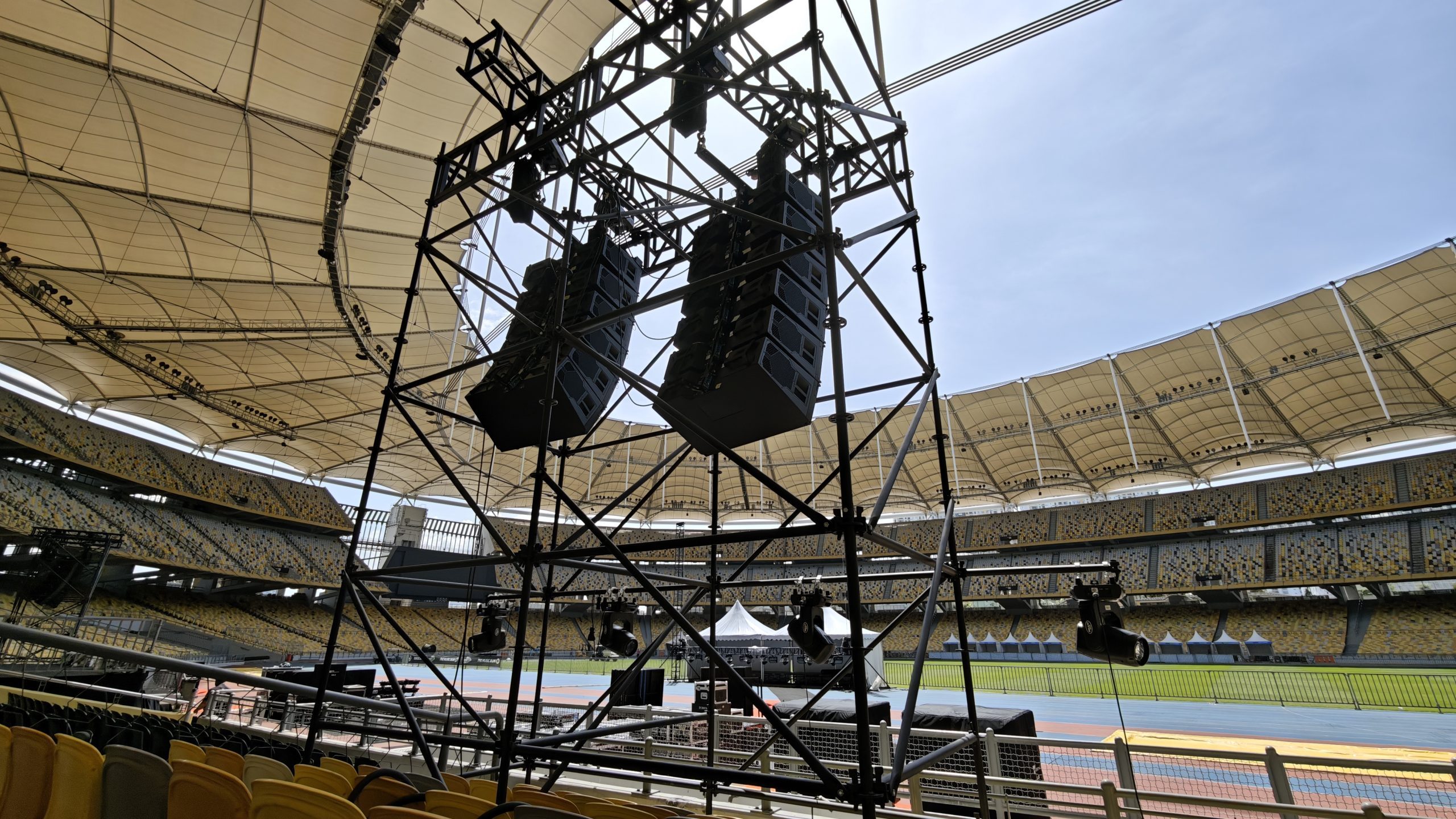
Line arrays revolutionized live sound in the late 20th century. Instead of relying on a single cabinet, they use multiple speaker elements stacked vertically. This design allows engineers to control sound dispersion with precision, ensuring even coverage across large venues.
Key Characteristics:
- Coverage Control: Narrow vertical dispersion, wide horizontal coverage.
- Scalability: Easily expanded for arenas, stadiums, and outdoor festivals.
- Rigging Requirements: Typically flown from trusses or towers, requiring professional setup.
- Cost: Higher investment due to complexity and number of components.
Advantages:
- Consistent Coverage: Line arrays deliver uniform sound pressure levels across long distances.
- Directional Control: Engineers can shape the vertical coverage to minimize reflections from ceilings or floors.
- Professional Standard: Preferred for concerts, festivals, and large-scale productions.
- Reduced Interference: Designed to minimize phase cancellation and overlapping sound waves.
Limitations:
- Complexity: Requires skilled technicians for design, rigging, and tuning.
- Cost: Higher upfront investment in equipment and labor.
- Overkill for Small Venues: In intimate spaces, line arrays may be unnecessary and less effective than point source systems.
Comparing System Suitability
| Venue Size | Recommended System |
|---|---|
| Small (Up to 500 people) | Point Source Systems |
| Medium (500–2,000 people) | Both (Line Arrays for better consistency) |
| Large (2,000+ people/Festivals) | Line Arrays (Industry Standard) |
The Science Behind Coverage
The difference between these systems lies in wave propagation:
- Point Source: Sound radiates outward in all directions, diminishing with distance according to the inverse square law. This means volume drops significantly as listeners move farther away.
- Line Array: By stacking multiple elements, sound waves combine to form a cylindrical wavefront. This reduces volume loss over distance, maintaining clarity across larger areas.
According to professional audio theory, this scientific principle explains why line arrays dominate large-scale productions: they maintain consistent sound pressure levels without overwhelming the front rows or neglecting the back.
Deployment Strategies
Point Source Deployment:
- Place speakers at audience level or slightly elevated.
- Use multiple cabinets for wider coverage, but avoid overlapping zones.
- Ideal for portable setups where speed and simplicity matter.
Line Array Deployment:
- Fly arrays from trusses or towers to cover wide audience areas.
- Adjust vertical angles to target specific zones (front rows, mid-section, back rows).
- Often paired with subwoofers for low-frequency reinforcement.
Hybrid Approaches
In some cases, combining both systems yields the best results. For example:
- Line arrays for main audience coverage.
- Point source speakers as fills for side areas, balconies, or VIP zones.
Future Trends in Audio Systems
- Smaller, more efficient line arrays are emerging, making them accessible for mid-sized venues.
- Digital signal processing (DSP) allows precise tuning, improving clarity and reducing feedback.
- Sustainable designs focus on energy efficiency and lightweight materials, reducing environmental impact.
Choosing between line arrays and point source systems is not about which is “better” overall, but which is better suited to the event context. Point source systems remain reliable, cost-effective solutions for smaller venues, while line arrays dominate large-scale productions with their precision and consistency. For event organizers and AV professionals, understanding these differences ensures smarter decisions, better audience experiences, and more efficient use of resources.
Experience Crystal Clear Sound
Whether you need a compact point source setup for a meeting or a massive line array for a concert, DOREMi has the technical expertise and equipment to deliver perfect audio.