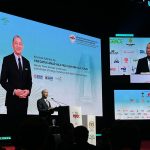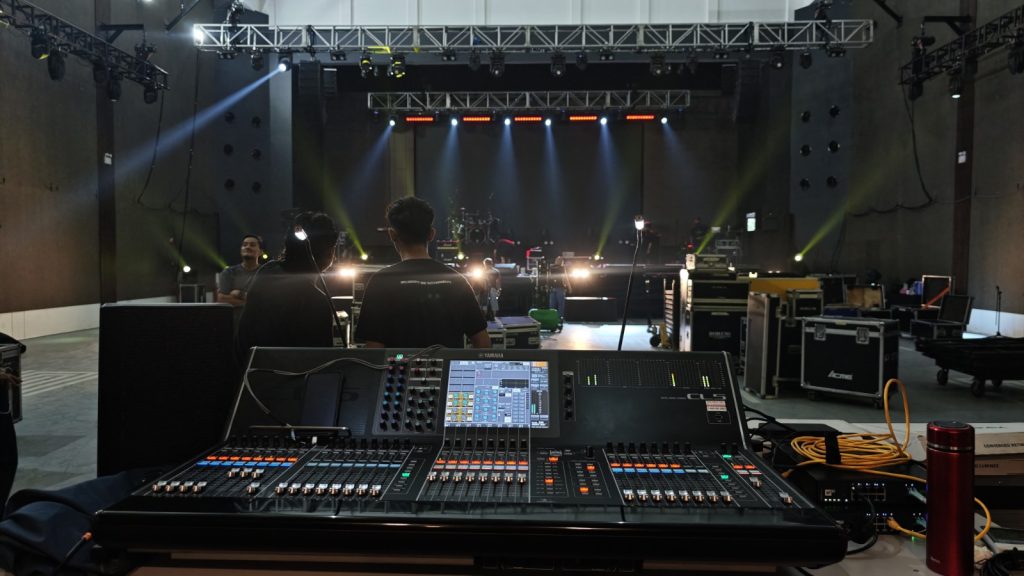
A keynote speaker steps onto the stage as the ballroom lights dim. Hundreds of attendees fall silent, waiting for the presentation to begin. The microphone is switched on, the first words are spoken, and every syllable is delivered with exceptional clarity throughout the venue. At the same time, the audio is being routed to livestream viewers, recorded for future playback, and fed into interpretation systems all without noticeable delay or distortion.
To the audience, it feels effortless. Behind that seamless experience, however, is a carefully engineered digital audio chain where every component plays a critical role in preserving sound quality from the moment it enters the microphone until it reaches the loudspeakers.
A single weak link, whether it’s poor gain staging, an overloaded processor, unstable clock synchronisation, network congestion, or improper loudspeaker tuning which can compromise the entire production. What begins as a crystal-clear signal can quickly become noisy, distorted, delayed, or even completely lost.
This is why professional event production is about much more than selecting premium microphones or powerful speakers. It requires designing a complete digital audio ecosystem where every stage works together to maintain signal integrity, minimise latency, and deliver consistent sound to every member of the audience.
Whether supporting corporate conferences, concerts, exhibitions, product launches, hybrid events, or large-scale public gatherings, understanding the digital audio chain helps event organisers appreciate how professional engineering contributes to a flawless event experience.
What Is a Digital Audio Chain?
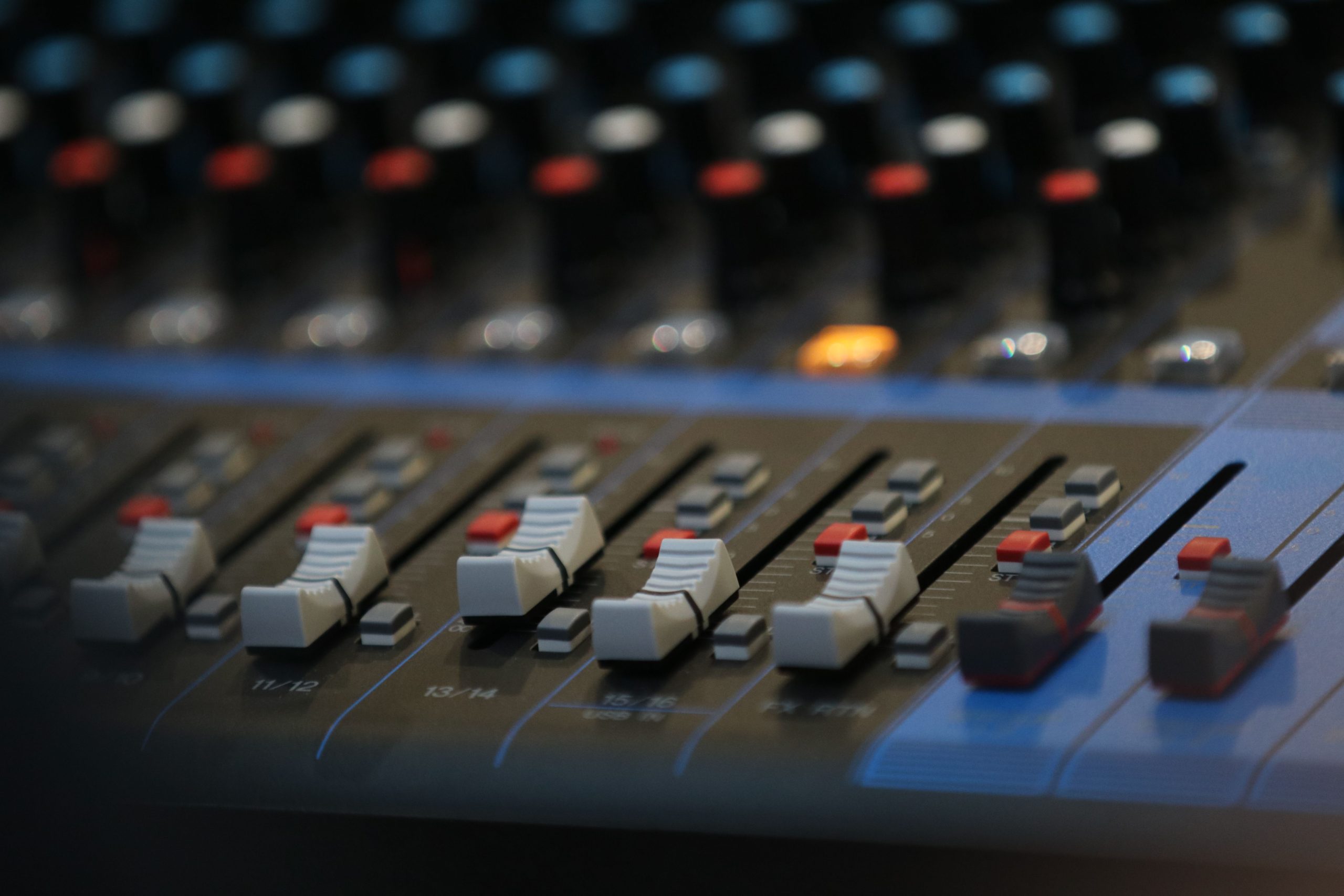
A digital audio chain is the complete pathway that audio follows from the moment it is captured until it is reproduced through loudspeakers or headphones.
Instead of viewing audio equipment as individual pieces of technology, professional engineers treat the entire system as one continuous workflow where every component affects the next.
A typical digital audio chain includes:
Microphone → Preamplifier → Analog-to-Digital Converter (ADC) → Digital Mixing Console → Digital Signal Processing (DSP) → Audio Network → Digital-to-Analog Converter (DAC) → Power Amplifier → Loudspeaker
Each stage has a specific responsibility. If one component introduces noise, distortion, excessive latency, or improper gain, every device downstream inherits that problem. For this reason, experienced audio engineers focus on optimising the entire signal chain rather than relying on a single high-end piece of equipment.
Why “Zero Loss” Matters in Professional Audio
In live event production, “zero loss” does not imply that audio travels without any processing or conversion. Instead, it refers to preserving the original sound as accurately as possible throughout the entire signal chain.
The objective is simple:
- Maintain clarity
- Preserve dynamic range
- Prevent unwanted noise
- Minimise latency
- Avoid unnecessary signal degradation
- Ensure consistent sound across every output
Achieving this requires careful engineering at every stage rather than relying solely on expensive equipment. A premium microphone connected to a poorly configured system will still produce poor results, while a well-designed signal chain can maximise the performance of every component.
Stage 1: Capturing Sound at the Source
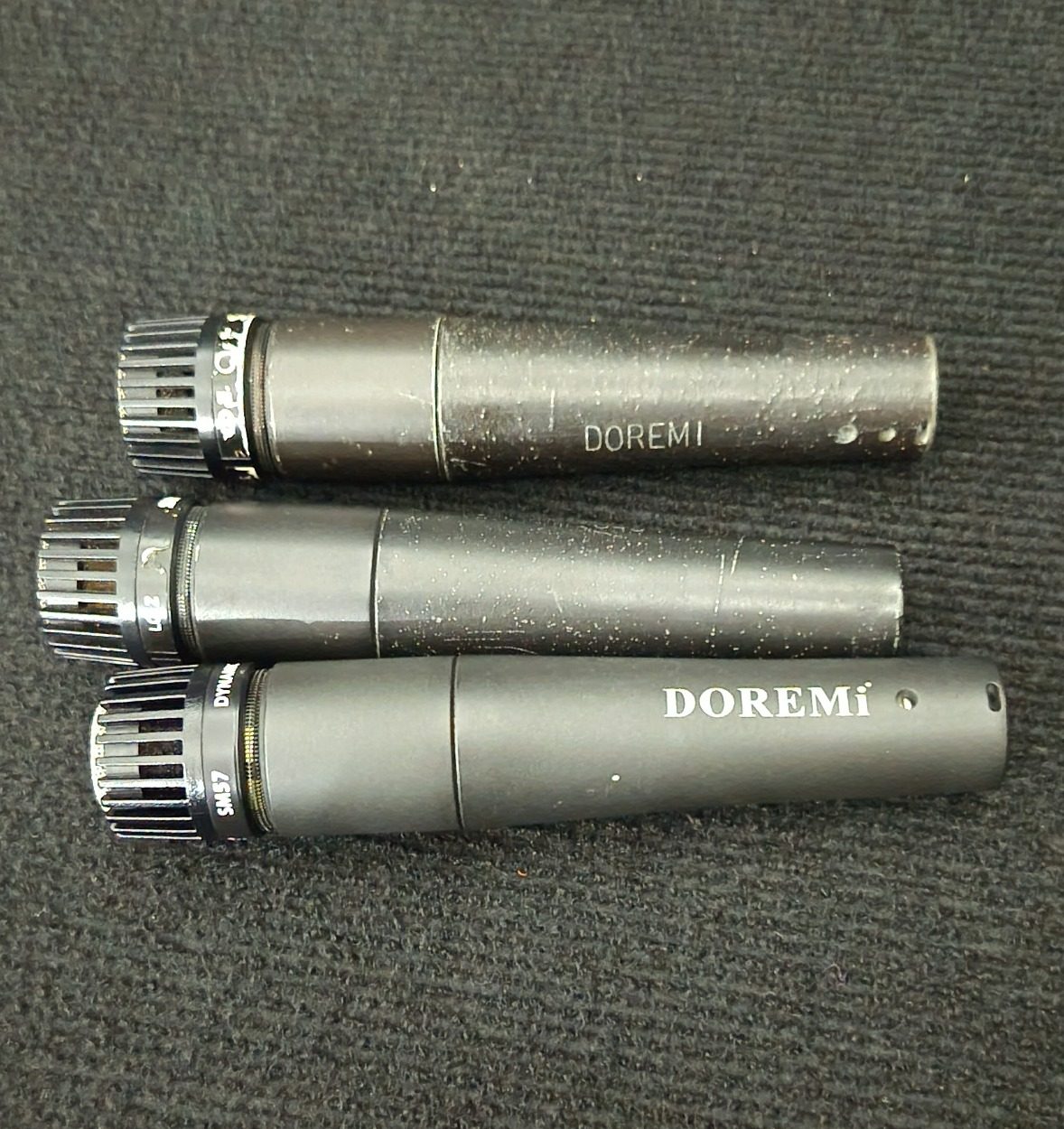
Everything begins with the microphone. The microphone is responsible for converting sound waves into electrical signals that can be processed by the audio system. This is the first and arguably one of the most important—steps in the digital audio chain because any imperfections introduced here cannot be completely corrected later. Different events require different microphone solutions. Corporate conferences often prioritise speech intelligibility using wireless handheld or lapel microphones. Concerts demand microphones capable of handling high sound pressure levels while accurately reproducing vocals and instruments. Hybrid events require microphones that deliver clean audio both for audiences in the venue and viewers joining remotely.
Selecting the correct microphone involves considering factors such as:
- Frequency response
- Polar pattern
- Sensitivity
- Maximum sound pressure level
- Wireless reliability
- Environmental conditions
Capturing clean audio at the source significantly reduces the amount of corrective processing required later in the signal chain.
Stage 2: The Microphone Preamplifier
The electrical signal leaving a microphone is extremely weak. Before it can be processed digitally, it must first be amplified by a microphone preamplifier. The preamp raises the signal to a usable level while introducing as little noise as possible.
A high-quality preamplifier provides:
- Low noise floor
- Wide dynamic range
- Clean gain
- Minimal distortion
- Stable headroom
Improper gain settings at this stage create problems that affect the entire system. If the gain is too low, engineers must boost the signal later, increasing unwanted noise. If the gain is too high, clipping occurs, permanently damaging the audio before it even reaches the digital mixer. For this reason, professional engineers spend considerable time setting correct input gain before an event begins.
Stage 3: Analog-to-Digital Conversion (ADC)
Once the signal reaches an appropriate level, it enters one of the most critical stages of the modern audio chain: Analog-to-Digital Conversion. Since microphones generate analog signals while modern audio systems operate digitally, the waveform must be converted into digital data. This conversion takes place thousands of times every second.
Two specifications determine conversion quality:
Sampling Rate
Sampling rate defines how frequently the analog waveform is measured.
Professional live productions commonly operate at:
- 48 kHz
- 96 kHz
Higher sampling rates capture more audio detail but require greater processing power and bandwidth.
Bit Depth
Bit depth determines how accurately each sample is recorded.
Professional event systems typically use:
- 24-bit audio
Compared to lower bit depths, 24-bit recording offers:
- Greater dynamic range
- Lower noise floor
- Better headroom
- Improved clarity during quiet passages
High-quality ADC ensures that the original performance is accurately represented before entering the digital environment.
Stage 4: Digital Mixing Console – The Control Centre
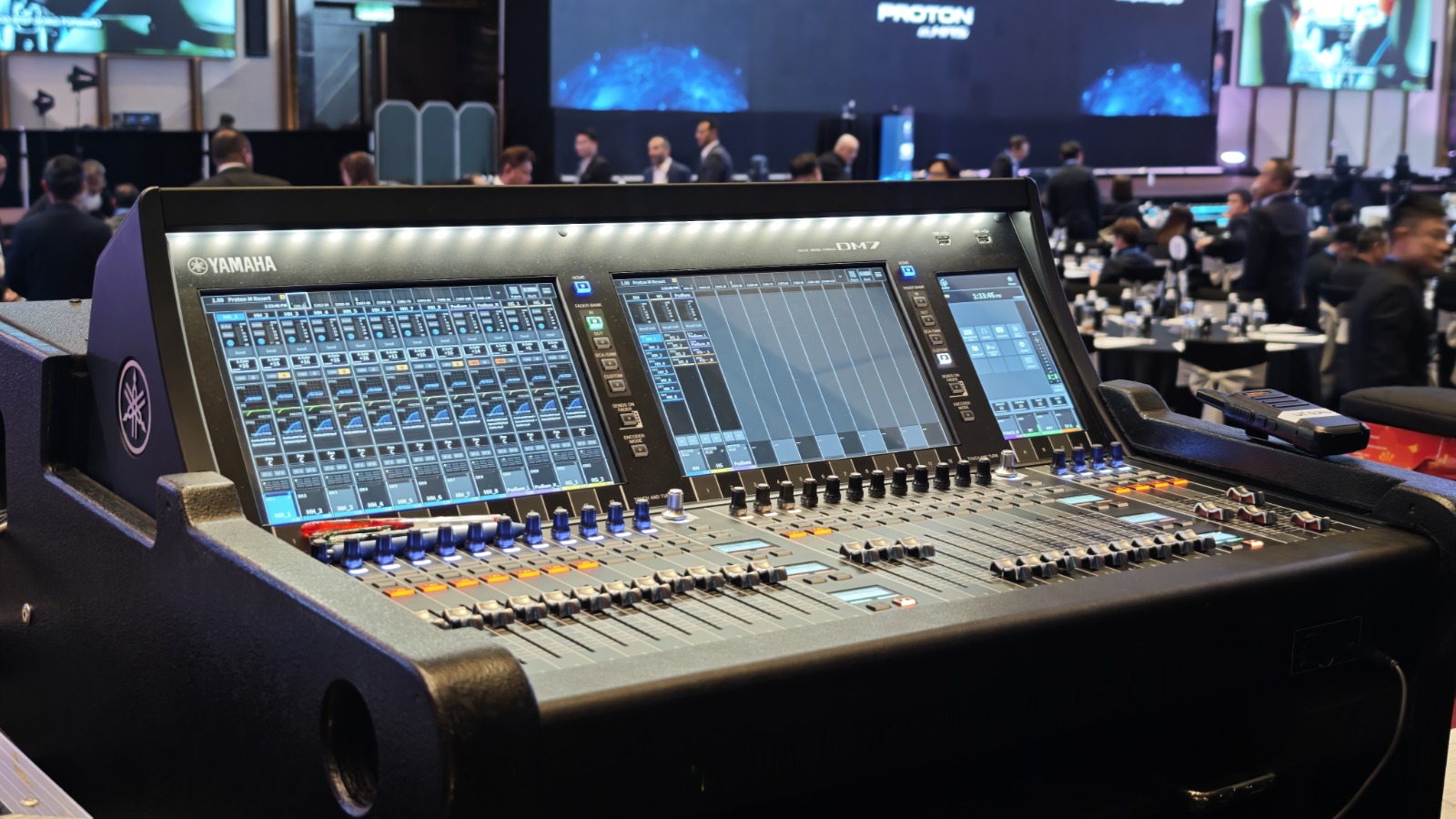
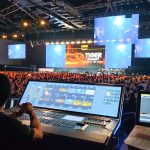
Once converted into digital data, every microphone, instrument, playback source, and video feed arrives at the digital mixing console. This is where audio engineers shape the overall listening experience. Rather than simply adjusting volume levels, modern digital consoles function as intelligent production hubs capable of managing hundreds of audio channels simultaneously.
Engineers use digital consoles to:
- Balance microphones
- Mix live music
- Control playback systems
- Route audio to multiple destinations
- Manage livestream feeds
- Create monitor mixes
- Apply equalisation
- Control dynamics
- Automate scene changes
Large conferences may require separate audio mixes for:
- Ballroom audience
- Livestream viewers
- Recording systems
- Simultaneous interpretation
- Media distribution
- Overflow rooms
Modern consoles make these complex workflows possible while maintaining consistency throughout the production.
Why Digital Mixing Has Changed Event Production
Unlike traditional analogue consoles, digital mixers allow engineers to save and recall complete configurations instantly. This provides several advantages during live events.
For example, a product launch may transition through:
- Registration
- Opening video
- CEO presentation
- Product unveiling
- Panel discussion
- Media interview
- Entertainment performance
Each segment requires different microphone levels, routing, effects, and loudspeaker settings. Rather than manually reconfiguring hundreds of controls, engineers simply recall pre-programmed scenes within seconds. This improves both operational efficiency and production reliability.
Stage 5: Digital Signal Processing (DSP) – Optimising Every Sound
Once audio has been mixed, it moves into one of the most powerful stages of the digital audio chain: Digital Signal Processing (DSP). If the digital mixing console is the control centre of the system, DSP is the intelligence that refines and optimises every signal before it reaches the audience. Rather than simply making audio louder, DSP ensures that sound remains clear, balanced, and consistent regardless of venue size or audience location. Modern processors perform millions of calculations every second, allowing engineers to shape the listening experience with remarkable precision.
Professional DSP systems are responsible for:
- Equalisation (EQ)
- Dynamic processing
- Feedback suppression
- Delay alignment
- Loudspeaker crossover management
- Limiting and speaker protection
- Acoustic optimisation
- Multi-zone audio distribution
Without DSP, even premium loudspeakers can sound inconsistent if deployed in a challenging venue.
Equalisation (EQ): Balancing the Sound
Every venue has its own acoustic characteristics. Large convention halls create reflections. Ballrooms often generate echoes, while outdoor venues disperse sound differently due to the absence of walls and ceilings. Equalisation allows engineers to adjust specific frequencies to create a balanced sound that suits the environment.
For example:
- Reducing excessive bass in enclosed halls
- Improving speech clarity by enhancing vocal frequencies
- Softening harsh high frequencies
- Compensating for room acoustics
Proper equalisation ensures that speeches remain intelligible and music sounds natural throughout the venue.
Dynamic Processing: Maintaining Consistent Audio Levels
Live events rarely maintain constant sound levels. A keynote speaker may suddenly raise their voice during an important announcement, while a vocalist may sing far louder than expected during a performance. Dynamic processors automatically manage these variations.
Common processing tools include:
Compressors- Reduce excessive volume peaks while maintaining overall consistency.
Limiters- Prevent signals from exceeding safe levels, protecting both equipment and audience comfort.
Noise Gates- Mute microphones when they are not being used, reducing background noise and stage bleed. When properly configured, these processors operate transparently, allowing audiences to experience consistent audio without noticing the technology behind it.
Stage 6: Audio Networking – Moving Sound Without Compromise
Modern event productions rarely rely on hundreds of analogue cables running across a venue. Instead, professional systems increasingly use Audio-over-IP (AoIP) technologies, where digital audio travels across Ethernet networks. Rather than transmitting one signal through one cable, multiple audio channels can travel simultaneously through a single network connection.
This approach offers significant advantages:
- Reduced cabling
- Faster deployment
- Greater routing flexibility
- Improved scalability
- Easier system management
- Remote monitoring capabilities
Large-scale events often require hundreds of audio channels to move between:
- Stage boxes
- Mixing consoles
- DSP processors
- Recording systems
- Broadcast trucks
- Livestream equipment
- Interpretation systems
Without digital networking, managing this complexity would require enormous amounts of copper cabling and significantly longer setup times.
Dante: The Industry Standard
Among professional audio networking technologies, Dante has become one of the most widely adopted standards. Instead of connecting equipment using individual analogue cables, Dante converts audio into digital packets that travel across standard Ethernet infrastructure. This enables engineers to route signals between multiple devices almost instantly.
Typical applications include:
- Corporate conferences
- Concert productions
- Broadcast environments
- Hybrid events
- Convention centres
- Performing arts venues
Because routing is managed through software, engineers can quickly adapt to last-minute production changes without physically reconnecting equipment.
Other Audio Networking Protocols
While Dante is the most widely recognised, other networking standards also play important roles.
AES67- Provides interoperability between different audio networking platforms, allowing equipment from multiple manufacturers to communicate seamlessly.
AVB (Audio Video Bridging)- Offers precise timing and guaranteed bandwidth, making it suitable for integrated AV installations where audio and video must remain synchronised. The choice of protocol depends on the project’s technical requirements, equipment compatibility, and overall production design.
Stage 7: Clock Synchronisation – Keeping Every Device in Time
One of the most overlooked aspects of digital audio is timing. Every digital device processes information using its own internal clock. If multiple devices operate independently without proper synchronisation, they begin processing audio at slightly different moments.
This can result in:
- Clicks
- Pops
- Audio glitches
- Signal instability
- Synchronisation errors
- Data corruption
To prevent these issues, professional systems designate a master clock, ensuring every console, DSP processor, stage box, recorder, and network device operates at exactly the same timing reference. Although audiences never notice proper clock synchronisation, they immediately notice when it fails.
Stage 8: Digital-to-Analog Conversion (DAC)
After processing and routing are complete, digital audio must eventually return to the analogue world. This happens through Digital-to-Analog Conversion (DAC). DAC reconstructs the digital information into analogue electrical signals capable of driving power amplifiers.
The quality of this conversion influences:
- Frequency response
- Dynamic range
- Noise performance
- Overall sonic accuracy
Professional systems use high-quality DAC components to ensure that every detail captured at the microphone is preserved before reaching the loudspeakers.
Stage 9: Power Amplifiers – Delivering the Energy
The signal leaving the DAC still lacks sufficient power to drive loudspeakers. Power amplifiers increase the signal’s electrical energy while maintaining its accuracy. Modern professional amplifiers provide much more than raw power.
Many now include:
- Built-in DSP
- Network monitoring
- Remote diagnostics
- Temperature monitoring
- Speaker protection
- Automatic fault reporting
These intelligent amplifiers continuously monitor system performance throughout an event, helping engineers identify potential issues before they become critical failures.
Stage 10: Loudspeakers – Where Engineering Meets Audience Experience
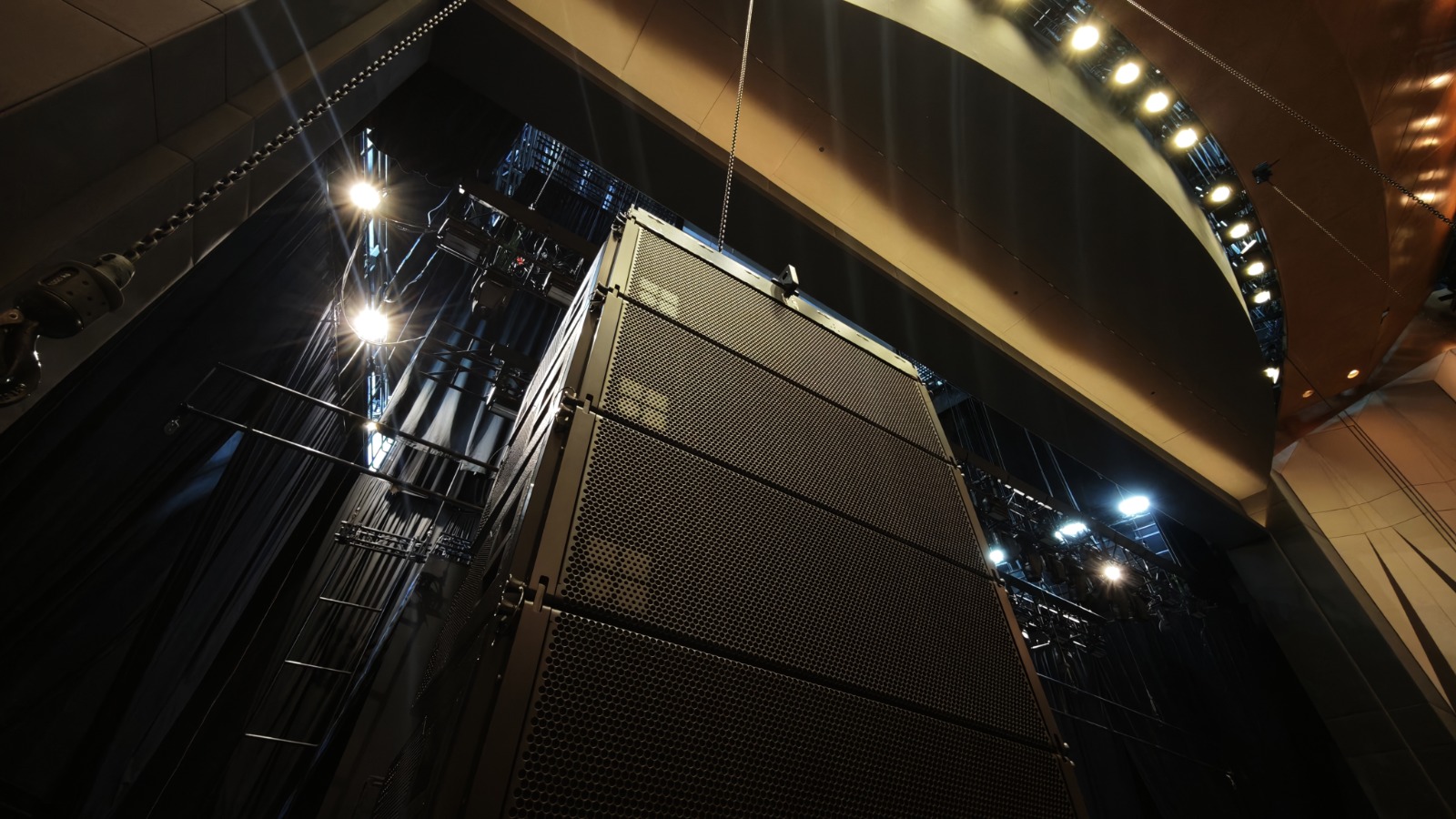
The loudspeaker is the final destination of the digital audio chain and the only component directly experienced by the audience. Its purpose extends beyond producing high volume.
Professional loudspeaker systems are designed to deliver:
- Even sound coverage
- Clear speech intelligibility
- Accurate music reproduction
- Consistent frequency response
- Controlled dispersion
- Reliable performance over extended periods
A properly engineered loudspeaker system ensures that guests seated in the front row experience audio quality similar to those seated at the back of the venue.
Achieving this requires careful planning of:
- Speaker placement
- Coverage angles
- Delay timing
- System tuning
- Audience layout
- Venue acoustics
Even the most advanced speakers cannot compensate for poor system design, reinforcing the importance of viewing the entire audio chain as one integrated ecosystem rather than a collection of individual components.
Why Every Stage Matters
Many people assume that purchasing premium microphones or high-end speakers automatically guarantees exceptional sound quality. In reality, professional audio is only as strong as its weakest link. A poorly configured preamp can introduce unwanted noise. Improper gain staging may cause distortion before processing even begins. Network congestion can interrupt audio transmission, while incorrect DSP settings may reduce speech clarity or create feedback issues. Professional event production is therefore not about using the most expensive equipment—it is about ensuring every stage of the digital audio chain works together seamlessly to preserve signal integrity from microphone to speaker.
Common Mistakes That Break the Digital Audio Chain
Even with professional-grade equipment, audio quality can quickly deteriorate if the digital signal chain is poorly designed or configured. In live event production, many technical failures are not caused by faulty equipment but by avoidable engineering mistakes that compromise signal integrity.
Poor Gain Staging
Gain staging is one of the most fundamental principles in professional audio engineering. Every device in the signal chain—from the microphone preamp to the loudspeaker—must receive an appropriate signal level. If the input gain is set too high, clipping and distortion occur before the signal even reaches the mixer. If it is too low, engineers must compensate by increasing output levels later in the chain, introducing unwanted noise and reducing the overall signal-to-noise ratio. Proper gain staging ensures that every device operates within its optimal dynamic range while preserving maximum audio clarity.
Unnecessary Signal Conversion
Every time audio is converted between analogue and digital formats, there is potential for small losses in quality, increased latency, and additional processing complexity. A professionally engineered system minimises unnecessary conversions by keeping audio in the digital domain for as much of the signal path as possible.
Simpler signal paths generally provide:
- Lower latency
- Better reliability
- Reduced noise
- Easier troubleshooting
Improper Clock Synchronisation
When multiple digital devices operate without a common timing reference, audio packets may arrive at different intervals.
This can result in:
- Clicking noises
- Audio pops
- Dropouts
- Unstable recordings
- Synchronisation errors
Professional engineers always establish a reliable master clock before configuring the rest of the system.
Poor Network Design
Modern digital audio systems depend heavily on network infrastructure. Simply connecting devices to an ordinary office network switch is rarely sufficient for professional productions.
Large events require careful consideration of:
- Managed network switches
- VLAN configuration
- Quality of Service (QoS)
- Redundant network paths
- Traffic prioritisation
Without proper network planning, audio interruptions may occur even when every individual device functions correctly.
Ignoring Redundancy
Live events rarely provide a second chance. A keynote presentation, product launch, or concert cannot simply pause while engineers reconnect equipment.
Professional productions therefore incorporate redundancy throughout the audio chain, including:
- Backup microphones
- Secondary mixing consoles
- Redundant network switches
- Duplicate recording systems
- Emergency playback devices
- Backup power supplies
Redundancy allows productions to continue even if one component unexpectedly fails.
Designing a Reliable Digital Audio System
Building a professional audio system involves far more than connecting equipment together. It requires a systematic engineering approach that considers the entire production workflow.
Key design considerations include:
Understanding Event Requirements
Every event has unique technical demands. A corporate seminar prioritises speech intelligibility, while a concert requires powerful musical reproduction. Hybrid events add further complexity by requiring separate audio feeds for livestream viewers, in-room audiences, recording systems, and virtual participants. The audio system should always be designed around the event objectives rather than simply selecting the largest equipment package.
Planning Signal Flow
Professional engineers create detailed signal flow diagrams before installation begins.
These diagrams identify:
- Audio sources
- Processing stages
- Network routes
- Recording outputs
- Broadcast feeds
- Backup pathways
Careful planning significantly reduces setup time and simplifies troubleshooting during live operation.
Considering Venue Acoustics
No two venues sound alike.
Factors such as:
- Ceiling height
- Wall materials
- Room dimensions
- Audience size
- Stage location
All influence sound behaviour. System tuning, loudspeaker positioning, and DSP configuration must therefore be customised for every venue rather than relying on generic settings.
Testing Before the Audience Arrives
Professional productions dedicate substantial time to testing every stage of the digital audio chain.
Typical pre-event checks include:
- Microphone testing
- Network verification
- DSP configuration
- Loudspeaker alignment
- Backup system testing
- Recording verification
- Livestream monitoring
Identifying potential issues before guests arrive dramatically reduces operational risk.
Real-World Applications of the Digital Audio Chain
Modern digital audio systems support almost every type of professional event.
Corporate Conferences
Large conferences require multiple microphones, presentation audio, simultaneous interpretation, recording systems, livestream outputs, and overflow room distribution. A digital audio chain enables engineers to manage all these requirements from a centralised platform while maintaining consistent sound quality throughout the venue.
Concerts and Live Performances
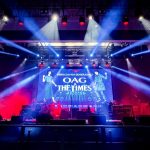
Concert productions involve hundreds of simultaneous audio channels, wireless systems, digital stage boxes, monitor consoles, playback systems, and front-of-house mixing. A fully integrated digital workflow provides the flexibility and reliability required for large-scale performances.
Exhibitions and Trade Shows
Exhibitions often feature multiple presentation stages, product demonstrations, announcement systems, and interactive booths operating simultaneously. Digital routing allows independent audio zones to coexist without interference while simplifying system management across the exhibition floor.
Hybrid Events
Hybrid productions represent one of the most demanding applications for modern audio engineering.
Separate mixes are often required for:
- In-person audiences
- Livestream viewers
- Recording systems
- Virtual meeting platforms
- Simultaneous interpretation channels
Digital signal processing and audio networking make these complex workflows possible while maintaining synchronisation with video systems.
The Future of Digital Audio Engineering
The evolution of professional audio continues well beyond digital mixing consoles. Emerging technologies are transforming how live productions are designed and managed.
These include:
- AI-assisted mixing and system optimisation
- Cloud-based audio monitoring
- Remote system management
- Immersive spatial audio
- Audio-over-IP expansion
- Software-defined DSP platforms
- Automated fault detection
- Predictive system diagnostics
As events become increasingly connected and technology-driven, digital audio systems will continue evolving toward greater automation, scalability, and operational intelligence.
Why Choose DOREMi for Professional Digital Audio Solutions?
Delivering exceptional audio is not simply about supplying premium equipment—it is about engineering an integrated system that performs reliably under live event conditions.
At DOREMi, our technical specialists design complete digital audio ecosystems tailored to each event’s objectives, venue, and production requirements. From microphone selection and digital mixing to DSP configuration, Dante audio networking, loudspeaker optimisation, and hybrid event integration, every stage is planned to ensure maximum clarity, stability, and operational reliability.
Whether supporting corporate conferences, exhibitions, concerts, product launches, government events, or hybrid productions, we focus on preserving signal integrity so every audience experiences consistent, professional-quality sound.
Build a Reliable Digital Audio System for Your Next Event
Whether you’re organising a corporate conference, exhibition, product launch, concert, or hybrid event, every successful production depends on a well-designed digital audio chain.
Consult DOREMi’s technical specialists to develop an integrated audio solution that delivers exceptional clarity, reliable performance, and seamless sound from microphone to speaker—ensuring every message is heard exactly as intended.