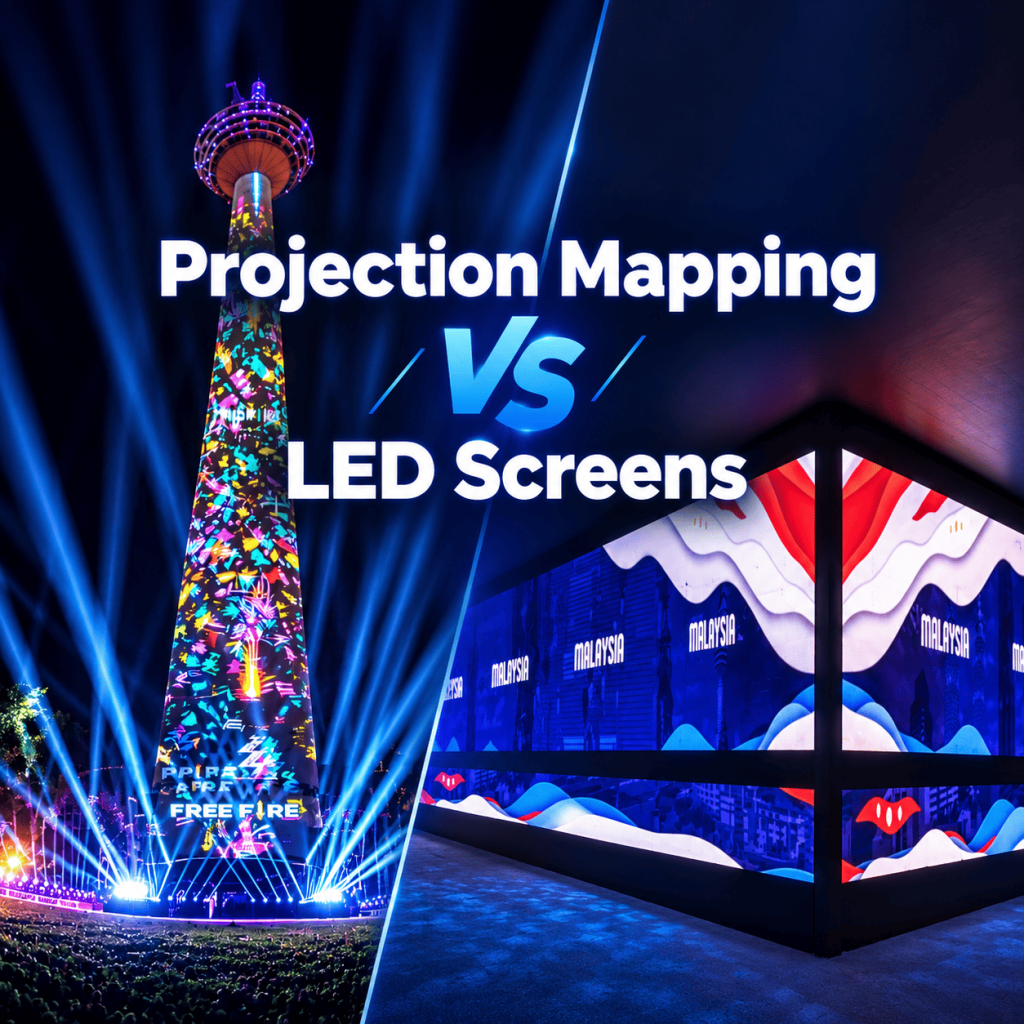
Visual technology plays an important role in how audiences experience an event. From corporate product launches and conferences to concerts and gala dinners, the right visual setup can communicate a message, highlight a brand and create memorable moments.
However, when planning an event, one common question is whether to choose projection mapping or LED screens. Both technologies can deliver impressive visuals, but they work differently and serve different purposes.
Projection mapping services allow organisers to transform physical surfaces into dynamic visual displays, while LED screen rental provides bright, high-visibility displays for presentations, videos, branding and live content.
Understanding the differences helps event organisers select a solution that suits their venue, creative objectives, audience and budget. Rather than choosing the technology that looks most impressive on its own, the goal is to determine which approach will deliver the best experience for the event.
What Is Projection Mapping?
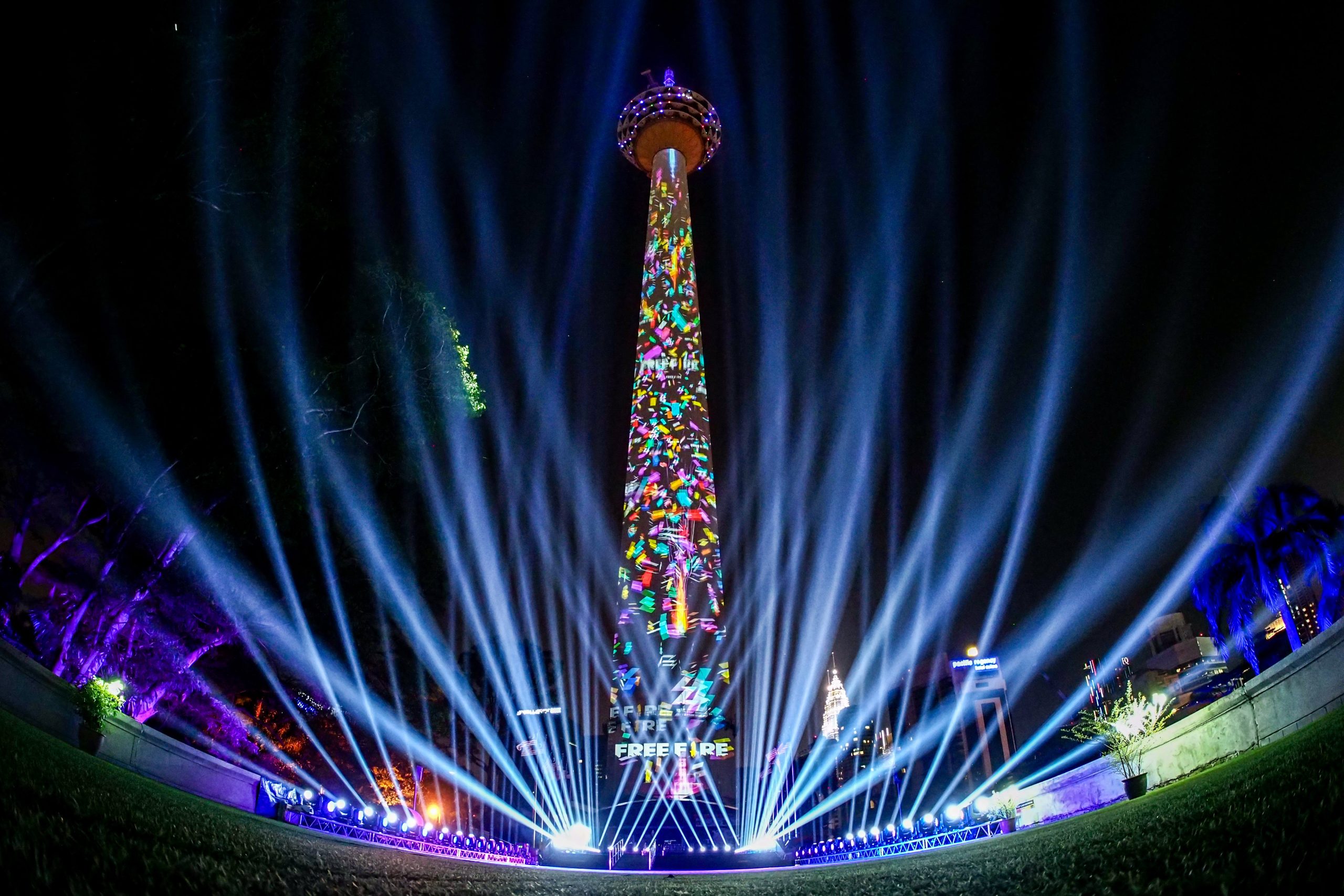
 Projection mapping is a visual technique that uses specialised projectors and software to display images, videos and animations across physical surfaces. Unlike conventional projection onto a flat screen, projection mapping aligns digital content with the shape, dimensions and features of a specific surface.
This allows walls, buildings, sculptures, product structures and custom stage designs to become part of the visual experience.
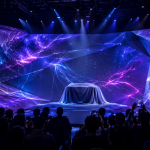
For example, a product launch could use projection mapping to make a physical display appear to change colour, reveal different textures or transform through a sequence of animations. At a gala dinner, a stage structure could appear to open, move or change appearance through carefully designed visual content.
The effect comes from coordinating the projected content with the physical surface. The content must be designed and aligned so that the visuals fit the target structure accurately.
Professional projection mapping services therefore involve more than supplying projectors. Depending on the project, the process may include assessing the surface, developing visual content, planning projector positions, mapping the geometry and calibrating the system before the event.
Projection mapping is particularly useful when the objective is to create a distinctive visual moment rather than simply display information on a conventional screen.
At DOREMi, projection mapping can be applied to suitable physical structures and surfaces to create visual experiences for events, product launches and brand presentations.
What Is LED Screen ?
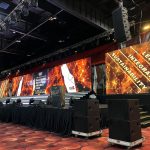
 LED screen involves using LED display panels assembled into a screen or video wall for a temporary event. The panels produce their own light, allowing them to display bright images, videos, presentations and other visual content.
Unlike projection mapping, which places visuals onto an existing physical surface, an LED screen is itself the display surface.
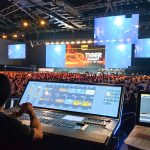
LED screens are widely used for corporate conferences, concerts, exhibitions, product launches, award ceremonies and other events that require clear visual communication.
A corporate conference may use an LED screen to display presentation slides, company branding and live camera feeds. A concert may use a large LED wall to show artist visuals, performance footage and animated backgrounds. At an exhibition, LED displays can help brands present products and promotional content.
One of the main advantages of LED screen rental is visibility. Because LED panels produce their own light, they generally maintain stronger image visibility than projection in environments with significant ambient lighting.
The screens can also be configured in different sizes to suit the stage, venue and audience. However, screen dimensions, pixel pitch, installation method and content resolution still need to be considered when planning the setup.
For event organisers, LED screen rental offers a practical way to deliver consistent visual content without purchasing and maintaining permanent display equipment.
Projection Mapping vs LED Screens: What Is the Difference?
The main difference lies in how each technology creates the visual experience.
Projection mapping uses light to transform a physical surface through carefully aligned digital content. LED screens display content directly from illuminated panels.
This distinction affects their creative applications, visibility, installation requirements and overall suitability for different events.
1. Visual Impact and Creative Freedom
Projection mapping offers considerable creative freedom because the visuals can follow the contours and features of a physical structure.
Instead of placing a conventional rectangular screen behind a presenter, organisers can use a building facade, product structure or specially designed stage surface as part of the visual storytelling.
For example, a product launch could feature a mapped physical structure that appears to change appearance before the product is revealed. The surface becomes part of the presentation rather than simply serving as a background.
This is where projection mapping services can provide a distinctive advantage. They allow event organisers to develop visual sequences around the physical environment and create effects that would be difficult to reproduce with a conventional LED screen alone.
LED screens, however, offer their own creative flexibility. They can display animated graphics, high-resolution videos, live footage and branded content. Multiple screens can also be incorporated into a stage design to create a larger visual backdrop.
The difference is that LED content remains within the display area, while projection mapping can make the target surface itself appear to transform.
Which is better? Choose projection mapping when transforming a physical structure is central to the creative concept. Choose LED screen rental when you need a flexible, high-impact display for a wide range of content.
2. Brightness and Visibility
Lighting conditions are among the most important factors when comparing the two technologies.
LED screens produce their own light, which helps them remain visible in venues with ambient lighting. This makes LED screen rental a practical choice for conferences, exhibitions, corporate events and other programmes where the room cannot be kept dark.
Projection mapping depends on projected light reflecting from a surface. Ambient light can reduce contrast and make the visuals appear less vivid. The surface colour, texture and condition can also influence the final result.
This does not mean projection mapping always requires complete darkness. Rather, the lighting environment must be considered carefully, and the projection equipment must be suitable for the surface and viewing conditions.
For an outdoor projection mapping show, darkness and control over competing light sources are particularly important. A night-time building projection may be effective, while the same projection during bright daylight could be difficult to see clearly.
For an indoor product launch, the decision depends on whether the venue lighting can be managed and whether the creative concept benefits from mapping a physical structure.
Which is better? LED screen rental is generally the more dependable choice when strong visibility is essential in bright environments. Projection mapping can be highly effective when lighting conditions can be planned around the intended visual effect.
3. Installation and Technical Planning
Both technologies require technical preparation, but the work involved differs.
For LED screen rental, the production team must determine the appropriate screen dimensions, pixel pitch, mounting or support method, signal processing and content format. Installation must also account for the stage layout, power requirements, cable management and viewing angles.
Projection mapping involves additional considerations relating to the target surface. The production team needs to assess the surface geometry, projector positions, throw distance, lens requirements and possible obstructions.
The visual content must be mapped to the surface so that images and animations align with its physical features. Depending on the complexity of the project, this may require custom content creation, software configuration, calibration and on-site testing.
Neither technology should be treated as a simple last-minute addition. Both require sufficient preparation time, particularly when they are central to the event programme.
However, projection mapping generally involves more surface-specific preparation, especially when the target is an irregular structure or a large architectural feature.
Which is better? LED screens may be more straightforward when the requirement is a conventional display. Projection mapping is worth the additional planning when the physical surface is an essential part of the creative concept.
4. Cost and Budget Considerations
There is no single price that applies to all projection mapping or LED screen rental projects. Costs depend on the scale and complexity of the setup.
For LED screen rental, pricing can be influenced by screen size, pixel pitch, rental duration, installation requirements, transport and the technical crew required to operate the display.
A larger screen or a display with finer pixel pitch may cost more, while complex stage structures and additional processing requirements can increase the overall production budget.
For projection mapping services, costs may include projector specifications, the number of projectors required, mapping software, custom content creation, calibration and technical operation.
Mapping an existing simple surface may involve a different level of preparation from transforming a complex structure with multiple angles and detailed visual sequences.
The content itself also matters. A projection mapping show built around custom animation may require more design and production time than a straightforward display of prepared video content.
When comparing quotations, organisers should consider the complete production scope rather than comparing the equipment rental price alone. Installation, content preparation, testing and technical operation may all affect the final cost.
Which is better? LED screen rental may be more practical for events that need conventional visual content throughout the programme. Projection mapping may justify the additional investment when the event depends on a distinctive, surface-based visual experience.
The best decision is the one that achieves the intended result within the available budget.
Which Technology Is Better for Different Types of Events?
 The ideal choice depends on what the audience needs to see and what the organiser wants the visuals to achieve.
Corporate Conferences and Seminars
Corporate conferences usually require clear communication. Presentations, speaker slides, company videos, sponsor logos and live camera feeds must remain visible throughout the programme.
For these requirements, LED screen rental is often the more practical choice. The screen provides a consistent display area for information and can be integrated with the event’s audiovisual systems.
Projection mapping may be useful when a conference includes a special opening segment, a themed stage design or a visual transformation intended to introduce the event.
For most conferences, however, the primary display needs are usually better served by an LED screen.
Product Launches
Product launches are an excellent example of where both technologies can be effective.
LED screens can display product videos, campaign visuals, branding and presentations. They also allow the production team to switch between different content throughout the programme.
Projection mapping can add another layer of storytelling by transforming a physical product display or surrounding stage structure. It can help build anticipation before a reveal or make a physical object appear to change as part of a coordinated visual sequence.
For a launch where the reveal is the main attraction, projection mapping services may provide a more distinctive creative approach.
For a launch that depends on clear product information, video playback and consistent branding throughout the event, LED screen rental may be the stronger foundation.
In some cases, combining both technologies can deliver the best result.
Concerts and Live Performances
Concerts depend on a combination of visual impact, sound, lighting and timing.
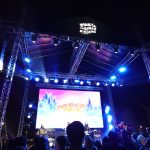
LED screens are commonly used to display artist visuals, live camera feeds and animated backgrounds. Their brightness makes them suitable for many live performance environments, including stages with strong lighting effects.
Projection mapping can be useful when the production includes a specially designed physical structure that forms part of the visual performance. It can transform stage scenery and create effects that follow the contours of the set.
However, projection mapping requires careful consideration of ambient light, moving performers and other elements that could affect the projected image.
For many concerts, LED screen rental is the practical choice for continuous visual content, while projection mapping can provide additional creative value in selected segments.
Gala Dinners and Award Ceremonies
Gala dinners often require a mixture of formal presentations, entertainment, award announcements, sponsor visibility and special performance moments.
LED screens are useful for displaying award categories, recipient names, corporate videos, event branding and live footage. They provide a clear visual reference throughout the programme.
Projection mapping can create a dramatic opening sequence or transform suitable stage scenery to match the event theme.
The technologies serve different roles: LED screens support information and programme content, while projection mapping can add a more immersive visual moment.
For organisers, the choice should reflect how much of the programme requires continuous display content versus a specially designed visual experience.
Exhibitions and Brand Activations
Exhibitions and brand activations are designed to attract attention and communicate information in environments where visitors may be moving between multiple displays.
LED screen rental can help brands present promotional videos, product demonstrations and campaign visuals. Screen sizes can be adapted to the available space, subject to the technical and structural requirements of the installation.
Projection mapping may be suitable when a brand wants to transform a physical product, display structure or installation into part of its campaign storytelling.
For example, a mapped object could appear to change material or reveal different product features through animation.
The decision depends on the intended interaction, venue lighting and available installation space. If the priority is displaying information clearly, LED screens may be more suitable. If the physical object itself is central to the experience, projection mapping may offer greater creative freedom.
Can Projection Mapping and LED Screens Be Used Together?

Yes. Projection mapping and LED screens do not have to be competing options.
Combining them can be effective when each technology has a clear role within the event.
For example, an LED screen can display presentations, branding and live video throughout a corporate event, while projection mapping transforms a physical stage structure during the opening show or product reveal.
At an awards ceremony, LED screens can handle award announcements and sponsor content, while projection mapping creates a distinctive visual sequence for the opening or a major programme transition.
The key is to ensure that the two technologies complement one another. Their content, brightness, timing and visual design need to be coordinated so that the overall stage does not appear cluttered or confusing.
Using both technologies may also increase the production budget and technical requirements. Organisers should therefore identify the moments where projection mapping adds meaningful value rather than including it simply because it is available.
When planned carefully, a combined setup can balance practical communication with creative storytelling.
How to Choose the Right Solution for Your Event
Before deciding between projection mapping services and LED screen rental, consider these five factors.
- Define your main objective. If you need to display presentations, videos, logos and live content, LED screens are often the practical choice. If you want to transform a physical surface and create a distinctive visual sequence, projection mapping may be more suitable.
- Assess the venue. Consider the available space, surface conditions, ambient light, projector positioning and audience sightlines. A venue that works well for an LED screen may not automatically be suitable for projection mapping.
- Understand your content. Conventional rectangular video content may be easier to display on an LED screen. Projection mapping requires content designed or adapted to fit the geometry of the target surface.
- Set a realistic budget. Consider equipment, content creation, installation, technical crew, testing and operation. Request a quotation based on your actual requirements rather than comparing only the headline rental prices.
- Plan the technical setup early. Early consultation allows the production team to assess feasibility, recommend suitable equipment and identify constraints before the event schedule becomes difficult to change.
If you are unsure which option suits your event, a technical discussion with an experienced production team can help you compare the practical requirements and creative possibilities.
How DOREMi Supports Projection Mapping and LED Screen Requirements
DOREMi Services & Rental Sdn Bhd provides event production and event technology solutions for corporate events, conferences, exhibitions, product launches and live productions across Malaysia.
Our services include LED screens, audiovisual systems, sound, lighting, staging and other technical equipment needed to support different event formats.
For organisers considering projection mapping services, the process begins with understanding the creative concept and assessing the physical surface. The venue, viewing conditions, content requirements and technical setup all influence whether projection mapping is suitable.
For events that require LED screen rental, screen size, viewing distance, pixel pitch, content format and installation requirements help determine the appropriate configuration.
The goal is to recommend a solution that supports the event’s objectives rather than assuming that one technology is always better than the other.
Depending on the event, a conventional LED display may be sufficient. In other cases, projection mapping may provide the visual transformation the organiser is looking for. Some productions may benefit from a combination of both.
By considering these requirements during the planning stage, organisers can make more informed decisions about their event technology and allocate their production budget more effectively.
Frequently Asked Questions
Is projection mapping better than LED screens?
Neither technology is universally better. Projection mapping is suitable for transforming physical surfaces and creating visual storytelling experiences, while LED screens are often better for bright, clear presentations, branding and live content. The right choice depends on the event, venue, creative concept and budget.
Is LED screen rental suitable for corporate events?
Yes. LED screen rental is commonly suitable for corporate conferences, seminars, product launches and award ceremonies. It can display presentations, videos, company branding, live camera feeds and other programme content.
What are projection mapping services used for?
Projection mapping services are used to display visuals that align with the shape of a physical surface, such as a building facade, sculpture, product structure or stage scenery. Applications include product launches, opening shows, exhibitions and special event experiences.
Is projection mapping more expensive than LED screen rental?
Costs depend on the scale and complexity of the project. Projection mapping may require custom content creation, specialised projectors and surface calibration. LED screen rental costs depend on screen size, pixel pitch, installation and technical requirements. A project-specific quotation is the best way to compare the options.
Can projection mapping be used outdoors?
Yes, projection mapping can be used outdoors, particularly for night-time events on suitable physical structures. Ambient light, surface conditions, weather protection, projector placement and site access must be considered during planning.
Can I use projection mapping and LED screens at the same event?
Yes. LED screens can display presentations, videos and branding, while projection mapping can transform physical structures for selected visual moments. Combining them works best when both systems have clearly defined roles and their content is coordinated.
How early should I plan projection mapping or LED screen rental?
It is best to discuss your requirements during the early event planning stage. Projection mapping may require additional time for surface assessment and custom content preparation, while LED screen rental also requires planning for screen configuration, installation, content testing and technical operation.
Further Reading
For more information about choosing visual technology for your event, explore these guides:
- LED Displays vs Projection Mapping: Which Works Best for Events? – LED Nation USA: Compare the strengths and practical considerations of LED displays and projection mapping for different event environments.
- LED Wall vs Projection Mapping: Which Is Right for Your Event? – IH Global: Explore how venue conditions, visual objectives and production requirements influence the choice between LED walls and projection mapping.
Planning Your Next Event Production?
If you are planning a corporate conference, product launch, exhibition, concert or other live event, choosing the right visual technology early can help ensure your production setup meets your creative objectives, venue conditions and budget.
At DOREMi Services & Rental Sdn Bhd, we provide projection mapping services, LED screen rental and integrated event production solutions across Malaysia. Our services include LED screens, sound systems, lighting, staging, truss and audiovisual equipment, with technical requirements tailored to each project.
Speak with DOREMi’s event technology specialists to explore whether projection mapping, LED screens or a combination of both is right for your event, or contact our team to discuss your upcoming event.
DOREMi – Event Technology Made Easy.