Key Takeaways
- An immersive event experience brings together storytelling, space, sound, visuals, technology and interaction to make attendees feel more involved throughout the event.
- Strong event experience design starts with a clear business goal, audience needs and a planned journey from arrival through to the event’s key moments and departure.
- Lighting, audio, projection, interactive technology and other production elements should support the same creative direction rather than operate as separate features.
- Immersive production can be applied to product launches, brand activations, conferences, award nights and other corporate events, depending on the intended experience.
- Effective experiential event production coordinates creative, technical and audience-facing elements around one idea so the event feels cohesive, purposeful and memorable.
A successful event should do more than run smoothly. It should give people something to experience, respond to and remember. That is where an immersive event experience makes a difference.
By combining storytelling, space, visuals, sound, technology and audience interaction, brands can create events that feel more engaging and purposeful. Instead of treating each production element separately, immersive events bring them together around a clear audience journey.
This guide explains what immersive events are, why they matter, how they are designed and what marketers should consider when planning one.
What Is an Immersive Event Experience?
An immersive event experience is designed to make attendees feel involved in the event rather than simply watching it unfold. It brings together storytelling, space, sound, visuals, technology and interaction to create a more engaging audience journey.
Immersion does not always require advanced technology such as AR or VR. It can also come from the way lighting changes the mood, how sound supports a key moment, how a space is designed, or how attendees are encouraged to participate.
The important part is how these elements work together. Instead of treating staging, visuals, audio and interaction as separate components, effective event experience design connects them around a clear idea or message. This helps create an experience that feels more cohesive, purposeful and memorable from the audience’s point of view.
Why Immersive Corporate Events Create Stronger Audience Experiences
An immersive corporate event gives attendees more ways to connect with what is happening around them. Instead of relying only on presentations or stage content, it uses interaction, environment and storytelling to create a more active and engaging experience.
Turn Attendees From Spectators Into Participants
Interactive elements give attendees a role in the event rather than leaving them to simply watch. This could involve responding to digital content, exploring an activation or taking part in a shared experience that keeps them more involved throughout the programme.
Bring the Brand Story Into the Physical Experience
Immersion allows the brand message to extend beyond logos and presentation slides. Lighting, visuals, sound, staging and the surrounding environment can all help express the event theme and reinforce what the brand wants attendees to understand or feel.
Create Moments Audiences Can Remember and Share
Distinctive moments such as interactive installations, dramatic reveals or visually strong stage sequences can make an event easier to remember. They can also create natural opportunities for photography, video and social content that extend the experience beyond the venue.
How to Design an Immersive Event Experience
A strong immersive event starts with a clear idea of what the audience should experience. Technology, staging and effects should support that goal, not lead it. The process should move from strategy to audience journey, sensory design, interaction and finally technical execution.
Start With the Business Goal and Audience
Begin by defining what the event needs to achieve and who it is for. Consider:
- What should attendees understand?
- How should they feel?
- What action should they take?
- What should they remember afterwards?
These answers help shape the creative direction and keep the experience focused on a clear purpose.
Map the Audience Journey
Think about the event from the attendee’s point of view, from arrival to departure.
Arrival → Exploration → Main Programme → Key Moment → Departure
Good event experience design considers how each stage connects. The aim is to create a consistent journey rather than concentrating all the impact on one moment.
Build the Story Through Lighting, Sound and Visuals
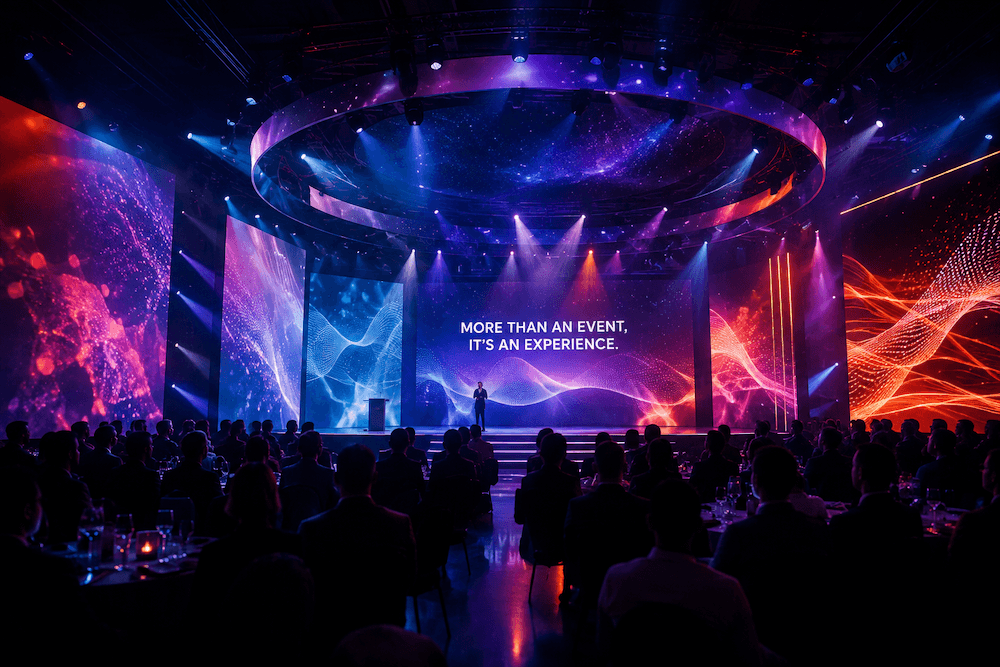
Lighting, audio and visual content can shape how the event feels and where attention is directed. Lighting can change the atmosphere, sound can add energy or emotion, while LED displays and projection can transform the surrounding space.
When these elements follow the same creative direction, they feel like part of one experience rather than separate production features.
Add Interaction Where It Strengthens the Experience
Interaction can help attendees feel more involved. This may include:
- Interactive displays
- Augmented reality
- Digital activations
- Product demonstrations
- Interactive LED surfaces
- Launching gimmicks
The technology should serve a clear purpose, such as explaining a product, encouraging participation or supporting the brand story.
Use Sensory Storytelling to Build Key Moments
Sensory storytelling combines elements such as sound, lighting, visuals, movement and physical effects to guide emotion and build anticipation.
These elements can be used to strengthen moments such as a product reveal, opening sequence, performance, award presentation or major announcement.
Integrate and Rehearse the Production
Once the concept is confirmed, the production elements need to work together in real time. Lighting cues, sound, visual content, staging and interactive technology should be coordinated and tested before the event.
Rehearsals help ensure important transitions and key moments happen smoothly and at the intended time.
Where Can Immersive Event Production Be Used?
Immersive event production can be adapted to different business events depending on the audience, objective and type of experience a brand wants to create. It is especially useful when there is a need to make key moments more engaging, interactive or visually distinctive.
Product Launches
Product launches can use projection, interactive demonstrations, visual storytelling and launching gimmicks to build anticipation around a reveal. These elements can also help explain product features in a more engaging way while giving the launch a stronger sense of occasion.
Brand Activations
Brand activations can use immersive elements to encourage direct participation. Interactive displays, digital touchpoints and themed environments can help attendees explore the brand in a more hands-on way instead of only receiving promotional messages.
Conferences, Award Nights and Corporate Events
An immersive corporate event does not always need large-scale spectacle. Thoughtful stage design, lighting, audio, visual content and programme transitions can make conferences, award nights and other corporate events feel more cohesive, polished and engaging.
Why Experiential Event Production Needs to Be Planned as One Experience
Immersive events often involve many moving parts, including creative direction, staging, lighting, sound, LED displays, projection, interactive technology, content and live technical execution.
If these elements are planned separately, the event can feel fragmented. A strong experiential event production Malaysia approach brings them together around one audience journey and one creative idea.
This helps ensure that the visuals support the story, the sound matches the mood, the technology adds purpose and the key moments feel connected rather than isolated. It also makes coordination easier across the production team.
For marketers, the goal is not simply to add more equipment. It is to create one cohesive experience where every production element contributes to the same message, atmosphere and audience outcome.
Creating Immersive Event Experiences: Questions to Ask
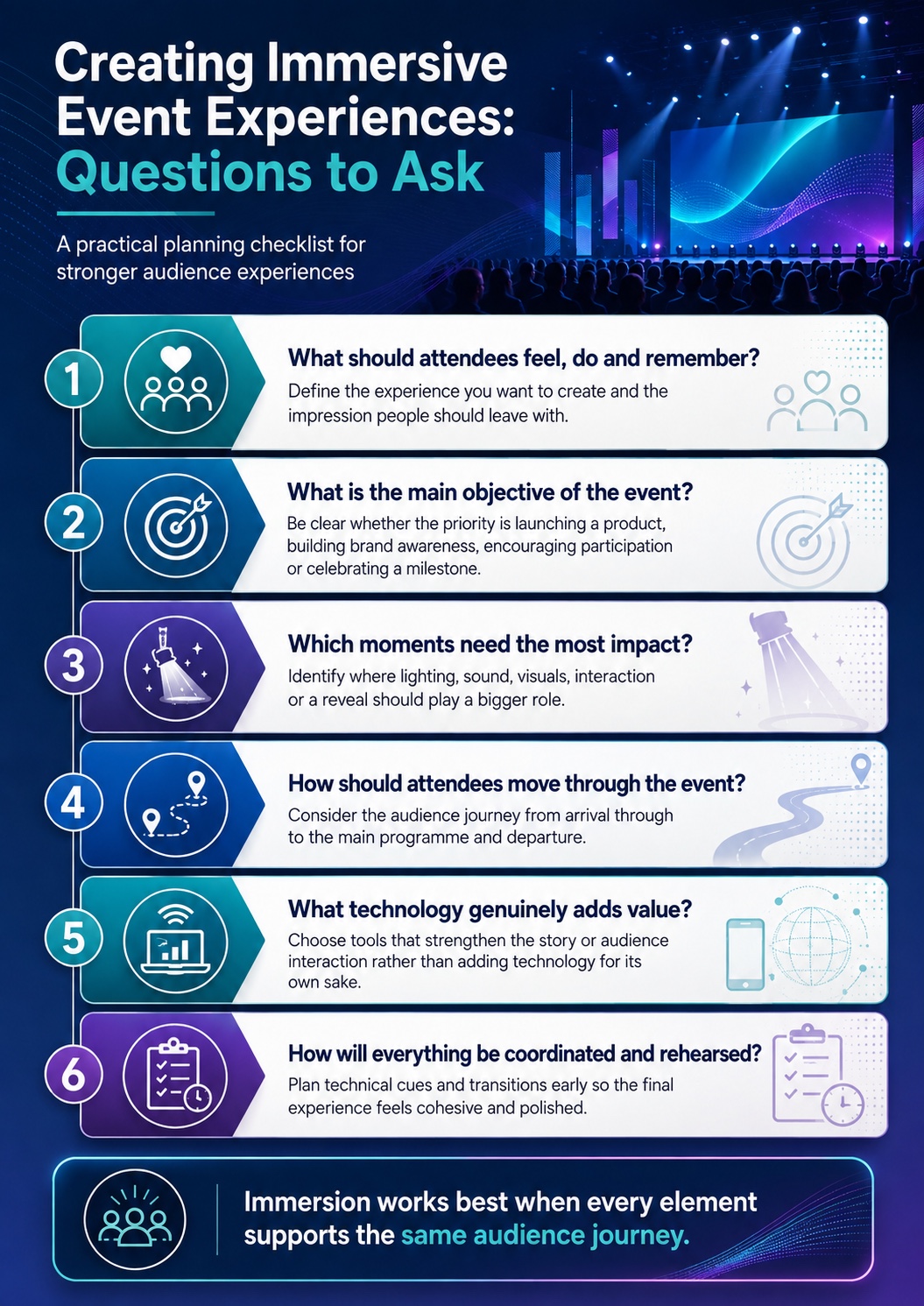
Before planning an immersive event, it helps to ask a few practical questions that keep the experience focused on the audience and the business objective:
- What should attendees feel, do and remember? This helps define the experience you want to create.
- What is the main objective of the event? Be clear whether the priority is launching a product, building brand awareness, encouraging participation or celebrating a milestone.
- Which moments need the most impact? Identify where lighting, sound, visuals, interaction or a reveal should play a bigger role.
- How should attendees move through the event? Consider the experience from arrival through to the main programme and departure.
- What technology genuinely adds value? Choose tools that strengthen the story or audience interaction rather than adding technology for its own sake.
- How will everything be coordinated and rehearsed? Planning technical cues and transitions early helps the final experience feel cohesive and polished.
FAQ
Can immersive event experiences work for smaller corporate events?
Yes. Immersion is not limited to large-scale productions. Smaller events can create engaging experiences through thoughtful use of the space, personalised interactions, focused visual content or carefully designed audience touchpoints. The scale of the experience can be adjusted to suit the event.
How to measure the success of an immersive event?
Success can be measured against the objectives set for the event. Depending on the campaign, this may include attendance, participation rates, audience feedback, social engagement, leads generated or other agreed business outcomes. The most useful measures should reflect what the event was designed to achieve.
Can an immersive event be designed for both in-person and online audiences?
Yes. Hybrid events can be designed so remote attendees experience more than a simple livestream. Digital content, interactive features and dedicated online touchpoints can help involve virtual audiences while the physical event delivers its own on-site experience.
Can immersive event concepts be adapted for different audience sizes?
Yes. The same creative idea can often be scaled depending on the number of attendees and the event format. A smaller audience may allow for more personalised interaction, while larger events may rely on visual, spatial or digital elements that can reach more people at once.
How can brands measure the value of an immersive event after it ends?
Look beyond what happened during the event itself. Brands can assess post-event engagement, content generated from the event, attendee feedback, enquiries, leads or other follow-up activity. Comparing these results with the original campaign objectives provides a clearer picture of the event’s overall value.
Conclusion: Create an Event People Experience, Not Just Attend
A strong immersive event experience is not about adding more technology. It comes from designing every part of the event around a clear purpose and audience journey.
When storytelling, space, lighting, sound, visuals, interaction and production work together, the event feels more connected and memorable. For brands planning experiential event production in Malaysia, the focus should be on creating an experience where every element supports the same idea.
With the right planning, execution and event production partner such as DOREMi, an event can become more than a programme. It can become an experience people genuinely remember.