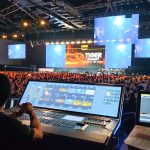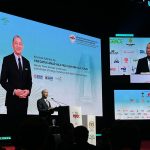
In live event production, the audience rarely thinks about what happens behind the stage.
They hear a presenter speaking clearly. A singer’s vocal reaches the back of the venue without distortion. A band sounds balanced. Video, lighting and audio cues happen at exactly the right moment.
What they do not see are the hundreds of metres of cable, stage boxes, digital consoles, amplifiers, processors and network connections working behind the scenes to make that experience possible.
And when an audio signal has to travel a long distance, one technical question becomes especially important:
How do you move a large number of audio channels across a venue without allowing noise, interference and signal degradation to compromise the sound?
This is where digital snakes come in.
Digital stage snakes and networked audio systems have transformed how professional live sound is designed. Instead of running individual analogue audio lines from microphones and instruments all the way back to front of house, a digital snake can convert and transport multiple channels as digital data between the stage and mixing system.
For large conferences, concerts, festivals, corporate events and outdoor productions, this can dramatically simplify the signal path while providing greater flexibility and control.
The technology is part of a broader shift towards digital audio networking, with systems built around technologies and standards such as Dante, AES67, MADI and manufacturer-specific digital audio networks.
The Audio Engineering Society currently recognises AES3, AES10 (MADI) and AES67 among its established audio standards, with AES67-2023 specifically addressing high-performance streaming audio-over-IP interoperability.
But what exactly makes a digital snake different from an analogue snake—and why does it matter when your stage is hundreds of metres away?
What Is an Audio Snake?
Before understanding digital snakes, it helps to understand the traditional analogue snake.
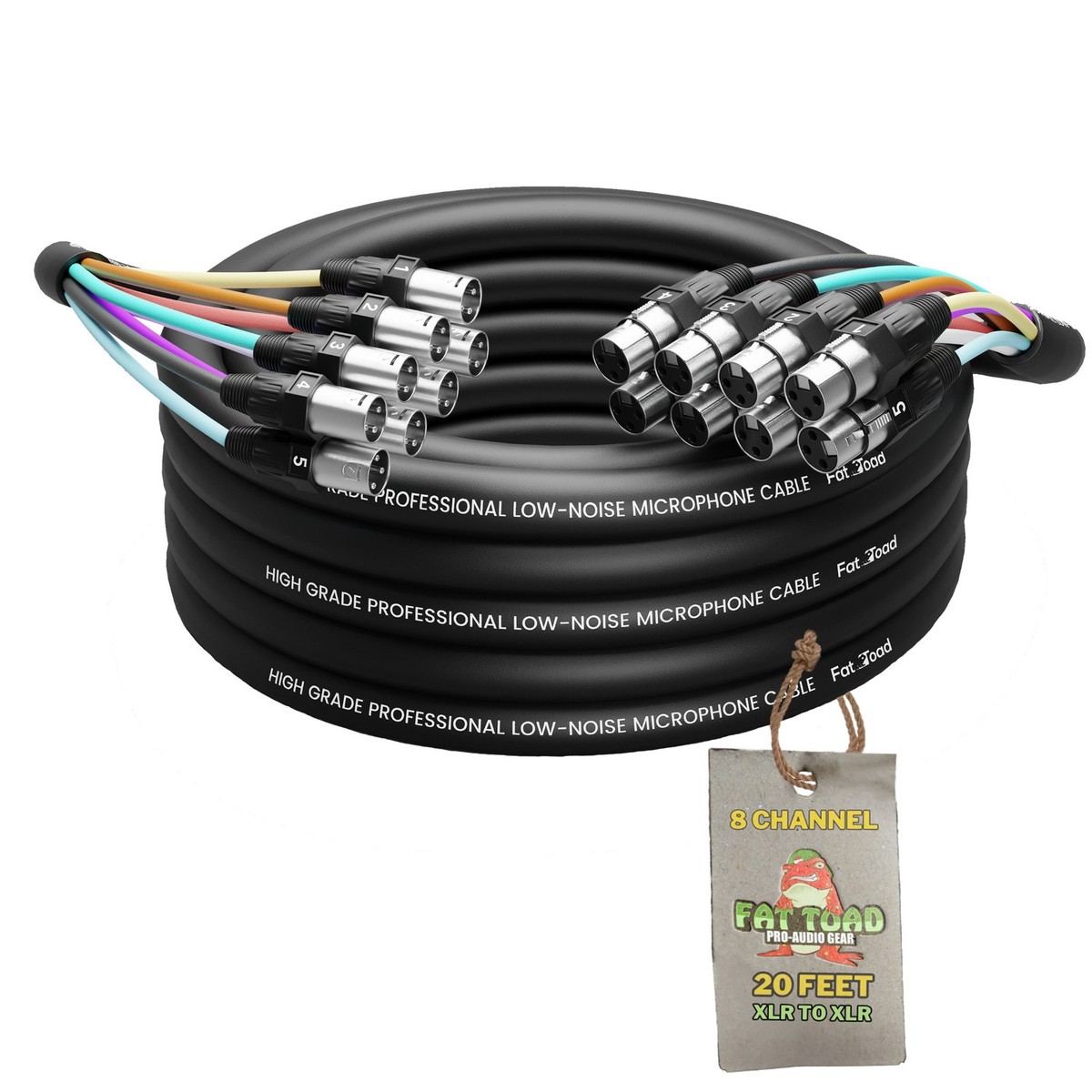
An analogue audio snake is essentially a multi-channel cable system that carries numerous audio signals between locations.
For example, imagine a concert stage with:
- 24 microphones
- 8 instrument inputs
- 4 monitor feeds
- Several spare channels
Instead of running dozens of individual cables across the venue, an analogue snake bundles multiple audio circuits into one larger cable.
One end connects to a stage box near the performers.
The other end connects to the mixing console or another audio position.
It is a practical solution and has been a fundamental part of live sound for decades.
The problem appears when the distance becomes longer and the environment becomes more electrically complicated.
That is where digital transmission becomes increasingly attractive.
What Makes a Digital Snake Different?
A digital snake typically places analogue-to-digital conversion close to the stage.
Microphone and instrument signals enter a digital stage box.
The stage box converts those analogue signals into digital audio.
The digital information is then transmitted to the mixing console or another device over an appropriate digital transport system.
At the receiving end, the digital signal can be processed, mixed, routed and distributed without having to repeatedly travel as an analogue electrical signal.
A simplified signal path looks like this:
Microphone → Digital Stage Box → Digital Network/Transport → Mixing Console → Processing → Amplifier → Loudspeaker
Compare that with a conventional analogue arrangement:
Microphone → Analogue Snake → Mixing Console → Analogue/Digital Processing → Amplifier → Loudspeaker
The digital approach can significantly reduce the amount of long-distance analogue cabling required.
And that matters because analogue audio signals are electrical signals that can be affected by the environment through which the cable travels.
Why Does Long-Distance Analogue Audio Pick Up Noise?
The phrase “analog noise” can refer to several different problems, so it is important not to oversimplify the issue.
Long analogue cable runs do not automatically mean noisy audio.
A properly designed balanced analogue system can perform extremely well over substantial distances.
However, longer and more complex analogue signal paths can create more opportunities for unwanted interference.
Potential sources include:
- Electromagnetic interference (EMI)
- Radio-frequency interference (RFI)
- Poor shielding
- Ground-potential differences
- Ground loops
- Nearby power cables
- Lighting equipment
- LED display systems
- Motorised equipment
- Poor cable termination
- Damaged connectors
- Incorrect gain structure
This is especially relevant at large events where audio, lighting, video and power systems may all be operating within the same production environment.
For example, an audio cable running alongside a poorly managed power distribution route may be exposed to unwanted electrical interference.
That does not mean the audio system is inherently defective.
It means signal-path design matters.
Balanced Audio Helps—But It Is Not Magic
Professional analogue audio commonly uses balanced connections, particularly XLR connections.
Balanced transmission is designed to reject common-mode interference.
In simplified terms, the audio signal is carried on two conductors with opposite polarity. The receiving device compares them and rejects interference that appears similarly on both conductors.
This is one of the reasons professional balanced audio can perform reliably over long cable runs.
But balanced analogue transmission still depends on good engineering.
Cable quality, shielding, grounding, connector integrity and installation practices all matter.
Even the Audio Engineering Society has standards addressing connector and electromagnetic-compatibility considerations. AES68, for example, specifies an XLR variant intended to improve rejection of RF interference through an enhanced connector-shell connection.
So the correct conclusion isn’t:
“Analogue cables are noisy.”
It is:
“The longer and more complex the analogue signal path becomes, the more important signal integrity and system design become.”
Digital audio networking approaches the problem differently.
Digital Audio Changes What Travels Down the Cable
The biggest conceptual difference is what the cable is carrying.
With analogue audio, the cable carries an electrical representation of the audio waveform.
With digital audio, the audio has been converted into digital data.
That data can then be transported using a digital protocol or network.
This creates several important advantages.
Once the signal has been converted into digital form, normal analogue interference along the subsequent digital transport path does not directly become a new audible version of the original waveform in the same way.
However, digital systems are not immune to technical problems.
Poor network design can still produce:
- Packet loss
- Clocking problems
- Synchronisation issues
- Network congestion
- Configuration errors
- Latency problems
- Connection failures
So digital does not mean “nothing can go wrong.”
It means the system has a different set of engineering considerations.
The Big Advantage: Moving Many Channels as Data
One of the biggest reasons digital snakes have become so useful is channel density.
Imagine a large concert where 64 or more audio channels need to travel from stage to front of house.
An analogue system requires a substantial amount of physical cabling.
A digital system can transport many channels through a digital link, depending on the protocol, sample rate, hardware and network architecture.
For example, Yamaha’s RIVAGE PM documentation states that its HY144-D Dante interface can transfer up to 144 channels at 96 kHz, while transmission over CAT5e or better Ethernet is specified up to 100 metres. Yamaha’s TWINLANe system can use multimode fibre for distances up to 300 metres and single-mode fibre for distances up to 2 km in the documented configurations.
This illustrates why digital audio transport becomes especially valuable when event production moves beyond the scale of a simple stage.
Dante, AES67, MADI and Digital Audio Networks
Not all digital snakes work in exactly the same way.
The phrase digital snake can describe several different technologies.
Dante
Dante, developed by Audinate, is a widely adopted audio-over-IP technology used in professional audio systems.
It allows compatible devices to exchange digital audio over Ethernet-based networks.
This can include:
- Digital consoles
- Stage boxes
- DSP processors
- Amplifiers
- Computers
- Recording systems
- Audio interfaces
Its networking approach can make audio routing highly flexible.
Instead of thinking only in terms of:
Input 1 → Console Channel 1
a networked system can allow audio sources to be routed to multiple destinations according to the system configuration.
AES67
AES67 is different from Dante in that it is an interoperability standard rather than a single manufacturer’s complete product ecosystem.
The Audio Engineering Society describes AES67 as a standard for high-performance streaming audio-over-IP interoperability. The current AES67-2023 documentation covers areas including synchronisation, media clocks, network transport, encoding and streaming, session description and connection management.
This matters because professional productions may contain equipment from multiple manufacturers.
Interoperability can make it easier to integrate different devices into a wider audio infrastructure.
MADI
MADI, or AES10, is another established digital audio transport standard.
It is widely used for high-channel-count digital audio connections and can be implemented over different physical media depending on the equipment.
The AES lists AES10 as the standard associated with MADI.
MADI is particularly useful in applications where a dedicated digital audio link is preferable to a general-purpose audio network.
Why Fibre Matters for Really Long Distances
Copper Ethernet has practical distance limitations.
For example, Yamaha’s documentation specifies up to 100 metres for its Dante interface using CAT5e or better Ethernet cable in the cited RIVAGE configuration.
But what happens when the stage is much further away?
This is where fibre optic transmission becomes extremely valuable.
Fibre sends information using light rather than electrical signals through a glass or plastic optical medium.
Professional audio systems can use fibre to achieve much longer transmission distances than conventional copper Ethernet in appropriate configurations.
The benefits can include:
- Very long transmission distances
- High bandwidth
- Electrical isolation
- Resistance to electromagnetic interference
- Reduced sensitivity to ground-potential differences between locations
That last point is particularly important in complex event environments.
If two areas of a venue have different electrical grounding conditions, copper connections can potentially introduce unwanted ground-related problems.
Optical fibre provides galvanic isolation because there is no conductive electrical path between the endpoints.
This is one reason fibre is so useful for large-scale event production.
Digital Snakes and Ground Loops
A ground loop occurs when equipment interconnected by conductive paths has multiple grounding routes with different electrical potentials.
The resulting current can sometimes manifest as audible hum or buzz in analogue audio systems.
Ground loops are not caused simply by “long cables.”
They are related to grounding and interconnection architecture.
A digital audio system can reduce some of these problems by converting the signal to digital early in the signal chain.
Fibre can go even further by electrically isolating the connected locations.
However, this does not mean every digital system automatically eliminates grounding problems.
Power distribution, equipment grounding and safety practices still need to be professionally designed.
Never treat a digital audio network as a replacement for proper electrical safety.
Digital Snakes Also Simplify Stage Management
Noise reduction is only part of the story.
Digital snakes can dramatically improve workflow.
A traditional analogue stage may require a large number of individual connections.
A digital stage box can consolidate many inputs and outputs into a compact unit positioned close to the stage.
That means:
- Shorter analogue microphone runs
- Less cable clutter
- Faster stage connections
- Cleaner stage layouts
- Easier troubleshooting
- More flexible routing
This can be particularly useful when microphones are spread across a large stage.
Instead of sending every microphone signal across the entire venue as analogue audio, the signals can be converted close to their source.
The digital transport then handles the long-distance journey.
Why This Matters for Corporate Events
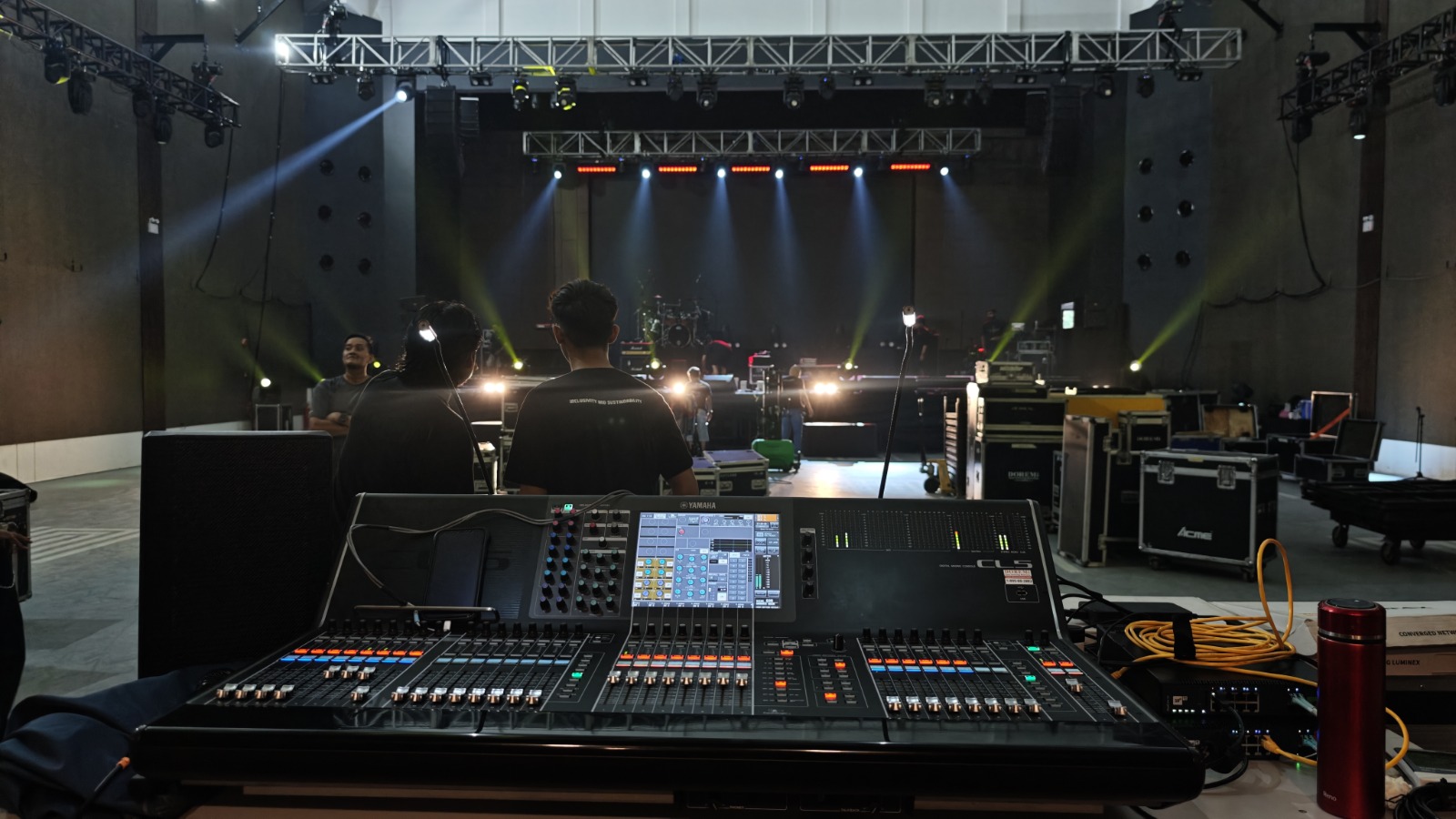
People sometimes associate digital snakes with concerts.
But corporate events can benefit just as much.
Consider a large conference with:
- Main stage
- Multiple presenters
- Panel discussions
- Wireless microphones
- Playback computers
- Video presentation systems
- Overflow rooms
- Livestreaming
- Recording
- Translation or interpretation
- Remote speakers
The audio system becomes much more complex than simply putting microphones into a mixer.
A networked digital audio system can allow audio sources to be distributed to different destinations without requiring a separate analogue cable for every route.
This becomes particularly valuable when the event includes hybrid production.
A speaker’s microphone might need to reach:
- The main PA
- The recording system
- The livestream
- A confidence or monitoring system
- An overflow room
With a properly configured digital network, routing can be handled within the system rather than through a maze of physical analogue splits.
Concerts and Festivals: Where Digital Snakes Really Shine
Large concerts place enormous demands on audio infrastructure.
You may have:
- Lead vocals
- Backing vocals
- Drum microphones
- Guitar microphones
- Bass
- Keyboards
- Playback
- Percussion
- Brass
- Strings
- In-ear monitoring
- Wedges
- Side fills
- Front fills
- Broadcast feeds
- Recording feeds
The channel count can grow quickly.
And the physical distance between stage and front-of-house position may be significant.
Digital stage boxes and networked audio systems allow production teams to keep analogue runs short while sending digital audio over the longer distance.
This is one reason digital audio infrastructure is increasingly associated with large-scale live sound.
DOREMi’s own recent production work illustrates the scale at which modern event audio operates. Its technical breakdown of Music Run 2026 describes a large outdoor audio deployment using d&b audiotechnic KSL Series loudspeakers, SL-SUB cardioid subwoofers, CCL Series loudspeakers, D90 and D40 amplifiers, ArrayCalc system design and R1 V3 monitoring and control.
A production at this scale is not simply about putting speakers on a stage. It requires carefully planned signal distribution, processing, control and monitoring across a large event environment.
Digital Does Not Automatically Mean Better Sound
This is an important point.
A digital snake is not a magic device that makes every microphone sound better.
The final audio quality still depends on:
- Microphone selection
- Microphone placement
- Preamplifier quality
- Gain structure
- Analogue-to-digital conversion
- Sample rate
- Bit depth
- DSP
- Mixing
- Loudspeaker design
- System tuning
- Venue acoustics
- Engineer skill
A poorly designed digital system can still sound terrible.
A well-designed analogue system can sound excellent.
The real advantage of digital snakes is signal management, scalability, routing flexibility and long-distance transport, alongside the potential to reduce certain forms of analogue interference by moving conversion closer to the source.
Latency: The Question Every Live Event Should Ask
When audio is transported digitally, there is some amount of processing and transmission latency.
For most live event systems, this can be extremely small and carefully managed.
But latency becomes important when multiple systems interact.
For example:
Microphone → Digital Stage Box → Network → Console → DSP → Amplifier → Speaker
Every stage can contribute processing time.
This becomes particularly important when:
- Performers use in-ear monitors
- Multiple loudspeaker zones are used
- Video and audio need to remain synchronised
- Several networked devices are connected
- Audio is sent over long distances
AES67-2023 is specifically designed around high-performance audio networking suitable for live sound, with the AES describing low-latency operation compatible with live applications.
A competent system designer therefore considers latency as part of the complete signal path—not simply the network cable.
Synchronisation Is Another Hidden Piece of the Puzzle
Digital audio systems need to agree about timing.
If different devices are not synchronised correctly, problems can occur.
Digital audio networks therefore use clocking and synchronisation mechanisms to keep devices aligned.
AES67 includes recommendations for media clock identification and synchronisation as part of its interoperability framework.
This may sound highly technical, but the practical takeaway is simple:
A large digital audio system needs a reliable timing architecture.
When dozens of devices are exchanging digital audio, accurate synchronisation is essential for stable operation.
What Happens When the Network Fails?
This is one of the most important questions to ask before deploying a digital snake.
With analogue audio, a cable either works or it doesn’t.
With networked digital audio, there can be more variables.
A problem might come from:
- Incorrect IP configuration
- Network switch configuration
- Faulty cable
- Failed network hardware
- Clocking issues
- Packet loss
- Power failure
- Incorrect routing
- Device compatibility
Professional event systems therefore need redundancy and contingency planning where the event’s scale and risk justify it.
Critical productions may use redundant network paths, backup equipment and carefully managed network infrastructure.
The more important the event, the less acceptable a single point of failure becomes.
Don’t Plug Your Audio Network Into Just Any Network
One of the biggest mistakes people can make is treating a professional audio network exactly like an office network.
Yes, both may use Ethernet technology.
But a professional live audio network has specific requirements.
Production teams need to consider:
- Managed network switches
- Bandwidth
- Quality of Service (QoS)
- Multicast behaviour where applicable
- Clocking
- Network topology
- Redundancy
- Cable quality
- Fibre infrastructure
- Device compatibility
- Network security
- Configuration management
AES67 itself builds on established networking technologies and provides recommendations for interoperable high-performance media networking. The AES notes that the required performance is typically achievable on wired local-area networks but is generally not available over the public internet or typical wide-area networks.
In other words:
Professional audio networking is an engineered network—not simply “audio over Wi-Fi.”
A Practical Digital Snake Checklist for Event Planners
If you’re hiring an audio production company for a large event, you don’t need to become a network engineer.
But asking the right questions can help you understand whether the system is appropriate.
Ask about channel count
How many inputs and outputs are required?
Ask about distance
How far is the stage from the mixing position?
Ask about transport
Is the system using copper Ethernet, fibre, MADI, a proprietary digital network or another transport?
Ask about redundancy
What happens if the primary digital link fails?
Ask about latency
What is the expected end-to-end latency?
Ask about clocking
How are the digital devices synchronised?
Ask about network infrastructure
Are dedicated or properly configured network switches being used?
Ask about analogue conversion
Where are the signals converted from analogue to digital?
Ask about monitoring
Can the technical team identify a failed link or device quickly?
Ask about backup plans
Is there a contingency system for critical audio channels?
These questions can reveal much more about a production’s technical readiness than simply asking how many speakers are being provided.
Digital Snakes Are About More Than Eliminating Noise
The title of this article focuses on eliminating analogue noise, but that is only one part of the story.
The bigger transformation is how audio is transported and managed.
Digital audio networks allow sound to become data.
And once audio becomes data, production teams can route, duplicate, monitor and distribute it in ways that would be considerably more cumbersome using traditional analogue infrastructure.
A single microphone can potentially become a source for multiple destinations.
A stage box can sit exactly where the inputs are needed.
A front-of-house console can be positioned far away without requiring every microphone signal to remain analogue for the entire journey.
A recording system can receive channels directly from the digital infrastructure.
A broadcast feed can be created without repeatedly splitting analogue signals.
This is the real power of the digital snake.
Where DOREMi Fits Into the Digital Audio Picture
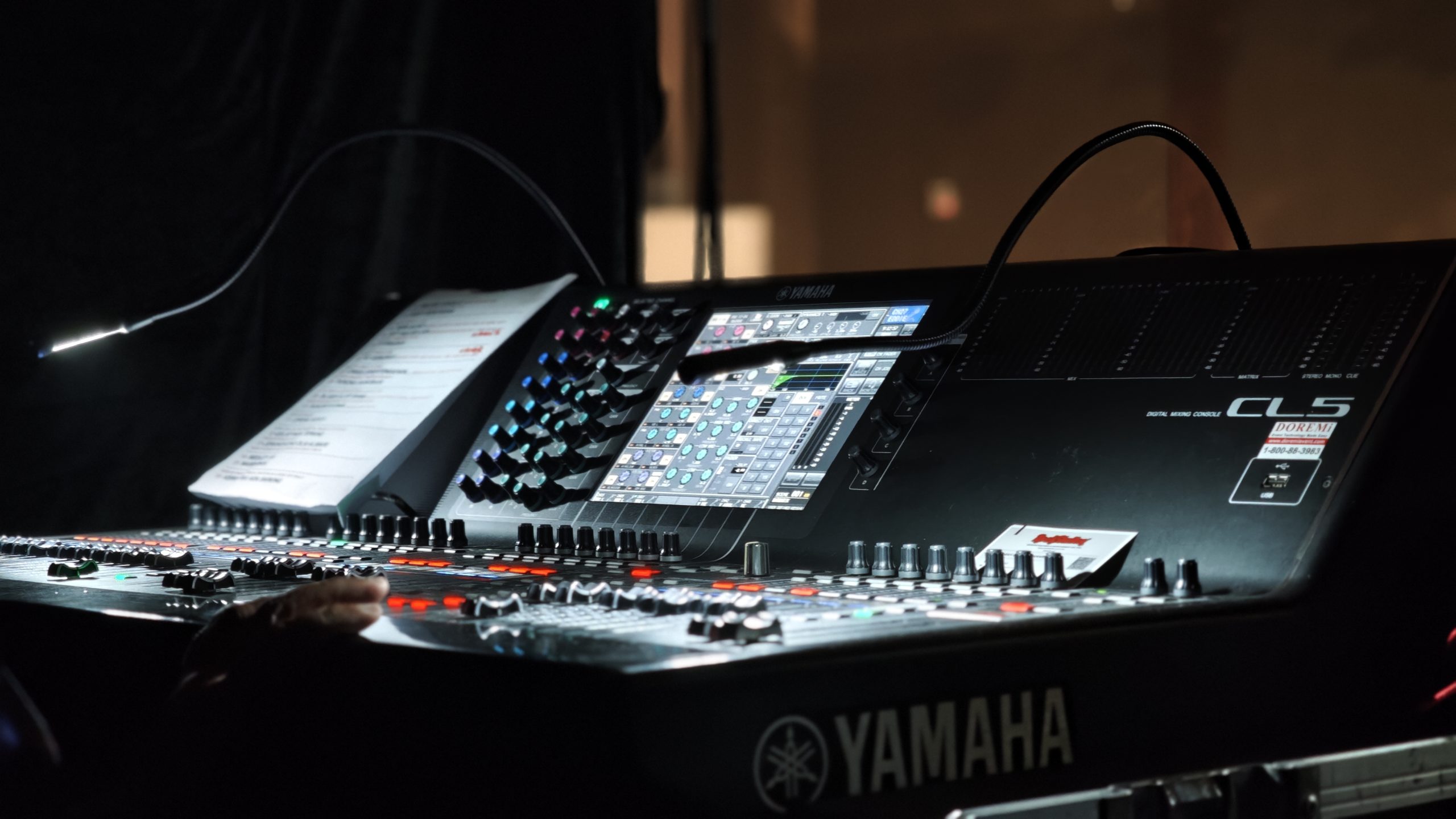
Modern event production increasingly requires an integrated approach to audio.
The sound system has to work alongside staging, lighting, LED displays, cameras, livestreaming, power distribution and the overall event schedule.
DOREMi’s published services include sound-system rental, AV systems, lighting, staging and other event production solutions, supporting formats ranging from conferences and corporate events to concerts and outdoor celebrations.
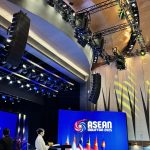
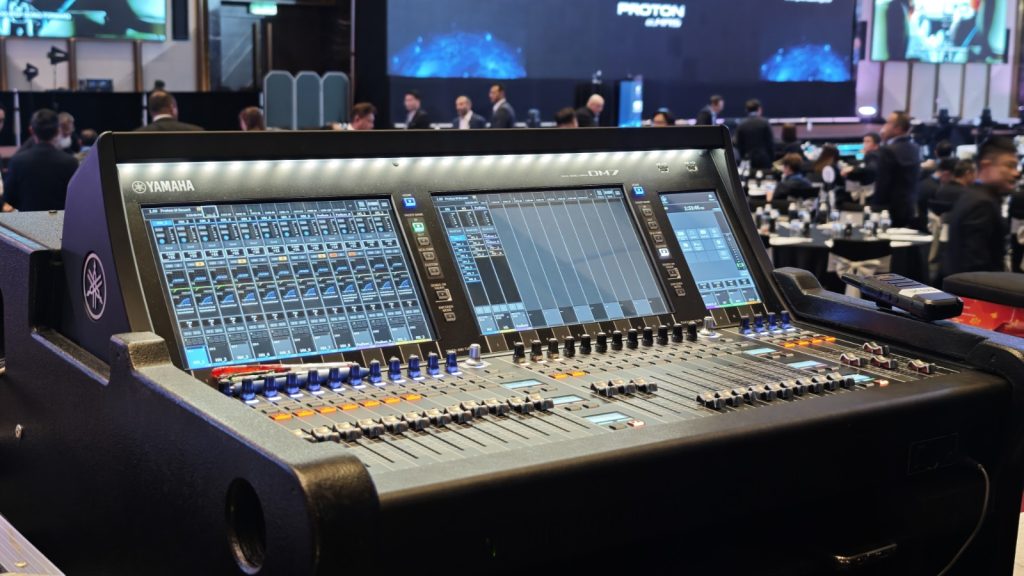
Its published work also includes technically demanding events such as the 58th ASEAN Foreign Ministers’ Meeting, where DOREMi describes providing microphones, line-array speaker systems and digital mixing consoles to support communication among delegates and high-ranking officials.
For large outdoor productions, its Music Run 2026 project demonstrates another side of the equation: designing a system around coverage, system prediction, amplification, monitoring and control rather than simply increasing speaker volume.
That distinction is important.
Good event audio is not simply about having powerful equipment.
It is about designing the signal path around the event.
The Future of Long-Distance Event Audio
The move towards networked audio is unlikely to reverse.
As events become more complex, audio increasingly needs to interact with:
- Video systems
- Streaming platforms
- Recording systems
- Broadcast infrastructure
- Intercom
- Show control
- Digital consoles
- DSP
- Network monitoring
- Remote production workflows
Standards such as AES67 are helping address interoperability between networked audio technologies, while proprietary systems continue to evolve around specific manufacturers and production ecosystems. The AES is currently reviewing AES67 as part of its standards-development process, demonstrating that interoperability remains an active area of professional audio engineering.
For event producers, the takeaway is not that every event needs the most complicated network possible.
It is that the infrastructure should scale with the production.
A small meeting may need only a conventional digital mixer and a few cables.
A 10,000-person outdoor event with multiple stages, broadcast feeds and long stage-to-control distances may require sophisticated digital audio networking and fibre infrastructure.
The technology should follow the requirements.
Cleaner Signal Paths, Smarter Productions
A digital snake is easy to misunderstand.
It isn’t simply an analogue snake with newer connectors.
It represents a fundamental change in how audio moves around a production.
By converting analogue audio into digital data closer to the source, professional systems can reduce long analogue signal paths, simplify cable infrastructure, provide flexible routing and make large-channel-count productions easier to manage.
When combined with appropriate network design and, where necessary, fibre transport, digital audio systems can also address challenges associated with long-distance copper connections, electromagnetic interference and ground-potential differences.
But the technology works best when it is treated as part of a complete engineering system.
Good sound starts before the signal reaches the speakers.
It starts with the microphone.
It continues through gain structure, conversion, transport, clocking, routing, processing and amplification.
And by the time that signal reaches the audience, every part of the chain has contributed to what they hear.
For conferences, concerts, festivals, corporate launches, sporting events and large outdoor productions, that is why digital audio infrastructure deserves as much attention as the loudspeakers themselves.
Because when the audience hears crystal-clear speech from the back row, a vocalist cuts cleanly through a full band, or thousands of people experience the same powerful mix across a venue, they may never notice the digital snake working behind the scenes.
And that’s exactly how professional audio should feel: invisible, reliable and simply there when it matters.
If you’re planning a large-scale event in Malaysia, choosing the right audio system is about more than selecting speakers. The signal path, stage infrastructure, digital transport, control system and technical crew all need to work together. DOREMi Events provides professional sound, AV and event production solutions designed around the specific requirements of each event—from corporate conferences and gala dinners to concerts and large outdoor productions.
Because the audience shouldn’t have to understand the technology behind great sound. They should simply experience it.