2025 Event Trends: What to Expect in AV, Lighting & Sound for the New Year
A New Year, A New Production Outlook
As we about step into 2026, the language of event production is evolving faster than ever. What might have felt cutting-edge just a year ago is now expected standard. Music playlists are no longer enough, lighting isn’t just ambience, and sound systems are judged with the same scrutiny as guest catering and décor. Attendees expect to be transported—not just entertained.
The past few years have seen hybrid formats flourish, LED technology become more accessible, and sensory experiences take centre stage. But in 2026, as noted by leading event tech authorities like EventMB, event AV, lighting, and sound are shifting toward something even more ambitious: immersive environmental storytelling. It’s not about a speaker behind a podium or a band on stage—it’s about creating a living space that feels emotional, engaging, and unforgettable.
This article explores the key trends in AV (audio-visual), lighting, and sound that will shape events in 2026. You’ll find practical insights, real examples, and tips you can use—whether you’re planning a corporate gala, a wedding, a product launch, a festival, or another large-scale celebration.
Key Takeaways
- Spatial Audio: Moving away from centralized speakers, 2025 focuses on strategically placed audio zones so sound physically travels through the room for a 3D listening experience.
- Lighting as Narrative: Static colors are out. Dynamic, pre-programmed “scenes” that evolve with the event’s timeline are the new standard for shaping emotional architecture.
- MicroLED Integration: High-definition MicroLED walls are replacing printed backdrops, offering immersive visual storytelling without pixelation.
- Sustainable Tech: Reusable modular staging, battery-powered wireless AV, and energy-efficient LED fixtures are non-negotiable expectations for modern event planning.
1. Immersive Audio Experiences: Beyond Background Music
Event audio is no longer limited to “music in the background” or “loudspeakers at volume.” In 2025, we’re seeing three major shifts:
Spatial Audio for Richer Soundscapes
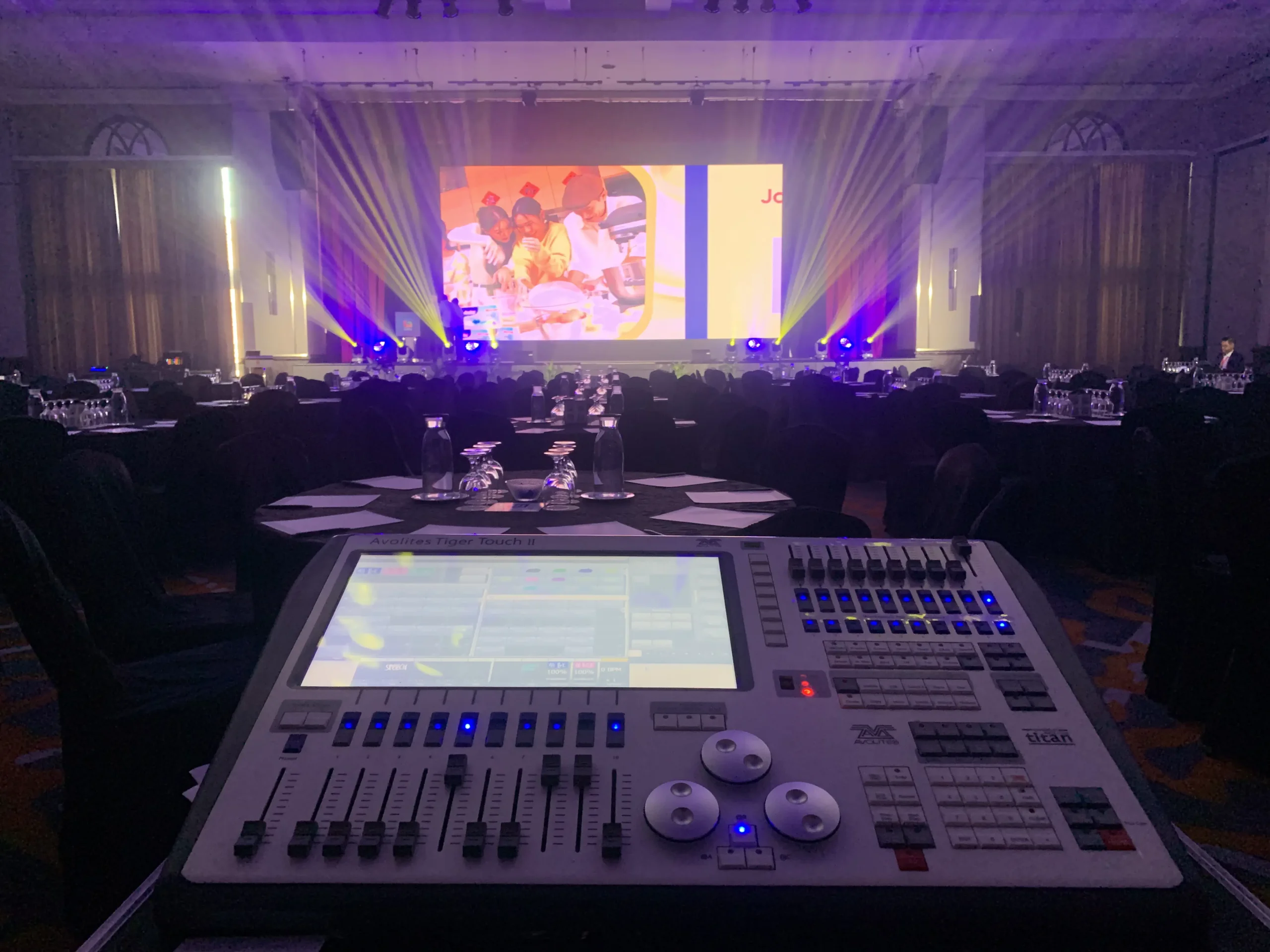
Spatial audio—sound designed to emulate how we naturally hear in physical spaces—is becoming more common. Instead of one or two big speakers blasting centrally, multiple speaker zones are strategically placed so music and sound cues can move through the room. This is especially impactful during:
- Gala dinners
- Award presentations
- Hybrid sessions where remote content interacts with live atmosphere
Guests at different parts of the venue experience intuitive audio transitions, making speeches clearer and music more enveloping.
Personalised Soundzones
In larger venues or outdoor sites, planners are creating soundzones: areas where different audio experiences coexist without bleeding into each other.
For example:
- Soft live jazz near a networking lounge
- Energetic playlists on the dance floor
- Spoken-word segments with clear voice reinforcement near stages
This layered approach keeps energy balanced and reduces noise fatigue.
Live Mix Engineers as Standard
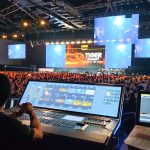
Audio isn’t plug-and-play. Engineers now actively mix live performances, guest speakers, and playback content in real time. This ensures levels remain consistent and microphones don’t feed back—a detail that guests feel intensely, even if they don’t consciously articulate it.
Tip for planners: Always include a dedicated audio technician on your production team, even for medium-sized events. A good mix makes every moment sound intentional.
2. Lighting as Narrative: From Static to Storytelling
Gone are the days of simple wash lighting or pre-set colours. Lighting in 2025 tells stories—subtly guiding emotional arcs throughout an event.
Dynamic Scene Lighting
Rather than static lighting schemes, designers are creating scenes—pre-programmed lighting moods that evolve with the agenda. Here’s how that plays out:
- Arrival & Welcome: Soft, warm tones invite guests in and support networking.
- Main Program: Controlled focus lighting highlights speakers without distraction.
- Interactive Segments: Movement and colour contrast energise guests.
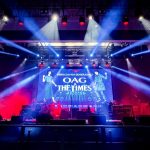
- Finale: High-impact colour shifts and patterns build excitement.
This kind of design transforms lighting from décor into emotional architecture.
3D Mapping & Projection Integration
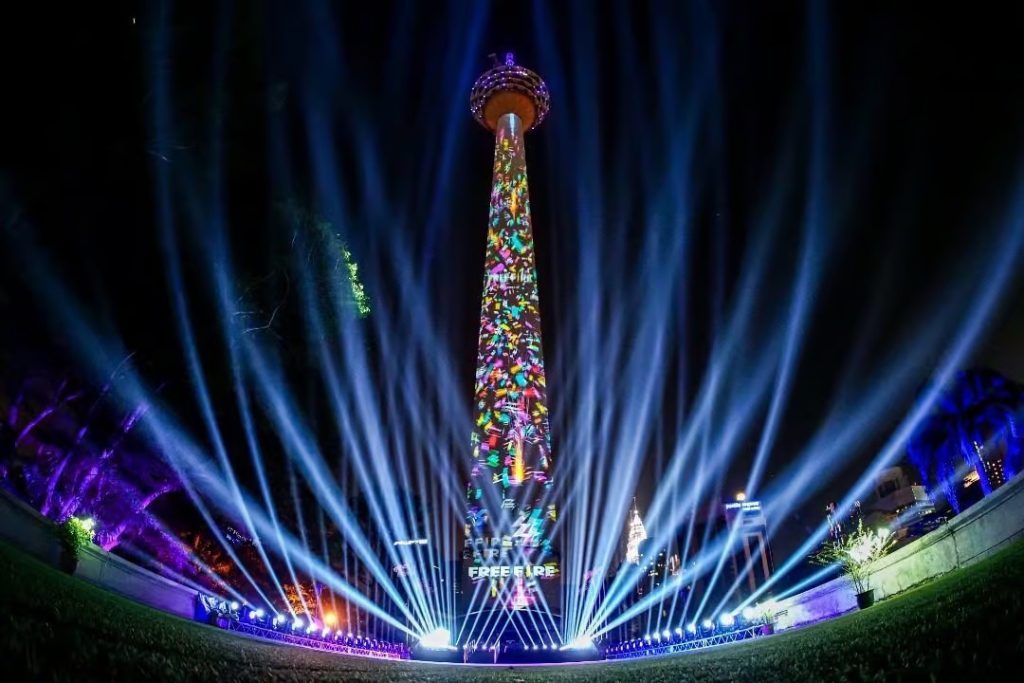
Projection technology has matured beyond signage. In 2025, 3D projection mapping is making waves in brand launches, ceremonies, and themed celebrations.
Examples include:
- Mapping onto architectural features—a ballroom column becomes a cascading light sculpture.
- Branded visual storytelling during keynote sessions.
- Interactive projection floors where guests trigger visual effects with movement.
These effects delight guests and reinforce messaging without overwhelming the space.
Lighting & Cameras in Harmony
With social media content king, lighting is now designed with cameras in mind. Balanced skin tones, controlled highlights, and intentional shadow placement ensure that live streams, reels, and event photos look cinematic—without extra post-production.
Pro Tip: Involve your lighting designer early in content briefs so visuals and video capture align seamlessly.
3. Next-Gen Visual Displays: Clearer, Bigger, Smarter
Display technology continues to improve, and in 2025, the standards are higher:
MicroLED & High-Definition AV Walls
Large LED walls don’t just look sharp—they feel immersive. MicroLED panels with high pixel density are now cost-effective for mid-sized venues, creating visually impactful backdrops without distracting viewers.
These displays are great for:
- Dynamic agendas for conferences
- Visual brand messaging during corporate launches
- Live feeds of performances for large audiences
Interactive Touch Displays
Beyond passive screens, interactive touch panels are being used for:
- Guest engagement zones
- Sponsor showcases
- Real-time votes or polls during hybrid sessions
They turn visual content into participatory experiences.
Wireless Projection & Edge Blending
For complex surfaces or expansive stages, wireless projection and edge-blending create smooth, seamless visuals without bulky cabling—and allow flexibility in venue setup that was previously impossible.
4. Hybrid & Remote Integration: A Seamless Experience
Hybrid events peaked in popularity, but by 2025 they’ve matured. Remote participation isn’t an afterthought—it’s part of the core design.
Audio For Hybrid Audiences
Remote guests now experience spatial audio designed to replicate the live environment. Rather than a simple stereo feed, hybrid setups use virtualized room acoustics so listening feels natural, not flattened.
Real-Time Lighting Sync with Livestreams
Lighting cues are now programmable to interact with livestream scenes. For example:
- When a live speaker transitions to a remote presenter, lighting dims for focus.
- Countdown timers for hybrid Q&A sessions are projected on both stage screens and livestream visuals.
Interactive Virtual Components
Remote participants engage with:
- Real-time polls
- Chat moderated into live panels
- Virtual breakouts that influence on-site visuals
This ensures hybrid attendees feel included, not sidelined.
5. Entertainment Meets Technology
Music and performance are being elevated through technology:
AI-Assisted DJ Sets
AI tools help DJs:
- Analyse guest demographics and read room energy
- Transition seamlessly between genres
- Maintain flow without awkward silence
This is especially useful in multi-segment events where musical needs shift rapidly.
Live Performance Integration
Live performers are now often augmented with:
- Synchronized lighting choreography
- Projection backdrops reacting to beat patterns
- Wearable tech that triggers visuals or sound cues
This blurs the boundary between performer and production.
Spatial Soundscapes in Performances
Instead of speakers clustered at one end, spatial audio arrays allow music to travel through the venue, creating a truly three-dimensional sound experience—perfect for sophisticated parties and evening gala events.
6. Production Workflows: More Collaboration, Less Chaos
Technical production used to be a back-end consideration. Now it’s central to creative planning.
Early-Phase Collaboration
Production teams are now involved at the concept stage—not just execution. This means:
- AV, lighting, and sound influence creative decisions early.
- Venue selection is informed by technical feasibility.
- Rehearsals are scheduled weeks in advance, not hours.
Cloud-Based Run Sheets & Cue Management
Digital run sheets synchronized between lighting, sound, and AV crews keep everyone on the same page:
- Real-time cue updates
- Automatic notifications for stage changes
- Version control for last-minute program shifts
This level of organisation reduces last-minute stress and improves execution quality.
7. Sustainability in Production: Technology with Purpose

Eco-friendly production isn’t just a trend—it’s an expectation.
LED Over Traditional Fixtures
LED lighting consumes significantly less power and generates less heat than conventional fixtures, making it a staple for longer events.
Reusable Modular Systems
Modular rigging and staging reduce waste and minimise teardown time.
Battery-Powered Wireless AV Solutions
Wireless, battery-powered technology reduces cabling and the need for extensive power draws—ideal for outdoor events or venues with limited electrical infrastructure.
These sustainable approaches lower costs and environmental impact.
8. Audience Engagement Through Technology
Events are becoming interactive ecosystems:
Augmented Reality (AR) Integration
From AR photo booths to projection overlays on branded spaces, attendees can interact with digital layers that enrich their experience.
Digital Personalisation Apps
Attendees receive:
- Customised schedules
- In-event notifications
- Music voting features
- Interactive agendas
These tools bridge physical and digital participation.
9. Safety & Redundancy: Professionalism You Can Hear and See
As production complexity rises, so does the need for professional planning:
- Redundant audio systems prevent dropout during critical moments
- Backup power systems eliminate delays
- Safety rigging and certified structures protect guests
- Licensed pyrotechnics and special effects are regulated and insured
Technical reliability isn’t glitzy—it’s essential.
10. Practical Tips for Planners in 2025
Here’s how to stay ahead:
- Involve production teams early. Creative and technical decisions need alignment.
- Prioritise audio clarity over volume. Guests remember quality, not loudness.
- Design lighting for cameras and live experiences. Social content is now part of ROI.
- Plan for hybrid from the start. It’s no longer an add-on.
- Test everything. Walkthroughs identify issues before guests arrive.
- Allocate budget for technical support. Professionals save stress and elevate results.
Production Is the New Stagecraft of Events
In 2025, event production is no longer a background function—it’s a foreground experience. AV, lighting, and sound don’t just support an event—they shape how people remember it.
From immersive audio systems and narrative lighting to spatial soundscapes and hybrid integration, technological advances are redefining what it means to celebrate, convene, and connect.
Whether you’re planning a gala dinner, an international conference, a product launch, or a cultural festival, the trends point toward greater sensory engagement, smarter technical integration, and events that feel less like gatherings and more like experiences.
The takeaway? Great events aren’t built by accident. They’re built with intentional design, collaborative production, and technology that serves emotion as much as function. Stay ahead of the curve and turn your vision into reality with DOREMi Events.
Here’s to a year of unforgettable moments—and the sound, light, and visuals that make them unforgettable.