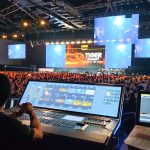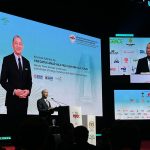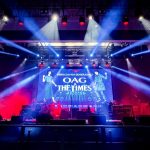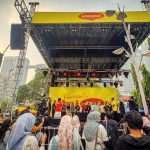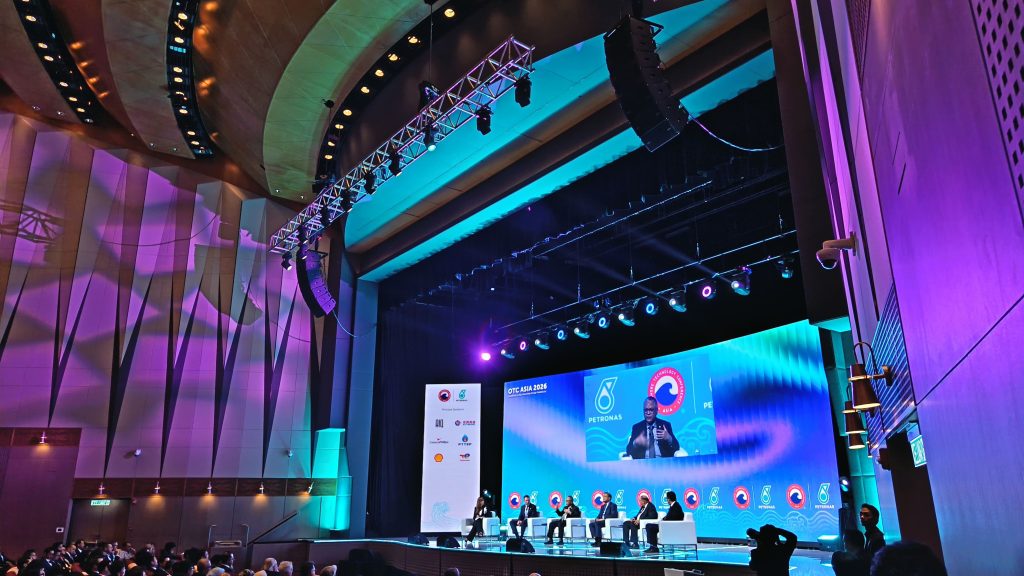
Outdoor events have one advantage that indoor venues can never fully replicate: scale. A concert can stretch across an open field, a corporate launch can occupy an entire plaza, a festival stage can rise against the night sky, and a sporting ceremony can unfold across a venue designed to hold thousands of spectators.
But that scale creates one of the biggest technical challenges in event production: lighting has to work much harder outdoors.
This is where high-output LED profile fixtures come into play.
When the sun goes down and the stage lights come on, a fixture that looks impressive inside a ballroom may suddenly feel inadequate outdoors. Ambient light, atmospheric conditions, long throw distances, large stages and wide audience areas can all reduce the visual impact of conventional lighting.
High-wattage LED profiles are designed to solve that problem by combining high output, controlled optics, beam precision, colour quality and advanced control in a fixture capable of putting light exactly where it is needed.
For event organisers, production managers and lighting designers, the question is therefore not simply, “How bright is the fixture?” It is:
Can the fixture deliver enough usable light, at the right distance, with the right beam, colour and control, for the environment we are working in?
That distinction matters.
What Is an LED Profile Fixture?
An LED profile, sometimes called an LED ellipsoidal or LED profile spotlight, is a stage lighting fixture designed to produce a controlled beam of light.
Unlike a basic wash light, which is primarily designed to spread light over a broad area, a profile fixture allows the lighting designer to shape and direct the beam.
Depending on the model and lens configuration, an LED profile can be used for:
- Actor or presenter front lighting
- Long-throw stage illumination
- Architectural highlighting
- Logo and gobo projection
- Set and scenic lighting
- Key lighting for cameras
- Special effects
- Audience and entrance illumination
- Highlighting specific areas of an outdoor stage
Modern LED profiles can also provide advanced colour control, dimming, shuttering and network or DMX control.
For example, ETC’s Source Four LED Series 3 Lustr X8 offers interchangeable lens tubes ranging from 5° to 90°, along with DMX-512/RDM and wireless control options. The manufacturer lists a maximum output of 10,889 lumens for its Lustr X8 engine and an L70 rating above 54,000 hours.
That illustrates an important point: LED profile lighting is not simply about replacing an old lamp with an LED. It is about gaining greater control over how light is produced and delivered.
Why Outdoor Lighting Is a Different Battle
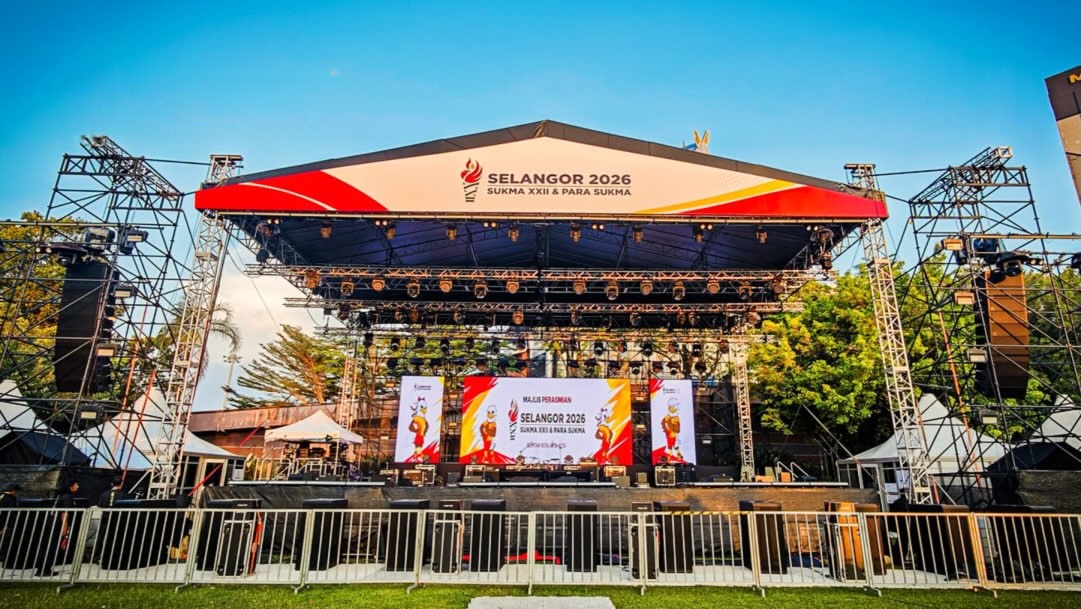
Indoor venues provide walls, ceilings and relatively controlled environmental conditions. Outdoor events provide none of those luxuries.
A lighting designer working outdoors has to account for:
Ambient light
During daylight hours, artificial lighting has to compete with the sun. Even after sunset, surrounding buildings, streetlights, advertising screens and venue lighting can contribute unwanted ambient illumination.
Distance
The further the light has to travel, the more important optical efficiency and beam control become.
A fixture illuminating a performer from 8 metres away is facing a very different challenge from one illuminating a performer from 30 or 50 metres away.
Atmospheric conditions
Humidity, haze, dust, rain and airborne particles can influence how light appears in the air.
Large viewing areas
An indoor audience might sit within a relatively compact space. Outdoor audiences can spread across enormous areas.
Weather
Rain and moisture can turn an ordinary lighting setup into a serious equipment and safety concern.
This is why outdoor event lighting needs to be considered as a complete system rather than simply a collection of fixtures.
High Output Helps Light Travel Further
The first and most obvious advantage of a high-wattage LED profile is output.
However, wattage itself should not be treated as a direct measurement of brightness.
A fixture consuming more watts does not automatically produce proportionally more useful light. Modern LED fixtures should be evaluated using actual photometric data such as:
- Lumens
- Candela
- Lux at specific distances
- Beam angle
- Field angle
- Optical efficiency
- Throw distance
This is especially important for outdoor events.
For example, ETC’s published specifications for its Lustr X8 profile show how output changes with lens selection and throw distance. The fixture can be configured with different lens tubes, allowing designers to choose between tighter long-throw beams and wider coverage.
That is why simply asking an equipment supplier, “How many watts is it?”, is not enough.
A better question is:
“What is the measured output at my required throw distance and beam angle?”
That answer is much more useful when designing an outdoor lighting rig.
Beam Angle Can Be More Important Than Raw Brightness
Imagine trying to illuminate one performer standing 30 metres away.
If your fixture produces a very wide beam, much of the light may spread beyond the performer.
A narrower beam can concentrate more of the available light into the required area.
This is the basic principle behind optical efficiency.
For outdoor stages, different lens options can therefore make a significant difference.
Narrow beams
Useful for:
- Long-throw lighting
- Individual performers
- High stage positions
- Architectural details
- Special effects
- Focused highlights
Medium beams
Useful for:
- Presenter areas
- Small performance groups
- Stage sections
- General key lighting
Wide beams
Useful for:
- Larger stage areas
- Scenic elements
- Shorter throws
- Broader coverage
The correct choice depends on the venue, mounting position, stage dimensions and desired lighting effect.
The goal isn’t necessarily to use the narrowest beam available.
The goal is to use the right beam for the job.
Outdoor Events Need More Than “Bright”
There is a common misconception that outdoor lighting is simply a battle to produce the highest possible brightness.
In reality, usable brightness is what matters.
A powerful fixture with poor optics can produce plenty of light without producing a clean, effective result.
A well-designed profile fixture combines:
LED engine + optics + lens + beam control + colour system + thermal management + control system
These elements work together.
This is why professional lighting specifications often include much more than wattage.
When comparing fixtures, production teams should look at:
- Measured lux at distance
- Beam and field angles
- Lens options
- CRI and colour-quality information
- Dimming performance
- Flicker characteristics
- LED lifetime
- IP rating
- DMX/RDM or network control
- Power consumption
- Operating temperature
- Weight
- Mounting requirements
- Serviceability
Recent industry guidance also increasingly recommends looking beyond CRI alone and considering broader colour metrics such as TM-30, particularly where accurate colour reproduction matters for people and products on camera.
Colour Accuracy Matters More Outdoors Than You Think
Outdoor events are increasingly filmed, photographed and streamed.
That means lighting is no longer only being judged by people sitting in the audience.
It is also being judged through:
- Professional cameras
- Smartphones
- Livestreams
- Social media videos
- Event photography
- Broadcast systems
Poor colour rendering can make skin tones look unnatural, clothing colours appear inconsistent and branded colours fail to reproduce accurately.
This is especially important for:
Corporate events
Company logos and brand colours need to look correct.
Product launches
Products may be positioned directly under stage lighting and photographed from multiple angles.
Fashion events
Fabric colour and skin tone are fundamental to the visual presentation.
Concerts
Performers need to remain visually expressive even when saturated colours and dynamic effects are introduced.
Awards ceremonies
People are often photographed under key lighting while receiving awards.
High-quality LED systems can provide much better control over colour temperature and colour mixing than older lighting technologies.
ETC, for example, highlights its Lustr X8 colour system’s use of Deep Red alongside other LED colours to improve the rendering of skin tones, sunsets and saturated scenes.
IP Rating: The Specification Outdoor Events Cannot Ignore
If a lighting fixture is going outdoors, weather protection should be one of the first questions asked.
This is where IP ratings become important.
The IP code, defined under IEC 60529, indicates the degree of protection provided against ingress of solids and liquids.
For example:
IP65
- 6 = dust-tight
- 5 = protected against water jets
But there is an important detail that event organisers sometimes overlook:
IP65 does not mean “invincible in rain.”
An IP rating describes specific test conditions. It does not mean a fixture can be installed anywhere, exposed indefinitely, or ignored during severe weather.
Outdoor production still requires:
- Appropriate fixture positioning
- Weather monitoring
- Proper cable protection
- Safe power distribution
- Ground protection
- Drainage considerations
- Covered connections where appropriate
- Professional installation
- A contingency plan for severe weather
Some modern professional fixtures are specifically designed for outdoor touring and carry IP65 ratings. ROBE’s iFORTE LTX range, for example, is rated IP65 and is marketed for live concert touring both indoors and outdoors.
The lesson is simple:
Don’t turn an indoor fixture into an outdoor fixture just because someone puts a rain cover over it.
The entire lighting and power system needs to be planned for the environment.
High-Wattage Does Not Automatically Mean High Power Bills
This may sound contradictory, but modern LED technology has changed the relationship between output and power consumption.
Traditional high-intensity stage fixtures could require substantial electrical power and generate significant heat.
Modern LED systems can achieve high output while providing improved efficiency and longer source life.
ETC specifically highlights the relationship between efficient LED fixtures, lower power consumption, lower heat and the ability to place more luminaires on a circuit.
This matters enormously for outdoor productions.
Power availability can be one of the biggest logistical constraints at:
- Festivals
- Outdoor concerts
- Roadshows
- Sporting events
- Brand activations
- Temporary venues
- Remote locations
Every fixture needs to be considered as part of the overall power budget.
A professional production team should calculate:
Total fixture load + other AV equipment + distribution losses + startup/inrush requirements + available supply
rather than simply counting fixtures.
Thermal Management Is Critical in Malaysia
Outdoor event lighting in Malaysia presents another challenge: heat and humidity.
A fixture operating outdoors may already be dealing with high ambient temperatures before it is switched on.
LEDs are more efficient than many traditional light sources, but they still produce heat.
Good thermal management helps maintain:
- Consistent output
- Colour stability
- Component life
- Reliability
- Performance during long shows
Manufacturers therefore use different approaches, including heatsinks, active cooling and thermal monitoring.
This is particularly relevant for events where lighting runs continuously for several hours.
A fixture that performs well for a short demonstration is not necessarily the same fixture you want running throughout a full-day outdoor festival.
Production reliability matters more than showroom brightness.
LED Profiles Give Designers Precision
One of the biggest advantages of profile fixtures is the ability to control the shape and direction of light.
A professional profile can incorporate features such as:
- Framing shutters
- Gobo projection
- Iris control
- Zoom optics
- Beam shaping
- Precise dimming
This makes them extremely useful when the lighting designer needs to illuminate one area without flooding another.
For example, a corporate event might require a clean white spotlight on a CEO delivering a speech while keeping the surrounding stage comparatively dark.
A profile fixture can help achieve that controlled look.
At a concert, the same principle can be used to isolate performers, highlight set pieces or project patterns across a stage.
The result is not simply a brighter event.
It is a more intentional event.
Lighting for Cameras Is a Different Challenge
An outdoor event may look excellent to the audience but poor on camera.
Why?
Because cameras respond differently to light than human eyes do.
Issues such as:
- Flicker
- Colour shifts
- Overexposure
- Harsh shadows
- Poor skin tones
- Uneven illumination
- Excessive contrast
can become obvious in video.
This is why professional event lighting increasingly considers camera requirements during design.
Modern fixtures may provide dedicated flicker-management features. ETC’s Lustr X8 specifications, for example, include selectable camera flicker-control frequencies.
For events involving livestreaming or broadcast, lighting designers should coordinate with the video team before the show rather than attempting to correct lighting problems after cameras are already rolling.
DMX and Network Control Turn Lighting Into a System
High-output LED profiles become significantly more powerful when integrated into a professional lighting-control system.
DMX512 remains a widely used control protocol in entertainment lighting, while modern systems can also incorporate RDM and network-based protocols.
With proper control, lighting operators can program:
- Preset scenes
- Colour changes
- Intensity transitions
- Cue sequences
- Spotlight positions
- Performance looks
- Emergency or backup states
This allows the lighting system to follow the event’s run sheet.
For example:
Guest arrival → Opening → Welcome speech → Awards → Performance → Product reveal → Finale
Each segment can have its own lighting state.
Rather than having technicians manually adjust individual fixtures throughout the show, programmed cues allow the entire system to transition consistently.
That is where professional lighting moves beyond equipment rental and becomes event production technology.
High-Output Profiles Can Reduce the Number of Fixtures Needed
More fixtures do not always mean better lighting.
If the fixtures have insufficient output or poor beam control, a production team may compensate by adding more units.
That can create additional:
- Rigging weight
- Power demand
- Cabling
- Programming work
- Setup time
- Transport requirements
- Labour costs
A sufficiently powerful and optically efficient fixture can sometimes achieve the required coverage with fewer units.
But this should never become a blanket rule.
A lighting designer still needs to consider redundancy, coverage, angles, colour mixing and the visual design of the show.
The objective is not:
“Use fewer lights.”
The objective is:
“Use the right number of appropriately specified lights.”
What Should You Ask Before Renting Outdoor LED Profiles?
If you are an event organiser comparing lighting suppliers, don’t stop at:
“How many watts?”
Ask for the actual specifications.
A practical outdoor LED profile checklist
- What is the fixture’s measured output?
Ask for lux or candela data at the distance you actually need. - What lens options are available?
A 10° beam and a 50° beam solve very different problems. - What is the IP rating?
Confirm that the fixture is genuinely designed for the intended outdoor conditions. - What is the colour specification?
Ask about CRI, TM-30 where available, colour temperature and consistency. - Is it suitable for camera?
Ask about flicker performance if the event will be photographed, livestreamed or broadcast. - What control protocols are supported?
DMX512, RDM and network control can affect how easily fixtures integrate into the production system. - What is the power draw?
This is essential when planning generators or temporary electrical supplies. - What are the environmental limits?
Check operating temperature and manufacturer guidance. - What happens if it rains?
The supplier should have a clear outdoor weather and contingency procedure. - Who is handling the lighting design?
The best fixture in the world will not compensate for poor positioning, focusing or programming.
The Bigger Picture: Lighting Is About What the Audience Needs to See
The “Lumen War” isn’t really about producing the highest number of lumens.
It’s about producing enough usable light with enough control to make an outdoor event work.
A high-output LED profile can help solve multiple challenges simultaneously:
- Long throw distances
- Large stages
- Strong ambient light
- Precise performer illumination
- Scenic highlighting
- Branding
- Camera requirements
- Colour consistency
- Dynamic programming
- Outdoor reliability
But the fixture should always be selected according to the event rather than the other way around.
A small garden wedding does not require the same lighting strategy as a stadium-scale concert.
A corporate product launch does not need the same system as a festival.
A sporting ceremony has different sightline and coverage requirements from a fashion show.
The right lighting starts with the event brief, not the equipment catalogue.
Where High-Output LED Profiles Make the Most Difference
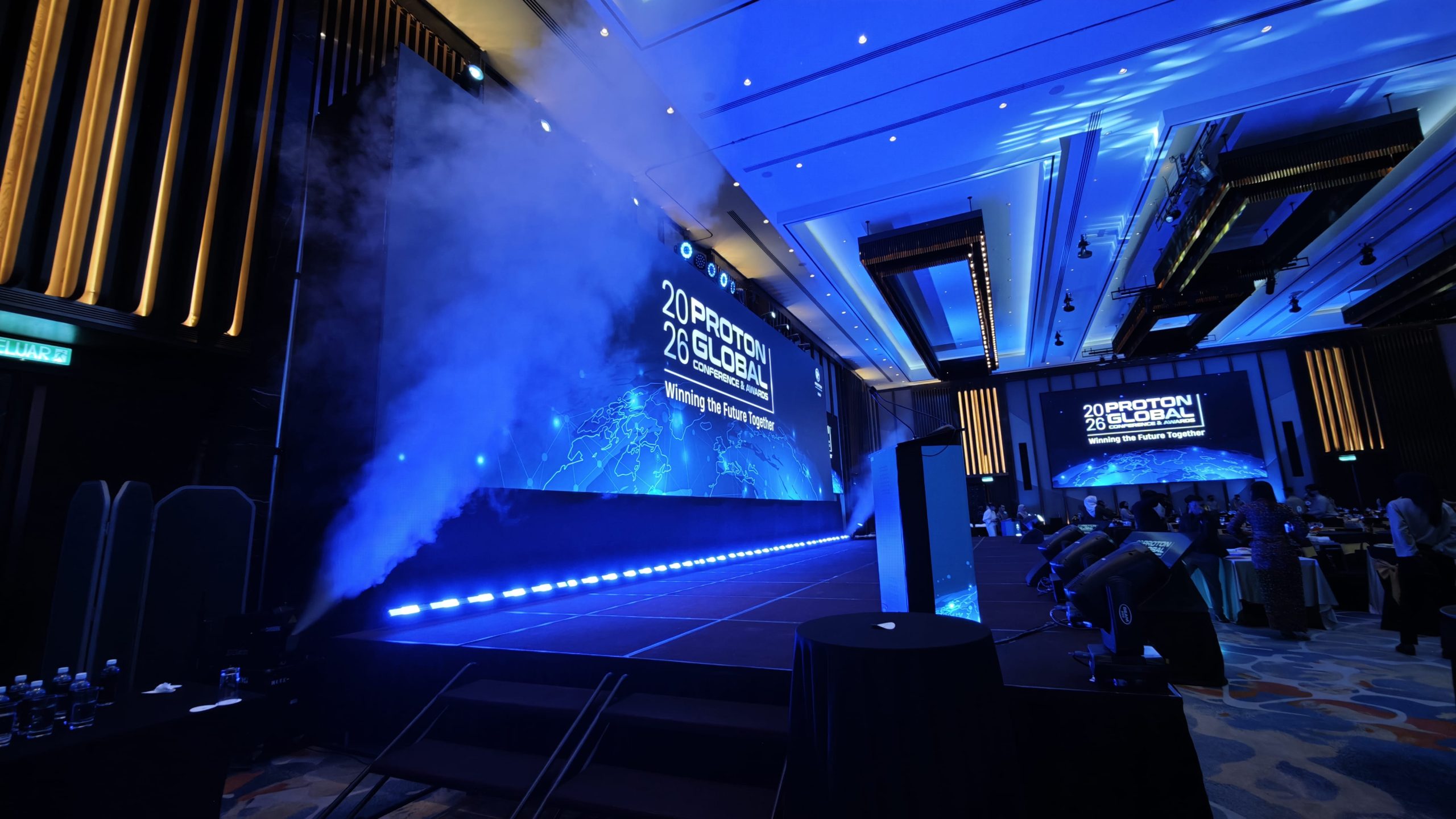
High-wattage LED profiles are particularly valuable for:
Outdoor concerts
Long throws, powerful beams and camera-friendly colour control help performers remain visually prominent.
Festivals
Large stages and wide audience areas require lighting systems capable of maintaining visual impact across significant distances.
Corporate launches
Profiles can create precise highlights for speakers, products, branding and stage moments.
Outdoor award ceremonies
Controlled key lighting helps presenters and winners remain visible for both the live audience and cameras.
Sporting events
Large venues demand powerful, reliable fixtures capable of reaching significant distances.
Fashion shows
Colour quality, controlled beams and camera compatibility are critical.
Outdoor weddings
Profiles can provide elegant architectural and stage lighting without relying solely on broad washes.
Outdoor Lighting Is an Engineering Exercise, Not Just Decoration
One of the most important shifts in modern event production is recognising that lighting is simultaneously creative, technical and operational.
The lighting designer is thinking about the look.
The production manager is thinking about logistics.
The technical team is thinking about power, control and rigging.
The safety team is thinking about weather, load and electrical protection.
The camera team is thinking about exposure, colour and flicker.
All of these considerations affect the final result.
This is why professional event production companies increasingly approach lighting as part of a wider technical system involving sound, LED screens, staging, truss, power distribution and show control.
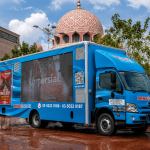
DOREMi’s own event-production approach reflects this broader philosophy. Its published services include professional lighting, LED screens, stage and truss systems, professional sound and other AV solutions, while its company profile describes an extensive in-house equipment inventory and technical production capability.
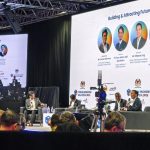
The company’s published portfolio also includes conference and corporate productions such as UFI Asia Pacific Conference, EPF Digital Front Runner, McDonald’s Breakthrough and Grifols Hybrid Conference.
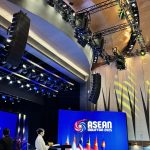
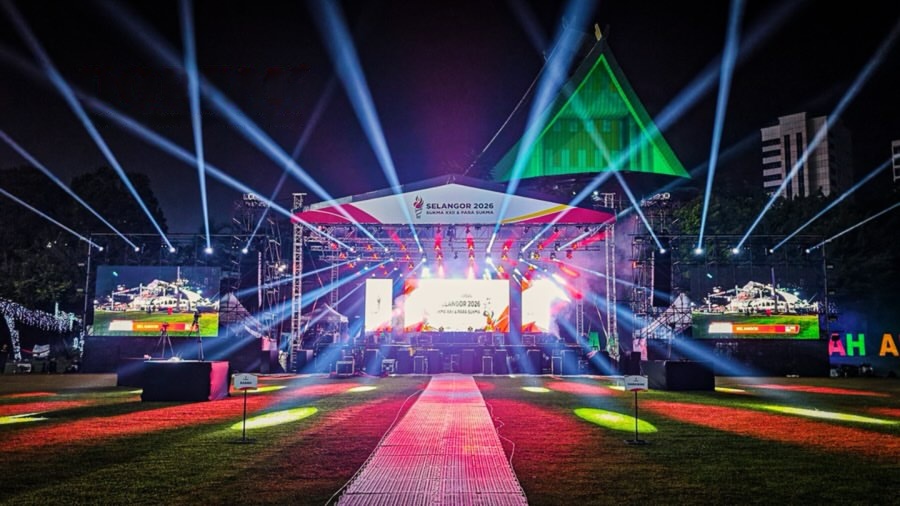
More recently, DOREMi has also publicly highlighted its involvement in the SUKMA Selangor 2026 Opening Ceremony, where lighting was part of a larger production involving LED screens, professional sound, laser effects, truss and staging.
These examples demonstrate why lighting should not be viewed in isolation.
At major events, every technical element has to work together.
Win the Lumen War With the Right Light
Outdoor events expose every weakness in a lighting system.
A fixture that feels bright indoors may disappear against a large outdoor environment. A poorly chosen beam may waste valuable output. An unsuitable IP rating can create serious weather concerns. Poor colour quality can affect photography and livestreaming. Insufficient power planning can compromise the entire production.
High-output LED profiles provide a powerful solution because they combine brightness with precision.
But the smartest production decision isn’t necessarily choosing the fixture with the biggest wattage or the highest lumen figure.
It is choosing a lighting system that matches:
the venue + throw distance + stage size + audience + weather + camera requirements + creative direction + power availability.
That is the real battle behind the “Lumen War.”
And when all of those factors are planned correctly, the result is more than a brighter stage.
It is a stage that commands attention.
For outdoor concerts, corporate events, festivals, sporting ceremonies, launches and large-scale productions, the right lighting partner can make the difference between simply illuminating a venue and creating an environment people remember.
Outdoor lighting requires careful consideration of output, weather conditions, coverage and fixture selection. For a deeper technical overview, explore this Ultimate Outdoor Stage Lighting Guide
Need a Safe and Reliable LED Wall Installation for Your Event?
Work with a production team that understands the relationship between lighting, staging, sound, visuals, power and weather from the beginning. With the right technical planning, high-output LED profiles become more than powerful fixtures—they become tools for shaping the entire audience experience.
At DOREMi Events, the goal is not simply to put more light on a stage. It is to help create the right technical environment for the event, from planning and equipment selection to production and execution.
Because when the sun goes down, that’s when the real lighting work begins.