Hybrid Events Aren’t Dead: Mastering Virtual Connectivity in 2026
For a while, hybrid events were treated like a temporary solution; something the events industry adopted out of necessity rather than choice. As physical gatherings returned, many assumed virtual participation would slowly fade away. But in 2026, that assumption is no longer accurate. Hybrid events are not only still relevant; they have become a core strategy for modern event experiences.
Today’s audiences expect flexibility. Some want the energy of being physically present, while others prefer the convenience of joining remotely from anywhere in the world. Brands, corporations, and organisers are now realising that limiting an event to a single format is no longer enough. The real challenge is no longer whether hybrid events will survive—but how to master virtual connectivity so both audiences feel equally engaged, included, and connected.
Why Hybrid Events Are Still Essential in 2026
Hybrid events continue to thrive because they solve one of the biggest challenges in modern communication: accessibility without compromise. By removing geographical barriers, a product launch in Kuala Lumpur can attract viewers from Singapore, the Middle East, Europe, or the United States simultaneously.
- Global Reach: Audiences are no longer restricted by geography, allowing for massive scaling.
- Cost Efficiency: Hybrid formats reduce accommodation and transport costs while maintaining high engagement.
- Data-Driven Insights: Virtual platforms allow organisers to track viewer duration, interaction rates, and session drop-off points with precision.
- Flexibility: Hybrid setups allow events to continue smoothly even when unexpected logistical disruptions occur.
The Core Shift: From Streaming to Experience
One of the biggest misconceptions about hybrid events is that they are simply “live streaming an event.” In 2026, that approach is outdated. Modern hybrid events are designed as dual experiences—where both physical and virtual audiences receive tailored engagement rather than a one-sided broadcast.
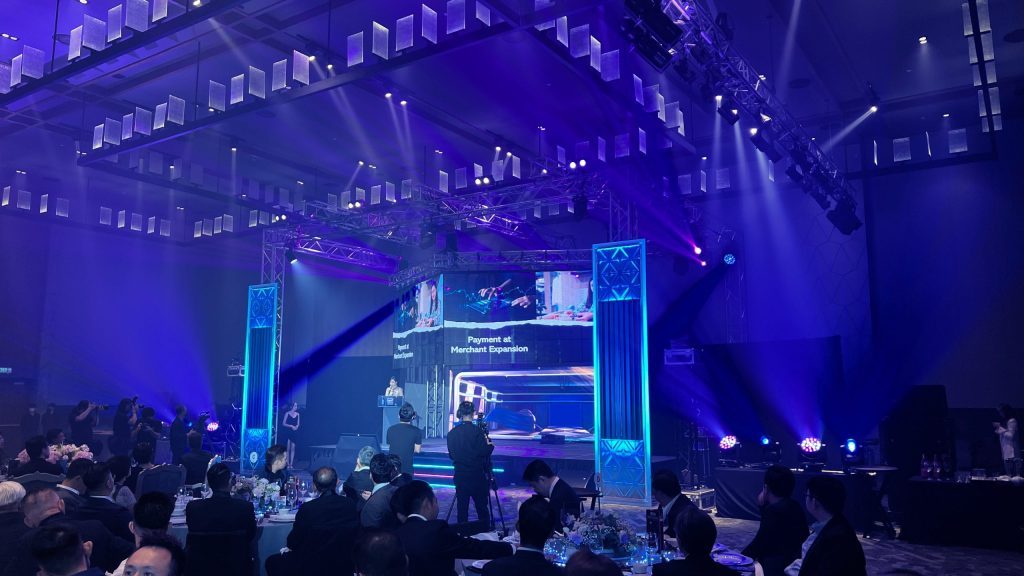
This shift requires a complete rethink of event production. Virtual audiences are no longer passive viewers; they are integrated into real-time interactions. Whether you are hosting a gala at Sunway Resort or a massive trade show at MITEC, the goal is to ensure no audience feels secondary.
The Technology Behind Seamless Connectivity

A successful hybrid event depends heavily on robust technical infrastructure. Professional-grade execution is what separates a successful global broadcast from a failed stream.
1. Multi-Camera Production Systems
Professional hybrid events use multiple camera angles—wide stage coverage, close-up shots, and audience reaction shots—to create a broadcast-level experience. This ensures virtual viewers feel fully immersed in the room’s energy.
2. Low-Latency Streaming & Audio Integration
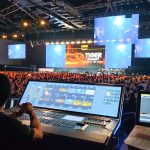
Latency is the enemy of interaction. Modern systems focus on real-time transmission and adaptive bitrate streaming. Equally important is the audio; digital mixing consoles and wireless microphones ensure clear sound for remote viewers, who often prioritize audio quality over video resolution.
3. LED and Visual Synchronization
Visuals must be consistent across both physical screens and the streamed output. This involves high-resolution LED walls, real-time content mapping, and color calibration for broadcast consistency to ensure the visuals look stunning on every screen.
Designing for Two Audiences at Once
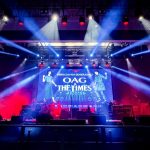
The challenge of hybrid events is designing for two completely different environments simultaneously. The physical audience enjoys the lighting atmosphere and sound immersion, while the virtual audience relies on camera framing and digital engagement tools like live polls and Q&A sessions.
Content must be dynamic and segments shorter to prevent “virtual fatigue.” Visual storytelling—using LED visuals, animations, and live demonstrations—has become an essential component in 2026. Every hybrid event needs a clear narrative structure: a strong opening hook, interactive core segments, and a high-impact reveal.
Trends Shaping Hybrid Events in 2026
- AI-Assisted Production: AI is now used to auto-switch camera angles and optimize streaming quality in real-time.
- Immersive Environments: Projection mapping and transparent LED screens are creating cinematic experiences for remote viewers.
- Personalized Viewing: Virtual audiences can often choose their own camera angles or language interpretation streams.
- Sustainability: Hybrid formats significantly reduce the carbon footprint by minimizing international travel needs.
Common Mistakes and Real-World Applications
Even experienced organisers make critical errors, such as treating virtual participants as secondary or failing to plan for internet redundancy. High-stakes environments like SEMICON or the MATTA Fair at MITEC demand multi-zone setups and professional technical coordination. These events prove that the future of the industry is integrated.
Master the Hybrid Advantage
Hybrid events in 2026 are about creating one unified experience across two environments. Success depends on synchronizing technology, storytelling, and engagement with precision. Ready to deliver a seamless hybrid event with professional audio-visual support?