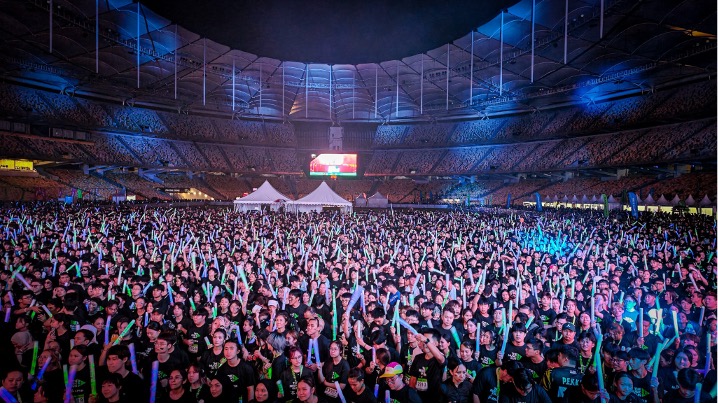
Think about some of the world’s biggest outdoor events. Whether it’s thousands of fans singing along at a K-pop concert, massive crowds gathering at music festivals, or participants crossing the finish line at large-scale fun runs and marathons, one thing connects them all: everyone expects to hear every moment clearly.
Fans spend hundreds, sometimes thousands, on tickets to watch their favourite artists perform live. Event organisers invest heavily in stage designs, LED screens, lighting effects, performers, and audience experiences. Yet all of that effort can be overshadowed by one simple problem: poor sound.
Imagine standing in a crowd of 10,000 people, eagerly waiting for the headline act to take the stage. The lights dim, the music starts, but the vocals sound distant, announcements are unclear, and the audio becomes weaker the further you move from the stage. Suddenly, the excitement begins to fade.
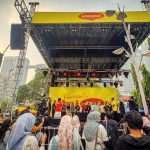
From music festivals and cultural celebrations to sporting events, product launches, food fairs, public concerts, and community gatherings, open-air events continue to attract massive audiences across Malaysia and around the world. A festival can feature world-class performers, stunning stage designs, and engaging activities but if attendees cannot hear announcements clearly, understand speeches, or enjoy music with consistent quality throughout the venue, the overall experience suffers.
Why Outdoor Events Are More Challenging Than Indoor Events
Unlike convention halls, theatres, ballrooms, and auditoriums, outdoor venues have no walls or ceilings to contain sound. This creates several unique challenges:
1. Sound Travels Differently Outdoors
In indoor environments, walls and ceilings help reflect sound waves toward audiences. Outdoors, sound energy disperses freely into open space — leaving distant audiences with lower volume levels, reduced speech intelligibility, inconsistent audio quality, and delayed sound arrival. Professional engineers must compensate through careful speaker placement, system tuning, and coverage planning.
2. Environmental Noise
Outdoor festivals compete with numerous ambient noise sources including traffic, wind, generators, nearby activities, crowd chatter, and food and vendor areas. The audio system must be powerful enough to overcome environmental noise while maintaining clarity and comfort for all attendees.
3. Venue Size and Audience Distribution
Many festivals span large grounds with multiple zones main stages, secondary stages, vendor areas, registration zones, VIP sections, food courts, and activity spaces. Ensuring consistent audio coverage across all these areas requires extensive planning and specialised equipment.
4. Weather Conditions
Wind, humidity, and temperature variations all affect how sound travels. Strong winds can push sound away from audience areas, temperature changes can alter sound propagation, and rain introduces additional equipment protection requirements — all variables that professional event teams must account for during system design.
The Role of Large-Scale Audio Systems
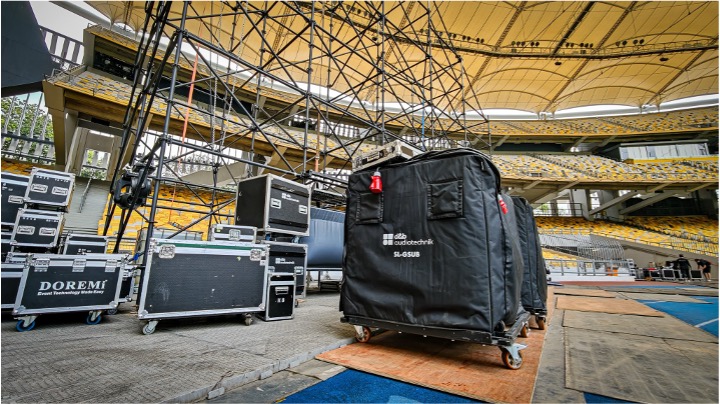
Large-scale festival audio systems are designed to provide even sound coverage across large audience areas while maintaining clarity and consistency. Their goals include clear speech reproduction, high-quality music playback, consistent volume distribution, audience comfort, and reliable operation throughout the event. The objective is not simply to make sound louder it is ensuring every attendee receives a similar listening experience regardless of where they are standing.
Why Line Array Systems Dominate Modern Festivals
One of the most significant advancements in professional live sound is the widespread adoption of line array technology. Today, line arrays are commonly seen at music festivals, stadium concerts, outdoor celebrations, government events, sporting events, and international touring productions.
A line array consists of multiple loudspeaker modules stacked vertically and precisely angled. Instead of projecting sound in all directions, the system focuses sound energy toward audience areas offering better coverage, reduced sound loss, improved speech clarity, and greater engineer control over coverage angles to match venue dimensions and audience layouts.
The Importance of Subwoofers in Outdoor Festivals
At outdoor festivals, subwoofers provide musical depth, audience engagement, physical energy, and enhanced concert experiences. Without sufficient low-frequency reinforcement, music can sound thin and lack excitement. However, deploying subwoofers effectively requires careful planning poorly positioned subwoofers can create uneven bass response, dead spots, excessive noise pollution, and phase cancellation issues.
Professional engineers use advanced techniques such as cardioid and end-fire arrays to control low-frequency energy and improve audience experiences.
Delay Towers: The Secret Behind Large Festival Coverage
As audience sizes grow, even the most powerful main speaker systems may struggle to provide consistent coverage. Delay towers are additional speaker systems positioned further away from the main stage and electronically synchronised with the primary audio system. Their benefits include improved coverage for distant audiences, lower overall volume requirements, better speech intelligibility, and reduced listener fatigue.
Without delay towers, engineers often compensate by increasing stage volume excessively creating discomfort for attendees near the front while still leaving rear audiences underserved.
Digital Audio Technology Has Changed Everything
Modern festivals rely heavily on digital audio technology that offers capabilities unimaginable just a decade ago:
Digital Mixing Consoles
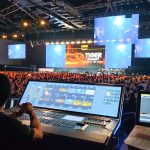
Modern digital consoles provide scene recall, multi-track recording, remote control, networked audio integration, and extensive signal processing allowing engineers to instantly switch between performances and maintain consistency throughout the event.
Audio Networking
Protocols such as Dante have transformed festival production reducing cabling, enabling faster deployment, improving flexibility, and easing troubleshooting. Audio signals can travel long distances digitally while maintaining high fidelity.
System Modelling Software
Before equipment even arrives on site, engineers use simulation software to predict coverage patterns, sound pressure levels, frequency response, and potential problem areas enabling more accurate planning and better results.
Why Speech Intelligibility Matters More Than Volume
One common misconception is that larger festivals simply require louder sound. In reality, clarity matters more than sheer volume. Attendees need to understand safety announcements, emergency instructions, event schedules, sponsor presentations, and performer introductions. Poor speech intelligibility can lead to confusion, frustration, and even safety concerns which is why professional audio systems are designed to maximise intelligibility while maintaining audience comfort.
Festival Audio and Safety
Audio systems play a significant role in event safety management. Clear communication is critical during emergency situations, evacuations, severe weather alerts, medical incidents, and crowd management. A professionally designed audio system ensures messages reach attendees quickly and clearly when it matters most one of the key reasons major festivals invest heavily in professional sound reinforcement solutions.
Audio Requirements for Different Festival Types
| Festival Type | Key Audio Requirements |
|---|---|
| Music Festivals | High-output line arrays, extensive subwoofer deployment, delay towers, advanced monitoring systems |
| Food Festivals | Distributed audio zones, clear announcements, background music coverage across vendor areas |
| Cultural Festivals | Speech clarity, live performance support, flexible coverage configurations |
| Sporting Events | Crowd engagement systems, public address capabilities, emergency communication support |
| Corporate Outdoor Events | Professional speech reinforcement, multimedia integration, consistent audience coverage |
Common Mistakes Event Organisers Make
- Choosing equipment based only on price — Selecting the cheapest option often results in inadequate coverage and poor audience experiences.
- Underestimating audience size — A system suitable for 500 attendees may struggle significantly when serving several thousand people.
- Ignoring venue layout — Trees, tents, structures, and terrain all affect sound propagation and must be factored into system design.
- Last-minute planning — Large-scale audio systems require advance planning, simulations, logistics coordination, and technical preparation.
- Failing to conduct proper sound checks — Comprehensive testing is essential before attendees arrive; there is no substitute for a full walkthrough.
Sustainability in Modern Event Audio
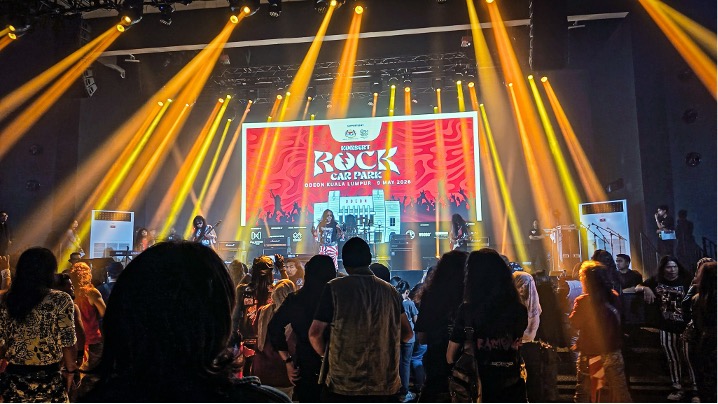
The events industry is increasingly focused on sustainability. Modern audio technologies contribute through more efficient amplifiers, reduced power consumption, lightweight equipment designs, faster deployment, and lower transportation requirements helping reduce environmental impact while maintaining high performance.
The Future of Outdoor Festival Audio
Several trends are shaping the future of festival sound:
AI-Powered System Optimisation
Network-Based Production
Immersive Audience Experiences
Sustainable Energy-Efficient Systems
Artificial intelligence and automated system tuning continue improving efficiency and consistency. Increasing reliance on digital networking allows greater flexibility and scalability. Immersive audio technologies are gradually making their way into larger outdoor productions, and manufacturers continue developing more energy-efficient and environmentally responsible systems.
Delivering Exceptional Festival Experiences Through Professional Audio
Outdoor festivals create unforgettable memories, but great experiences do not happen by accident. Behind every successful open-air event is a carefully planned and professionally executed audio system designed to overcome environmental challenges, deliver consistent coverage, and ensure every attendee remains connected to the event.
From line arrays and subwoofers to delay towers and digital audio networking, modern sound reinforcement technology enables organisers to engage audiences on a scale that was once impossible. Whether it is a community celebration, corporate activation, cultural showcase, marathon, public concert, or major music festival, investing in professional large-scale audio solutions remains one of the most important decisions any event organiser can make.
Having supported major public events, exhibitions, roadshows, festivals, concerts, sporting activations, and large-scale productions across Malaysia including projects such as the Xiaomi Pop Run, Music Run, Yamaha Booth MotoGP Sepang, Jelajah Suria tours, Selangor Aviation Show, MATTA Fair, and various large public activations experienced event production teams understand that exceptional sound is not simply about volume. It is about delivering clarity, consistency, engagement, and memorable experiences for every attendee, regardless of where they are standing.
Planning an Outdoor Festival or Large-Scale Public Event?
Our audio specialists design and deploy professional large-scale sound systems for open-air events of any size — from line array deployment and subwoofer configuration to delay towers, digital networking, and full festival audio production.