Motorsport events are built around speed, precision and excitement. Whether it is a car racing competition, motorcycle championship, rally event or motorsport festival, spectators want to stay connected to the action even when they are not positioned directly beside the track.
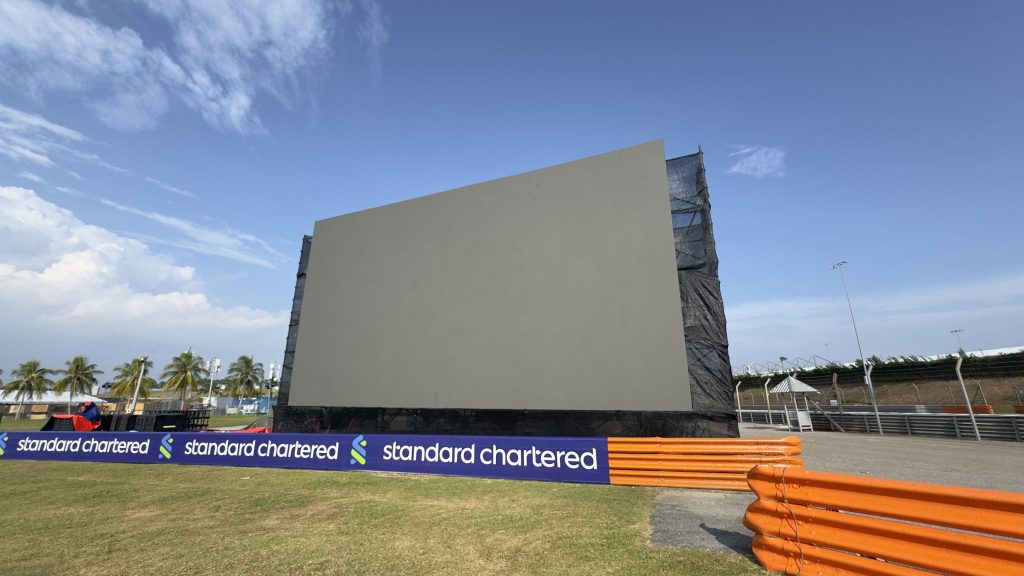
An outdoor LED screen helps bring the experience closer to the audience. It can display live race footage, event announcements, sponsor branding, race information and promotional content across different areas of the venue. For larger events, strategically positioned LED displays can help spectators follow key moments while supporting the event’s overall presentation.
However, installing an LED screen at a motorsport venue involves more than choosing a large display. Outdoor conditions, direct sunlight, dust, weather exposure, viewing distance, structural stability and screen placement all need careful consideration.
Unlike a typical indoor corporate event, motorsport venues may involve open grounds, temporary structures, vehicle movement and large spectator areas. The LED screen must be selected and installed according to the specific environment and operational requirements.
Here are the key considerations when planning outdoor LED screens for motorsport events.
Choose an Outdoor-Rated LED Screen
The first consideration is selecting an LED screen designed for outdoor use.
Motorsport events are commonly held in open environments such as racing circuits, outdoor arenas, temporary event grounds and road-based venues. These locations expose equipment to sunlight, rain, dust, humidity and changing temperatures.
An indoor LED screen is not automatically suitable for these conditions. Outdoor LED screens are designed with weather-resistant components and enclosures to provide better protection against environmental exposure.
One specification to check is the Ingress Protection (IP) rating. This indicates the level of protection an enclosure provides against solid particles and water under defined test conditions.
For example, IP65-rated equipment is dust-tight and protected against water jets. However, an IP rating should not be treated as a guarantee that the entire event installation is waterproof. The screen cabinets, connectors, cables, control equipment and power distribution arrangements must all be considered separately.
Before confirming an LED screen rental, organisers should ask the supplier about the outdoor rating of the proposed panels and the protection provided for supporting equipment.
The correct specification will depend on the actual venue conditions and the manufacturer’s equipment documentation.
Consider Screen Brightness Under Direct Sunlight
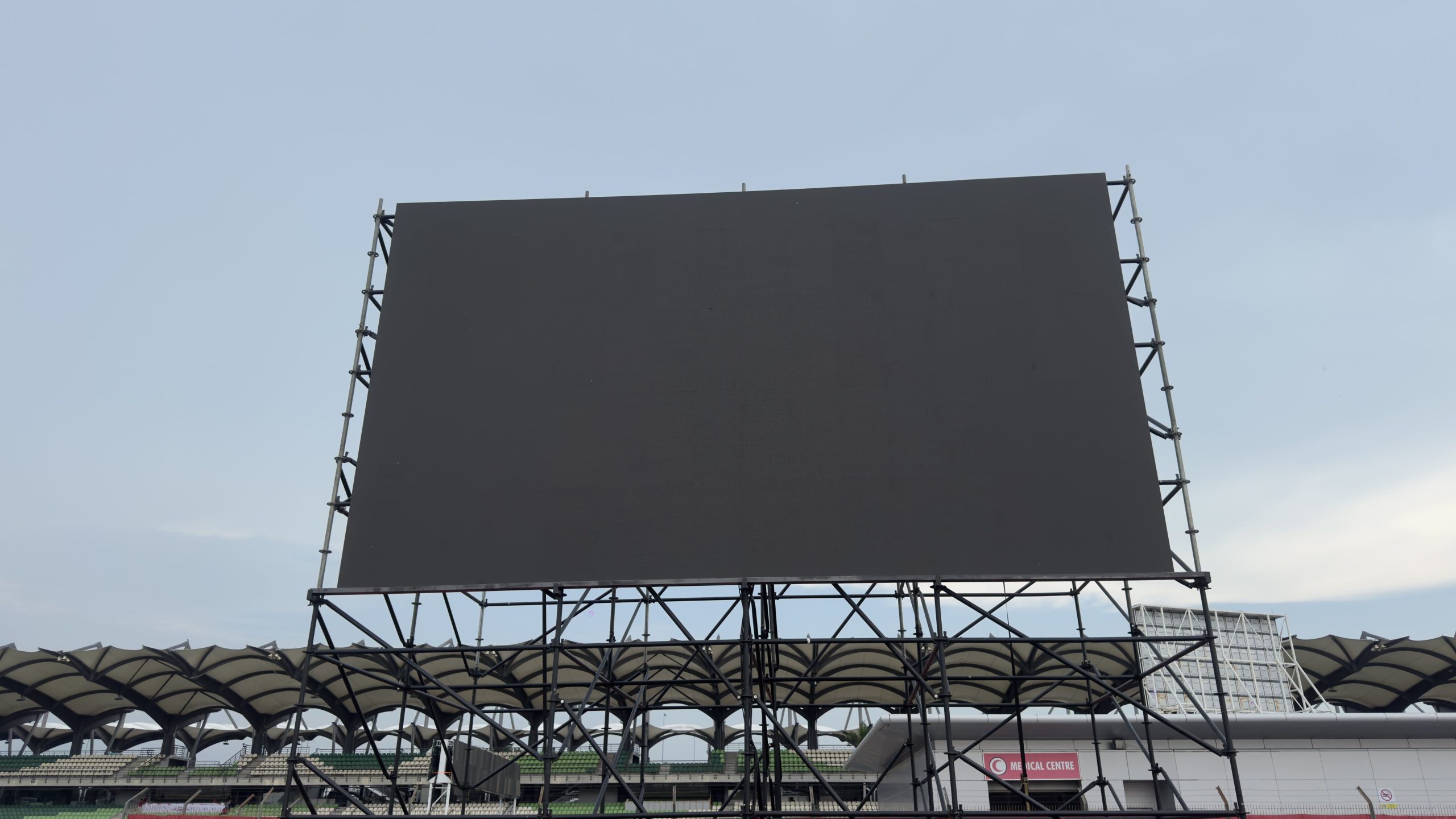 Visibility is one of the biggest challenges when using an LED screen outdoors.
At a motorsport event, spectators may be watching the screen in the middle of the day, when sunlight is strong and ambient brightness is high. A screen that looks clear in a shaded indoor environment may appear less visible when exposed to direct sunlight.
Outdoor LED screens therefore require higher brightness capabilities than typical indoor displays.
Brightness is measured in nits, or candelas per square metre (cd/m²). Outdoor display requirements vary according to the environment, screen orientation, surrounding light and time of operation. The supplied Big Screen Media guide, for example, discusses outdoor brightness ranges of approximately 2,500–7,500 nits and highlights the importance of matching brightness to the installation environment.
For motorsport events, consider the following:
Daytime races: The LED screen may need higher brightness to remain visible under strong sunlight, particularly in open spectator areas.
Evening races: Brightness should be adjustable to suit changing ambient light conditions. Running a screen at maximum brightness after sunset may create unnecessary glare.
Shaded viewing areas: Screens positioned under covered grandstands or temporary structures may have different brightness requirements from displays installed in fully exposed areas.
The objective is not simply to select the brightest available LED screen. It is to achieve comfortable, clear visibility throughout the event’s operating hours.
Select the Right Pixel Pitch and Screen Resolution
Pixel pitch is another important factor when choosing an LED screen.
It refers to the distance, measured in millimetres, between the centres of adjacent pixels. A smaller pixel pitch generally provides greater pixel density and sharper image detail, while a larger pixel pitch may be appropriate when spectators are viewing the display from further away.
At motorsport events, spectators are often spread across large areas. Some may be seated in grandstands, while others watch from fan zones, hospitality areas or designated spectator spaces.
The screen specification should therefore reflect the expected viewing distance.
For example, a screen positioned near a hospitality area may be viewed from relatively close distances. A large display installed across an open spectator area may be viewed from much further away.
Consider the type of content as well. Live race footage, sponsor advertisements and general event visuals may have different image-detail requirements from text-heavy information displays.
Choosing an appropriate pixel pitch helps balance image clarity, viewing distance and rental cost. It also avoids paying for an unnecessarily fine-pitch display when the audience will be watching from far away.
Plan LED Screen Placement Around the Circuit
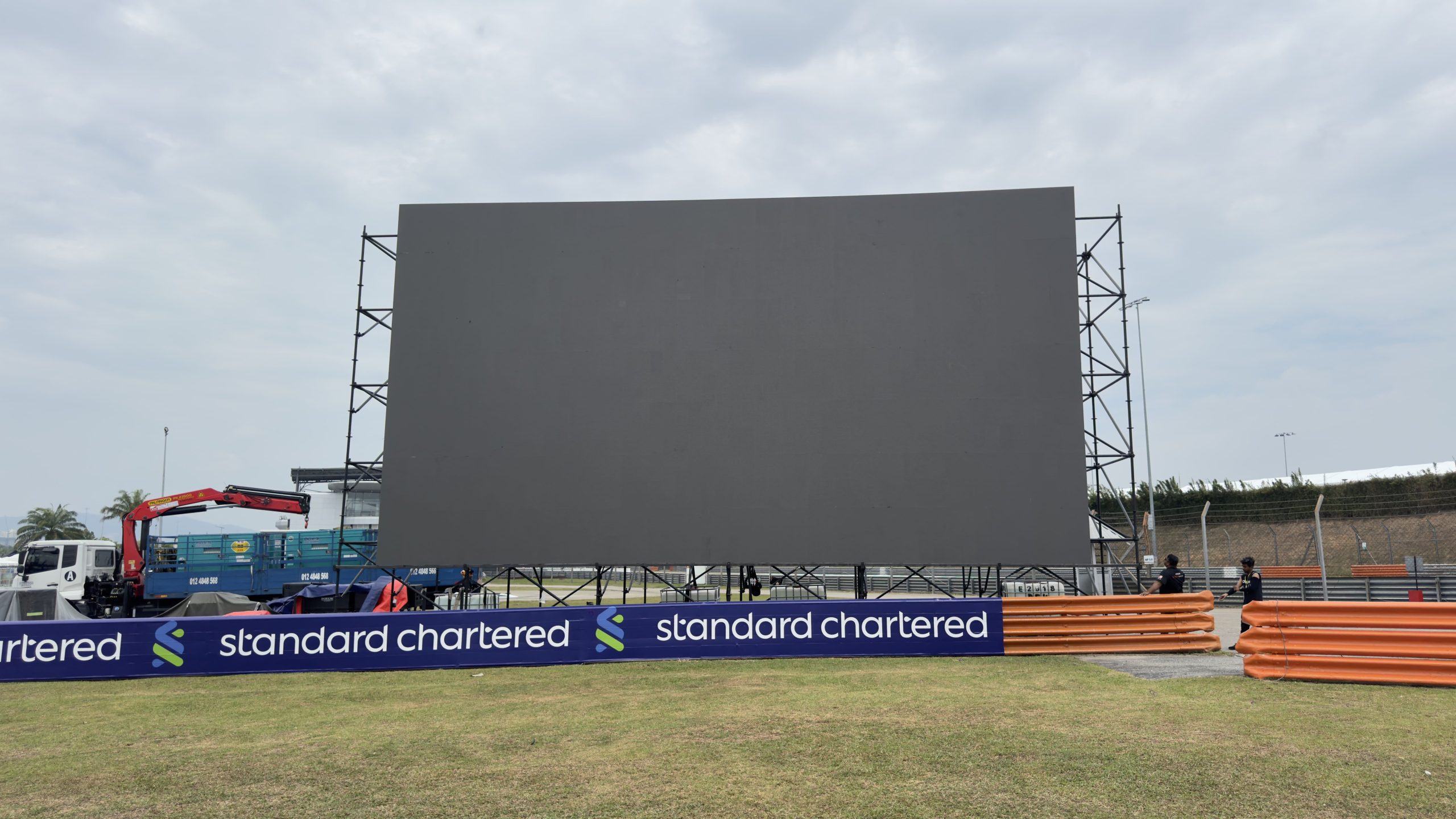 Screen placement is particularly important at motorsport events.
Unlike a ballroom or conference hall, a racing venue has defined vehicle routes, restricted operational areas, safety barriers, spectator zones and viewing restrictions. An LED screen must be positioned without interfering with these arrangements.
Potential display locations may include:
- Main spectator grandstands.
- Designated fan zones.
- Event entrances and gathering areas.
- Hospitality and VIP viewing areas.
- Paddock or promotional areas where permitted.
- Event activity zones away from vehicle movement.
The right location depends on the circuit layout and the purpose of the screen.
For example, a large LED screen near a main grandstand can help spectators follow race footage and important event announcements. Another display in a fan zone can provide entertainment and sponsor visibility for visitors who are not watching directly from the track.
However, screen placement should never compromise spectator safety, emergency access, official sightlines or circuit operations. Displays should not obstruct critical views of the track or be installed in restricted areas without the relevant approval.
Organisers should coordinate with the circuit operator, event organiser and safety team before finalising the installation positions.
The screen should improve the spectator experience while respecting the venue’s operational and safety requirements.
Assess Wind Load and Structural Stability
A large outdoor LED screen presents a substantial surface area to the surrounding environment. Wind can place significant pressure on the display and its supporting structure.
This is especially important at motorsport venues, where screens may be installed in exposed locations without nearby buildings to provide shelter.
The LED panels are only one part of the installation. The supporting truss, ground support, frame, ballast, anchoring and foundation arrangements must also be appropriate for the screen dimensions and site conditions.
Before installation, the production team should assess:
- Proposed screen dimensions and total equipment weight.
- Screen mounting method and supporting structure.
- Ground conditions and available installation space.
- Exposure to prevailing wind and other environmental conditions.
- Required engineering assessment and venue approvals.
- Access for inspection, maintenance and emergency response.
A larger screen is not necessarily a better solution if the site cannot safely accommodate its supporting structure.
Temporary event installations must also account for changing weather conditions during the event. The organiser and production team should establish suitable monitoring and contingency procedures based on the venue’s safety plan.
Structural design and approval should be handled by appropriately qualified professionals. A supplier’s screen specification alone does not establish that the complete installation is safe.
Protect Equipment Against Rain, Dust and Heat
Outdoor motorsport environments can be challenging for electronic equipment.
Dust may be present around open grounds, vehicle routes and temporary event areas. Rain can affect exposed equipment, while high temperatures and prolonged sunlight can increase the thermal demands on display systems.
An outdoor LED screen should therefore be selected with environmental protection appropriate to the location.
The production team should consider the following:
Rain protection: Outdoor-rated LED panels and suitable cable connections help reduce the risk of water ingress. Supporting control and power equipment should also be protected.
Dust exposure: Dust-resistant enclosures and appropriate maintenance practices help protect equipment in open environments.
Heat management: Screen cabinets and supporting equipment need suitable ventilation and thermal management to operate within their specified conditions.
Cable protection: Power and data cables should be routed and protected against water exposure, accidental contact and physical damage.
Maintenance access: Technicians should have a safe and practical way to inspect and service the display during the event.
It is also important to understand that an outdoor IP rating applies to a particular equipment configuration. It does not automatically protect temporary cable joints, power distribution units or other equipment connected to the screen.
Proper installation and operational procedures remain essential.
Ensure Reliable Power Supply and Signal Distribution
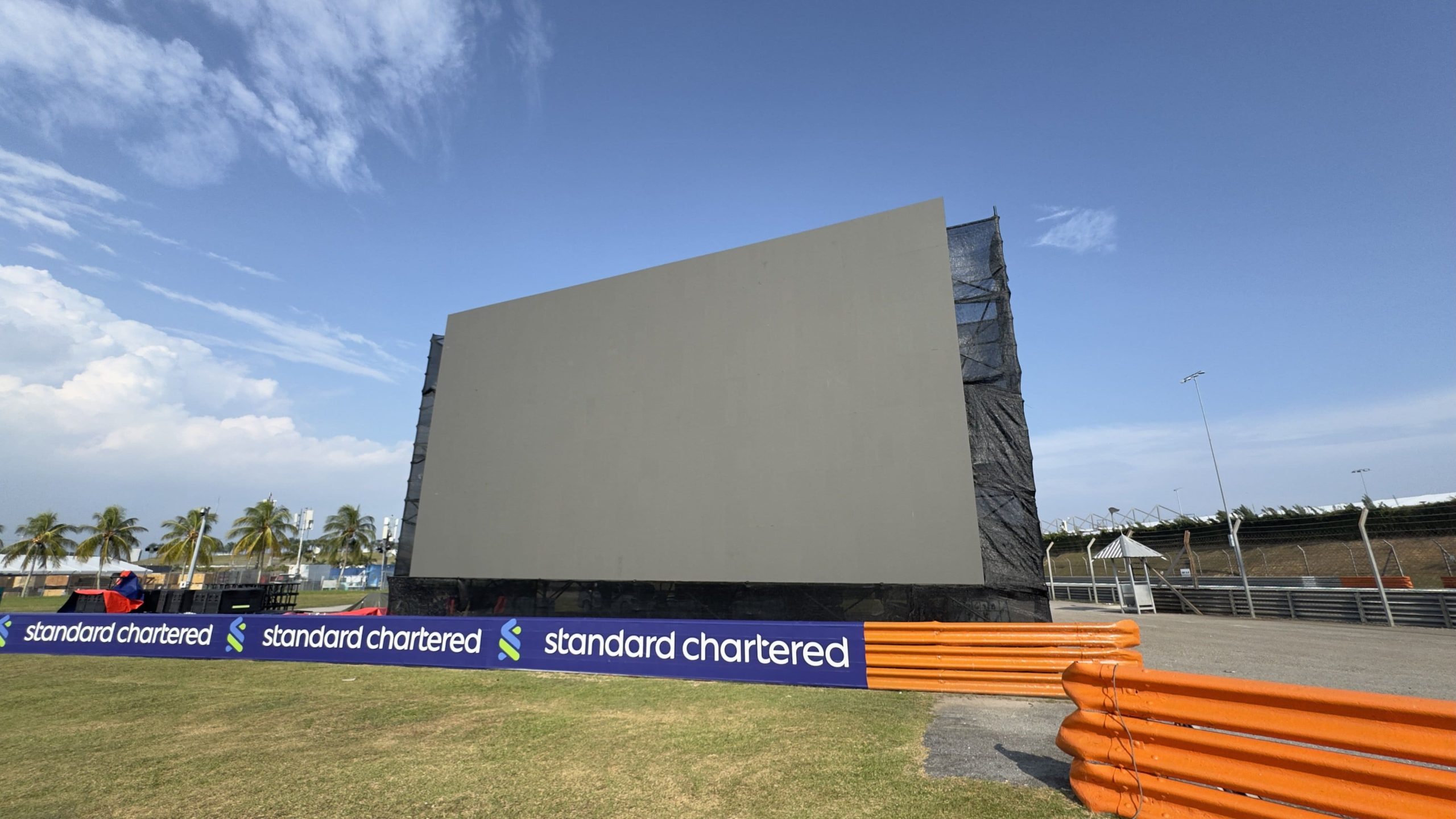 An outdoor LED screen requires a stable power supply and reliable signal transmission.
At a motorsport event, the screen may operate for extended periods and display different types of content throughout the programme. Interruptions to power or video signals can affect the spectator experience and the event’s overall presentation.
The power requirements should be calculated according to the screen dimensions, equipment specifications and operating conditions. Organisers should also confirm the available electrical supply at the installation location.
Where required, the production team may plan dedicated power distribution and suitable backup arrangements.
Signal distribution also needs attention. The LED screen may receive content from a playback system, video processor, live camera system or other event production equipment.
For larger installations, cable routes may cover considerable distances. The production team should plan appropriate signal transmission methods and protect connections from environmental exposure and accidental interference.
A technical test before the event is important to confirm that the display receives the correct signal and that the content appears as intended.
Plan Live Race Footage and Event Content
One of the biggest advantages of using LED screens at motorsport events is the ability to share live visual content with spectators.
A screen can display live camera footage, race highlights, sponsor advertisements, event announcements and other programme content.
For example, spectators in a fan zone may be able to watch a live camera feed of the race even when they are not positioned near the circuit. During breaks between sessions, the screen can display sponsor content, event information or promotional videos.
However, the content and technical workflow should be planned before the event.
If live race footage is required, organisers should confirm the camera positions, video feed source, signal routing and video switching requirements. Where official race timing, results or other live data are intended for display, the organiser should also confirm the authorised data source and the method of integration.
Content should be prepared in the correct aspect ratio and resolution for the LED screen. Text, logos and important information should be large enough to read from the intended viewing distance.
It is also useful to prepare alternative content in case a live feed becomes unavailable. This allows the screen to continue displaying event information or approved promotional visuals while technical issues are addressed.
Consider Refresh Rate and Camera Compatibility
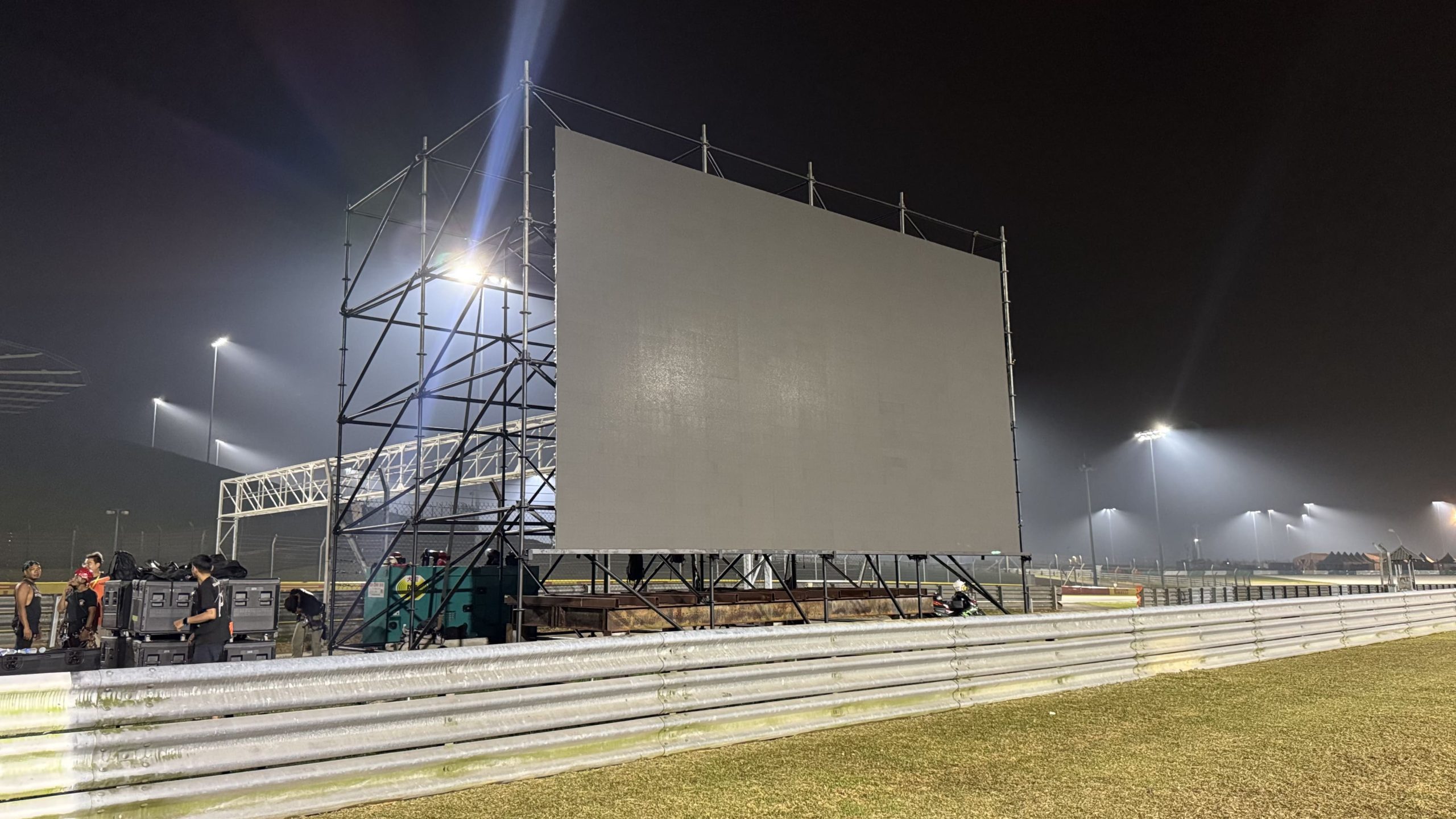 When an LED screen is used alongside live cameras, its display performance becomes another important consideration.
The screen may be captured by broadcast cameras, event cameras or mobile devices used by spectators. If the display and camera settings are not compatible, visual artefacts such as flickering, rolling bands or uneven brightness may appear in recorded footage.
The refresh rate of an LED screen is one specification to discuss with the supplier, particularly when the event includes professional video production or broadcasting.
The production team should test the actual LED screen with the intended camera equipment before the event. Camera shutter settings, frame rates, screen refresh performance and video processing should be checked together.
This is especially relevant for motorsport events that produce highlight videos, live broadcasts or social media content. A display that looks acceptable to the naked eye may not always produce the same result when recorded by a camera.
Coordinate LED Screens with the Overall Event Production
An LED screen should be planned as part of the wider event production system rather than treated as an isolated piece of equipment.
Motorsport events may require sound systems, lighting, staging, truss structures, video production and technical crew support. These elements need to work together according to the event layout and programme.
For example, an LED screen installed in a fan zone may need to work alongside a sound system for announcements and entertainment. A display near a hospitality area may require a different content and audio arrangement.
Coordination is also important during installation and dismantling. Equipment delivery, vehicle access, cable routes and technical working areas should be planned around the venue’s operational schedule.
A site inspection before the event allows the production team to understand the available space, ground conditions, power access, viewing angles and installation restrictions.
The more complex the setup, the more important it becomes to establish clear responsibilities between the organiser, venue operator, production supplier and other technical teams.
Prepare for Technical Testing and Event-Day Support
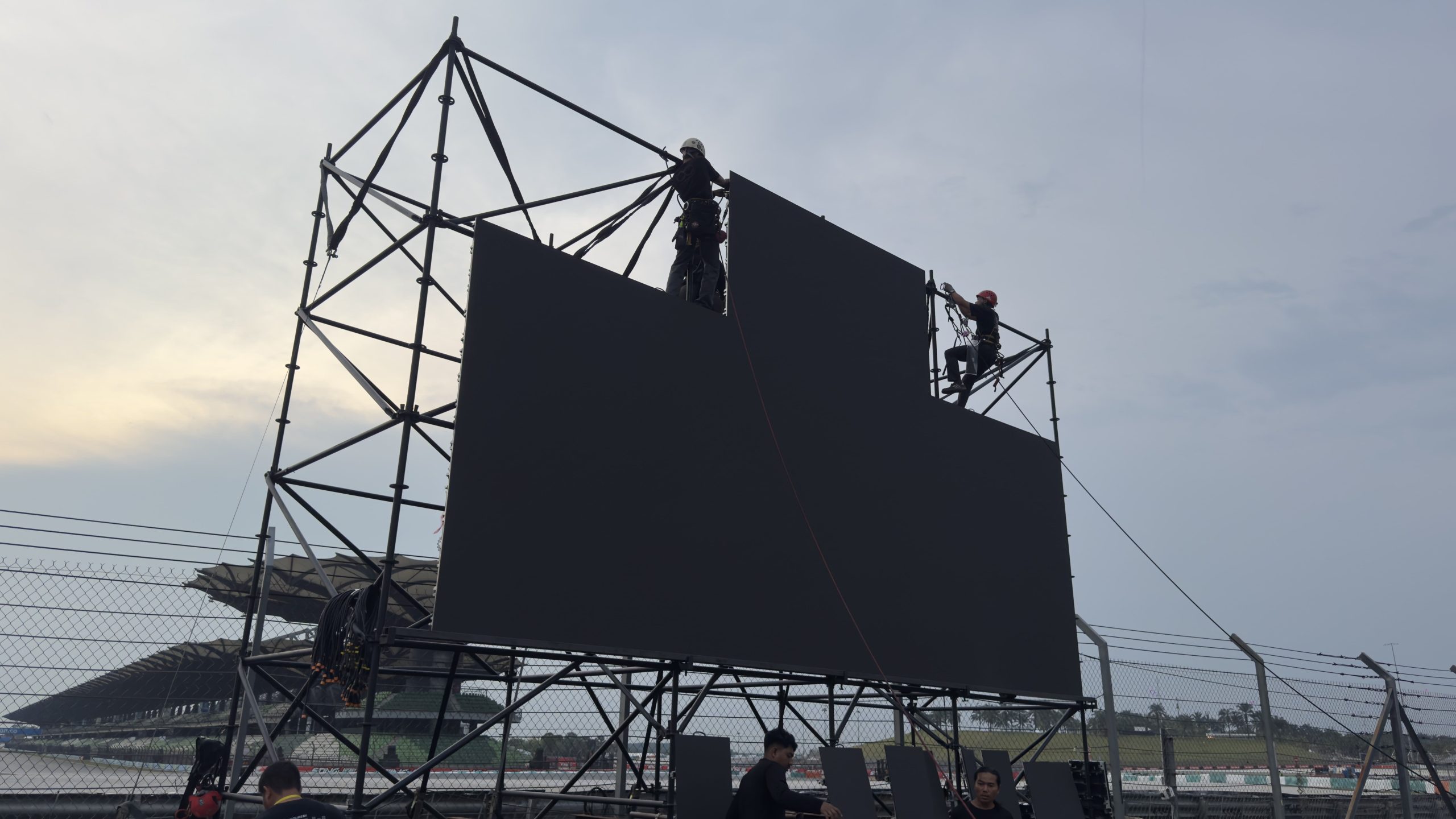 Even with careful planning, outdoor events can present unexpected challenges.
A technical rehearsal or pre-event test allows the team to identify problems before spectators arrive. This includes checking screen output, brightness, playback content, camera feeds, signal connections and power distribution.
The team should also confirm that the screen is visible from the intended audience positions and that no new obstruction has appeared during the site setup.
During the event, on-site technical support can help manage content changes, troubleshoot display issues and coordinate with other production departments.
For motorsport events with multiple race sessions, a clear content schedule is useful. It helps the operator prepare the correct visuals for opening activities, race sessions, breaks, announcements and closing segments.
Contingency planning should also cover adverse weather and other site conditions. The event organiser and technical team should follow the venue’s procedures for suspending operation or securing equipment when conditions become unsafe.
Choosing the Right Outdoor LED Screen for Motorsport Events
Outdoor LED screens can make motorsport events more engaging by bringing race footage, event information and sponsor content closer to spectators.
However, selecting the right display requires careful consideration of the venue, viewing distance, sunlight exposure, weather protection, structural requirements, power supply and content workflow.
A successful installation is not simply about having the biggest screen or the highest brightness. It is about choosing an LED screen configuration that suits the environment, supports the event programme and provides a clear viewing experience without compromising safety.
Further Reading
-
How to Choose the Right LED Screen – Big Screen Media – Covers application, environmental conditions, brightness, weather resistance and viewing distance when selecting an LED screen.
-
Outdoor LED Screen Rental and Display Considerations – Additional reference for selecting LED screens for different event environments.
Website: https://www.doremievent.com/
Planning Your Next Event with Outdoor LED Screens?
Whether you are organising a motorsport competition, racing festival, automotive launch or outdoor brand activation, the right outdoor LED screen rental can help bring your event visuals to life.
At DOREMi, we provide professional LED screen rental and event production solutions, supported by sound systems, lighting, staging, truss structures and audiovisual equipment. Our team works with event organisers to understand their venue, audience and technical requirements before recommending a suitable LED screen setup.
From large-format outdoor LED displays to integrated event production, DOREMi helps deliver visual solutions that support your event objectives.
Contact DOREMi to discuss your outdoor LED screen and event production requirements.