Outdoor events offer a different atmosphere from indoor functions. Concerts, festivals, product launches, community celebrations and corporate gatherings allow audiences to enjoy performances and activities in open spaces. However, organising an outdoor event also introduces additional production considerations, particularly when it comes to stage design, structural safety and weather conditions.
Unlike indoor venues, outdoor event spaces may not have existing stage facilities, covered areas or suitable technical infrastructure. Event organisers therefore need to consider how the stage will be installed, how performers and equipment will be accommodated, and how the setup can remain suitable throughout the event.
Choosing the right outdoor stage rental solution involves more than selecting a stage size. It requires an understanding of the event programme, venue conditions, audience capacity and technical production requirements.
Here are the key considerations when planning an outdoor stage setup in Malaysia.
Determine the Right Stage Size for Your Event
The first consideration is the size of the stage. A stage that is too small may restrict performer movement, equipment placement and event activities. On the other hand, an unnecessarily large stage may increase production costs and occupy space that could otherwise be used for the audience or other event facilities.
The appropriate stage dimensions depend on the type of event and how the stage will be used.
For a corporate event or formal ceremony, the stage may need to accommodate presenters, VIPs, award recipients and a backdrop. A concert or music festival may require additional space for musicians, instruments, microphones, monitors and stage crew.
Before confirming an outdoor stage rental arrangement, consider:
- Number of performers or presenters appearing on stage.
- Space required for musical instruments and technical equipment.
- Placement of LED screens and stage backdrops.
- Movement areas for performers and event crew.
- Stage access, stairs and audience visibility.
- Space required for special event activities or presentations.
Organisers should also consider future changes to the event programme. If the stage will accommodate several performances, its layout should support smooth transitions between different segments.
Assess the Outdoor Venue and Ground Conditions
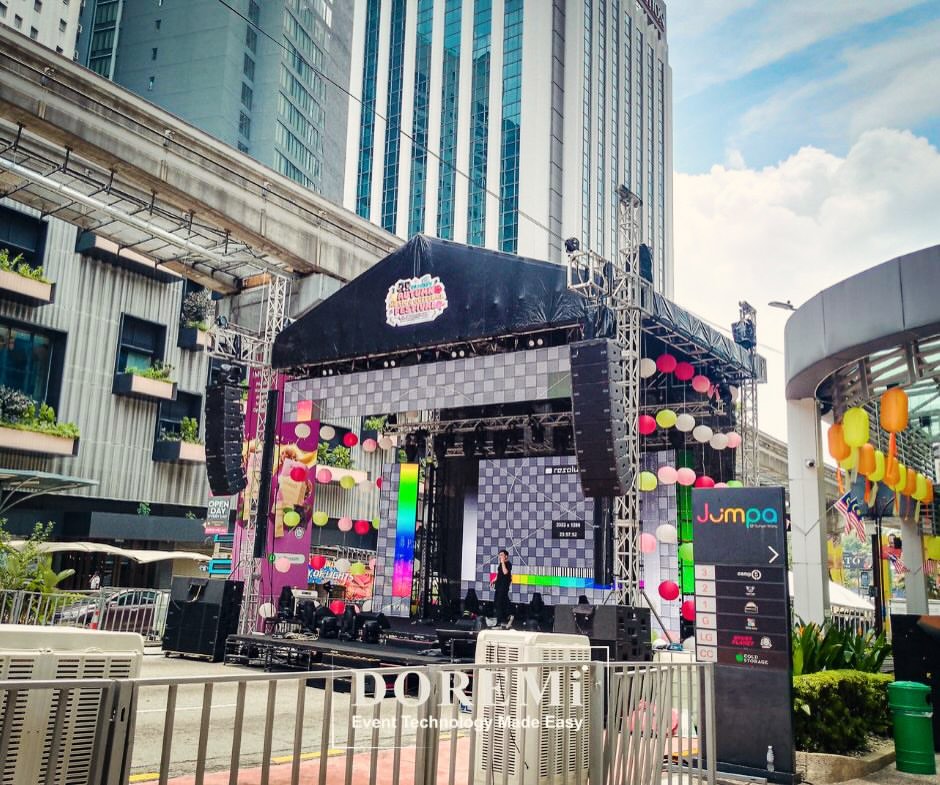 Outdoor venues are not always designed for temporary event structures. A field, car park, open plaza or public space may have different ground conditions that affect stage installation.
Before selecting a stage setup, the production team should assess the installation area. The surface should be suitable for the intended structure, and the available space should be checked for obstacles, slopes, drainage areas and access restrictions.
Important considerations include:
Ground level: Uneven surfaces may affect the installation and levelling of stage structures. The site should be assessed before installation begins.
Ground condition: Grass, soil, concrete and paved surfaces can present different installation requirements. The suitability of the surface should be evaluated according to the proposed structure and loading conditions.
Drainage: Outdoor venues should be assessed for areas where rainwater may collect, especially during Malaysia’s rainy periods.
Site access: Delivery vehicles, installation equipment and crew need suitable access to the stage area.
Surrounding structures: Trees, buildings, overhead cables and other obstacles may affect the stage position and technical layout.
A proper site assessment helps organisers identify potential issues early and select a stage configuration that suits the actual venue.
Consider Malaysia’s Weather Conditions
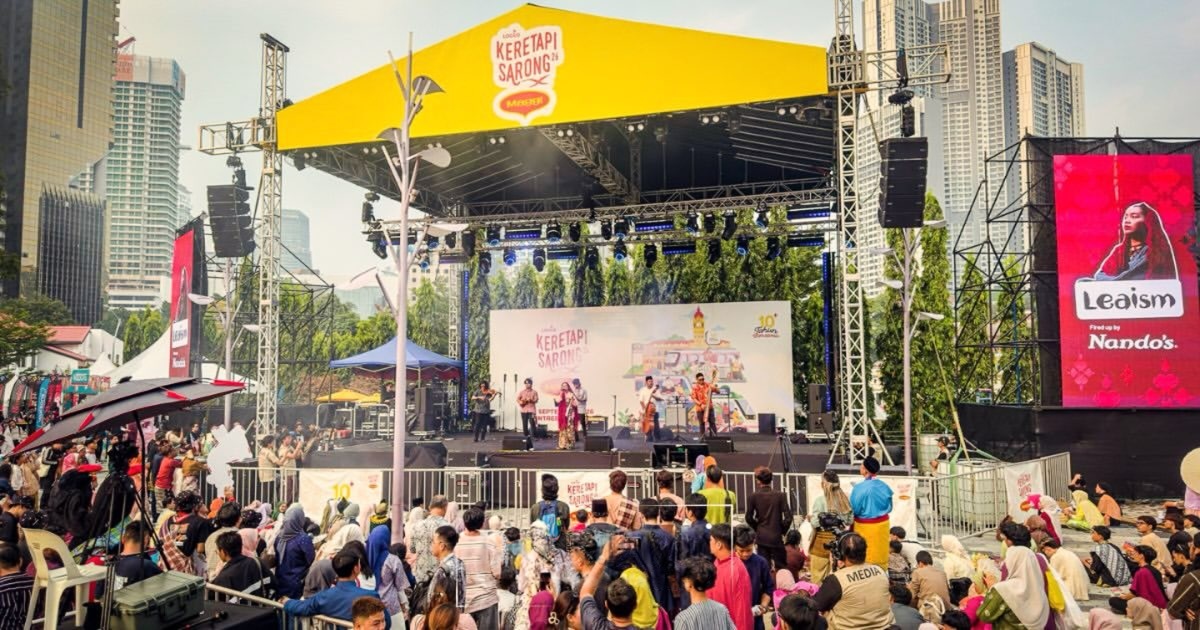 Weather is one of the most important considerations for outdoor stage rental in Malaysia. Rain, strong winds, high temperatures and changing weather conditions can affect the event setup and its operation.
Unlike indoor events, outdoor productions cannot rely entirely on the venue building for protection. Organisers need to plan for weather conditions that may affect performers, technical equipment, structures and audience comfort.
For events during rainy periods, consider whether the stage requires suitable roofing or weather protection. Technical equipment such as LED screens, sound systems and lighting fixtures may also need appropriate protection based on their design and installation conditions.
Wind is another important consideration. Large stage backdrops, banners, LED displays and overhead structures may be affected by wind loads. Structural design, securing methods and installation arrangements should be assessed by qualified personnel.
Organisers should establish a weather monitoring and contingency plan before event day. This may include procedures for pausing performances, protecting equipment, restricting access to affected areas or relocating activities where practical.
Weather planning should be part of the production process from the beginning, not something considered only when rain appears.
Plan Stage Roofing and Weather Protection
A suitable roof structure can provide protection for performers, stage equipment and selected production areas. It can also help create a more defined performance space for outdoor concerts and ceremonies.
However, the roof design must match the stage dimensions and event requirements. It should not obstruct lighting positions, LED screen visibility or other technical elements.
When planning stage roofing, consider:
- The dimensions and height required for the stage.
- Clearance for performers and stage equipment.
- Positioning of lighting fixtures and other suspended equipment.
- Water runoff and drainage arrangements.
- Wind exposure and structural requirements.
- Access for installation, inspection and dismantling.
Roofing and supporting structures should be designed and installed according to the applicable engineering and safety requirements. Organisers should not assume that adding a roof automatically makes an outdoor stage suitable for all weather conditions.
The production team should also consider whether additional protection is needed for the sound control position, lighting control area and other technical operating locations.
Integrate the Stage with LED Screens, Lighting and Sound
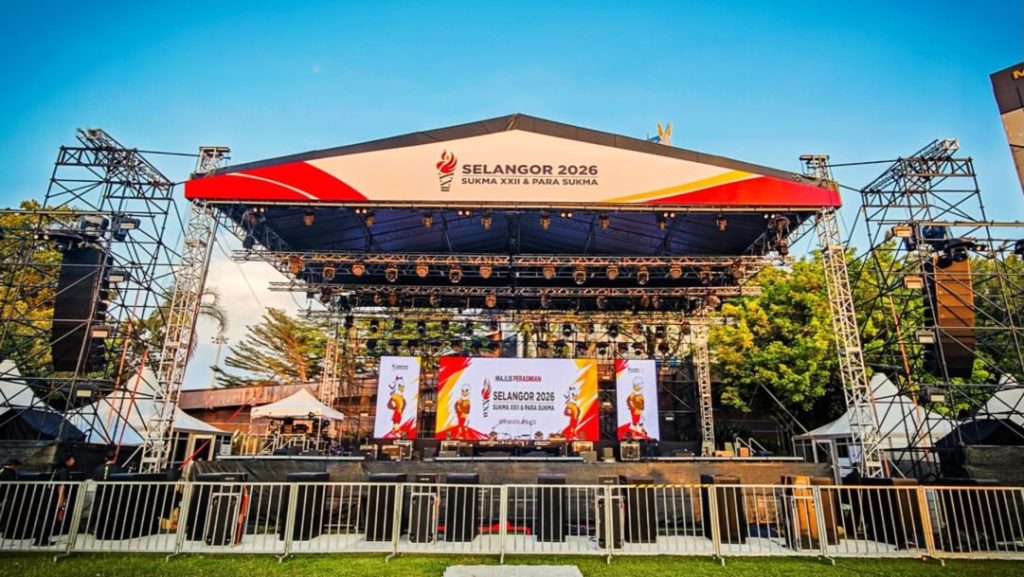
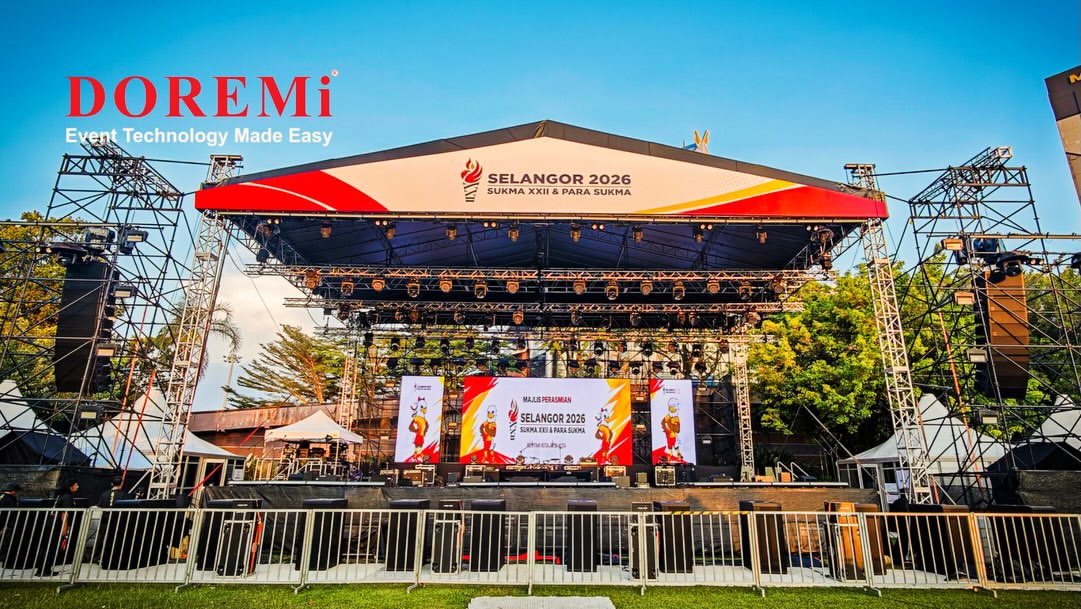 An outdoor stage is often the central part of a larger event production setup. It needs to accommodate more than performers. LED screens, lighting fixtures, sound systems and technical structures may all be required.
For example, an outdoor concert may use LED screens as a visual backdrop, allowing audiences to see performance visuals and event branding. Stage lighting can create atmosphere and highlight performers, while a properly configured sound system helps deliver audio across the audience area.
These elements need to be considered during the stage planning process.
LED screens: Screen size, position, viewing distance and structural support should be considered alongside the stage design.
Lighting: Lighting fixtures need suitable mounting positions and adequate clearance. Their placement should support the intended lighting design without obstructing performers or audience views.
Sound systems: Speaker positions should be planned according to the audience layout, stage arrangement and acoustic requirements of the outdoor environment.
Truss structures: Truss may be used to support lighting, LED displays or other production equipment, depending on the design and structural requirements.
Planning these components together helps prevent last-minute changes and allows the production team to create a more coordinated setup.
Consider Stage Access and Audience Safety
A well-designed outdoor stage should support performers and technical crew while providing safe access during the event.
Stairs, ramps where required, handrails and access routes should be considered according to the stage height, intended users and applicable safety requirements.
The stage layout should also account for the movement of performers, presenters, VIPs and crew. For example, an awards ceremony may require a clear route for recipients to enter and exit the stage without interrupting the programme.
Audience safety is equally important. Organisers should consider barriers, cable management, emergency access and separation between technical operating areas and public spaces.
Cables should be routed and protected appropriately to reduce trip hazards. Technical equipment should not obstruct emergency routes or create unnecessary access restrictions.
For larger outdoor events, the production layout should be coordinated with the event organiser, venue management and relevant safety personnel.
Allow Sufficient Time for Installation and Rehearsals
Outdoor stage installation involves several activities, including delivery, assembly, structural checks, equipment positioning and technical testing.
The installation schedule should be prepared according to the size and complexity of the setup. Larger stages with LED screens, truss structures, lighting and sound systems may require more time and coordination.
A practical production schedule should include:
- Site inspection and measurement.
- Delivery and preparation of equipment.
- Stage and structural installation.
- Installation of LED screens, lighting and sound systems.
- Technical checks and equipment testing.
- Rehearsals and programme coordination.
- Final inspection before the event opens.
Organisers should also allow time for adjustments if the actual site conditions differ from the initial plan.
Technical rehearsals are particularly important for events involving live performances, speeches or multiple programme segments. They allow the production team to check stage access, audio levels, lighting cues and screen content before the audience arrives.
Work with an Experienced Outdoor Event Production Partner
Outdoor stage rental should be considered as part of the overall event production plan. The stage must work together with the event’s technical equipment, venue conditions and programme requirements.
Working with an experienced event production partner can help organisers coordinate staging, truss structures, LED screens, sound systems and lighting as connected elements.
Instead of planning each component separately, the production team can assess the complete setup and identify potential challenges before installation begins.
This is especially useful for outdoor concerts, corporate events, festivals and public celebrations where multiple technical requirements need to be managed within a limited installation period.
Website: https://www.doremievent.com/
Planning Your Next Outdoor Event?
A successful outdoor event starts with a stage setup that suits the venue, audience and production requirements. From stage dimensions and weather protection to LED screens, lighting and sound systems, every element needs to be considered before installation.
At DOREMi, we provide event production solutions including outdoor stage rental, staging, truss structures, LED screens, professional sound systems and lighting. Our team works to coordinate the technical requirements and equipment setup for outdoor events of different formats.
Contact DOREMi to discuss your outdoor stage and event production requirements.