When the Show Cannot Afford a Power Failure
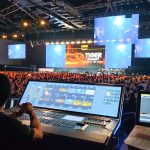
An event can have a spectacular stage design, a perfectly rehearsed programme, high-resolution LED screens and a world-class sound system — but all of that depends on one fundamental requirement: reliable electrical power.
For a small meeting, a brief interruption may be inconvenient. For a large-scale conference, concert, product launch, gala dinner or broadcast production, even a momentary power problem can have much bigger consequences. LED processors can shut down, audio systems can drop out, lighting control can be interrupted and critical production equipment may require a controlled restart.
This is why large and technically demanding events increasingly require more than simply placing a generator at the venue.
A properly engineered temporary power system may use two or more generators operating in parallel, with synchronisation controls, load-sharing systems, protection equipment and automatic transfer arrangements working together.
This approach is commonly known as a generator paralleling system or synchronised generator system.
The concept is straightforward: instead of depending entirely on one generator, multiple generator sets can be coordinated so that they operate as one controlled power source.
The engineering behind it, however, is considerably more sophisticated.
What Is a Twin-Generator System?
A twin-generator system uses two generator sets connected through a properly engineered electrical distribution and control system.
Rather than treating Generator A and Generator B as completely independent sources, a synchronisation or paralleling controller coordinates their operation.
The system can monitor parameters such as:
- Voltage
- Frequency
- Phase relationship
- Load demand
- Generator status
- Available capacity
- Engine and alternator alarms
- Circuit-breaker status
- Fault conditions
Before two generators are connected together electrically, their electrical characteristics must be sufficiently aligned. Synchronisation is the process of matching the generator output to the electrical bus before closing the relevant breaker.
This is important because generators cannot simply be connected together while operating at arbitrary voltage, frequency and phase conditions.
Modern generating-set standards recognise the requirements associated with generating sets operating in parallel. ISO 8528-5:2025, for example, covers performance criteria for reciprocating-engine-driven AC generating sets, including applications where generating sets operate in parallel.
In practical event production, this means the generators, switchgear, synchronisation controls and distribution system must be designed as one coordinated power architecture, rather than assembled as unrelated pieces of equipment.
Why Use Two Generators Instead of One Large Generator?
At first glance, using one sufficiently large generator might seem simpler.
Sometimes it is.
But there are situations where a twin-generator configuration provides advantages that a single generator cannot offer as effectively.
1. Redundancy
The biggest advantage is redundancy. If a single generator is responsible for the entire event load and it experiences a major fault, the available generating capacity can drop dramatically. With a properly designed twin-generator system, the failure of one unit does not necessarily mean that every connected load loses power. Depending on the system design and available capacity, the remaining generator may continue supplying the most important loads while lower-priority loads are automatically disconnected. This principle is particularly important when the event contains equipment that cannot simply be switched off without consequences.
2. Load Sharing
Two generators can divide the electrical demand between them. For example, if an event requires 800 kW of operating capacity, two suitably sized generators could potentially share the load rather than placing the entire demand on one machine. The exact configuration depends on the equipment ratings, operating conditions, redundancy requirements and engineering design. Load sharing can also allow generators to operate closer to an appropriate operating range rather than running one oversized machine at a very light load. The system controller manages how much real power each generator contributes, while the generators’ voltage and frequency controls work with the paralleling system to maintain stable operation. This is one reason generator load sharing is a critical concept in event power management.
3. Flexible Capacity
Event loads are rarely constant. A conference during a presentation may have relatively modest electrical demand. Later, the same venue could activate large LED walls, moving lights, audio amplification, special effects and other production equipment. A twin-generator system can provide greater flexibility because generator capacity can be brought online according to the required load, depending on the control strategy. This is particularly useful when the event has significantly different power requirements during setup, rehearsals, show operation and dismantling.
How Generator Synchronisation Works
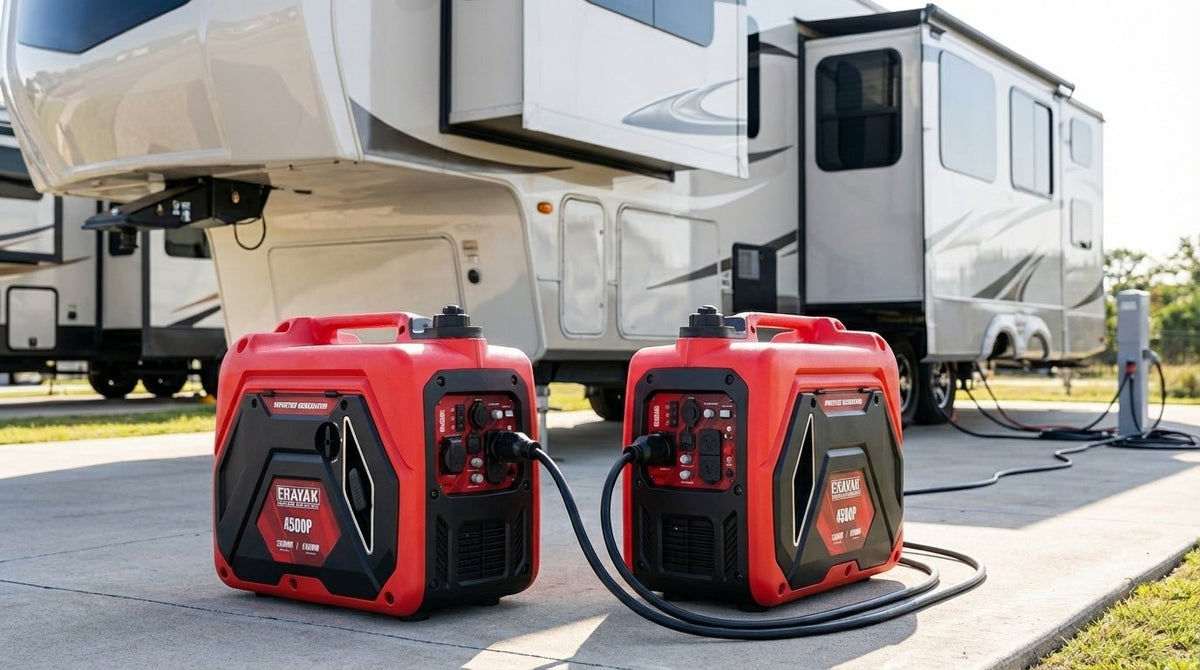
Synchronisation is one of the most important parts of a parallel generator system.
Before a generator is connected to an energised bus, the synchronisation controller checks whether the generator’s electrical output is suitable for connection. Three fundamental characteristics are particularly important:
Voltage
The generator’s voltage must be appropriately matched to the existing bus voltage.
Frequency
The generator frequency must be aligned with the bus frequency. In a typical 50 Hz system, which is relevant to Malaysia, the generator’s frequency must be controlled appropriately before paralleling.
Phase Angle
The generator’s AC waveform must be at an appropriate phase relationship with the bus. A synchronising controller continuously evaluates these conditions and determines when the generator can safely be connected. Once connected, the control system continues monitoring the generators rather than simply leaving them to operate independently. This distinction is important: synchronisation is not a one-time action. A well-engineered paralleling system continuously manages generator operation as electrical conditions change.
What Happens When Event Load Increases?
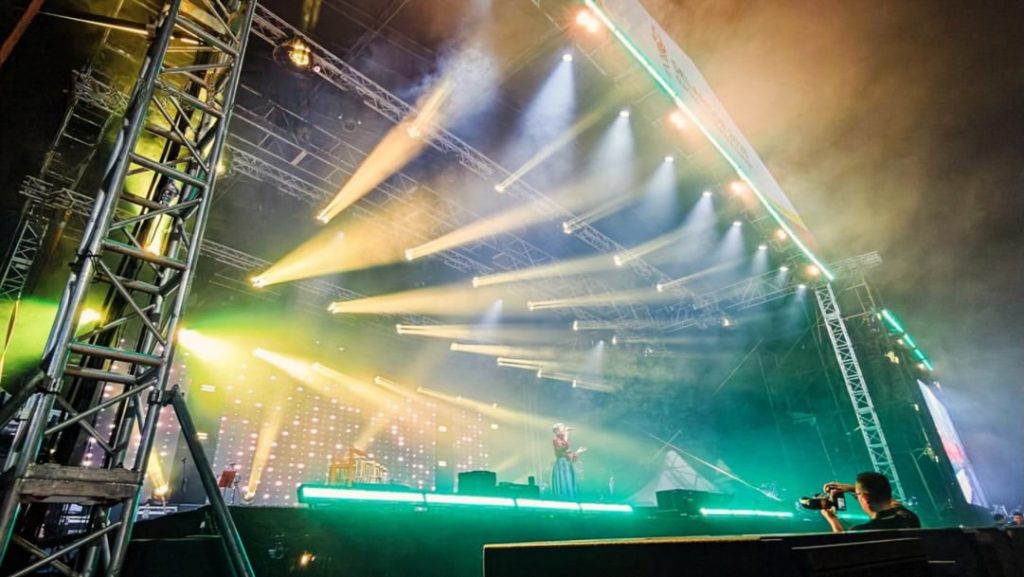
Imagine an outdoor concert where the electrical demand rises as the production moves from rehearsal into the live programme.
The power system may experience changing demand from:
- LED screens
- Video processors
- PA systems
- Amplifiers
- Stage lighting
- Moving lights
- Follow spots
- Control systems
- Broadcast equipment
- Catering equipment
- Back-of-house systems
- Temporary venue infrastructure
A properly designed power system should account for both the expected operating load and the characteristics of the connected equipment.
This is particularly important because some equipment does not behave like a simple resistive load. Power supplies, motor-driven equipment, LED systems and other electronic equipment can introduce transient or nonlinear electrical characteristics that need to be considered during system design.
The solution is not simply to add up the wattage printed on individual devices.
Event power planning requires an electrical load assessment.
Load Shedding: Protecting the Most Important Equipment
One of the most useful features of a properly engineered generator system is load shedding.
Suppose two generators are operating in parallel and one generator suddenly becomes unavailable.
If the remaining generator cannot safely support the entire connected load, attempting to maintain everything could overload the remaining unit.
Instead, the system can be designed around load priorities.
For example:
Priority 1
- Essential production control
- Critical communications
- Essential broadcast equipment
Priority 2
- Audio systems
- LED display systems
- Core lighting
Priority 3
- Non-essential decorative lighting
- Ancillary equipment
- Lower-priority temporary loads
If capacity becomes insufficient, lower-priority loads can be disconnected first so that the highest-priority equipment has the best chance of remaining operational.
NFPA documentation concerning paralleled emergency generator sets specifically discusses sequencing loads onto the emergency bus and automatically reducing loads when one or more generator sets fail.
For event production, this principle translates into an important lesson:
Not every electrical load should necessarily have the same priority.
A power plan should identify what absolutely needs to remain online and what can safely be disconnected.
The Role of the Automatic Transfer Switch
The Automatic Transfer Switch (ATS) is another important component of many standby and emergency power arrangements.
An ATS monitors the availability of a normal power source and controls the transfer of connected loads to an alternative source according to the system’s configuration and control logic.
In an event environment, transfer arrangements can become more complex because the system may involve utility power, one or more generators, temporary distribution equipment and critical production loads.
The transfer system must therefore be selected and coordinated with the overall electrical architecture.
The important point is that an ATS is not a substitute for generator synchronisation.
They perform different functions.
A simplified architecture could look like:
Utility Power → Transfer/Distribution System → Event Loads
with the generator system providing an alternate source:
Generator A + Generator B → Synchronisation & Paralleling Switchgear → Distribution → Critical Event Loads
The actual configuration depends on the venue, event requirements, electrical supply arrangement, generator specifications and applicable regulations.
Why Generator Size Alone Is Not Enough
A common mistake in event planning is asking:
“How many kVA do we need?”
That is a useful starting point, but it is not the whole question.
Professional power planning should consider:
Connected Load
What equipment will actually be connected?
Maximum Demand
What is the highest expected simultaneous demand?
Starting and Inrush Loads
Do any connected systems draw significantly higher current during startup?
Power Factor
What is the relationship between real power and apparent power for the connected loads?
Harmonics and Nonlinear Loads
How will electronic power supplies and other equipment affect the electrical system?
Distribution
How will power be distributed across the site, and are cables, panels, connectors and protection devices appropriately rated?
Redundancy
What happens if one generator becomes unavailable?
Environmental Conditions
Generator performance can be affected by site conditions such as ambient temperature, altitude, ventilation and installation environment.
Fuel and Operating Duration
How long must the system operate, and how will refuelling be managed without interrupting the event? The generator is only one part of the system.
The real objective is to design a complete temporary power network.
Generator Paralleling Is Also About Protection
Synchronisation and load sharing are only useful if the system includes appropriate electrical protection.
Depending on the installation, protection and control functions can address conditions such as:
- Overcurrent
- Short circuits
- Over/under voltage
- Over/under frequency
- Reverse power
- Loss of synchronism
- Generator faults
- Bus faults
- Emergency shutdown conditions
Protection settings should be engineered and coordinated with the equipment and electrical distribution system.
This is not an area where event organisers should rely on trial and error.
ISO 8528-13:2026, the current ISO standard covering safety requirements for reciprocating-engine-driven generating sets, addresses generating sets and associated equipment such as controlgear, switchgear and auxiliary equipment.
For temporary event installations, local electrical requirements, venue requirements and applicable safety regulations must also be considered.
Testing Is Where Reliability Becomes Real
A backup system should never be judged solely by how impressive it looks on paper.
It needs to be tested.
A generator that starts successfully in isolation is not necessarily a generator system that has been proven under event conditions.
Testing should consider the complete chain:
Generator → Synchronisation → Switchgear → Distribution → Load → Monitoring
Where appropriate, commissioning and testing can include:
- Generator start-up testing
- Synchronisation testing
- Load-sharing verification
- Transfer testing
- Protection verification
- Load-bank testing
- Emergency shutdown testing
- Communication and monitoring checks
- Failure simulations
- Inspection of cables, connectors and distribution equipment
ISO 8528-6:2023 provides test methods for characterising complete generating sets and includes simulation methods for assessing generating-set capability.
The principle is simple: test the system before the audience arrives.
Maintenance Matters More Than People Think
Even the best-designed generator system can become unreliable if maintenance is neglected.
Fuel quality, batteries, engine fluids, cooling systems, filters, belts, electrical connections, control systems and other components all require appropriate inspection and servicing.
Transfer equipment also needs attention.
NFPA material on maintenance of transfer switch equipment highlights the importance of periodic maintenance for emergency power applications.
For event production, preventive maintenance should ideally happen long before the equipment reaches the venue.
A generator should not be treated as something that is simply delivered, switched on and forgotten.
Twin Generators for Malaysian Events
Malaysia presents its own practical considerations for temporary event power.
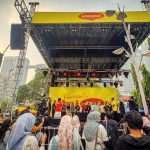
Outdoor events may face high ambient temperatures, heavy rain, high humidity and rapidly changing site conditions. Large venues may also have long cable runs between generators and production areas.
These factors make site planning just as important as generator capacity.
The location of the generators should consider:
- Ventilation
- Exhaust routing
- Noise
- Fuel access
- Weather protection
- Cable routing
- Security
- Accessibility for maintenance
- Separation from public areas
- Safe access for technical personnel
For an event production company, power planning should therefore begin during the technical planning stage rather than immediately before show day.
What a Professional Event Power Plan Should Include
For a technically demanding event, a good power plan should answer several questions before equipment arrives on site:
Where does the power come from?
Utility supply? Generators? Both?
How much power is required?
Not only total connected load, but expected operating demand and peak conditions.
Which equipment is critical?
Identify the systems that cannot tolerate an interruption.
What happens if one generator fails?
This is where redundancy and load-shedding strategy become important.
How will the generators communicate?
Synchronisation and paralleling controls must be compatible and correctly configured.
How will power be distributed?
The distribution network must be properly rated and organised.
How will the system be monitored?
Technical crews should be able to identify abnormal conditions quickly.
What happens during refuelling?
Fuel planning should account for event duration and operational requirements.
Has the complete system been tested?
A successful rehearsal is not only about the programme. It should also validate the technical infrastructure supporting it.
Zero Downtime Starts Before the Event
The phrase “zero downtime” is often used in event production, but technically it should be treated as a design objective rather than a guarantee.
No electrical system is completely immune to failure.
What professional engineering can do is reduce single points of failure, introduce redundancy, manage electrical loads intelligently and prepare the system to respond to faults.
That is the real value of a twin-generator system.
It is not simply about having two generators parked behind a stage.
It is about making two generating units operate as a coordinated system, with synchronisation, load sharing, protection, distribution, monitoring and contingency planning working together.
For major events, that difference matters.
Because when the countdown reaches zero and thousands of people are watching the stage, there is no opportunity to discover that the backup plan was never actually tested.
From Power Planning to Full Event Production
Reliable power is only one component of a successful event — but it supports almost everything else.
LED screens need stable electrical infrastructure. Audio systems need dependable power. Lighting consoles, networking equipment, video processors, broadcast systems and production control all depend on carefully planned technical infrastructure.
That is why event power should be considered alongside the wider production design from the beginning.
With more than 45 years of experience and over 45,000 projects, DOREMi Services & Rental Sdn Bhd provides event production and technology solutions covering audio, lighting, LED screens, AV systems, staging, truss, projection and event equipment rental.
DOREMi’s experience extends across corporate events, conferences, exhibitions, concerts, launches and other technically demanding productions. Its conference-production services, for example, combine AV technology with dedicated technical support and on-site production coordination.
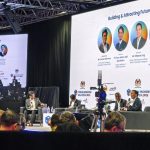
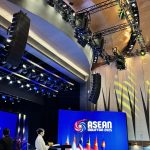
The company’s published portfolio also includes large-scale and high-profile event work, including the 47th ASEAN Summit and Related Summits in 2025, which DOREMi has highlighted among its event-production projects.
For event organisers, the takeaway is straightforward: power reliability should be engineered into the production, not treated as an afterthought.
Whether the requirement is a corporate conference, concert, gala dinner, product launch, exhibition or large outdoor production, the right technical partner can assess the venue, understand the equipment load, plan redundancy and coordinate the infrastructure required to keep the show moving.
Because the audience may remember the lights, the sound and the spectacular visuals.
But the best power system is often the one nobody notices — because everything simply keeps running.
Planning a Technically Demanding Event?
From AV and sound to LED screens, lighting, staging and technical production, DOREMi helps bring the different pieces of an event together under one production strategy.
For event organisers looking for professional event production services in Malaysia, reliable technical support and scalable event technology solutions, speak with the DOREMi team about your next production.
Event Technology Made Easy.