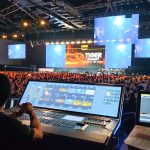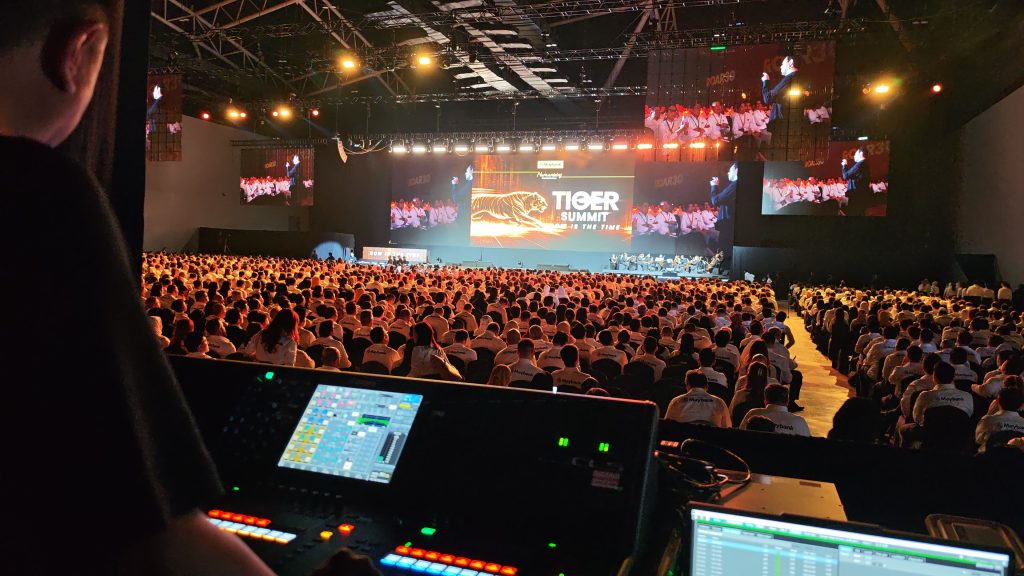
In today’s event production landscape, live experiences are no longer controlled from a single mixing desk or a basic lighting board. Modern events from corporate conferences and international exhibitions to concerts, gala dinners, hybrid summits, and product launches are now powered by fully integrated control environments often referred to as the Digital Command Center.
This command center is the operational heart of any professional production. It is where audio, lighting, video, LED systems, media servers, streaming platforms, and stage automation all come together under one unified control ecosystem. What used to be separate departments working independently has now evolved into a synchronised, software-driven environment where precision timing, real-time monitoring, and centralised decision-making define the success of the entire event.
What Is a Digital Command Center?
A Digital Command Center is a centralised control hub used to manage all technical aspects of a live event. Instead of operating lighting from one console, audio from another, video playback from a separate system, LED walls from a media server, and streaming from a laptop everything is now integrated into a unified control architecture.
At its core, a modern command center may include audio mixing consoles (digital FOH and monitor systems), lighting control desks, video switchers, media servers, LED processors, streaming encoders, intercom systems, network monitoring tools, and show control software. These systems communicate through network protocols and synchronised timecode to ensure every cue happens at the exact correct moment.
Why Modern Events Need a Command Center
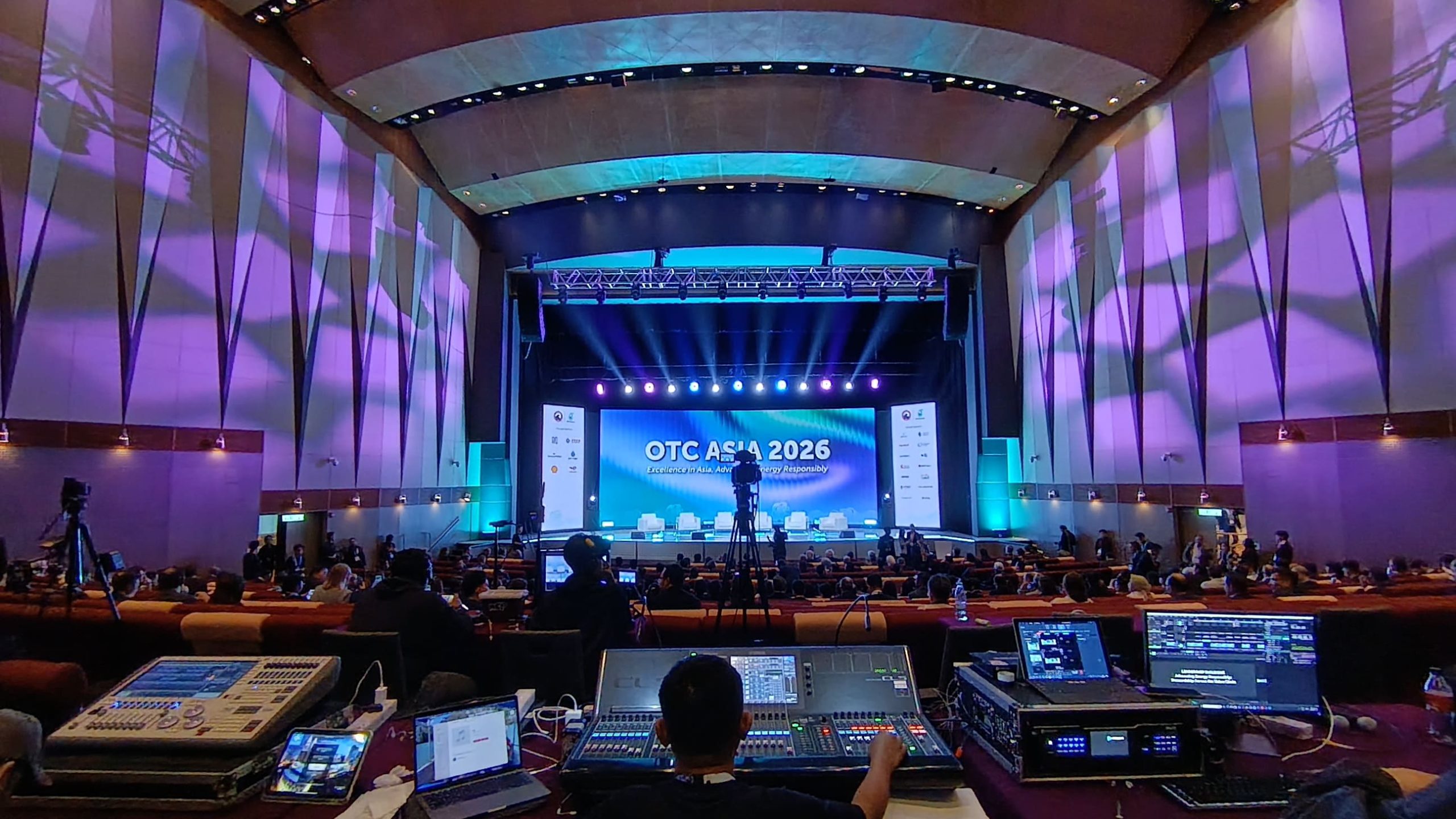
As events become more complex and hybridised, technical coordination has become more demanding than ever. A single corporate event may now include live speeches from VIPs, video presentations, real-time streaming to online audiences, multi-camera switching, LED wall content playback, stage lighting transitions, live performances, and interactive audience segments — all running simultaneously.
Without centralised control, managing these elements independently becomes risky and inefficient. The Digital Command Center solves this by enabling real-time coordination across departments, faster cue execution, reduced human error, centralised monitoring, improved redundancy and backup control, and seamless show automation.
The Core Components of a Modern AV Control Console
1. Digital Audio Consoles
Modern digital mixing consoles are no longer just soundboards they are powerful computers controlling microphone inputs, wireless systems, playback devices, live instruments, and broadcast feeds. They integrate with Dante audio networks, DSP processors, recording systems, and streaming outputs. Features include scene recall, multi-layer mixing, remote control via tablets, automated routing, and built-in processing allowing engineers to switch between speech, performance, and music modes instantly.
2. Lighting Control Systems
Lighting consoles manage everything from subtle ambient lighting to dynamic concert effects controlling moving head fixtures, LED washes, stage effects, architectural lighting, and special FX. Modern lighting systems use DMX protocols, Art-Net/sACN networking, and timecode synchronisation. Lighting designers can pre-program entire shows into cues, ensuring perfect timing during live events.
3. Video Switchers and Production Systems
Video systems handle camera switching, presentation feeds, live overlays, broadcast output, and multi-screen distribution. Operators use video switchers to transition between live camera shots, pre-recorded content, slides and presentations, and graphics overlays. Advanced systems also support multi-view monitoring, real-time chroma keying, and remote camera control (PTZ systems).
4. Media Servers for Content Playback
Media servers are responsible for running high-resolution visuals on LED walls and projection systems handling 4K/8K video playback, real-time effects, layered compositions, interactive visuals, and multi-output mapping. These systems ensure content matches complex LED designs, especially non-standard screen ratios and modular LED walls.
5. LED Control Systems
LED processors act as the bridge between video sources and LED displays, managing pixel mapping, resolution scaling, colour calibration, and signal distribution. Without proper LED control systems, even the most advanced LED walls would display distorted or misaligned visuals.
6. Show Control Software
Show control systems are the “brain” of the command center synchronising audio cues, lighting transitions, video playback, LED content, and stage automation through timecode (SMPTE), trigger-based automation, and networked commands. Popular show control workflows allow fully automated events, semi-live operator control, and backup manual override systems.
How the Digital Command Center Works During a Live Event
During a live production, the command center acts as the central nervous system. Here is a simplified workflow:
| Phase | Key Activities |
|---|---|
| Pre-Show | System testing and signal checks, audio line checks and RF scanning, lighting fixture patching, video playback testing, LED mapping calibration, cue programming verification |
| Show Start | Timecode synchronisation activated, lighting intro sequences triggered, audio playback routed, LED visuals initialised |
| During the Event | Real-time cue execution, live switching between cameras, speech and performance mixing, LED content adaptation, emergency adjustments if needed |
| Post-Show | System shutdown procedures, recording backup export, data logging and performance analysis |
Redundancy: The Silent Hero of Live Production
In high-profile events, system failure is not an option. That is why modern command centers are designed with redundancy at every level:
- Audio Redundancy — backup consoles, dual network paths, and spare microphones
- Video Redundancy — secondary switchers, backup media servers, and mirror outputs
- Power Redundancy — UPS systems, dual power supplies, and generator backups
- Network Redundancy — secondary switches and failover routing systems
This ensures the show continues even if one system fails.
Latency and Synchronisation in Control Systems
One of the biggest challenges in modern AV control is timing. Different systems operate at different speeds audio processing latency, video rendering delay, LED refresh timing, and lighting response time all vary. To maintain synchronisation, engineers use timecode systems, genlock synchronisation, frame-accurate playback, and network clock distribution. Without proper synchronisation, issues such as lip-sync errors or lighting mismatch can occur during live events.
Real-World Applications of Command Centers
Corporate Conferences
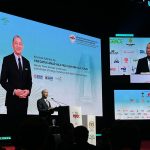
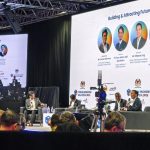
In corporate environments, command centers manage CEO speeches, presentation slides, livestream broadcasting, interpretation systems, and audience microphones. Events such as the Maybank Annual Dinner and Allianz Annual Dinner reflect how integrated AV control systems are essential for smooth corporate communication and stage management.
Exhibitions and Trade Shows
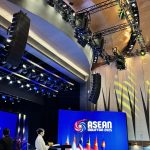
Large exhibitions require multi-zone control systems. Events such as SEMICON Southeast Asia, DSA Exhibition and Conference, and MATTA Fair rely on centralised control systems to manage multiple stages, presentations, and exhibitor zones simultaneously.
Concerts and Live Entertainment
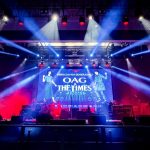
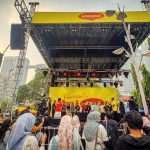
Concert productions require the highest level of synchronisation. Command centers manage lighting choreography, LED visuals, audio mixing, pyrotechnics, and stage automation simultaneously. Events such as the Carlsberg Music Festival and Music Run highlight how complex entertainment productions depend on tightly coordinated control systems.
Human Expertise Behind the Technology
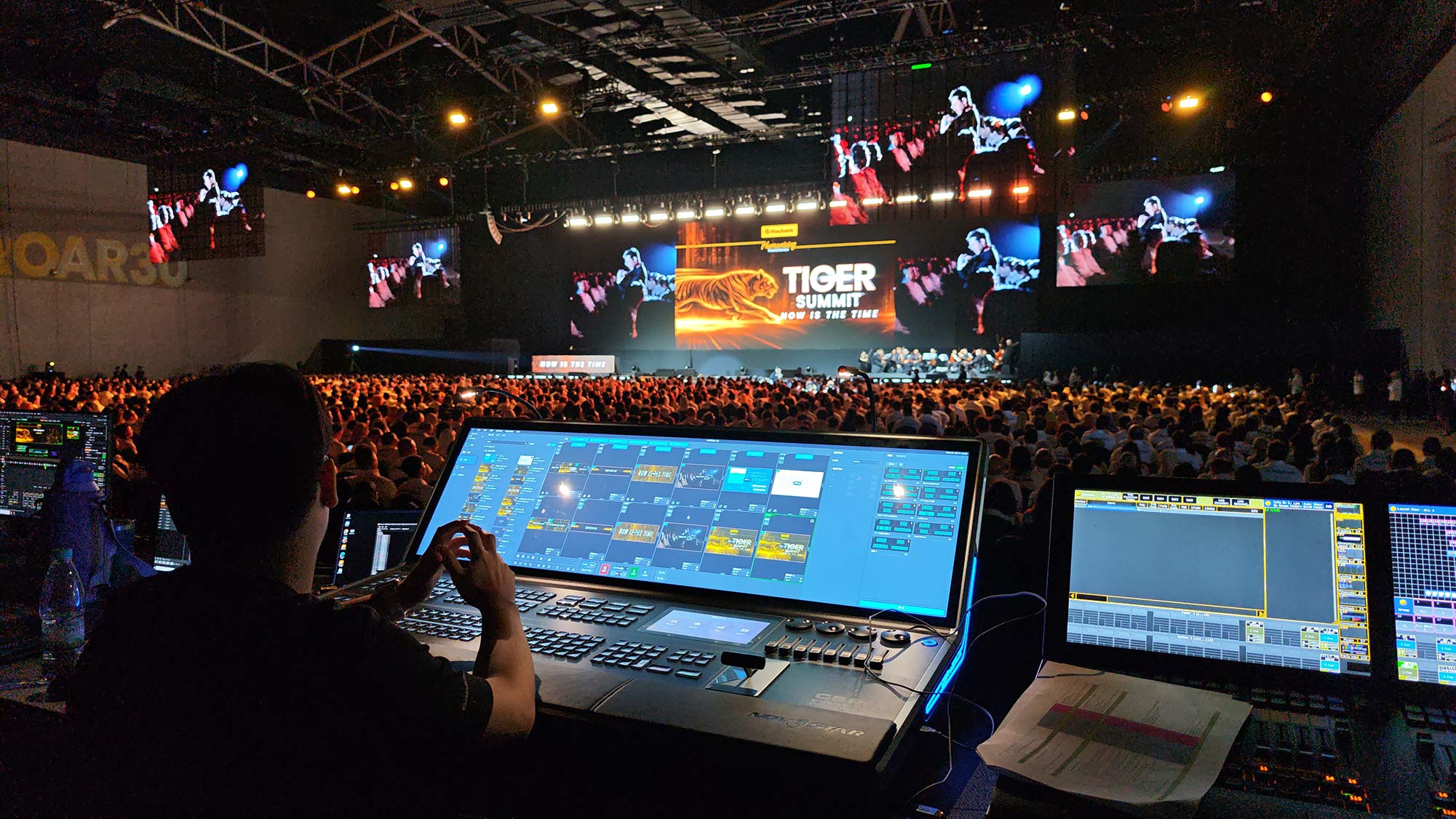
While technology is essential, the command center is ultimately operated by skilled professionals technical directors, FOH engineers, lighting designers, video operators, system engineers, and show callers. They interpret the flow of the event and make real-time decisions that technology alone cannot anticipate. A successful event is not just about equipment it is about coordination, timing, and experience.
The Future of AV Command Centers
The next evolution of digital command centers is already underway. We are moving toward environments where events can be partially operated remotely, systems self-optimise in real time, AI assists in mixing, lighting, and video decisions, and hybrid audiences become the norm:
AI-Assisted Show Control
Cloud-Based Production Systems
Remote Event Operation
Virtual Production Integration
Augmented Reality Control Layers
Automated Cue Generation
The command center will become even more powerful, connected, and intelligent.
The Heart of Every Seamless Event
The Digital Command Center represents the evolution of modern event production. It is no longer enough to have separate systems for audio, lighting, video, and LED control. Today’s live events demand fully integrated environments where every technical element works in perfect synchronisation. From corporate conferences and gala dinners to exhibitions and concerts, the command center ensures that every cue, transition, and moment happens exactly as intended smoothly, precisely, and reliably.
For integrated AV systems, technical event production, live control solutions, LED, audio, and lighting coordination across Malaysia’s event industry, DOREMi Events continues to support corporate events, exhibitions, concerts, and large-scale productions with modern, scalable event technology solutions.
Need a Fully Integrated AV Control System for Your Event?
Our technical team designs and operates complete digital command centers from audio consoles and lighting desks to video switching, LED control, show automation, and live streaming integration.