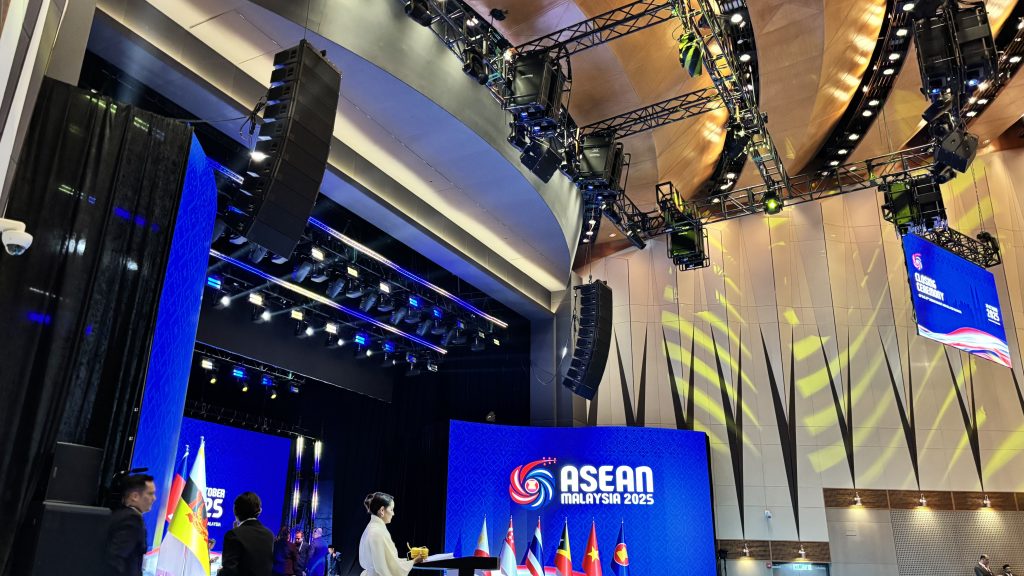
Good sound is one of the easiest things for an audience to notice when it goes wrong.
A presenter who cannot be heard clearly, a microphone that keeps feeding back, music that sounds unbalanced, or speakers that leave parts of the audience struggling to hear can quickly affect the overall event experience.
Choosing the right sound system, however, is not simply about finding the biggest speakers or the system with the highest power rating. The right setup depends on the venue, audience, event format, programme, acoustic environment and the way sound needs to reach the audience.
This is where professional sound system rental can make a difference. Instead of selecting equipment based only on specifications, the system can be planned around the actual requirements of the event.
Whether you are organising a corporate conference, product launch, annual dinner, exhibition, live performance, wedding or outdoor event, here are the key factors to consider before choosing your sound system.
Start With the Event, Not the Speakers
The first question should not be, “How many speakers do we need?”
It should be, “What does the audience need to hear?”
A corporate conference may mainly require clear speech from presenters and panelists. A product launch may combine presentations, music, announcements and a dramatic product reveal. A concert requires much more complex sound reinforcement for vocals, instruments, playback and stage monitoring.
The same sound equipment will not necessarily work equally well for all three.
Before requesting a sound system rental quotation, consider:
- What type of event is it?
- How many people are attending?
- Is the event indoors or outdoors?
- Where will the audience be seated or standing?
- How large is the stage?
- How many speakers, performers or presenters will be using microphones?
- Will there be music or video playback?
- Is the programme mainly speech, music or a combination?
- Will the event require a sound engineer?
These details give a sound provider a much better starting point than simply providing the expected number of guests.
Consider the Venue Size and Layout
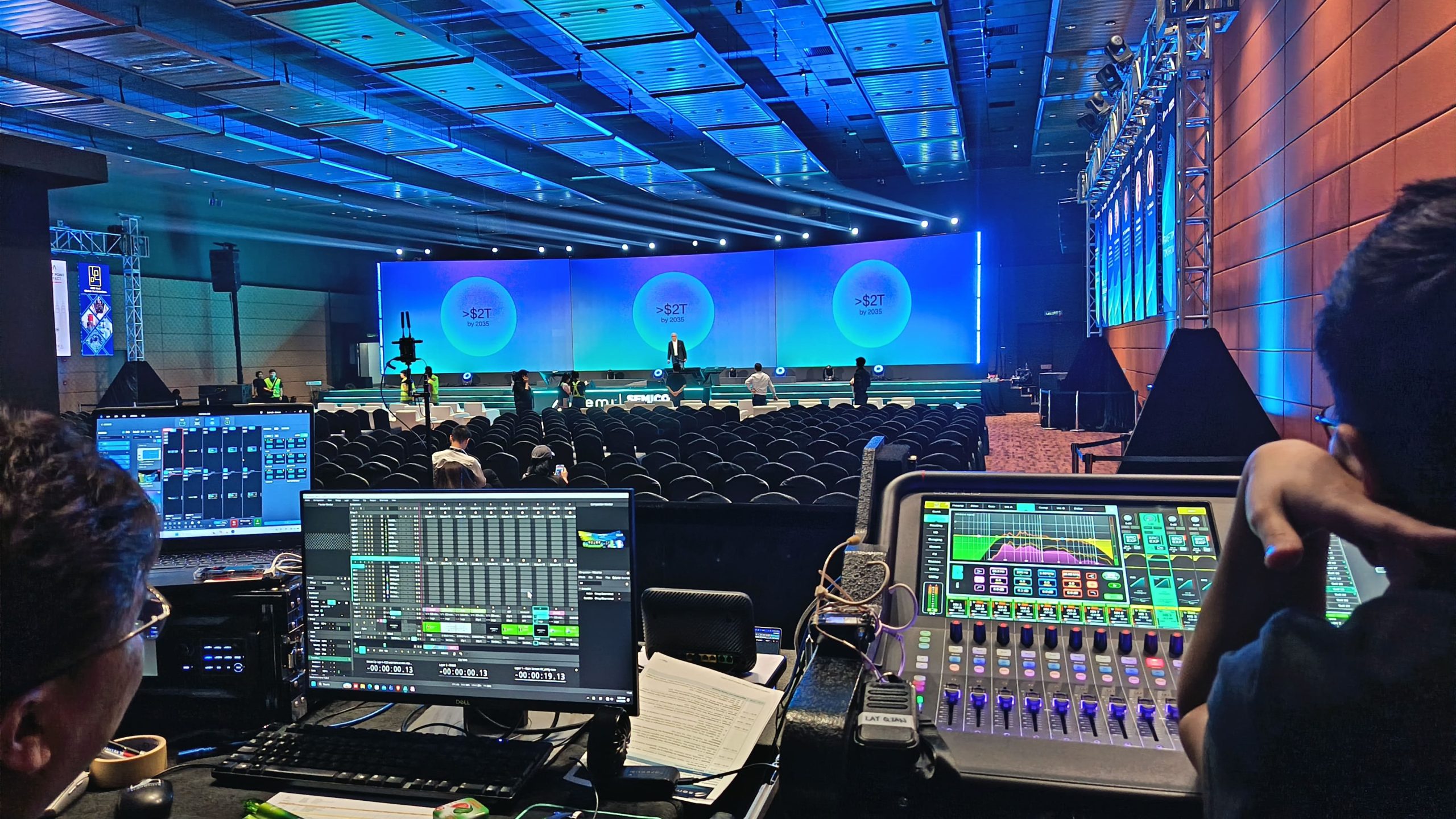 Venue size is important, but floor area alone does not determine the right sound system.
The shape of the room, ceiling height, stage position, seating arrangement and distance between the speakers and audience can all affect sound coverage.
A small meeting room may only require a compact PA system. A large ballroom may need a more distributed speaker arrangement to provide consistent coverage across the audience. A large outdoor event may require a much larger system designed to project sound across a wider area.
The objective is not to make the event as loud as possible.
It is to provide clear and consistent sound across the intended listening area.
For example, increasing the volume of speakers at the front does not necessarily solve a coverage problem at the back of a large venue. The solution may instead involve additional speaker positions, delay speakers or a different system configuration.
This is one reason professional sound system rental should begin with an assessment of the venue and audience layout.
Think About the Number of Guests — and Where They Will Be
Audience size affects the amount of sound coverage required, but the number of people alone does not tell you which system to use.
Imagine two events with 300 guests.
The first takes place in a compact ballroom with guests seated relatively close to the stage.
The second takes place outdoors, with the audience spread across a large open area.
Both events have the same number of guests, but their sound requirements can be very different.
Audience distribution matters because speakers need to cover the areas where people are actually listening.
When planning sound system rental, consider the entire audience footprint rather than only the seating capacity stated by the venue.
A professional sound provider can assess where sound needs to reach and recommend speaker placement accordingly.
Match the System to the Event Format
Different events place different demands on an audio system.
Corporate Conferences
Corporate conferences usually prioritise speech intelligibility.
Presenters, moderators and panelists need to be heard clearly, often for several hours. Depending on the programme, the setup may include wireless handheld microphones, lapel microphones, gooseneck microphones, speakers, a mixing console and audio connections for presentation or video playback.
For larger conferences, microphone management becomes increasingly important because multiple presenters may need to use microphones throughout the programme.
Product Launches
Product launches often combine speech, music, video and presentation content.
The sound system needs to support presenters while also delivering music playback and programmed audio during key moments.
If the launch includes a product reveal, countdown or performance, the audio system may also need to handle changes in volume and programme intensity.
Annual Dinners and Gala Events
Annual dinners usually involve speeches, announcements, background music, entertainment and awards.
The challenge is providing sufficient coverage without making the room unnecessarily loud.
Hotel ballrooms can also have reflective surfaces that affect speech clarity. Sound system positioning and tuning therefore become particularly important.
Concerts and Live Performances
Live performances require a much more comprehensive approach.
Depending on the scale, a professional system may include main PA speakers, subwoofers, stage monitors, microphones, mixing consoles and signal distribution.
Larger events may use line array systems where controlled sound coverage across a large audience area is required.
The system should be designed around the performers, stage, venue and audience rather than selected simply because it is the most powerful option available.
Exhibitions and Roadshows
Exhibitions present a different challenge because several sound sources may operate in the same environment.
For a booth, the objective may be to communicate with visitors without creating unnecessary noise for neighbouring exhibitors.
A compact, directional system may therefore be more appropriate than a large PA.
The right sound system rental solution should consider the surrounding environment as well as the booth or presentation area itself.
Understand the Difference Between a PA System and a Line Array
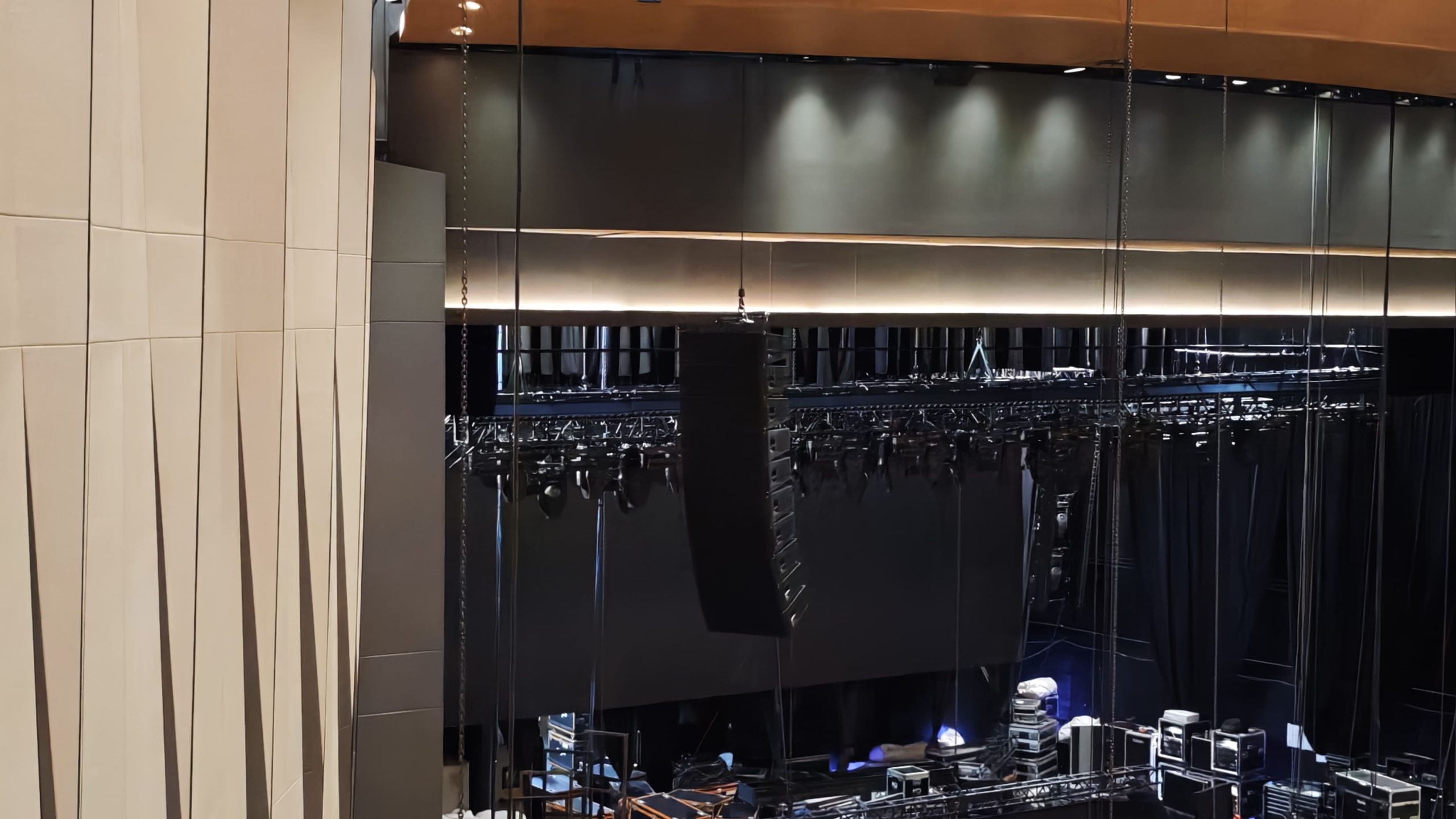 The terms PA system and line array are often used when discussing event sound, but they are not interchangeable in every situation.
A PA system is a broad term for equipment used to amplify and distribute sound to an audience. It can range from a compact setup for a small event to a professional system for a large production.
A line array is a specialised loudspeaker configuration commonly used for larger productions where controlled coverage over a larger audience area is required.
The important point is that a larger speaker system is not automatically a better speaker system.
A line array may be unnecessary for a small corporate function, while a compact PA may not provide the coverage required for a large outdoor audience.
The correct choice depends on the venue, audience distribution and programme.
Don’t Forget the Microphones
Speakers often receive most of the attention when people plan sound, but microphones are equally important.
A sound system can be technically powerful and still deliver a poor event experience if the microphones are unsuitable or poorly managed.
Consider what each person needs to do on stage.
A presenter who remains at a lectern may use a different microphone from a host who moves around the stage. A panel discussion may require several microphones operating simultaneously. A singer may require a vocal microphone, while musicians may need microphones for individual instruments.
Common microphone options include:
- Wireless handheld microphones
- Wired handheld microphones
- Lapel microphones
- Headset microphones
- Gooseneck microphones
- Instrument microphones
- Conference microphone systems
Wireless microphones provide freedom of movement, but they also require proper frequency coordination and battery management.
For important events, technical teams may also prepare backup microphones so that a single equipment issue does not interrupt the programme.
Consider the Venue’s Acoustics
A room can look excellent for an event and still be challenging for sound.
Glass walls, concrete surfaces, high ceilings and other hard materials can reflect sound. When reflections become excessive, speech can become difficult to understand.
This means turning up the volume is not always the answer.
Speaker positioning, system tuning, equalisation and the overall sound design can all influence how clearly the audience hears the programme.
This is particularly important for conferences, seminars and corporate presentations where understanding every word matters.
Professional sound system rental should therefore consider the acoustic characteristics of the venue rather than treating every room as acoustically identical.
Indoor and Outdoor Events Need Different Approaches
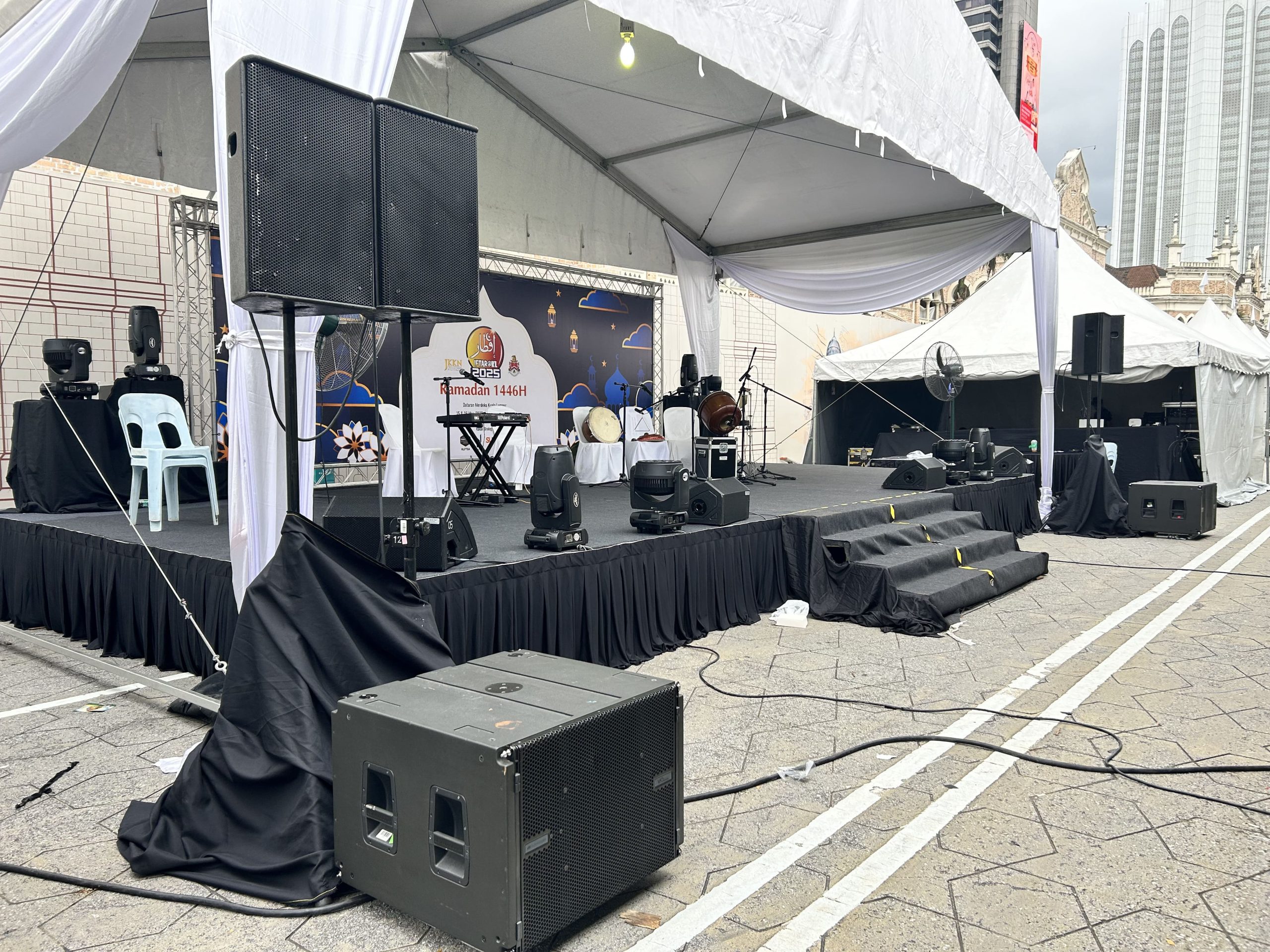 Indoor venues provide walls and ceilings that influence how sound behaves.
Outdoor events have a different set of challenges.
Without enclosing surfaces, sound can disperse differently, while wind, ambient noise and the size of the audience area can affect the listening experience.
Outdoor events may therefore require different speaker positioning and coverage strategies compared with an indoor event.
Weather also needs to be considered when equipment is being used outdoors. Protection, cable management, power distribution and contingency planning become part of the technical preparation.
For outdoor productions, the sound system should be designed around the actual site rather than simply taking an indoor setup and placing it outside.
Think About Stage Monitoring
The audience is not the only group that needs to hear the sound clearly.
Performers and presenters also need to hear what is happening on stage.
Stage monitors can allow performers to hear vocals, instruments, playback or other required audio.
For live music, monitoring becomes particularly important because performers need appropriate audio feedback while the audience is receiving the main mix.
Depending on the production, this may involve stage monitor speakers or in-ear monitoring systems.
The monitoring requirements should therefore be discussed when planning the overall sound system rental, rather than treated as an additional requirement at the last minute.
Consider the Mixing Console and Signal Flow
A sound system involves more than microphones and speakers.
The mixing console is where different audio sources can be controlled and balanced.
A typical event may have microphones, music playback, video playback and other audio sources entering the system at the same time.
The technical team needs to understand how these signals move through the system and how they will be controlled during the programme.
For a simple presentation, the setup may be relatively straightforward.
For a concert or large event, the signal flow can become considerably more complex.
This is why it is useful to discuss the full programme with your sound system rental provider rather than requesting only a speaker package.
Don’t Choose Based on Wattage Alone
One common mistake is comparing sound systems based only on wattage.
Power specifications can be useful, but they do not tell the complete story.
Coverage, speaker design, sensitivity, placement, venue acoustics, audience distance and system tuning all influence the final result.
Two systems with similar power ratings can perform differently in different environments.
Likewise, the most powerful system available may be unnecessary for a smaller event.
The better question is not, “How many watts do I need?”
It is, “What system can provide clear and appropriate coverage for my audience and venue?”
That shift in thinking can lead to a more practical and cost-effective solution.
Consider the Technical Team
Professional audio equipment still needs to be installed, connected, tested and operated correctly.
The technical team may be responsible for:
- Equipment setup
- Speaker positioning
- Microphone preparation
- Signal routing
- Mixing
- Sound checks
- Feedback management
- Playback
- Monitoring
- Troubleshooting during the event
For a small event, the operational requirements may be relatively simple.
For a conference, live performance or large production, having an experienced audio engineer can make a significant difference.
DOREMi’s current sound system rental service includes professional audio equipment and sound system engineer support, with systems recommended according to event space and attendee requirements.
Always Include a Sound Check
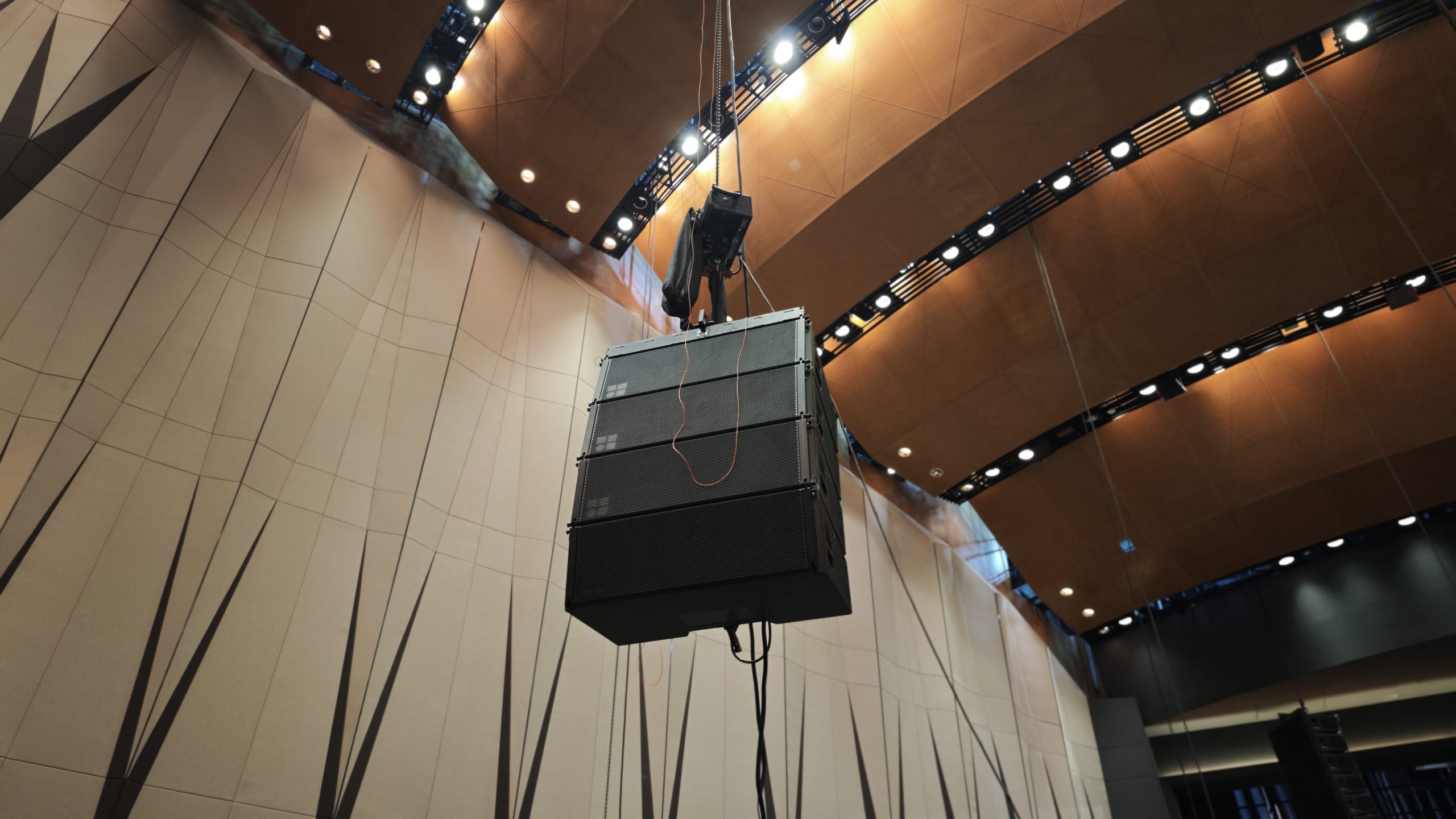 A sound system should not be tested for the first time when the audience enters the room.
A proper sound check gives the technical team an opportunity to test microphones, playback, speakers, signal routing and overall coverage.
It can also identify issues such as:
- Microphone feedback
- Incorrect microphone levels
- Missing audio connections
- Unbalanced music
- Poor speaker positioning
- Playback problems
- Wireless microphone issues
DOREMi also recommends conducting a sound check ahead of an event as part of its event equipment guidance.
For larger events, a rehearsal can go further by allowing the technical team to follow the actual programme and test transitions between presenters, videos, performances and other segments.
Ask What Is Included in the Rental
When comparing sound system rental quotations, do not compare only the equipment list.
Ask what the quotation actually includes.
For example:
| Requirement | Questions to Ask |
| Equipment | What speakers, microphones and mixers are included? |
| Delivery | Is transportation included? |
| Setup | Who installs and connects the system? |
| Sound Check | Is testing included before the event? |
| Engineer | Is an audio engineer provided? |
| Operation | Who manages the system during the event? |
| Dismantling | Is teardown included? |
| Backup | What happens if critical equipment fails? |
| Additional AV | Can the audio system integrate with LED, projection or video? |
A lower quotation may not necessarily represent better value if important technical services are excluded.
The objective should be to understand the complete scope of support.
Give Your Sound Provider the Right Information
The more accurate information you provide, the easier it is for a provider to recommend the appropriate system.
When requesting a sound system rental quotation, prepare:
Event details:
Date, duration and event type.
Venue details:
Venue name, room, floor plan and whether the event is indoors or outdoors.
Audience:
Expected number of guests and seating or standing arrangement.
Programme:
Speeches, presentations, panel discussions, music, performances, videos and other audio requirements.
Stage:
Stage dimensions and number of presenters or performers.
Microphones:
Number and type of microphones required.
Additional AV:
LED screens, projectors, cameras, livestreaming or other equipment that needs to connect to the sound system.
Technical support:
Whether you require setup, sound check, rehearsal and an on-site audio engineer.
This information allows the provider to design the system around the actual event instead of making assumptions.
Common Mistakes When Choosing a Sound System
Several mistakes can make an otherwise well-planned event unnecessarily difficult.
Choosing the biggest system
More equipment does not automatically mean better sound.
Looking only at price
The cheapest package may not include the technical support or equipment required for the programme.
Ignoring the audience layout
A system should cover where people will actually be listening.
Forgetting microphones
The number and type of microphones can significantly affect the required setup.
Ignoring venue acoustics
A powerful system cannot automatically solve an acoustic problem.
Leaving testing until showtime
Sound checks should happen before the audience arrives.
Treating sound as a standalone system
Audio often needs to integrate with presentations, LED screens, video playback, lighting cues and other event technology.
A Simple Sound System Checklist
Before confirming your sound system rental, ask:
- What type of event am I organising?
- How many people will attend?
- Where will the audience be located?
- Is the event indoors or outdoors?
- How large is the venue?
- What is the stage size?
- How many presenters or performers need microphones?
- Will there be music or video playback?
- Does the venue have acoustic challenges?
- Do performers require stage monitoring?
- Does the system need to connect with other AV equipment?
- Is a sound engineer required?
- Is sound check included?
- Is rehearsal required?
- What backup equipment is available?
- What does the rental quotation include?
Answering these questions before booking makes it much easier to select a system that fits the event.
Frequently Asked Questions
How do I know what sound system I need for my event?
Start with the event type, venue size, audience layout, programme and microphone requirements. A professional sound provider can then recommend the appropriate system based on coverage and technical requirements.
Is a bigger sound system always better?
No. A system should be appropriate for the venue and audience. An oversized system can be unnecessary, while an undersized system may not provide sufficient coverage.
Do I need a sound engineer?
For events involving multiple microphones, music, performances, complex audio routing or larger audiences, professional technical support is strongly recommended. The engineer can manage levels, mixing, sound checks and troubleshooting during the event.
What is the difference between a PA system and a line array?
A PA system is a broad term for equipment used to amplify sound to an audience. A line array is a specialised speaker configuration commonly used for larger events where controlled coverage across a larger audience area is required.
Should I rent or buy a sound system?
For organisations that hold events occasionally or have changing venue and programme requirements, rental can provide access to professional equipment without the costs of ownership, storage and maintenance. DOREMi notes that its rental solutions can be tailored to different event sizes and formats.
Further Reading
SoundMax — How to Choose the Right Sound System for Your Event
A practical guide covering venue size, audience numbers, event type, microphones, acoustics, PA systems, line arrays and what information to provide when requesting a sound system quotation.
Onyx Sound Project Consultants — How to Choose the Right Professional Audio System for Your Venue
Useful further reading on venue purpose, space, acoustics, audio zoning, equipment selection and professional system planning.
Planning Sound System Rental for Your Event?
The right sound system is not necessarily the biggest or most expensive system available.
It is the system that matches the venue, audience, programme and technical requirements while providing clear and consistent audio throughout the event.
Professional sound system rental can also provide access to suitable equipment, technical planning, setup, sound checks and on-site support without requiring an organiser to purchase and maintain an entire audio inventory.
DOREMi provides professional sound system rental solutions for corporate events, conferences, annual dinners, product launches, exhibitions, concerts, live performances, weddings and outdoor events. Its solutions can include speakers, microphones, mixers, PA systems and professional audio engineering support, planned according to the venue and event requirements.
Whether you are planning a small corporate presentation or a large live production, the most important question is simple:
Will everyone who needs to hear the event be able to hear it clearly?
That is where proper audio planning begins.
Speak with DOREMi’s event technology specialists to plan a sound system rental solution around your venue, audience and programme — from equipment selection and setup to sound check and show day.