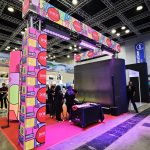
A small exhibition booth does not have to mean a small brand presence.
When floor space is limited, every part of the booth needs to work harder. The walls, display counters, lighting, product arrangement and signage all compete for attention while still leaving enough space for visitors and staff to move comfortably.
This is where LED Screen Rental and digital signage can become useful tools.
Instead of filling a compact booth with printed panels, brochures and large physical displays, a strategically positioned digital screen can create a strong visual point while allowing the brand to communicate more information within a limited footprint.
Digital signage can display videos, product demonstrations, animations, promotional messages, customer testimonials, event information and other visual content. Depending on the booth design, the display can also become part of the overall architecture rather than simply being an additional screen.
The objective is not to add technology simply because it looks impressive.
The objective is to make limited booth space more effective.
Why Small Booths Need a Different Branding Strategy
A large exhibition stand has more room to create separate zones for product demonstrations, meeting areas, displays, storage and branding.
A small booth usually does not.
Every square metre has to be considered carefully.
Adding too many physical elements can make a compact booth feel crowded. Large display structures may reduce visitor movement, while excessive printed information can make the booth difficult to understand from the aisle.
This is where digital signage offers an alternative.
One display can communicate several messages without requiring a separate physical panel for each one.
A screen can show a brand introduction during one moment, switch to a product video, display key features and then return to a call to action. With appropriate content management, digital signage can also be updated without replacing printed materials. Samsung explains that digital signage can combine screens, media players and content management systems to organise and distribute visual content.
For a small booth, this flexibility can be particularly useful.
The physical footprint stays relatively controlled while the amount of information the brand can communicate increases.
What Is Digital Signage?
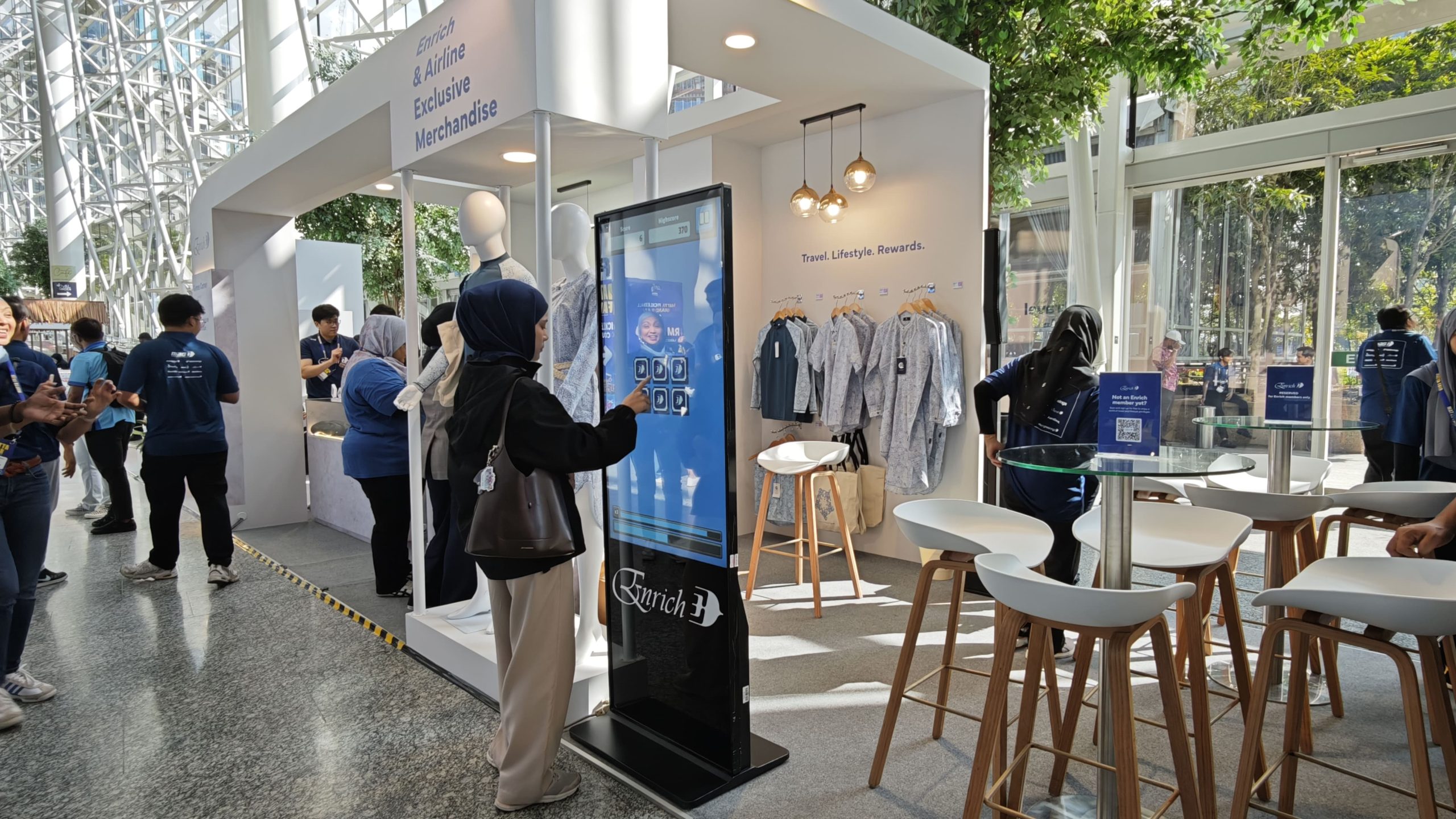 Digital signage refers broadly to the use of digital displays to communicate information, branding, advertising or other visual content.
In an exhibition environment, this can include LCD displays, LED screens, video walls, vertical displays, kiosks and interactive screens.
The technology can range from a simple screen playing a pre-produced video to a more sophisticated system where content is scheduled, updated or managed remotely.
Samsung describes digital signage as a digital screen used in place of traditional signs such as banners and printed displays. Its applications include information, advertising, wayfinding, video walls and other visual communication.
For exhibitors, the important point is that the screen is not the message itself.
The screen is the communication platform.
What matters is how the brand uses it.
How Digital Signage Can Make a Small Booth More Visible
Exhibition halls can be visually crowded.
Visitors may walk past dozens or even hundreds of exhibitors, with each booth competing for attention.
A static logo may communicate who you are, but it may not immediately communicate why someone should stop.
Digital content introduces movement and variation.
A product video can show an application that would be difficult to demonstrate physically. An animation can explain a process within a few seconds. A short customer testimonial can provide social proof. A simple promotional message can communicate an offer or campaign.
This gives a compact booth another visual layer.
Instead of relying entirely on the physical structure to attract attention, the screen becomes part of the booth’s visual identity.
The placement matters, however.
A screen hidden behind a counter or positioned where only people already standing inside the booth can see it is unlikely to perform the same role as a display that is visible from the aisle.
Visitor flow and sightlines should therefore be considered before deciding where the screen goes.
Choosing the Right Display for a Small Booth
Not every digital display is appropriate for every exhibition booth.
The correct solution depends on the booth dimensions, viewing distance, content, visitor flow and overall design.
For example, a compact booth may benefit from a vertical display because it uses height rather than taking up a large amount of floor space.
A wider booth may have enough wall space for a larger LED display.
A product-focused booth might benefit from a touchscreen that allows visitors to explore different products or features.
A display intended mainly to attract attention from the aisle may need to prioritise brightness, size and viewing angle.
Samsung notes that display selection should take into account factors such as viewing distance, mounting height, display size and the project’s objectives. It also identifies LED as a common choice for large-scale or high-brightness applications.
This is why LED Screen Rental should begin with the booth requirement rather than the equipment.
The question is not simply:
“What size LED screen can we fit?”
It should be:
“What does the screen need to accomplish?”
Vertical Digital Displays for Compact Booths
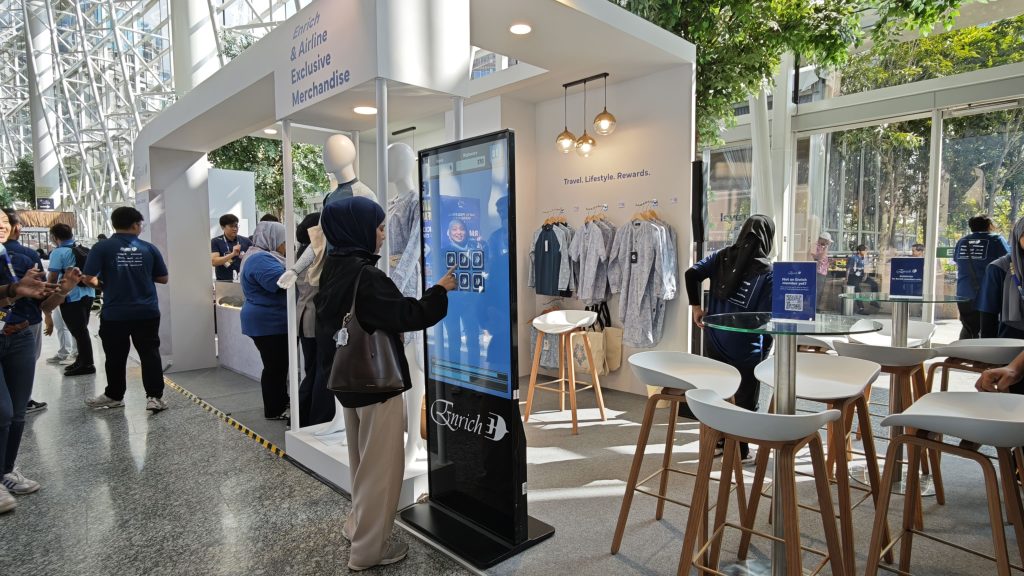
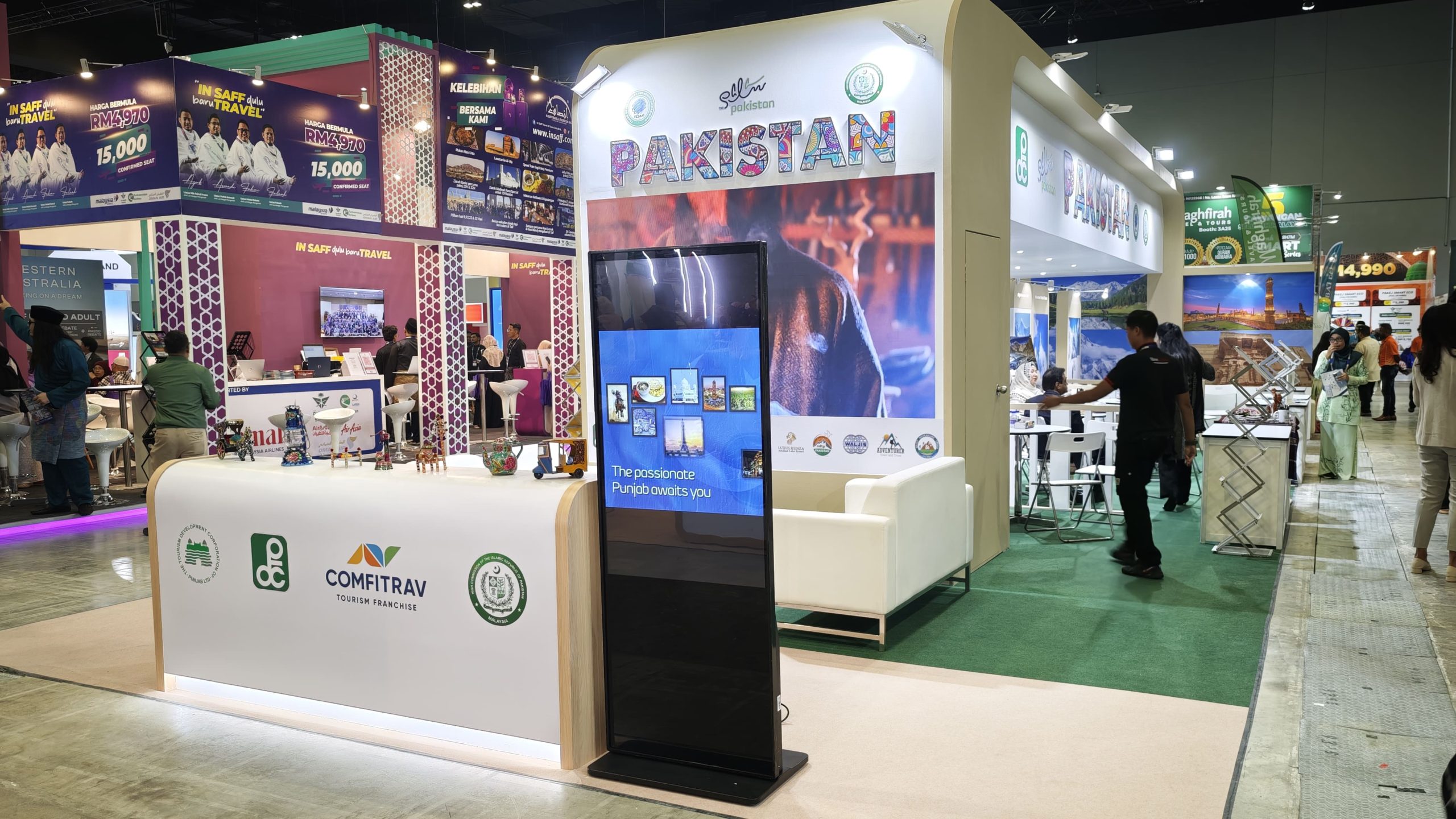 One practical approach for a small booth is a vertical or freestanding digital display.
The vertical format can create a strong visual element without occupying the same horizontal footprint as a large video wall.
This can be useful when the booth needs to accommodate:
- Product displays
- Staff and visitor interaction
- A small meeting area
- Demonstration counters
- Storage
- Printed branding
- Digital content
A vertical display can also become a visual landmark.
For example, a company could use it to show a looping brand animation that can be seen from the exhibition aisle. Once visitors enter the booth, the same screen could switch to product demonstrations or detailed information.
The content changes while the physical footprint remains the same.
DOREMi has previously highlighted the use of vertical LED totems for compact booths, where the display can provide strong visual visibility while occupying relatively little floor space.
Make the Screen Part of the Booth Design
One common mistake is treating the digital display as an afterthought.
The booth is designed first, and then someone asks where the screen can be placed.
A better approach is to consider digital signage during the booth design stage.
The screen should work with the booth’s:
- Branding
- Lighting
- Product displays
- Visitor flow
- Structural elements
- Meeting areas
- Main messaging
- Photography opportunities
For example, a screen placed directly behind a product may help reinforce the product demonstration.
A vertical display positioned at the booth entrance can attract visitors from the aisle.
A screen integrated into the rear wall can become the main visual backdrop.
The right position depends on the purpose.
A visually impressive screen in the wrong location can still have limited impact.
Content Matters More Than Simply Having a Screen
A digital display can attract attention, but attention alone does not guarantee engagement.
If the screen continuously plays a long corporate video, visitors may not stay long enough to understand the message.
Exhibition visitors are usually moving.
They may only glance at a screen for a few seconds before deciding whether to continue walking or stop.
That means content should be designed for the environment.
Instead of placing an entire presentation on the screen, consider shorter visual messages.
For example:
First message:
Who are we?
Second message:
What problem do we solve?
Third message:
What does the product do?
Fourth message:
Why should visitors care?
Final message:
Scan the QR code / Speak to our team / Book a demonstration.
The screen can then repeat the sequence.
The visitor does not need to arrive at the exact beginning of the video to understand the message.
Use Digital Signage to Demonstrate What Physical Space Cannot
One of the strongest advantages of digital signage is that it can show things that cannot physically fit inside a small booth.
Imagine a company selling industrial equipment.
The actual machinery may be too large to bring into a compact exhibition stand.
Instead, a digital display could show the equipment operating inside a factory.
A technology company could demonstrate its software through screen recordings.
A property developer could show different developments through video and animation.
An event technology company could show previous event installations.
A manufacturer could show the production process.
The physical booth remains compact while the digital content expands the story.
This is particularly valuable when the product itself is difficult to transport, demonstrate or display at full scale.
Product Demonstrations Without Taking Up More Floor Space
Digital signage can also help exhibitors demonstrate multiple products.
A traditional booth may need physical samples, printed specification panels or separate display structures.
A digital screen can rotate between products.
For example:
Product A → Product B → Product C → Product application → Customer case study
This does not eliminate the value of physical products.
Instead, the digital display can provide the supporting information.
A visitor can see the physical product while watching a short demonstration of how it works.
This combination can make a small booth feel more informative without adding significantly more physical structures.
Turn the Screen Into a Lead-Generation Tool
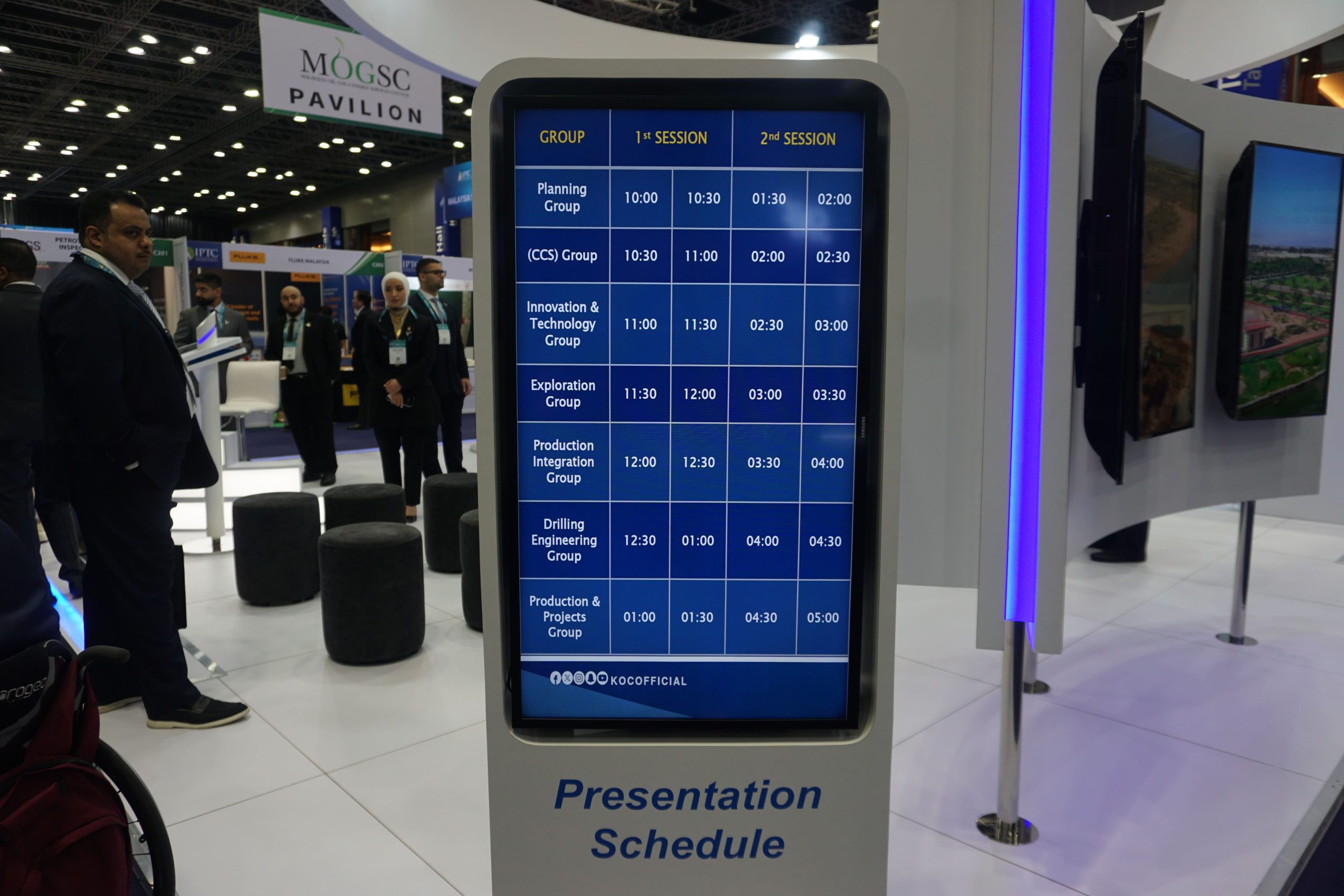 Digital signage does not have to stop at branding.
It can also support the next step in the visitor journey.
A simple QR code can direct visitors to:
- Product catalogues
- Registration forms
- Appointment booking
- Product demonstrations
- Company websites
- Social media
- Promotional campaigns
- Downloadable brochures
For example, a screen might display:
Interested in a demonstration? Scan here.
The screen attracts attention, the message creates interest, and the QR code provides a clear action.
This creates a simple connection between physical exhibition activity and digital engagement.
If interactive hardware is appropriate, a touchscreen can take this further by allowing visitors to browse product information or complete a form directly at the booth.
The important point is to avoid making the interaction unnecessarily complicated.
The visitor should understand what to do within a few seconds.
Digital Signage Can Reduce Reliance on Static Materials
Printed materials still have a place in exhibitions.
However, printing every product variation, specification and promotional message can become difficult to manage.
Digital content provides flexibility.
If a product message changes, the content can be updated.
If a promotion ends, the screen can display a new campaign.
If different visitor groups are expected on different days, content can potentially be scheduled accordingly.
Samsung notes that digital signage systems can use content management tools to upload, schedule and distribute content across displays, with some systems also supporting remote management.
For exhibitors attending multiple events, this can also make the physical booth structure more reusable.
The hardware can remain consistent while the digital content changes for each campaign.
Consider Brightness, Viewing Distance and Screen Position
The visual performance of a digital display depends on more than resolution.
For an exhibition booth, several practical factors need to be considered.
Brightness
The screen needs to remain visible within the lighting conditions of the exhibition hall.
A display that looks excellent in a dark environment may perform differently in a brightly lit exhibition space.
Viewing Distance
The ideal display size depends partly on how far away the audience will be when viewing the content.
A small screen may work well when visitors are standing directly in front of it but may have limited impact from the aisle.
Mounting Height
A screen positioned too low may be blocked by people or booth furniture.
A screen positioned too high may become difficult to engage with.
Viewing Angle
The display should be positioned according to the direction from which visitors approach.
A screen facing away from the main visitor flow may waste much of its potential visibility.
These considerations should be discussed when planning LED Screen Rental, particularly when the objective is to attract visitors from outside the booth.
Match Digital Content With Your Brand
Digital signage should not look disconnected from the rest of the booth.
The visual language should match the brand.
Consider:
- Brand colours
- Typography
- Logo placement
- Product photography
- Animation style
- Tone of messaging
- Video quality
- Call-to-action design
The screen should feel like part of the booth rather than a television that happens to be playing in the corner.
This is especially important when the booth is being photographed or filmed.
The digital display can become part of the brand’s visual identity in event photos, social media posts and marketing content after the exhibition.
Don’t Overload the Screen
More information does not necessarily create more impact.
A common mistake is attempting to display every product, service, specification and company achievement simultaneously.
The result can be visually crowded.
Digital signage works better when each screen has a clear purpose.
For example:
Screen objective: Brand awareness
→ Short visual brand story
Screen objective: Product education
→ Product demonstration
Screen objective: Lead generation
→ Offer + QR code
Screen objective: Social proof
→ Customer case study
The content can rotate, but each message should remain easy to understand.
When Should You Consider LED Screen Rental for a Small Booth?
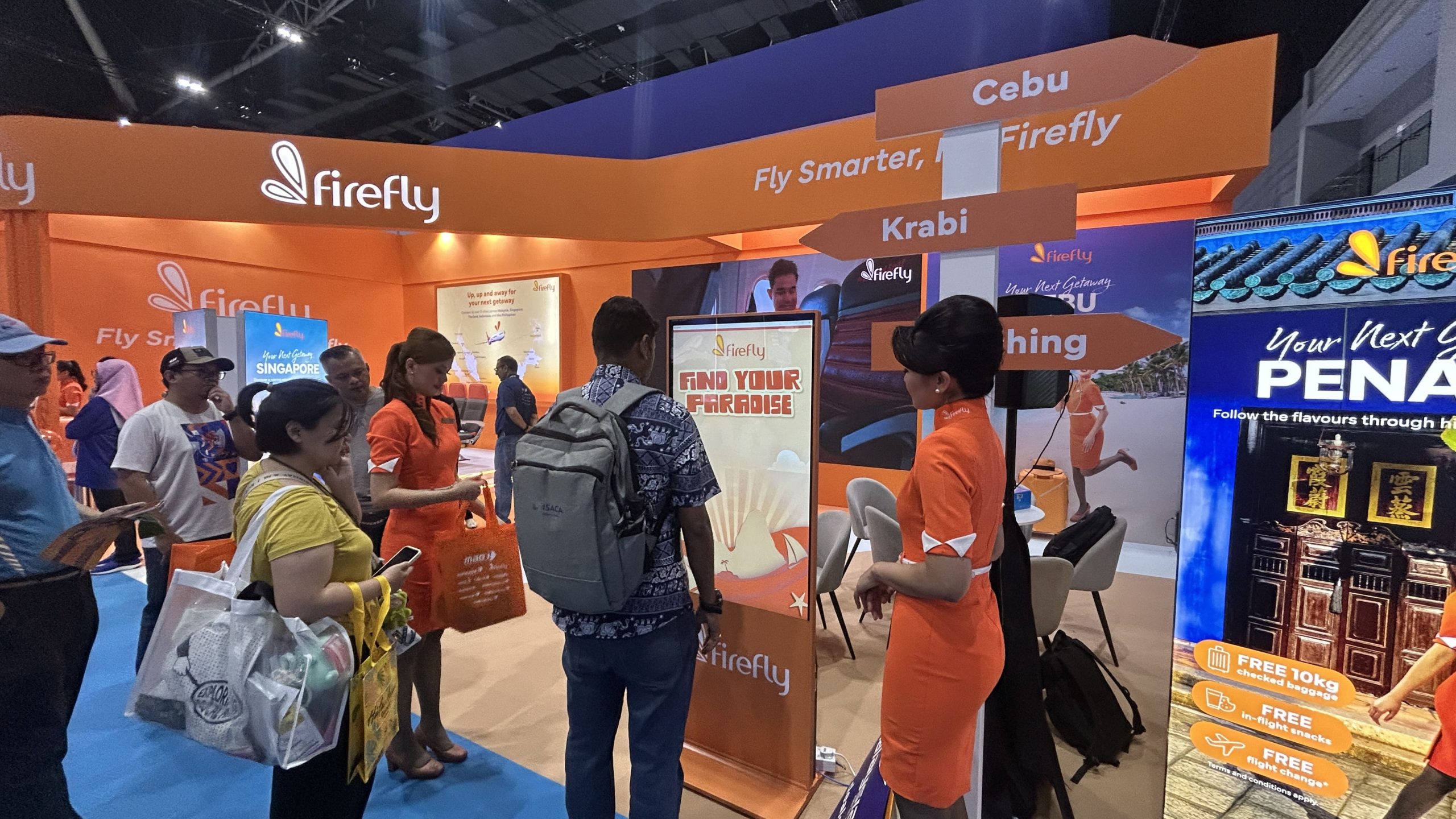 LED Screen Rental may be worth considering when your booth needs to achieve one or more of the following:
- Increase visibility from the exhibition aisle
- Display video content
- Demonstrate products
- Present multiple products within limited space
- Show projects or case studies
- Support a product launch
- Create a stronger visual backdrop
- Direct visitors toward a QR code or digital action
- Reduce the amount of printed information
- Create content that can be updated during the event
It may not be necessary for every booth.
A small exhibition stand with a simple product and highly targeted audience may work perfectly well with static branding.
The decision should therefore come back to the objective.
Technology should solve a communication problem rather than become decoration.
Planning Digital Signage Around the Visitor Journey
A useful way to plan a small booth is to think about what happens from the moment a visitor sees it.
Step 1: Attraction
What makes someone look toward the booth?
This is where strong visuals, movement and clear branding can help.
Step 2: Understanding
Once the visitor looks at the screen, can they understand what the company offers?
The message should be simple.
Step 3: Interest
Does the content give them a reason to stop?
A product demonstration, interesting visual or relevant problem statement can help.
Step 4: Interaction
What happens when they enter the booth?
This is where staff, physical products or interactive digital content can take over.
Step 5: Conversion
What should happen next?
A meeting, product enquiry, QR scan, demonstration booking or contact exchange gives the visitor a clear next step.
The screen is therefore only one part of the process.
The strongest booth experience connects digital content with human interaction.
Common Mistakes to Avoid
Choosing the Screen Before Planning the Booth
The screen should fit the booth, not force the booth design around the equipment.
Using Long Videos
Visitors may not stay long enough to watch a five-minute corporate video.
Shorter, repeatable content is usually more practical for a busy exhibition environment.
Ignoring Aisle Visibility
A screen that is visible only after visitors enter the booth misses an opportunity to attract people from outside.
Too Much Text
Visitors should be able to understand the main message quickly.
Treating Digital as Separate From Branding
The screen should complement the physical booth design.
Forgetting Technical Requirements
Power, signal sources, content playback, mounting, cable management and operating requirements should be considered before installation.
No Clear Call to Action
If the screen attracts attention but gives visitors no next step, some of that attention may not translate into engagement.
Why Professional LED Screen Rental Support Matters
A successful digital display setup involves more than supplying a screen.
The technical team needs to consider the booth structure, display position, content source, power requirements, signal connections and viewing conditions.
The screen also needs to be installed securely and positioned correctly.
For a compact booth, cable management becomes particularly important because there is less space to hide technical equipment.
A professional LED Screen Rental provider can help determine the appropriate display configuration based on the booth, content and event environment.
This can include delivery, setup, testing, technical support and dismantling, depending on the project requirements.
The objective is to make the technology work as part of the booth rather than create another technical problem for the exhibitor.
Making a Small Booth Work Harder
A small booth does not have the physical space to compete by simply adding more.
Instead, it needs to use its available space intelligently.
Digital signage provides one way to do that.
A single well-positioned display can act as a branding surface, product demonstration platform, information screen and lead-generation tool.
When combined with thoughtful booth design, clear messaging, appropriate lighting and human interaction, it can help a compact exhibition presence become more noticeable and more useful.
The key is not simply having a digital screen.
It is deciding what the screen should accomplish.
That means starting with the visitor journey, choosing the appropriate display, creating content for the exhibition environment and integrating the technology into the overall booth design.
For exhibitors considering LED Screen Rental, the right solution may not always be the largest screen available.
Sometimes, a strategically positioned digital display can make a much bigger difference than a larger but poorly planned installation.
Frequently Asked Questions
Is digital signage suitable for a small exhibition booth?
Yes. Digital signage can be particularly useful when floor space is limited because a display can provide dynamic branding and product information without requiring multiple physical panels.
Is LED Screen Rental better than a printed backdrop?
They serve different purposes. A printed backdrop provides a fixed visual message, while an LED display can show video, animation, product demonstrations and changing content. The right option depends on the booth objective and budget.
What can I display on a booth LED screen?
You can display brand videos, product demonstrations, animations, customer testimonials, promotional messages, event information, product catalogues and calls to action such as QR codes.
Does a small booth need a large LED screen?
Not necessarily. Screen size should be based on the booth layout, viewing distance, visitor flow and content requirements. A vertical or compact display may be more appropriate than a large video wall.
Can digital signage content be changed during an exhibition?
Depending on the display and content-management setup, digital signage content can be updated or scheduled. The technical requirements should be confirmed before the event.
Further Reading
Samsung VXT – What Is Digital Signage?
A useful introduction to digital signage, including display technologies, content management, video walls and considerations when selecting a digital signage solution.
Panasonic – How Digital Signage Simplifies Event Promotions for Businesses
Useful for understanding how digital displays can support event promotion and communication, particularly when businesses need flexible visual content during events.
Planning LED Screen Rental for Your Small Exhibition Booth?
A small booth still needs to compete for attention, communicate your brand and give visitors a reason to stop.
DOREMi provides LED Screen Rental solutions for exhibitions, corporate events, product launches and brand activations, with display configurations planned around the booth layout, viewing distance, content requirements and event environment.
From LED walls and vertical displays to other digital display solutions, the right setup can help exhibitors make better use of limited space while creating a more engaging visual experience.
Whether your goal is to showcase products, play promotional videos, present case studies or direct visitors toward a digital call to action, the display should be integrated into the overall booth strategy.
Speak with DOREMi’s event technology specialists to plan an LED Screen Rental solution that helps your small booth make a bigger visual impact.