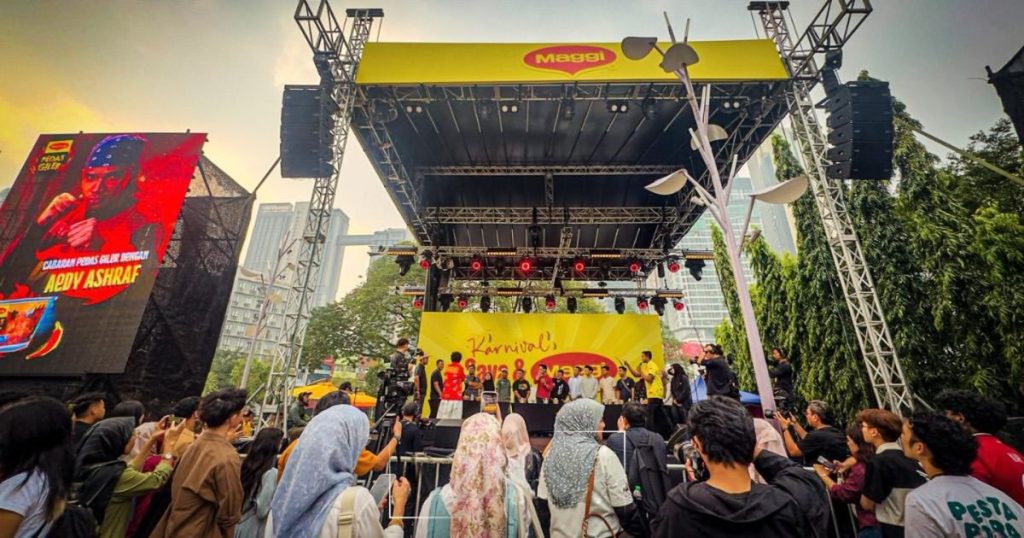
A finished event stage can look simple from the audience’s perspective.
There is a platform, a backdrop or LED screen, lighting above it, speakers around it and performers or presenters taking their positions.
But getting from an empty event space to that finished stage involves much more than assembling a platform.
For a live event, stage rental is part of a larger technical process involving site conditions, stage dimensions, equipment positioning, truss, lighting, audio, LED screens, cable management, safety checks, rehearsals and coordination between different production teams.
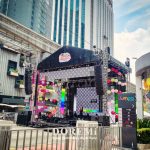
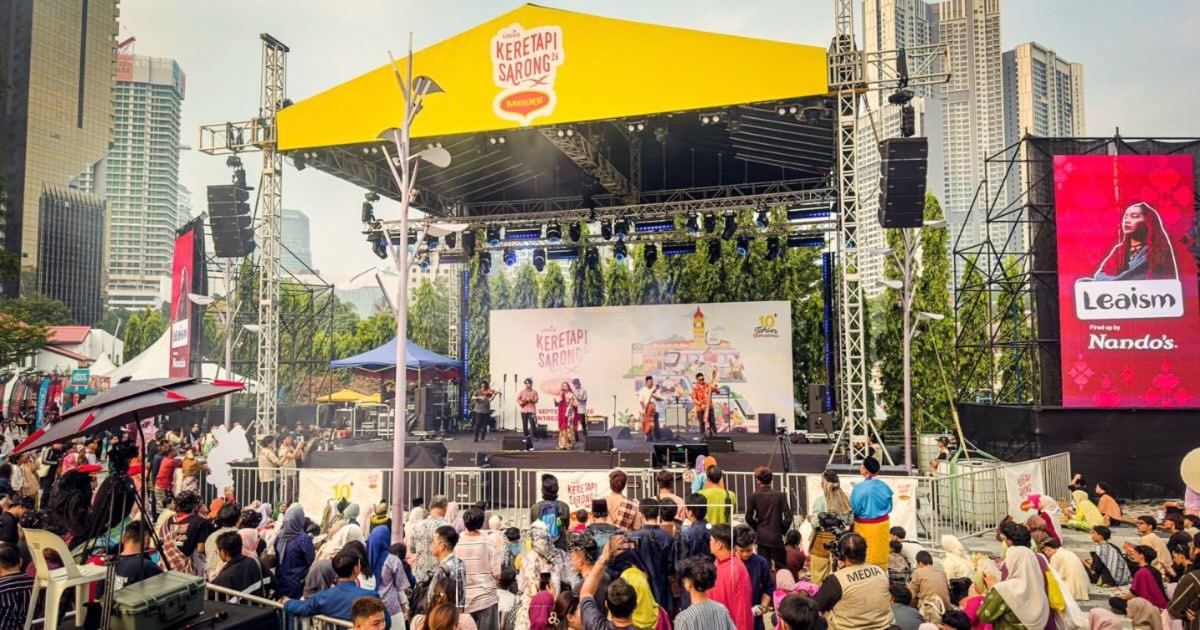
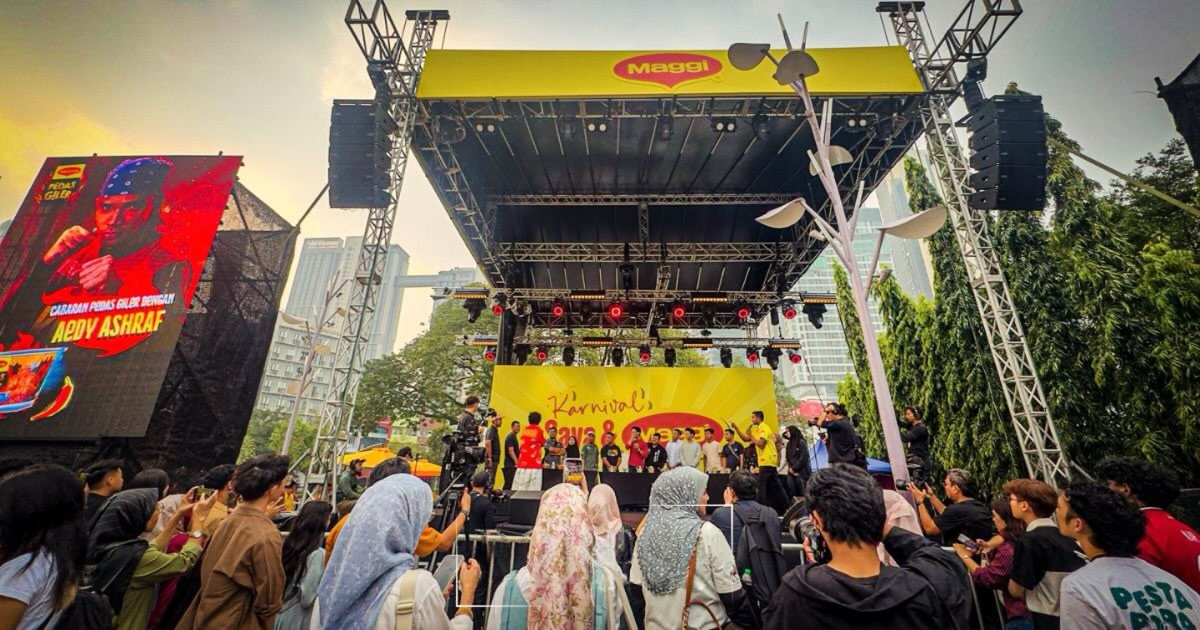
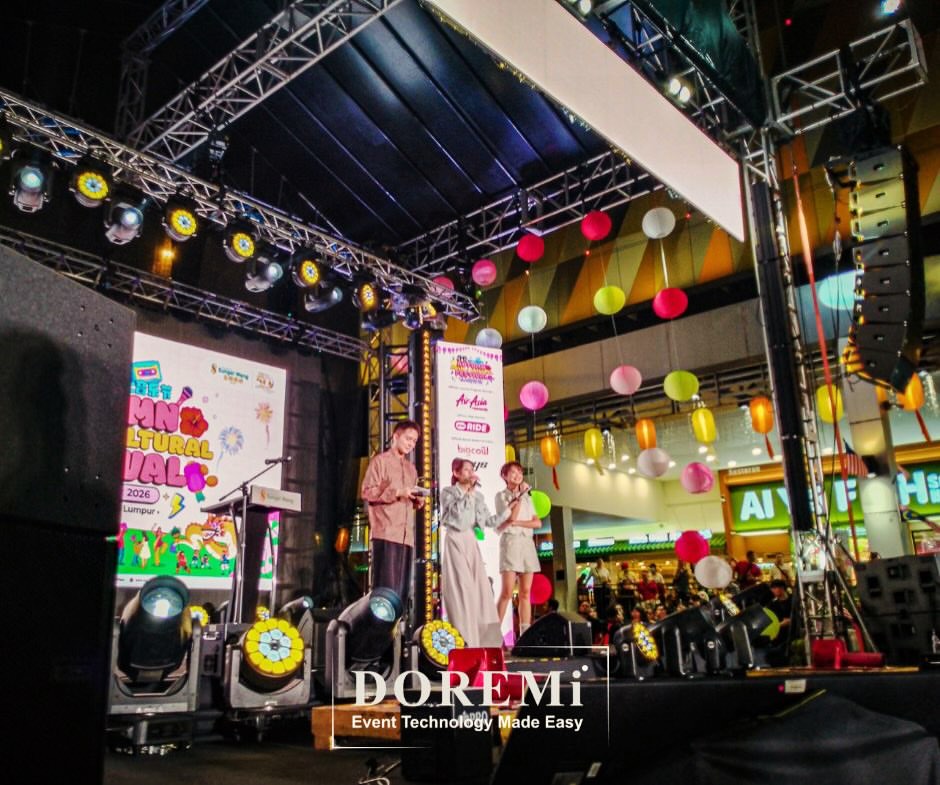
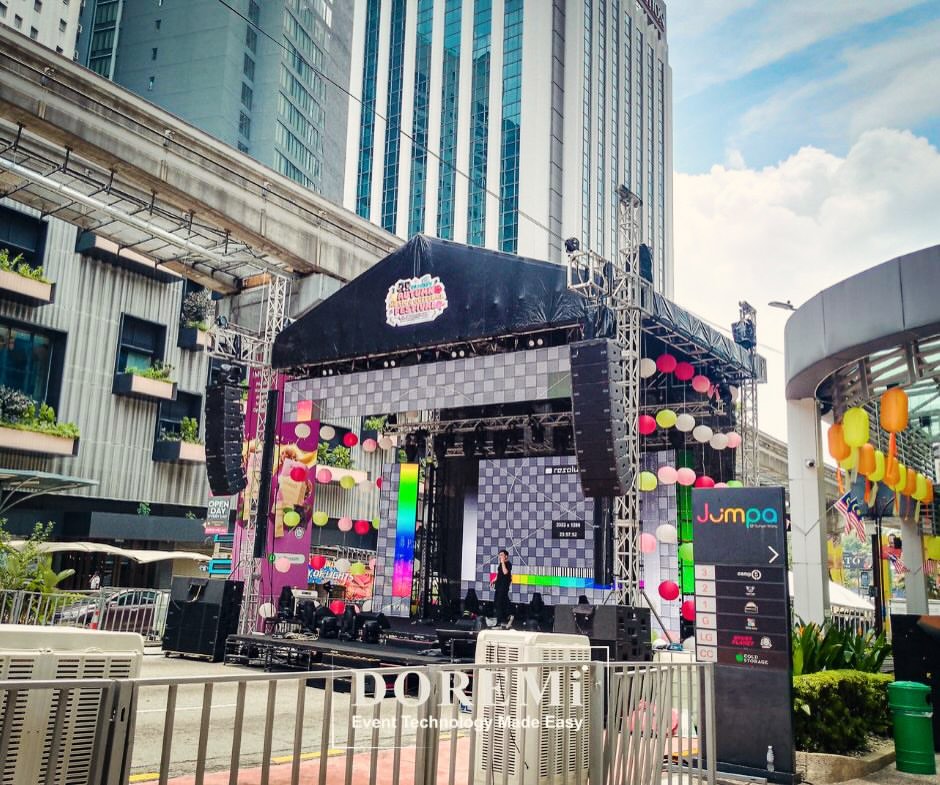
Recent projects such as the Sungei Wang Autumn Music & Cultural Festival 2026 and the production turnover between Keretapi Sarong 2026 and Karnival Saya & MAGGI at TRX are good examples of why stage construction needs to be approached as part of the overall event production rather than as an isolated rental item.
At Sungei Wang, DOREMi supported the complete technical production covering staging, truss, sound, lighting and LED. At TRX, the challenge involved transitioning technical production from one event into another within the same venue.
So, what actually happens before the audience sees the finished stage?
Stage Planning Starts Before the Equipment Arrives
The first stage of a live event is not the physical stage.
It is planning.
Before equipment reaches the venue, the production team needs to understand what the event requires and how the stage will be used.
A music festival may need space for performers, instruments, monitors and stage movement. A corporate conference may require a presentation screen, lectern, furniture and confidence monitors. A product launch may need a stage designed around a product reveal.
The stage therefore has to respond to the programme.
This is one reason stage rental should not be selected simply by asking for a particular stage size. The production team needs to understand the event format, audience size, venue, programme flow and technical requirements first.
DOREMi’s event production services cover areas including staging, sound, lighting, LED displays, rigging and event-day management, allowing these elements to be planned together rather than independently.
The Venue Is Assessed Before the Build
 Every venue presents different conditions.
Before the stage is built, the production team needs to understand where the stage will be positioned, how equipment will enter the venue and what restrictions could affect the setup.
Important considerations can include:
- Available stage area
- Ceiling height
- Audience layout
- Loading and unloading access
- Power availability
- Equipment access routes
- Existing structures
- Emergency access
- Technical control positions
- Rigging possibilities
- Indoor or outdoor conditions
For outdoor events, additional considerations such as weather, wind exposure and ground conditions become particularly important.
The venue also determines how the audience will experience the stage. A stage that works well in a compact indoor hall may require a completely different approach in an open outdoor event where the audience is spread over a much larger area.
Professional event staging is therefore not simply about constructing a platform. It needs to consider functionality, visibility, safety and the integration of audio, video and lighting.
Stage Size and Layout Are Determined by the Programme
Once the venue and event requirements are understood, the stage dimensions and layout can be planned.
This is where the difference between events becomes obvious.
A keynote presentation may only require space for one speaker, a lectern and a presentation screen.
A panel discussion needs space for several people, chairs, microphones and possibly a moderator.
A music festival may require considerably more stage space because performers need room for instruments, musicians, monitors, equipment changes and movement.
The stage also needs to provide sufficient clearance for technical equipment.
For example, placing a large LED screen behind performers affects the available stage depth. Adding truss, lighting fixtures or other production elements also affects the overall design.
This is why the stage should be considered together with the rest of the production system.
Building the Stage Platform
Once the layout is confirmed, the physical stage build can begin.
The stage platform creates the foundation for the performers, presenters and equipment.
Depending on the event, the platform may include different heights, configurations, stairs, ramps, extensions or risers.
The construction needs to be stable and suitable for the intended use and loading requirements.
The stage surface also needs to be appropriate for the programme. A live music event, for example, may involve performers moving between different areas of the stage, while a corporate event may require furniture, lecterns or presentation equipment.
At this stage, the team is not simply asking, “Does the stage look good?”
They are asking whether the stage works.
Can performers move safely?
Can presenters reach their positions easily?
Can equipment be placed where it needs to go?
Can the audience see the stage?
Can the technical team access the equipment when necessary?
These practical questions influence the final stage rental setup.
Truss Turns the Stage Into a Production Structure
 For many live events, the stage platform is only the beginning.
Truss can be added to create a structure for lighting, LED displays, branding and other technical equipment.
A truss system can form part of a stage roof, ground-support structure or other technical framework depending on the event design.
This becomes particularly important when the production includes multiple lighting fixtures or large visual elements.
For example, a music festival may require lighting positions above the performers, while a corporate event may use truss to support lighting and integrate visual branding.
The important point is that the truss cannot be treated as an afterthought.
Its dimensions, configuration and loading requirements need to be considered together with the equipment that will be installed on it.
A well-planned event staging system integrates structural elements with audio, video and lighting rather than treating each component as a separate installation.
LED Screens and Visual Elements Are Integrated
Once the basic stage structure is established, visual equipment can be positioned.
LED screens have become a major part of modern live event stages.
They can display:
- Event branding
- Sponsor content
- Presentation slides
- Videos
- Live camera feeds
- Performer visuals
- Animations
- Programme information
However, installing an LED screen is not simply a matter of putting a screen behind the stage.
Its size, position and height need to work with the stage dimensions and audience sightlines.
The production team also needs to consider what is happening on the stage itself.
For a live performance, the screen should not block performers.
For a corporate presentation, it needs to be positioned so that content remains visible to the audience.
For a camera-heavy production, the screen also needs to work with camera angles and lighting.
This is another reason why stage rental works best when planned together with LED, lighting and AV requirements.
Lighting Is Installed Around the Stage Design
The next layer is lighting.
Lighting does much more than make the stage visible.
It helps direct audience attention, creates atmosphere and supports different parts of the programme.
A live music event may use moving lights, washes, profiles and other fixtures to create changing looks during performances.
A corporate event may require more controlled lighting for presenters, panels and product reveals.
Lighting positions are influenced by the stage, truss and screen arrangement.
The technical team must also consider whether fixtures are illuminating the correct areas without creating unwanted shadows, glare or interference with visual content.
This is why lighting design should happen alongside stage planning rather than after the stage has already been built.
Sound Equipment Is Positioned Around the Audience
 A stage can look impressive, but the event still fails if people cannot hear what is happening.
Sound therefore becomes another major part of the build.
The audio team needs to consider the event format, audience distribution, stage layout and performance requirements.
The system may include:
- Main loudspeakers
- Subwoofers
- Stage monitors
- Wireless microphones
- Wired microphones
- Mixing consoles
- Playback systems
- Microphone stands
- Signal and power cabling
For live performances, stage monitoring is especially important because performers need to hear themselves and other musicians.
For corporate events, microphone selection and speech clarity become more important.
The positioning of the speakers also needs to work with the stage and audience layout.
This is where an integrated production approach becomes valuable: the stage, sound, LED and lighting systems all occupy the same production environment and need to coexist without interfering with one another.
Cable Management Happens Behind the Scenes
One of the least noticeable parts of stage construction is also one of the most important.
Cables.
A live event may require a large number of power, audio, video, lighting and control cables.
These cables need to reach their destinations without creating unnecessary hazards or disrupting the appearance of the event.
Cable routes need to be planned around:
- Performer movement
- Audience access
- Stage stairs
- Technical positions
- Equipment locations
- Power distribution
- Control areas
Where cables cross areas used by people, suitable protection and routing methods are required.
Good cable management is one of those details that audiences may never notice when it is done correctly.
That is exactly the point.
Technical Teams Start Connecting the System
Once the major equipment is physically positioned, the technical system starts coming together.
Audio equipment is connected and checked.
LED processors and display systems are configured.
Lighting fixtures are addressed and tested.
Control systems are connected.
Playback sources are checked.
Microphones are tested.
The stage is no longer just a structure. It becomes a working production environment.
This is also when small problems that were not obvious during the initial build can be identified.
A cable may need to be rerouted.
A light may need to be repositioned.
A screen may need to be adjusted.
A microphone position may need to change.
Professional event production is therefore an ongoing process of checking and refining rather than simply completing installation and walking away.
The Stage Is Tested Before Showtime
A finished setup does not mean the production is ready.
Testing is critical.
The technical team needs to check whether the equipment works together as intended.
For audio, this may involve testing microphones, playback sources, monitors and speaker coverage.
For LED screens, content sources and signal paths need to be checked.
For lighting, fixtures and programmed cues need to be tested.
For the stage itself, the team needs to confirm that access routes, stairs, furniture and equipment positions are ready.
The programme also needs to be considered.
Who enters first?
Where does the presenter stand?
When does the video play?
When does the lighting change?
When does the performer begin?
Who gives the cue?
These questions connect the physical stage to the live show.
A production schedule helps coordinate audio, video and lighting activities throughout the event, with the technical director or project manager typically managing the master schedule during the production process.
Rehearsal Turns the Setup Into a Show
 Rehearsal is where the stage is tested under real programme conditions.
Presenters may walk onto the stage.
Performers may conduct sound checks.
Videos may be played.
Lighting cues may be triggered.
Camera positions may be tested.
Transitions between programme segments can be rehearsed.
This allows the production team to identify problems before the audience arrives.
For a live music event, rehearsal can also help performers become familiar with the stage layout and monitoring system.
For a corporate event, presenters can confirm their positions and presentation content.
For a large production, different departments can practise working together.
The goal is not necessarily to rehearse every second of the event.
It is to ensure that the people, equipment and programme can work together when the event goes live.
Showtime: The Stage Becomes Part of the Experience
Eventually, the build is complete.
The audience arrives.
The lights go on.
The first microphone is live.
The LED screen displays the opening content.
The performers or presenters walk onto the stage.
At this point, most of the construction work disappears from the audience’s attention.
That is a sign of successful production.
The audience should experience the event rather than think about the technical infrastructure behind it.
But the production team continues working throughout the show.
Technical crew monitor the systems, stage managers coordinate timing, operators respond to cues and technicians remain ready to address issues.
DOREMi’s event production approach covers production management from conceptualisation through execution and pack-down, including stage management, time coordination, equipment operation and coordination with event partners.
What Recent DOREMi Events Show About Stage Production
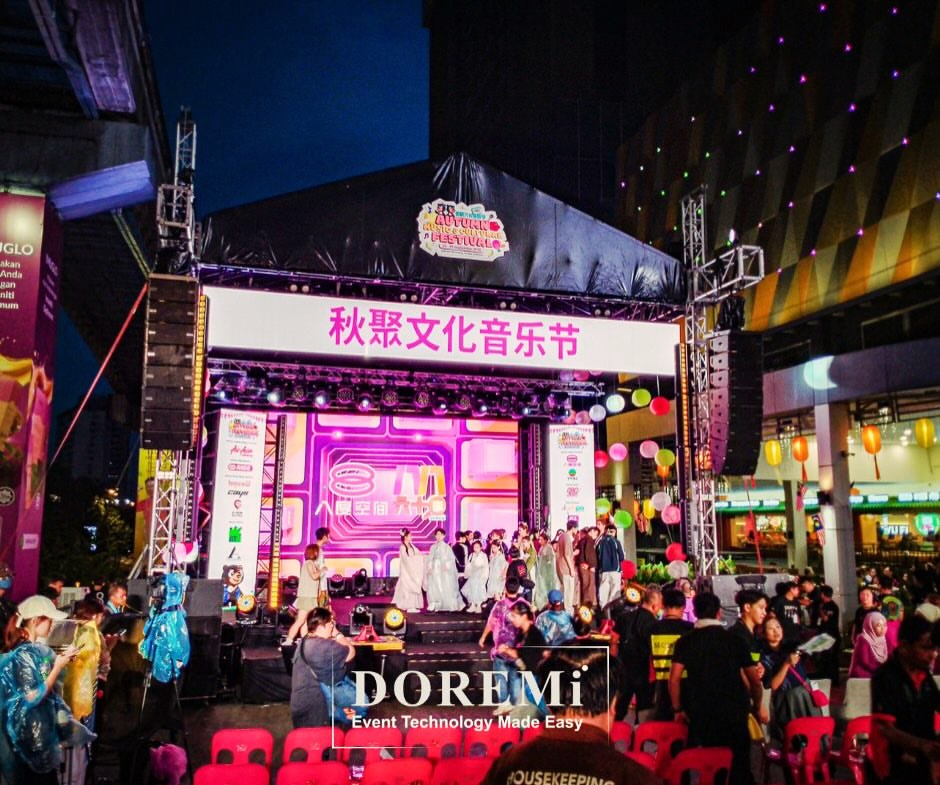
Recent DOREMi projects demonstrate why stage rental should be viewed as part of a wider production workflow.
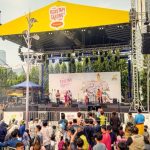
At the Sungei Wang Autumn Music & Cultural Festival 2026, DOREMi supported the complete technical production, including staging, truss, sound, lighting and LED. The project required these elements to work together throughout a multi-day public event.
The same principle appeared in a different way at TRX.
For Keretapi Sarong 2026, DOREMi provided staging, rooftop truss, sound, lighting and backline. When that event ended, the production challenge did not simply stop. The team had to transition the setup for the following Karnival Saya & MAGGI event at the same venue.
That type of production turnover demonstrates why technical planning matters beyond the initial installation.
Equipment has to be positioned, operated, dismantled, repositioned and tested according to the next programme.
In other words, building a stage is not just about getting equipment into position.
It is about preparing the entire technical environment for what happens next.
What Should You Ask When Booking Stage Rental?
If you are planning an upcoming live event, it helps to provide your stage rental provider with as much information as possible.
Start with:
- What type of event are you organising?
A concert, festival, conference, product launch and corporate event may require very different stage configurations. - Where is the event being held?
Venue dimensions, access, ceiling height, loading and outdoor conditions can affect the setup. - How large is the audience?
Audience distribution influences stage size, height, screen placement and technical coverage. - What equipment needs to be integrated?
Include LED screens, lighting, speakers, microphones, cameras, instruments and other technical equipment. - What does the programme look like?
Multiple performers, speakers, panels and programme changes can affect stage layout. - Is there a rehearsal or soundcheck?
This gives the technical team time to test the production before the audience arrives. - What happens after the event?
Pack-down timing is especially important when the venue has another event or tight access restrictions.
The more complete the information, the easier it becomes to design a stage solution around the actual event rather than simply supplying equipment.
Why Professional Stage Rental Is About More Than the Stage
A stage is one of the most visible elements of a live event, but it is only one part of the production.
Its success depends on how well it works with sound, lighting, LED, truss, performers, presenters, cameras, technical crew and the event programme.
That is why professional stage rental should be approached as part of the complete event production process.
At DOREMi, staging can be coordinated with sound systems, lighting, LED displays, AV equipment, truss and event-day technical support. The company’s event production services cover the process from planning and equipment preparation through execution and pack-down.
With more than 45 years of experience and more than 45,000 projects supported, DOREMi provides integrated event production and technology solutions for corporate events, concerts, exhibitions, festivals, launches and other live productions.
Frequently Asked Questions
What does stage rental usually include?
Stage rental can include the stage platform and related structural components, depending on the event requirements. Additional elements such as truss, stairs, roofing, backdrops, LED screens, lighting and technical equipment may be planned as part of a wider event production package.
How early should I arrange stage rental?
The timeline depends on the event size, venue, stage configuration and technical requirements. Larger productions should be discussed earlier because stage design may need to be coordinated with truss, lighting, LED, audio, venue access and production schedules.
Does every event need the same type of stage?
No. A conference, concert, festival, product launch and panel discussion can require very different stage layouts. The stage should be designed around the programme and how the audience will interact with it.
Can stage rental be combined with sound and lighting?
Yes. In many live events, integrating staging with sound, lighting, LED and other AV systems helps create a more coordinated production setup.
Why is rehearsal important after the stage is built?
Rehearsal allows the production team, presenters and performers to test the actual setup before the audience arrives. It can identify issues with microphones, screen content, lighting cues, stage positions and programme transitions before showtime.
Further Reading
DOREMi — Event Production: Seamless Production Turnover
A useful look at how technical production can be managed when one event needs to transition into another at the same venue, including the coordination required for staging and other production elements.
Read the DOREMi production turnover article
Advanced Staging Productions — What Is Event Staging?
An overview of event staging and how stages, risers, scenic elements, audio, video, lighting and safety considerations come together to support a live event.
Read the event staging guide
Planning Stage Rental for Your Next Live Event?
A professional event stage is not built simply by placing a platform in a venue.
It starts with understanding the event, assessing the venue, planning the layout and integrating the stage with sound, lighting, LED and other production requirements.
From the first equipment delivery to the final technical check, every stage of the process contributes to what the audience eventually sees.
DOREMi provides stage rental and event production solutions that can be planned around the venue, programme, audience and technical requirements of each event.
Whether you are organising a music festival, corporate event, product launch, conference, exhibition or live performance, the stage should support the entire event experience—not simply provide a place to stand.
Speak with DOREMi’s event technology specialists to plan a stage rental solution that takes your event from an empty venue to showtime with the right structure, technology and technical support.