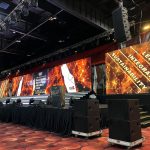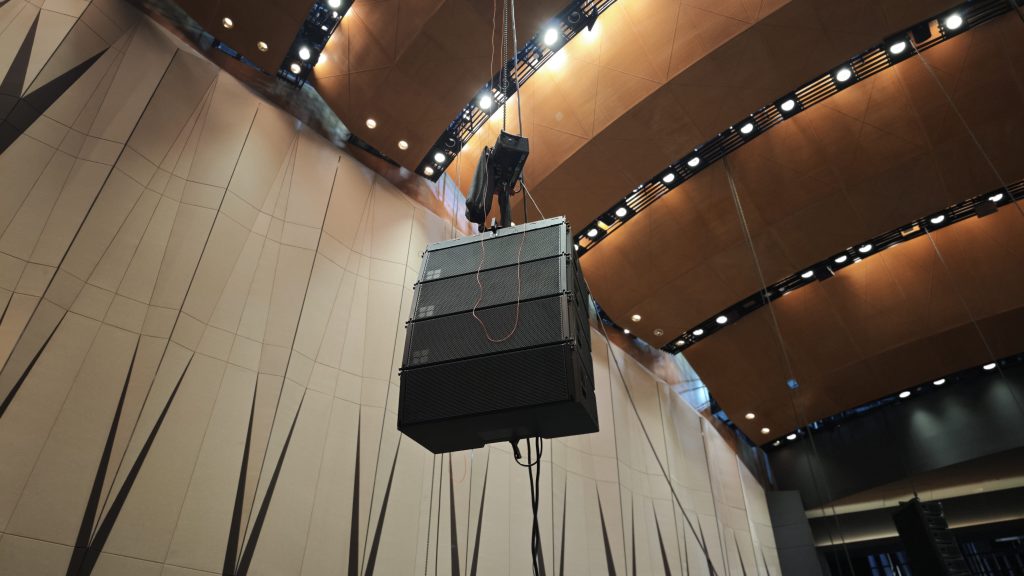
Imagine attending a corporate event where the opening speech sounds clear near the stage but becomes difficult to understand at the back of the ballroom. Guests sitting close to the speakers may find the volume uncomfortable, while those seated farther away struggle to hear the presenter.
This is a common audio problem at conferences, product launches, exhibitions, weddings and live performances. Even when the sound system appears powerful enough, the audience may not experience the same sound quality throughout the venue.
The issue is not always the speaker volume. Uneven sound can result from speaker placement, room acoustics, equipment selection, sound wave interference and the layout of the audience. Simply increasing the volume may make the front rows louder without solving the problem at the back.
A well-planned Sound System Rental setup considers how sound will travel through the actual event space, where the audience will be positioned and what type of programme is taking place. With appropriate equipment, careful positioning and professional sound checks, event organisers can significantly improve sound consistency and speech clarity.
In this guide, we explore the reasons behind uneven event audio, how to identify common problems and what organisers can do to create a more balanced listening experience.
What Causes an Audio Problem Where Some Areas Are Too Loud?
Sound does not travel evenly through every venue. Its behaviour depends on the distance from the speakers, the direction in which they are aimed, the surrounding surfaces and the way sound waves interact.
When a sound system is installed without considering these factors, different parts of the audience area can receive very different listening experiences.
For example, a pair of speakers positioned at the front of a long conference hall may provide strong coverage near the stage but insufficient clarity at the rear. In a ballroom with glass walls and a high ceiling, reflected sound may overlap with the original sound, making speeches seem unclear or echoey.
Outdoor events present different challenges. Without walls to contain or reflect sound, audio can disperse into the surrounding environment. Wind, traffic and crowd noise can also make speech harder to hear.
An audio problem can therefore occur even when all equipment is functioning correctly.
The important distinction is between volume and coverage. Volume describes how loud the sound is, while coverage describes how effectively the sound reaches the intended listening areas. A powerful system does not automatically provide consistent coverage.
Effective Sound System Rental planning starts by addressing both.
Speaker Placement: Why Location Matters
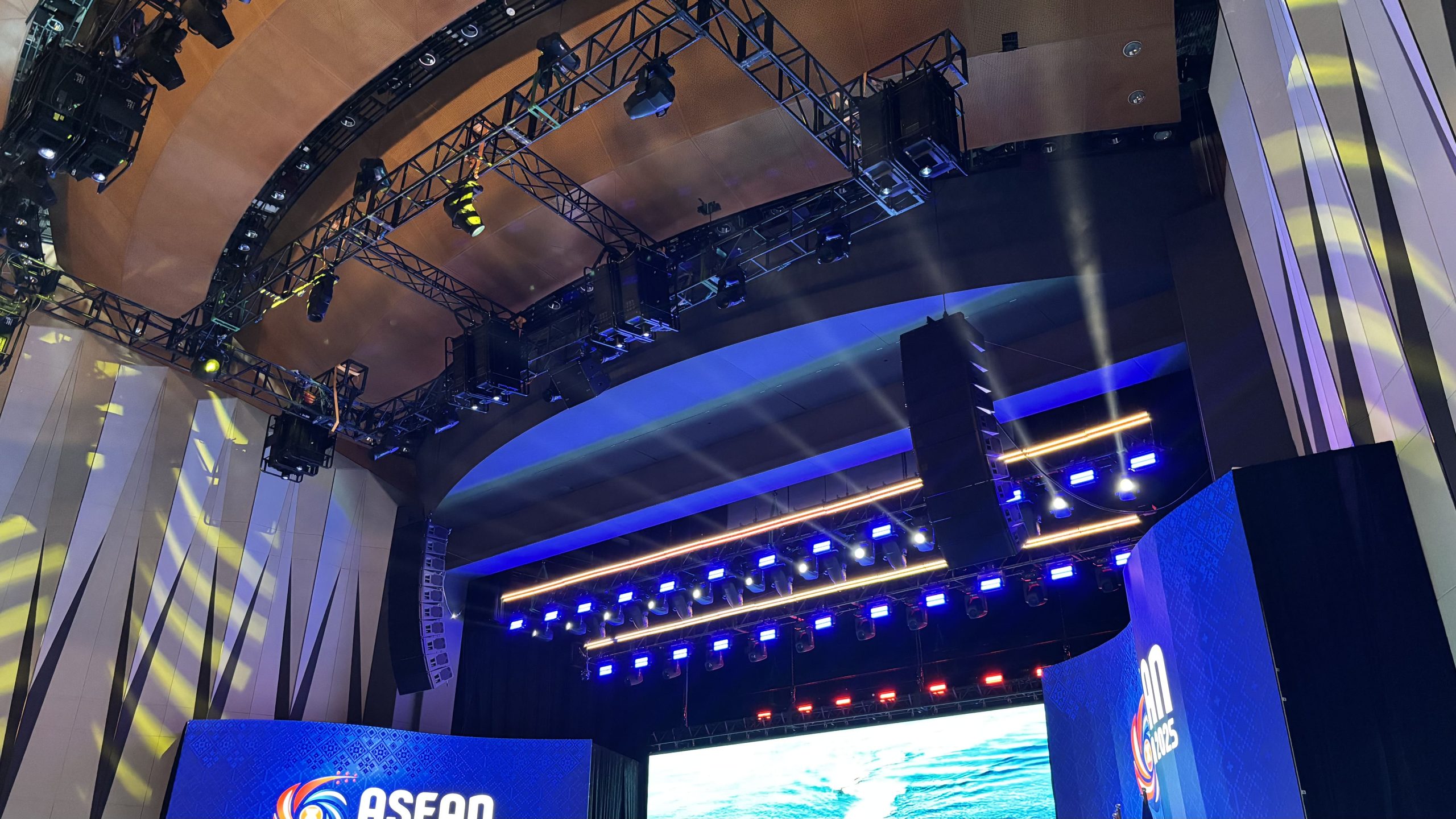 Speaker placement is one of the most important factors in achieving balanced event audio.
Speakers produce sound in particular directions and over specific coverage angles. If they are positioned poorly, some areas may receive direct sound while others receive mostly reflected sound or very little sound at all.
Speakers positioned too close to the audience
When speakers are placed directly beside the front rows, guests near them may experience excessive volume. People farther away may hear less direct sound and struggle to understand speech.
Increasing the master volume to help the back of the room can make the front even louder.
A better approach is to position speakers to cover the audience area as evenly as possible. The correct location and height depend on the speaker design, room dimensions, stage arrangement and seating plan.
Speakers aimed in the wrong direction
Even suitable speakers can produce an audio problem if they are aimed incorrectly.
For example, speakers directed toward a reflective wall may send unnecessary sound into that surface. Speakers angled too narrowly may leave people seated at the sides with poor coverage.
Technicians should consider the speaker’s dispersion pattern, which describes how sound spreads horizontally and vertically. Correct aiming helps direct more sound toward the audience and less toward unoccupied areas or reflective surfaces.
Obstacles between speakers and listeners
Pillars, partitions, exhibition structures and stage scenery can block direct sound. Guests seated behind these obstacles may experience lower volume or reduced speech clarity.
During planning, the technical team should review the actual venue layout rather than relying only on floor dimensions. The audience seating plan, stage position, temporary structures and expected crowd size all influence the final setup.
A professional Sound System Rental arrangement should be based on the area that needs to hear the sound, not simply the size of the stage.
Venue Acoustics: How the Room Changes What You Hear
Every venue has its own acoustic characteristics. Two rooms with similar capacities may require different sound system configurations because their surfaces, ceiling heights and shapes affect sound differently.
Hard surfaces and sound reflections
Glass, concrete, marble and other hard surfaces reflect sound. When these reflections reach listeners shortly after the original sound, they can make speech less distinct.
This is particularly noticeable during conferences, award ceremonies and corporate presentations, where audiences need to understand spoken words rather than simply hear that someone is speaking.
A microphone may capture a presenter’s voice clearly, but the audience can still experience poor intelligibility if reflected sound overlaps with the direct sound.
Reverberation in large halls
Reverberation occurs when sound continues to be heard after the original source has stopped because sound energy reflects around the room.
Some reverberation can add a sense of space to music. Too much, however, can make a speech sound blurred, especially when a presenter speaks quickly.
In a reverberant ballroom, increasing speaker volume is not always the answer. Louder sound can create more reflections and make the problem worse.
The solution may involve more controlled speaker coverage, appropriate equalisation, adjustments to speaker positioning or acoustic treatment where feasible.
Soft furnishings and audience absorption
Carpets, curtains, upholstered seating and other soft materials absorb some sound energy. A furnished ballroom may therefore behave differently from the same room when it is empty.
The audience also changes the acoustic environment. People absorb sound, and a room that sounds lively during an empty-room sound check may sound different once hundreds of guests arrive.
This is why sound checks should consider the expected audience and event configuration, not just the room in its setup state.
Understanding venue acoustics allows the technical team to select and position equipment more appropriately, reducing the likelihood of an audio problem once the programme begins.
Sound Wave Interference: Why More Speakers Do Not Always Mean Better Sound
Adding speakers can improve coverage, but it does not guarantee a better result.
When sound from multiple speakers reaches the same listening area, the sound waves can interact. Depending on their timing, phase and frequency, they may reinforce each other in some places and partially cancel each other in others.
This can create unexpected differences in volume and tonal balance.
What is phase cancellation?
Phase cancellation occurs when sound waves combine in a way that reduces the level of certain frequencies. Listeners may notice that bass sounds strong in one location but weak in another, even though the music and equipment have not changed.
Low-frequency sound can be particularly affected by the interaction between multiple subwoofers and the acoustics of the venue.
For example, placing two subwoofers apart without considering their interaction can create areas where bass energy is unusually strong and other areas where it is reduced. This can make music sound inconsistent as guests move around the venue.
Why delay speakers need careful configuration
For long venues or large outdoor audiences, additional speakers may be needed farther from the stage. These are sometimes called delay speakers because their output is electronically delayed to coordinate with the sound arriving from the main system.
If the timing is not configured correctly, listeners may hear an echo or perceive sound as coming from the wrong direction.
A properly designed system considers speaker positions, distances and timing so that additional speakers support the main system rather than compete with it.
The goal of Sound System Rental is not to place as many speakers as possible. It is to use the right number of speakers, in the right locations, with suitable configuration for the audience area.
The Difference Between a Sound System That Is Too Small and One That Is Poorly Designed
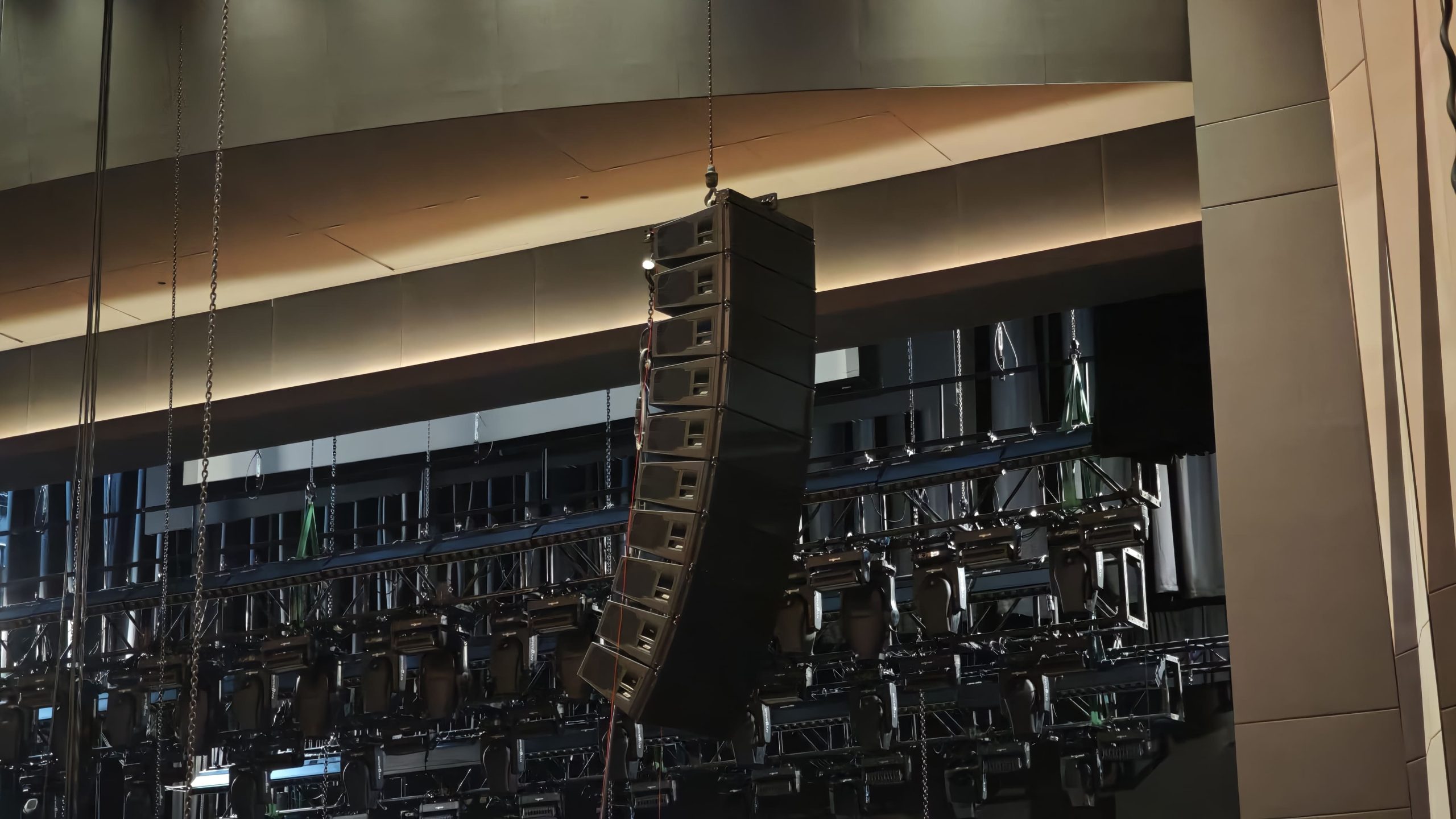 Another common audio problem occurs when the selected sound system cannot meet the demands of the event.
A small system may struggle to deliver clear sound across a large ballroom or outdoor audience. When operators push the system too hard, the result may be distortion, harshness or a loss of clarity.
However, a system with high power output can still perform poorly if its coverage does not suit the venue.
Why equipment selection matters
The appropriate system depends on several factors:
- Venue size and shape: A long hall, wide ballroom and open outdoor area require different coverage strategies.
- Audience size and distribution: A seated conference needs different coverage from a standing concert crowd.
- Programme type: Speech prioritises intelligibility, while live music may require greater dynamic range and low-frequency support.
- Ambient noise: Outdoor traffic, crowd noise and nearby activities can affect how clearly sound is heard.
- Speaker characteristics: Output capability, dispersion and frequency response all influence performance.
For example, a corporate seminar may benefit more from well-positioned speakers delivering clear, consistent speech than from a high-output music system that is unnecessarily loud.
An outdoor concert may require a different configuration, potentially including a line array or other suitable speaker arrangement, subwoofers and additional coverage for a deeper audience area.
Choosing Sound System Rental equipment according to the event’s actual requirements helps prevent both underpowered setups and unnecessarily excessive volume.
Why Turning Up the Volume Often Makes the Audio Problem Worse
When guests complain that they cannot hear, the immediate reaction may be to increase the master volume.
This can work if the entire system is simply too quiet and has sufficient capacity. But if the real issue is uneven coverage, increasing the volume may only create another problem.
Consider a conference where guests in the front rows already hear the presenter comfortably, but people at the rear struggle to understand the speech. Raising the master volume increases the sound reaching both groups. The front becomes uncomfortably loud, while the back may still receive poor-quality sound.
The problem is the distribution of sound, not necessarily its overall level.
A more effective solution may involve:
- Repositioning or re-aiming the main speakers.
- Adjusting the system’s coverage pattern.
- Adding appropriately placed fill or delay speakers.
- Correcting problematic equalisation or system settings.
- Checking whether the sound is being obstructed.
- Reducing excessive reverberation where practical.
The technical team should identify the cause before making changes.
A well-managed Sound System Rental setup aims for comfortable listening levels and clear audio throughout the intended audience area, rather than maximum loudness at the front.
Microphone Problems That Make Sound Seem Uneven
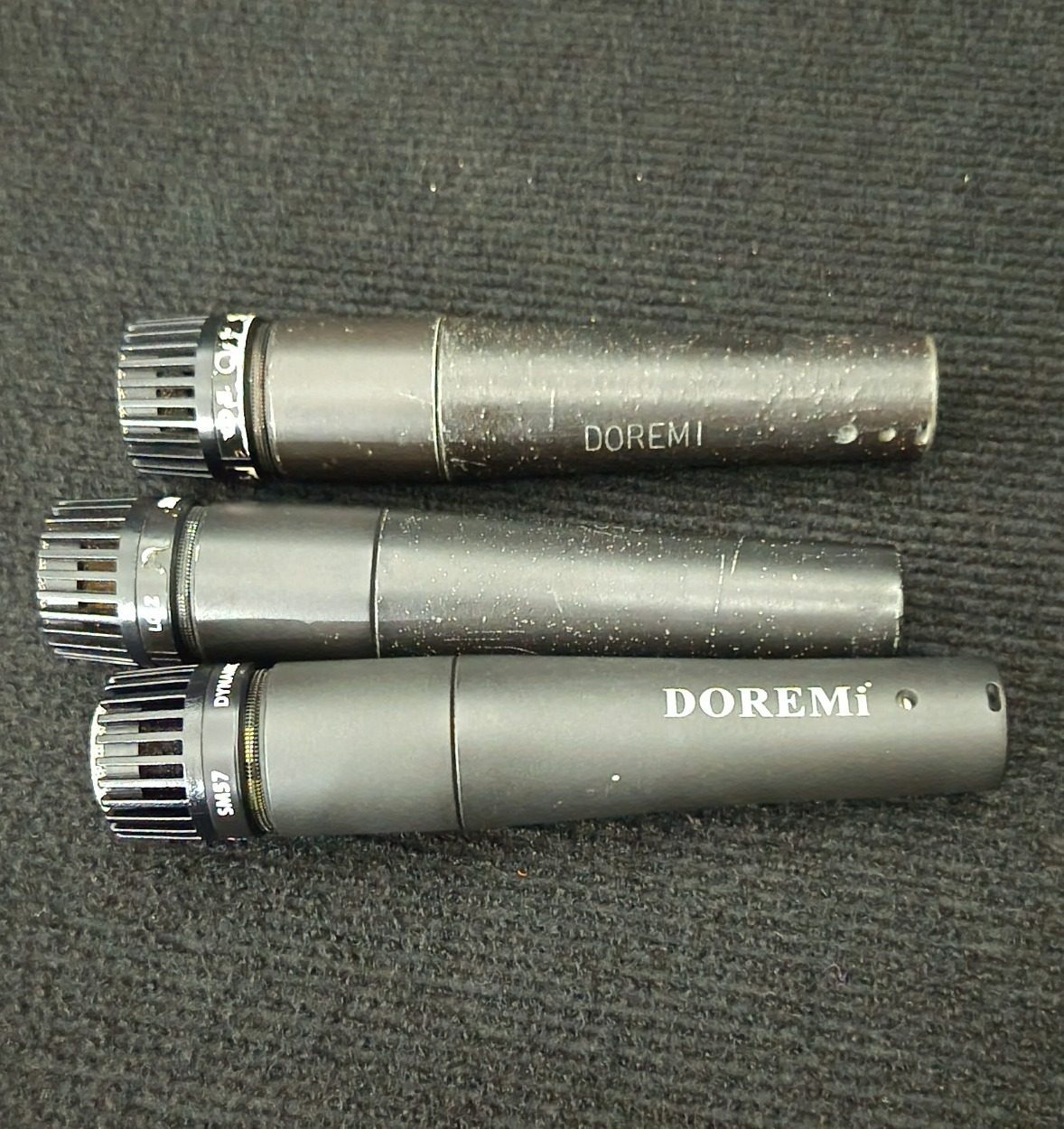 Not every audio problem comes from the speakers. The microphone, mixing console and signal settings also affect what the audience hears.
Incorrect microphone gain
Gain controls how strongly an incoming microphone signal is amplified at the input stage. If the gain is too low, the speaker may sound weak or require excessive amplification later in the signal chain. If it is too high, the signal may distort or trigger feedback.
A technician should set appropriate input levels during sound check and monitor them during the programme.
Microphone distance and speaking technique
A presenter who holds a microphone too far away may sound quiet even when the sound system is working correctly.
Moving the microphone closer can improve voice pickup, but the correct distance depends on the microphone type and how it is being used.
Presenters should be briefed on microphone handling, especially before speeches, panel discussions and award presentations.
Feedback and unclear speech
Feedback happens when sound from a loudspeaker returns to an open microphone and is amplified again, creating a ringing or squealing sound.
It is often associated with poor microphone and speaker positioning, excessive gain or problematic frequencies in the room.
Technicians can reduce the risk through suitable microphone selection, speaker placement, careful gain settings and equalisation. A sound check is essential for identifying issues before guests arrive.
These checks are especially important when multiple microphones are used throughout an event.
Indoor vs Outdoor Events: Different Audio Challenges
The same equipment configuration may not perform equally well in an indoor ballroom and an outdoor event space.
Indoor events
Indoor venues contain sound within walls and ceilings, creating reflections and reverberation. Glass walls, low ceilings, long corridors and unusual room shapes can all influence sound distribution.
For conferences and corporate presentations, the system should be configured to deliver speech clearly while controlling unnecessary reflections.
The technical team should also consider whether the audience extends around corners, behind pillars or into separate seating areas.
Outdoor events
Outdoor venues typically have fewer reflective boundaries, so sound can disperse beyond the audience area. Wind and surrounding noise may also affect perceived clarity.
Simply choosing more powerful speakers is not always the most efficient solution. Speaker direction, height, spacing and audience layout matter just as much.
Larger outdoor events may need multiple coverage zones or delay speakers to reach the audience consistently. Microphone wind protection and suitable placement are also important.
When planning Sound System Rental for outdoor events, organisers should share details about the site, expected attendance, stage location, nearby buildings and surrounding noise sources.
A setup designed around these conditions is more likely to deliver clear sound without excessive volume.
How to Prevent Uneven Audio Before Event Day
Many sound problems can be reduced through planning and testing. The earlier the technical team understands the venue and programme, the easier it is to identify potential issues.
Step 1: Share the event layout
Provide the venue floor plan, stage dimensions, seating arrangement and expected audience capacity. Identify balconies, pillars, separate audience zones and areas where guests may stand.
For exhibitions, clarify whether sound needs to reach one booth or a wider public area. For conferences, indicate where presenters, panelists and audience microphones will be used.
Step 2: Match equipment to the requirements
The sound system should suit the venue, programme and audience layout. Discuss whether the event requires speech reinforcement, background music, live performance audio or a combination of these.
A professional Sound System Rental provider can use this information to recommend a suitable configuration rather than relying on a generic equipment package.
Step 3: Conduct a site inspection when necessary
A site visit can reveal practical challenges that may not be obvious on a floor plan, including reflective surfaces, access restrictions, power locations and obstacles affecting speaker placement.
For complex or large-scale events, more detailed acoustic assessment and system planning may be appropriate.
Step 4: Test the entire signal chain
Check microphones, mixers, processors, amplifiers, speakers, cables and playback devices. Confirm that each input reaches the correct output and that levels remain clean throughout the system.
Testing individual components is useful, but the full system should also be tested as it will operate during the event.
Step 5: Sound-check from different listening positions
A sound check should not be limited to the mixing position or the front of the stage.
Listen from the front, centre, rear and sides of the audience area. If the venue includes balconies or separate sections, check those areas too.
For speech-focused events, test real speech through the actual microphones. Music alone may not reveal problems with speech intelligibility.
Step 6: Recheck after the setup changes
The sound may change when staging, partitions, exhibition structures or seating are moved. The final configuration should be checked after major setup changes and before the programme begins.
During the event, a technician should remain available to monitor levels and respond to changes.
What to Look for When Choosing a Sound System Rental Provider
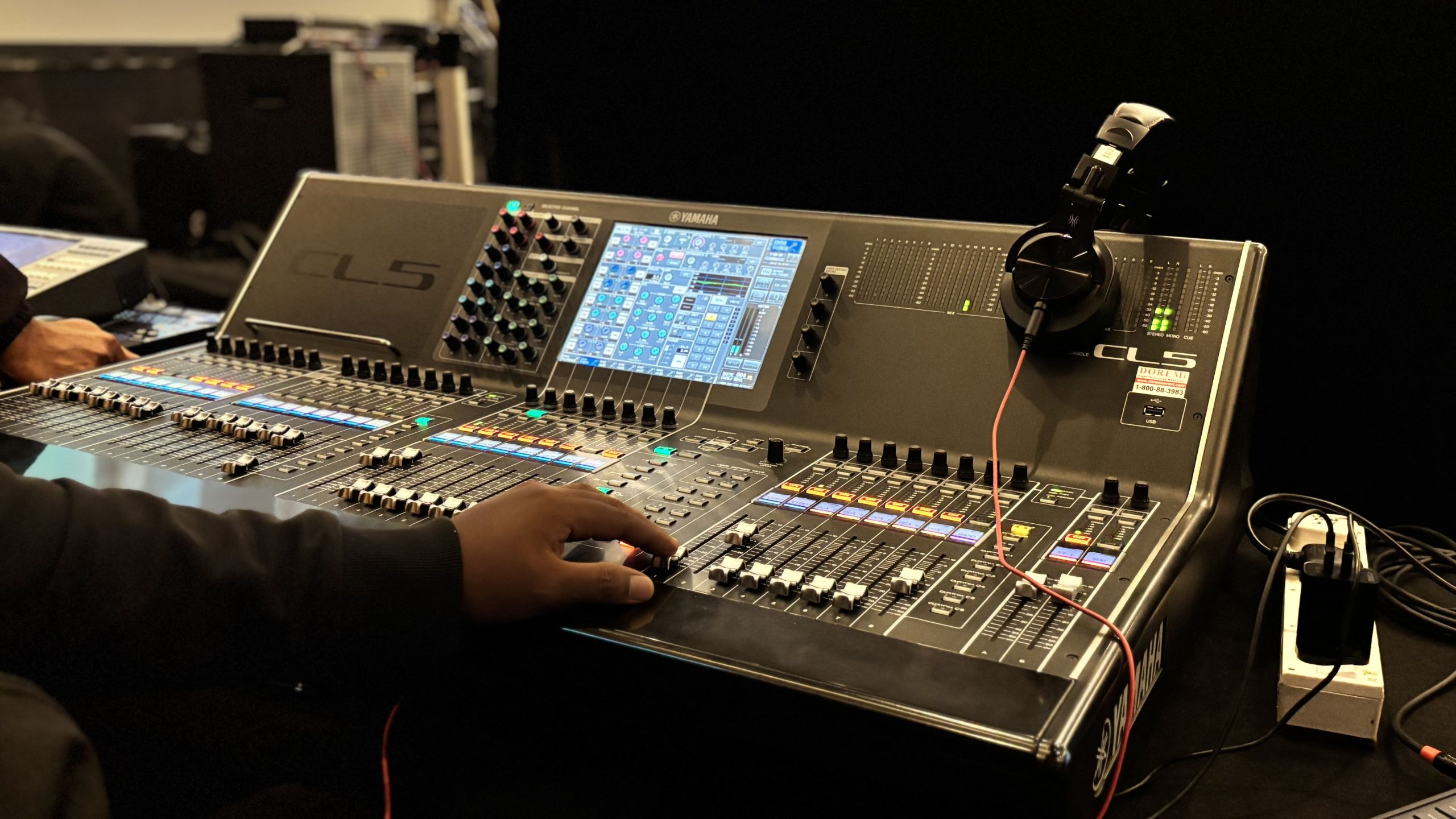 Equipment availability is only one part of a successful audio setup. Event organisers should also consider the provider’s ability to plan, configure and monitor the system.
When comparing Sound System Rental options, ask how the provider will address the venue’s layout, audience coverage and programme requirements.
Useful questions include:
- Will the equipment be selected based on the actual venue and audience size?
- How will the team check sound coverage across the audience area?
- Is a site visit or advance technical discussion recommended?
- Who will conduct the sound check?
- Will a technician be available during the event?
- Are suitable backup microphones or other critical components available if needed?
- How will audio be coordinated with lighting, LED screens and the wider event production setup?
These questions help distinguish between simply renting equipment and receiving a planned technical solution.
For larger conferences, concerts and corporate launches, sound should also be coordinated with staging, screen content, lighting cues and the programme schedule. A change in stage position or audience layout can affect audio coverage, so communication between the event team and technical crew is important.
The right provider should be able to explain why a particular setup suits the event and how potential problems will be identified before they affect the audience.
How DOREMi Approaches Event Audio Requirements
At DOREMi Services & Rental Sdn Bhd, sound is one part of the wider event technology setup. The audio arrangement needs to support the purpose of the event, the venue and the audience experience.
A corporate conference may require clear speech and consistent coverage throughout the seating area. A product launch may need speech reinforcement alongside music playback and coordinated audiovisual cues. A concert may require a more substantial system designed around performers, stage monitoring and audience coverage.
Each event has different technical priorities, which is why equipment selection should be guided by the actual requirements rather than volume alone.
Sound System Rental planning should consider the venue layout, speaker placement, microphone requirements, programme transitions and the need for on-site technical monitoring. Where the event includes LED screens, lighting and staging, coordination between these elements can also help the production run more smoothly.
The objective is straightforward: make sure the audience can hear what matters, at a comfortable level, with sound that supports the event rather than distracts from it.
Frequently Asked Questions
1. Why is sound too loud near the stage but too quiet at the back?
This audio problem is often caused by speaker placement, coverage limitations or an unsuitable system configuration. Increasing the master volume may make the front rows uncomfortable without adequately improving the rear. Speaker repositioning or additional coverage speakers may be more effective.
2. Can the same sound system work for every venue?
Not always. Room dimensions, acoustics, audience layout, background noise and programme type all influence equipment requirements. A system suitable for a small meeting room may not provide adequate coverage for a large ballroom or outdoor concert.
3. Does adding more speakers solve uneven sound?
Additional speakers can help cover areas that the main speakers cannot reach effectively. However, their placement, direction and timing must be considered. Poorly configured speakers can create interference, inconsistent volume or audible delays.
4. Why does speech sound echoey in a ballroom?
Hard surfaces and large room dimensions can create reflections and reverberation. These reflections may overlap with direct speech, reducing clarity. Suitable speaker positioning, controlled coverage and appropriate acoustic measures can help improve intelligibility.
5. How can I avoid an audio problem during a corporate event?
Share the venue layout and programme requirements with your technical provider early. Ensure the equipment is selected appropriately, conduct a full sound check and test the system from multiple audience positions. Keep technical support available during the programme.
6. When should I arrange Sound System Rental?
Arrange it as early as practical, particularly for large events, complex venues or programmes involving multiple microphones and live performances. Early planning allows time to review requirements, confirm equipment and address potential coverage issues before event day.
Further Reading
For additional guidance on preventing audio issues and improving event sound quality, explore these resources:
- How to Avoid Volume and Sound Quality Issues at Events — Learn how venue acoustics, equipment selection and sound checks influence listening quality.
- 5 Common Sound Issues at Events and How to Avoid Them — Explore practical ways to address uneven sound coverage, microphone feedback, distortion and wireless microphone interference.
Planning Your Next Event Production?
Clear, consistent audio helps audiences follow presentations, enjoy performances and stay engaged throughout an event. Addressing an audio problem starts with understanding the venue, selecting suitable equipment and planning how sound will reach the audience.
At DOREMi Services & Rental Sdn Bhd, we provide event production services and audiovisual solutions for corporate events, conferences, exhibitions, product launches and live performances. Our services include Sound System Rental, LED screens, lighting, staging, truss and other audiovisual equipment to support different event requirements.
Planning an upcoming event? Explore our event production services or audio system solutions to discuss your venue, audience coverage and technical requirements with the DOREMi team.