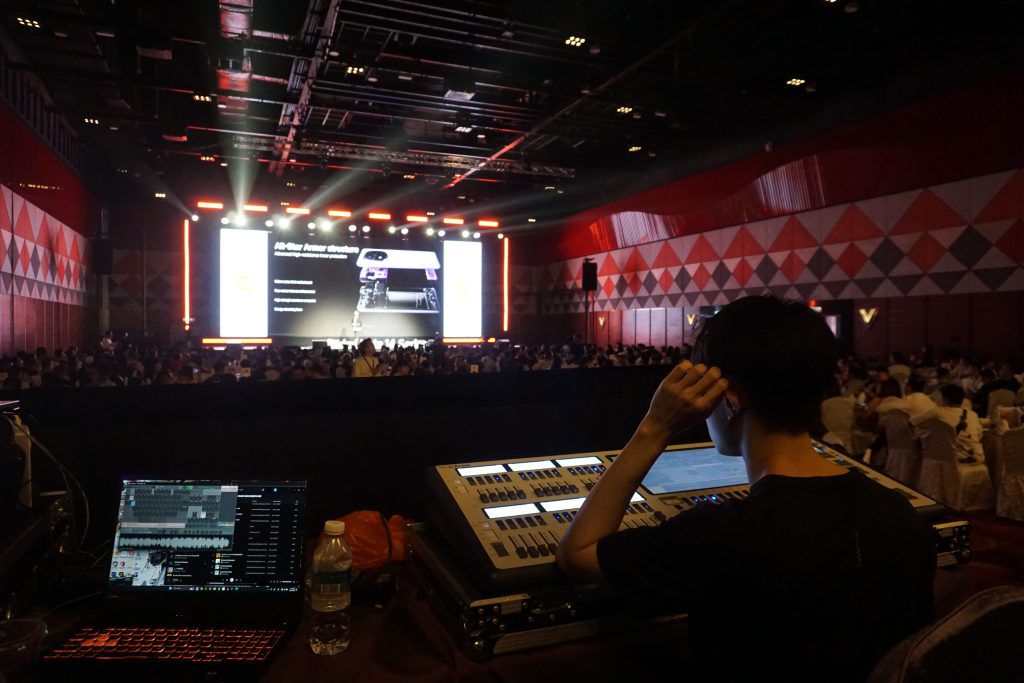
For companies that organise events regularly, the question eventually becomes unavoidable: Should the organisation continue using audio visual equipment rental, or should it invest in its own in-house AV equipment?
At first glance, purchasing AV equipment can appear to be the more economical option. If a company holds an annual dinner, quarterly town hall, employee conference, product presentation or recurring corporate meeting, why keep paying for audio visual equipment rental every time?
The answer is more complicated than simply comparing rental fees with equipment purchase prices.
Professional AV involves much more than owning microphones, speakers, LED screens, projectors and cables. It involves system design, equipment compatibility, setup, testing, operation, troubleshooting, transportation, storage, maintenance, technical personnel and contingency planning.
For recurring corporate events, the real question is therefore not:
“Is renting or buying AV equipment cheaper?”
It is:
“Which AV model gives the organisation the right combination of cost efficiency, reliability, flexibility and technical capability?”
This distinction becomes particularly important when corporate events are held at different venues, use different room layouts or require increasingly sophisticated production.
For some organisations, audio visual equipment rental remains the most practical solution even when events occur several times a year. For others, investing in selected in-house AV equipment may make financial and operational sense.
The decision depends on several factors.
What Does In-House AV Actually Mean?
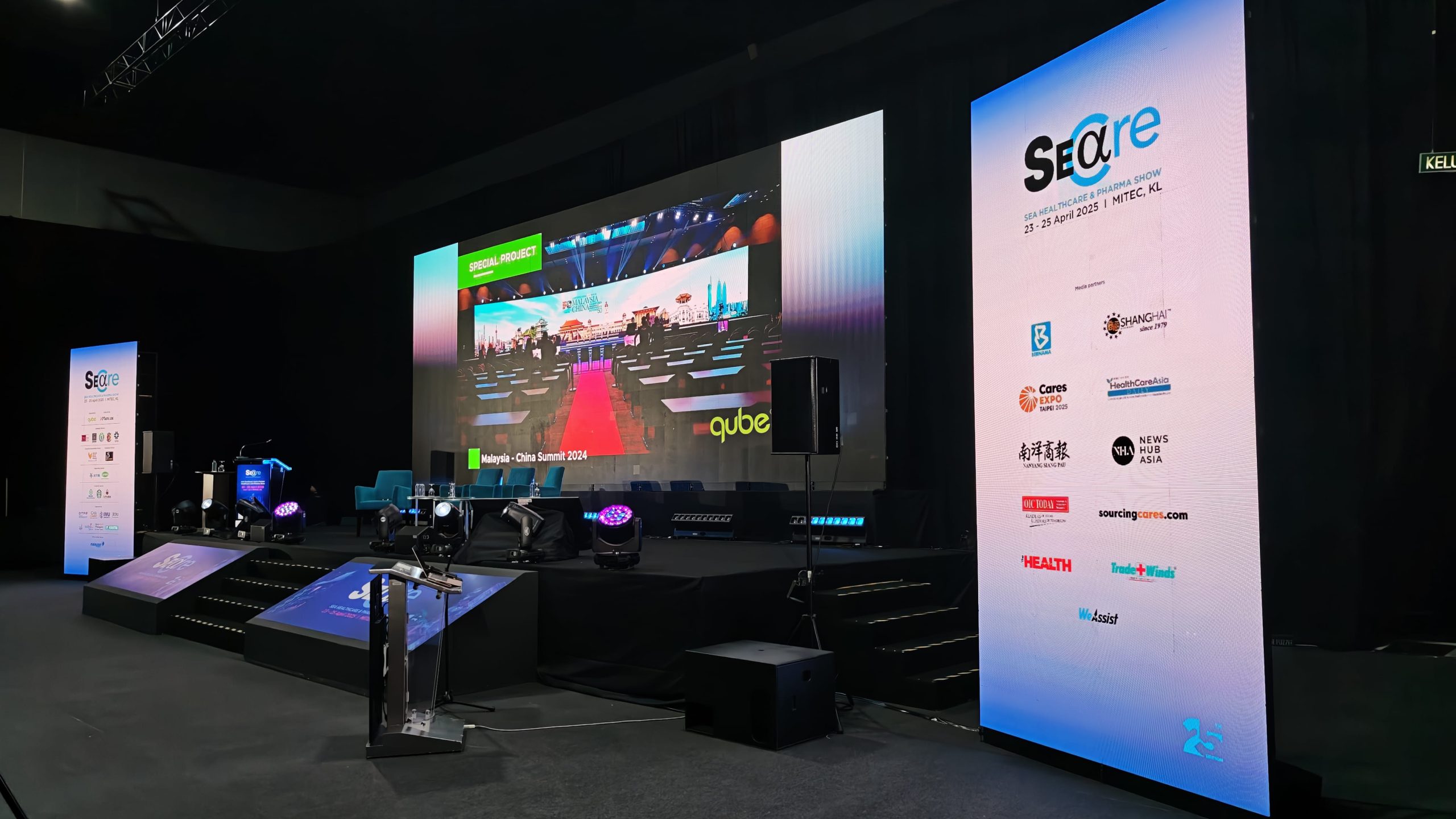
In-house AV means the organisation purchases and maintains its own audiovisual equipment for internal use.
Depending on the organisation’s requirements, an in-house inventory could include:
- Wireless and wired microphones
- Speakers and amplifiers
- Mixing consoles
- Projectors
- Displays
- LED screens
- Presentation switchers
- Cameras
- Video conferencing equipment
- Lighting fixtures
- Stage monitors
- Signal distribution equipment
- Cables and accessories
- Control systems
However, equipment ownership is only one part of the equation.
A company also needs to consider where the equipment will be stored, who will maintain it, who will transport it, who will configure it and who will operate it during an event.
This is where the apparent cost advantage of purchasing equipment can become less straightforward.
AV technology also changes quickly. A system purchased today may remain functional for years, but that does not necessarily mean it remains the most suitable technology for every corporate event.
A company might own a projector but later require an LED screen.
It might own wireless microphones but need additional channels for a large conference.
It might have presentation equipment but require multi-camera production for a hybrid event.
It might have basic speakers but require a professionally designed sound system for a gala dinner.
As a result, ownership does not necessarily eliminate the need for audio visual equipment rental.
What Does Audio Visual Equipment Rental Provide?
Professional audio visual equipment rental is fundamentally different from simply hiring a few pieces of equipment.
A professional rental provider can supply a combination of equipment, technical planning and operational support according to the requirements of a specific event.
Depending on the production, this may include:
- Professional sound systems
- Wireless microphones
- Mixing consoles
- LED screens
- Projection systems
- Confidence monitors
- Video processors
- Presentation systems
- Cameras
- Stage lighting
- Architectural lighting
- Trussing
- Technical crew
- System operators
- On-site troubleshooting
The advantage is flexibility.
Instead of purchasing equipment that may only be used several times a year, a company can specify what it needs for each event.
AVIXA describes AV equipment as covering both audio and visual technologies, including microphones, speakers, amplifiers, cameras, projectors and monitors, with the appropriate solution depending heavily on venue size, acoustics and event objectives.
That makes audio visual equipment rental particularly useful for organisations whose event requirements change from one occasion to another.
The First Question: How Often Does Your Company Actually Hold Events?
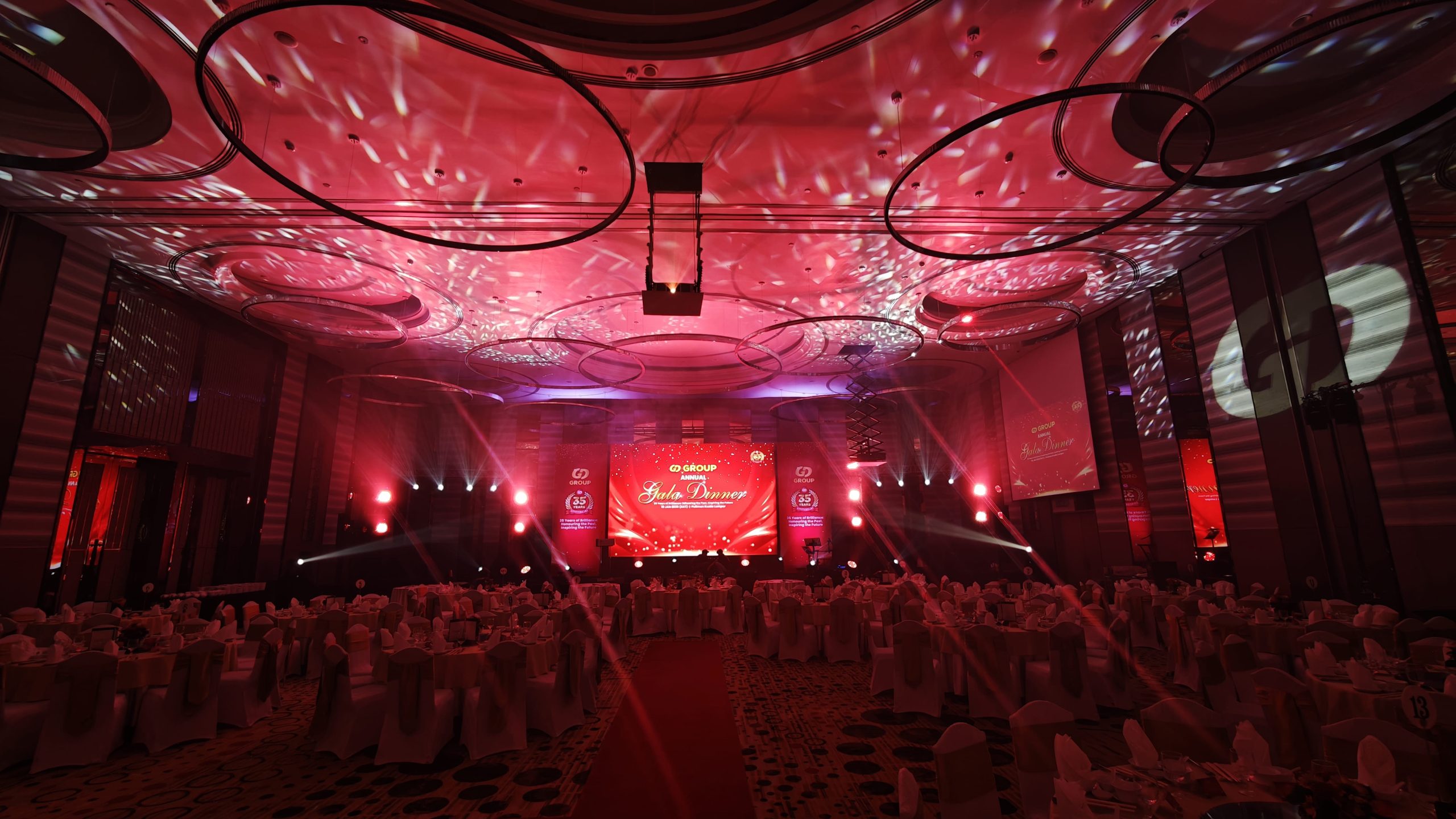
Event frequency is one of the most important considerations.
A company holding one major corporate event per year has a very different business case from an organisation running AV-heavy events every week.
Consider three hypothetical organisations.
Company A: One Annual Dinner
The company organises one annual dinner for 500 employees.
The event requires:
- Stage
- LED screen
- Sound system
- Wireless microphones
- Stage lighting
- Presentation playback
- Technical crew
Buying all the equipment would mean owning a considerable amount of equipment that may sit unused for most of the year.
For this organisation, audio visual equipment rental is likely to be more practical.
Company B: Monthly Internal Town Halls
Another organisation holds a monthly town hall for employees.
The company uses the same internal auditorium every month and requires:
- Displays
- Microphones
- Cameras
- Presentation systems
- Video conferencing
- Basic lighting
In this situation, an in-house AV installation may become more attractive.
The equipment has a high utilisation rate and can remain permanently installed.
Company C: Multiple Large Corporate Events
A multinational organisation might conduct:
- Annual dinners
- Conferences
- Product launches
- Town halls
- Executive meetings
- Employee engagement events
- Awards ceremonies
- Training conferences
However, these events may take place at different hotels and convention centres.
Even though the organisation runs many events, audio visual equipment rental can still make sense because each event requires a different technical configuration.
The important measurement is therefore not simply number of events.
It is equipment utilisation and consistency of requirements.
Equipment Utilisation Matters More Than Event Frequency
A common mistake is assuming:
More events = buying equipment is better.
Not necessarily.
Suppose an organisation holds six events per year.
That sounds like frequent usage.
But if every event requires a different AV configuration, equipment ownership can become inefficient.
One event may need a large LED screen.
Another may need projection.
Another may require multiple wireless microphones.
Another may require hybrid event production.
Another may require a large sound system.
Another may require only presentation displays.
The company could purchase equipment for all these scenarios—but that creates a much larger investment.
Alternatively, it could maintain a smaller in-house AV system and supplement it through audio visual equipment rental when necessary.
This hybrid approach can sometimes provide the best balance.
The Hidden Cost of Owning AV Equipment
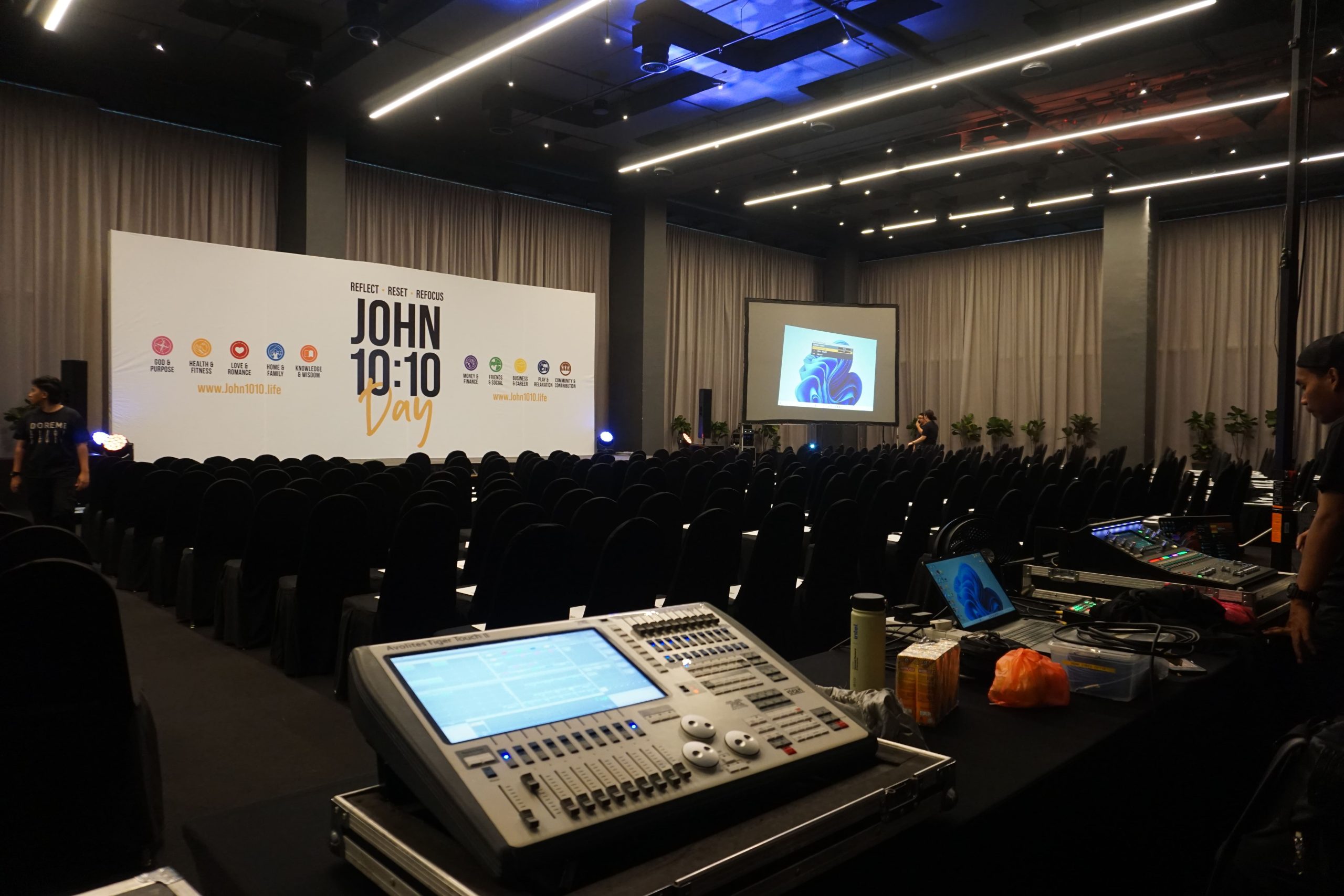
Purchase price is only the beginning.
Companies considering in-house AV should calculate the total cost of ownership.
This can include:
1. Initial Equipment Investment
Professional AV equipment can represent a significant capital expenditure.
High-quality LED systems, projectors, cameras, digital mixing consoles and professional loudspeakers are not comparable to consumer electronics.
2. Storage
Equipment needs a suitable environment.
Cables, screens, speakers, lighting fixtures and electronic equipment require organised storage and protection.
3. Maintenance
Equipment requires inspection, cleaning, testing and maintenance.
Batteries need replacement.
Cables become damaged.
Connectors wear out.
Wireless systems require frequency management.
Projectors and displays may require servicing.
4. Transportation
If the event takes place outside the company’s premises, someone has to move the equipment.
That means vehicles, loading, unloading and manpower.
5. Technical Labour
Someone needs to configure and operate the system.
A company may own a sound system, but that does not automatically mean employees know how to manage gain structure, EQ, feedback control, signal routing or wireless frequency coordination.
6. Replacement and Upgrades
Technology evolves.
A company may eventually need to replace equipment because newer technology provides better brightness, resolution, connectivity, processing or workflow.
This is one reason audio visual equipment rental remains attractive for organisations that want access to current technology without continually replacing their own inventory.
Technical Expertise Can Be More Important Than Equipment
This is one of the biggest differences between ownership and professional audio visual equipment rental.
Having equipment does not guarantee having a working AV system.
Consider a corporate conference.
The microphone may be connected.
The speaker may be powered.
The laptop may display the presentation.
But what happens when:
- The microphone starts feeding back?
- A presenter brings a laptop with a different output?
- The presentation resolution does not match the display?
- A wireless microphone experiences interference?
- A video signal needs to be distributed to multiple screens?
- A presentation needs to switch between several sources?
- Remote speakers need to join the event?
- The room requires different loudspeaker coverage?
These are system-level problems.
Professional AV support involves planning, installing, operating and maintaining audiovisual systems, rather than simply supplying individual pieces of equipment.
This is particularly important for corporate events because technical problems are highly visible.
A five-minute delay caused by a failed presentation system can affect hundreds of attendees.
A microphone failure during a CEO’s speech can become the most memorable part of an annual dinner.
A screen failure during a product presentation can directly affect the audience’s perception of the brand.
Venue Changes Can Make Rental AV More Practical
Recurring corporate events do not always happen in the same place.
An annual dinner might take place in a hotel ballroom.
A conference might be held at a convention centre.
A town hall could take place at headquarters.
A product launch might be organised at an unconventional venue.
Each location creates different technical requirements.
Room dimensions affect screen size.
Ceiling height affects projection.
Room acoustics affect sound-system design.
Stage configuration affects speaker placement.
Ambient lighting affects visual displays.
Audience size affects sound coverage.
This is why a fixed in-house AV system may not be suitable for every venue.
With audio visual equipment rental, the system can be designed around the venue instead.
Corporate Events That Should Seriously Consider Audio Visual Equipment Rental
Certain event types naturally favour professional audio visual equipment rental.
Annual Dinners and Gala Events
Annual dinners typically combine:
- Speeches
- Awards
- Entertainment
- Videos
- Presentations
- Performances
- Stage lighting
- Background music
- LED screens
The AV system therefore needs to support both communication and entertainment.
The requirements can also change significantly depending on the ballroom and programme.
For many organisations, renting the system and technical crew is more practical than maintaining a complete annual-dinner production inventory.
Conferences can require considerably more AV infrastructure than a standard corporate meeting.
A conference may involve:
- Multiple microphones
- Presentation playback
- Confidence monitors
- Large LED screens
- Speaker timers
- Stage displays
- Recording
- Live streaming
- Video playback
- Audience microphones
- Multiple presentation sources
If conferences are held at different venues, audio visual equipment rental provides the flexibility to scale the system according to the delegate count and room.
Product launches are particularly difficult to standardise.
One launch might require a large LED wall.
Another might use projection mapping.
Another could involve multiple display surfaces, lighting effects and playback systems.
The AV system becomes part of the brand experience.
Instead of owning a fixed system, organisations may benefit from audio visual equipment rental because the production can be designed specifically around the product, venue and creative concept.
Awards events typically involve frequent stage transitions.
The AV system needs to support:
- Presenter microphones
- Winner announcements
- Music cues
- Walk-up music
- Award videos
- Sponsor graphics
- Stage lighting
- LED content
- Photography
- Video production
A professionally operated system can help keep transitions controlled and consistent.
Employee Town Halls
This is one category where the answer can go either way.
If the company conducts town halls every month in a permanent auditorium, an installed in-house AV system can be highly practical.
However, if town halls move between different locations or require increasingly sophisticated production, audio visual equipment rental may remain more flexible.
A Real-World Example: DHL Annual Dinner 2026
A practical example of how professional AV supports a recurring corporate event is DHL Annual Dinner 2026, where DOREMi provided event technology support.
An annual dinner is a good example of why corporate AV cannot simply be reduced to “speakers and a screen.”
A corporate dinner combines formal communication with entertainment and audience engagement.
The production may need to accommodate speeches, presentations, award segments, videos, performances and transitions throughout the programme.
For an organisation such as DHL, the event environment also needs to reflect a professional corporate standard.
This is where the role of professional audio visual equipment rental becomes more than equipment supply.
The rental model allows the production team to configure the AV system around the event rather than forcing the event to fit a fixed equipment inventory.
For a recurring corporate event, this distinction is important.
The organisation can continue focusing on the programme, guests, branding and employee experience while the technical production is handled by an experienced event technology team.
DOREMi’s corporate gala and dinner services similarly combine audiovisual support with event production, with its AV team supporting both on-stage and off-stage activity.
The DHL Annual Dinner 2026 example therefore illustrates an important principle:
Recurring events do not necessarily require recurring equipment ownership.
What they require is a reliable production model that can consistently deliver the required technical outcome.
When Does In-House AV Make Sense?
There are situations where buying equipment is absolutely reasonable.
In-house AV can make sense when an organisation has:
High Equipment Utilisation
The equipment is used frequently enough to justify the capital investment.
A Permanent Venue
The organisation regularly uses the same auditorium, meeting room or event space.
Consistent Requirements
The same microphones, displays, cameras and presentation systems are required repeatedly.
Internal Technical Expertise
The organisation has trained staff capable of operating and maintaining the equipment.
Dedicated Storage
There is secure and suitable space for equipment.
Long-Term AV Requirements
The equipment is expected to remain useful for several years.
Need for Immediate Availability
Some organisations need AV capability at short notice without waiting for external suppliers.
In these circumstances, a carefully designed in-house system can be extremely effective.
When Is Audio Visual Equipment Rental the Better Choice?
Rental becomes particularly attractive when:
- Events happen at different venues
- Event requirements vary significantly
- The company does not have dedicated AV technicians
- Equipment utilisation is relatively low
- Large-scale equipment is only required occasionally
- Technology changes quickly
- Events require different screen sizes
- Large sound systems are required only for certain events
- The organisation needs specialist technical crew
- Production complexity changes from event to event
In these circumstances, audio visual equipment rental can provide access to professional equipment and technical expertise without requiring the organisation to build and maintain a large AV department.
The Hybrid Model: Often the Most Practical Solution
There is also a third option.
Companies do not necessarily need to choose between owning everything and renting everything.
A hybrid AV strategy can involve:
Own the equipment that is used constantly.
Rent the equipment that is used occasionally or requires specialist expertise.
For example, a company could own:
- Meeting-room displays
- Basic presentation systems
- Permanent microphones
- Video conferencing equipment
- Small speakers
- Basic cameras
But use audio visual equipment rental for:
- Annual dinners
- Large conferences
- Product launches
- Awards ceremonies
- Large town halls
- Outdoor events
- High-capacity LED screens
- Large professional sound systems
- Stage lighting
- Complex video production
This approach can reduce capital expenditure while retaining flexibility.
Compare the Total Cost, Not Just the Rental Quote
When comparing audio visual equipment rental with equipment ownership, companies should build a proper five-year calculation.
For ownership, include:
Equipment purchase + storage + maintenance + repairs + replacement + transportation + technical labour + upgrades + depreciation
For rental, consider:
Rental equipment + technical crew + transportation + setup + operation + dismantling
The numbers will differ from company to company.
There is no universal rule that rental is cheaper.
There is also no universal rule that buying is cheaper.
The financially responsible decision is the one that matches the organisation’s actual utilisation and operational requirements.
Reliability Should Be Part of the Calculation
Cost should not be the only KPI.
For important corporate events, organisations should also evaluate:
- Equipment reliability
- Technical support
- Backup equipment
- Technician availability
- Response time
- Pre-event testing
- Venue coordination
- System redundancy
- Experience with similar events
- Ability to scale
- Troubleshooting capability
A professional audio visual equipment rental provider can bring an entire technical workflow rather than simply delivering equipment.
DOREMi, for example, positions its event production service around planning and execution, with trained personnel present to manage event requirements and troubleshoot technical issues. The company states that it has more than 45 years of industry experience and more than 45,000 completed projects.
For corporate events, this operational capability can be as important as the equipment itself.
A Simple Decision Framework
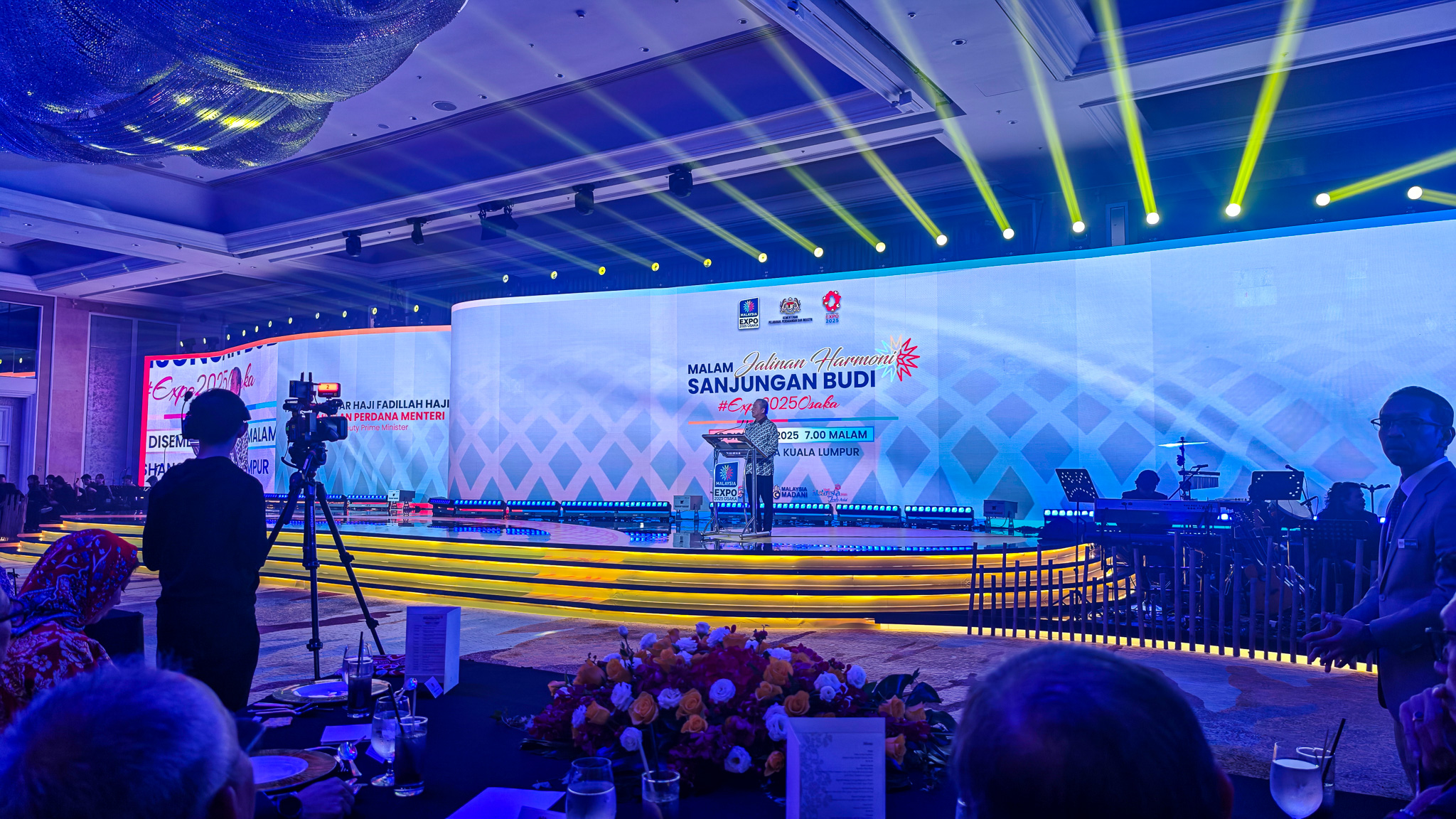
Corporate event teams can use the following questions before deciding.
Consider In-House AV If:
- Do we use the equipment every week or every month?
If yes, ownership may be worth considering.
- Do we use the same venue?
If yes, permanent installation becomes more attractive.
- Do we have trained technical staff?
If yes, internal operation becomes more realistic.
- Are our AV requirements predictable?
If yes, standardising equipment can reduce complexity.
- Can we maintain and upgrade the equipment?
If yes, ownership may be sustainable.
Consider Audio Visual Equipment Rental If:
- Do our venues change?
Rental provides greater flexibility.
- Do our event requirements change?
Rental allows different systems for different events.
- Do we only need large-scale AV occasionally?
Rental avoids purchasing equipment that spends most of the year in storage.
- Do we need specialist technicians?
A professional provider can supply technical personnel alongside the equipment.
- Is event reliability more important than equipment ownership?
A managed AV service may provide greater operational support.
The Right Question for Recurring Corporate Events
The most important conclusion is that recurring events do not automatically mean recurring equipment purchases.
A company can hold ten events per year and still benefit from audio visual equipment rental if every event has different requirements.
Another organisation may hold only four events per year but benefit from in-house AV because all four events use the same auditorium and the same equipment.
The decision should therefore be based on:
Frequency + utilisation + technical complexity + venue consistency + internal expertise + total cost of ownership.
And for many corporate organisations, the most practical answer is a combination of both.
Keep everyday AV requirements in-house.
Bring in professional audio visual equipment rental for larger, specialised or high-profile productions.
Frequently Asked Questions
Is audio visual equipment rental better than buying AV equipment?
Not necessarily. The better option depends on utilisation, event frequency, venue consistency, technical expertise and total cost of ownership. Rental is often more flexible for organisations with changing event requirements.
When should a company buy AV equipment?
Buying can make sense when equipment is used frequently, the organisation has a permanent venue, requirements are predictable and trained personnel are available to operate and maintain the system.
Is audio visual equipment rental suitable for recurring corporate events?
Yes. Recurring events can still benefit from rental when venues, audience sizes, programme formats or technical requirements change between events.
What does professional audio visual equipment rental include?
Depending on the provider and event, it can include sound systems, microphones, LED screens, projectors, video systems, lighting, staging, technical crew, setup, testing, operation and dismantling.
Is renting AV equipment more flexible?
Generally, yes. A rental provider can configure different systems for different venues and event formats instead of requiring an organisation to use the same equipment for every event.
Should a company use both in-house and rental AV?
A hybrid approach can be highly practical. Frequently used equipment can be kept in-house while specialised equipment and technical production can be outsourced through audio visual equipment rental.
Final Thoughts
The debate between rental AV and in-house AV should not be reduced to “Which one costs less?”
The more important question is:
Which model gives the organisation the right technology, expertise, flexibility and reliability for the way its events actually operate?
For organisations with permanent spaces and predictable AV requirements, in-house systems can provide convenience and long-term value.
For organisations running different corporate events across different venues, professional audio visual equipment rental can provide considerably greater flexibility.
And for many companies, the strongest strategy is somewhere in between.
Own what is used constantly.
Rent what changes.
Bring in specialists when the event demands a higher level of technical production.
That approach allows corporate event teams to focus on what matters most: delivering a professional event experience without turning AV equipment ownership into another operational burden.
Further Reading
For a professional overview of what AV equipment includes and how venue size, acoustics and event objectives influence AV selection, explore What Is AV Equipment? A Guide For All Your AV Needs from AVIXA. What Is AV Equipment? A Guide For All Your AV Needs — AVIXA
For additional guidance on professional AV support and the role of technical specialists in planning, operating and maintaining audiovisual systems, read Understanding AV Support: Enhancing Technology Experiences in Events and Workspaces from AVIXA. Understanding AV Support — AVIXA
Planning Your Corporate AV Strategy?
Whether an organisation is organising an annual dinner, conference, awards ceremony, town hall, product launch or recurring corporate event, the AV strategy should be planned around the event—not simply around the equipment available.
DOREMi provides audio visual equipment rental and event production solutions covering professional sound systems, LED screens, projection, staging, lighting and technical support.
With extensive experience supporting corporate events, DOREMi can help organisations determine whether their requirements are better suited to rental, in-house AV or a combination of both.
Speak with DOREMi’s event technology specialists to plan an AV solution that matches your event frequency, venue, audience and technical requirements—without investing in equipment you may not use.