A successful event does not stop when the programme begins. Every visible surface becomes part of the brand experience.
From the moment guests arrive, they encounter branded environments through registration counters, stage designs, photo areas, media walls and presentation spaces. Among these elements, event backdrops remain one of the most effective and versatile tools for creating a professional visual identity while giving guests a natural opportunity to interact with the brand.
An event backdrop can serve a practical purpose, such as covering an empty wall or defining a presentation area. But when designed strategically, it can become much more than decoration. A well-planned branded backdrop can reinforce brand recognition, create memorable photo opportunities and provide consistent visual exposure throughout an event.
For corporate conferences, product launches, award ceremonies, exhibitions, roadshows, government events and gala dinners, choosing the right event backdrop requires more than selecting an attractive design. Size, location, lighting, material, branding, photography requirements and venue conditions all influence the final result.
Why Event Backdrops Matter More Than They Appear
Event branding is often judged by small details.
A guest may not consciously analyse the backdrop behind a speaker or photograph, but the branded environment contributes to how the entire event is perceived. A clean, well-positioned event backdrop can make a venue feel more organised, professional and visually consistent.
More importantly, backdrops often appear in photographs.
A single photograph taken at an event may be shared on LinkedIn, Instagram, Facebook, news articles, company websites or internal communications. When the event backdrop is positioned correctly, the brand can remain visible every time that photograph is viewed or shared.
This makes event backdrops particularly valuable for:
- Corporate conferences and seminars
- Product launches
- Award ceremonies
- Press conferences
- Company anniversaries
- Government and official events
- Exhibition booths
- Media interviews
- Gala dinners
- Networking events
- Brand activations
- Roadshows and promotional events
The objective is not simply to put a logo on a wall.
The objective is to create a recognisable branded environment.
Choosing the Right Type of Event Backdrop
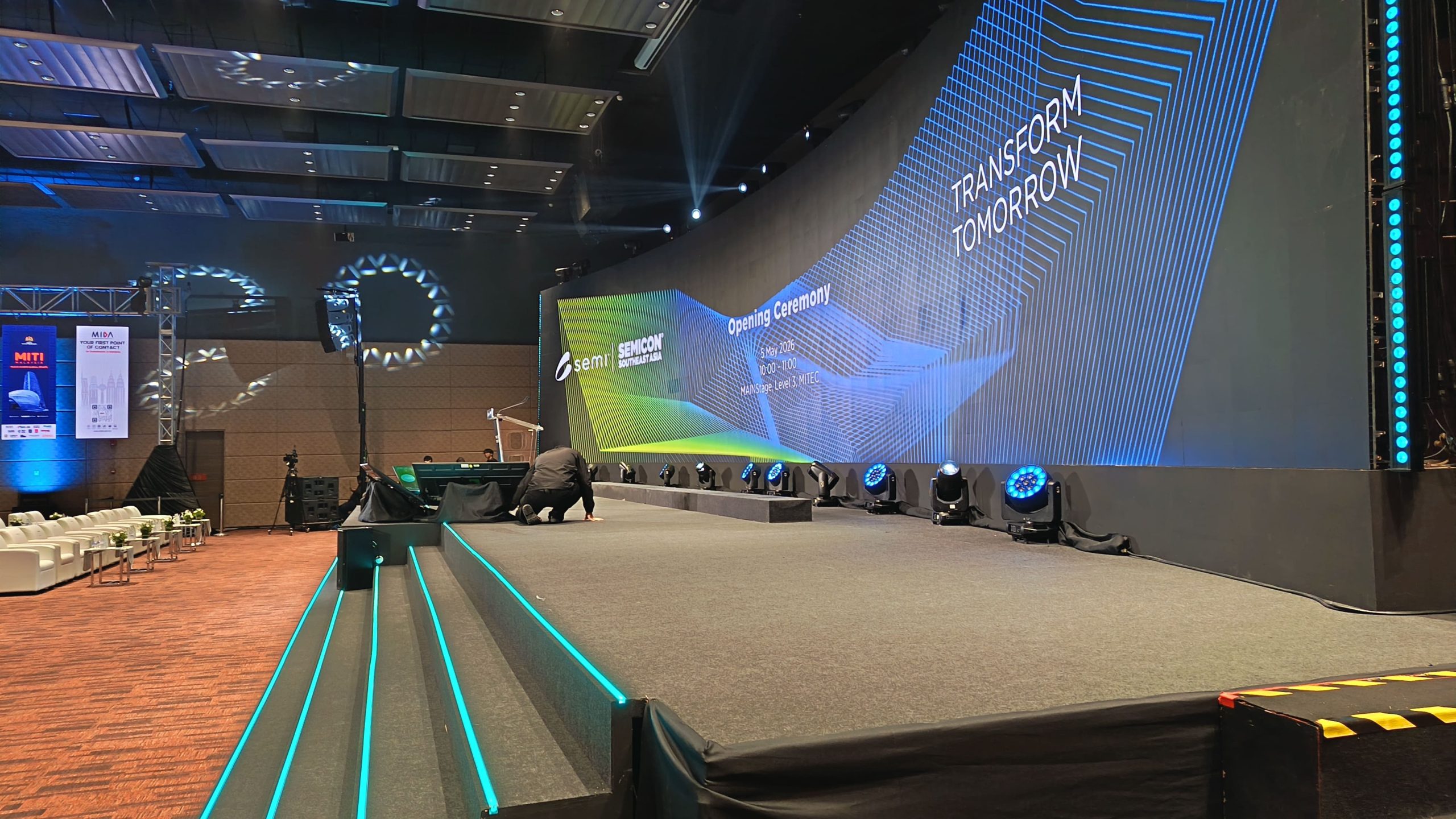
Not every event requires the same backdrop solution. The appropriate choice depends on the event objective, venue, audience and how the backdrop will be used.
1. Step-and-Repeat Backdrop
A step-and-repeat backdrop is one of the most recognisable event branding formats.
It typically features a repeated arrangement of logos or brand marks across the backdrop, creating a consistent background for photography.
This format is particularly effective for:
- Red-carpet events
- Award ceremonies
- Press conferences
- Corporate celebrations
- Media interviews
- Sponsorship events
- VIP photography sessions
The repeated branding ensures that the company or sponsor remains visible regardless of where a person stands in front of the backdrop.
However, the spacing and scale of the logos matter. Logos that are too large can appear overwhelming, while logos that are too small may disappear in photographs.
A professionally designed step-and-repeat backdrop should therefore consider the camera distance, expected number of people in photographs and the positioning of the main subject.
2. Branded Backdrop for Corporate Events
A branded backdrop offers greater creative flexibility than a traditional step-and-repeat design.
Instead of repeating the same logo, the backdrop can incorporate:
- Campaign graphics
- Event themes
- Corporate colours
- Taglines
- Product imagery
- Event names
- Key messages
- Sponsor logos
- Brand photography
This makes a branded backdrop particularly suitable for product launches, corporate events and themed campaigns where storytelling is as important as brand visibility.
For example, a product launch may use a backdrop featuring the new product as the main visual while incorporating the company identity subtly around it.
The result is a backdrop that communicates the purpose of the event rather than simply displaying a company logo.
Event Backdrop Placement Can Change Everything
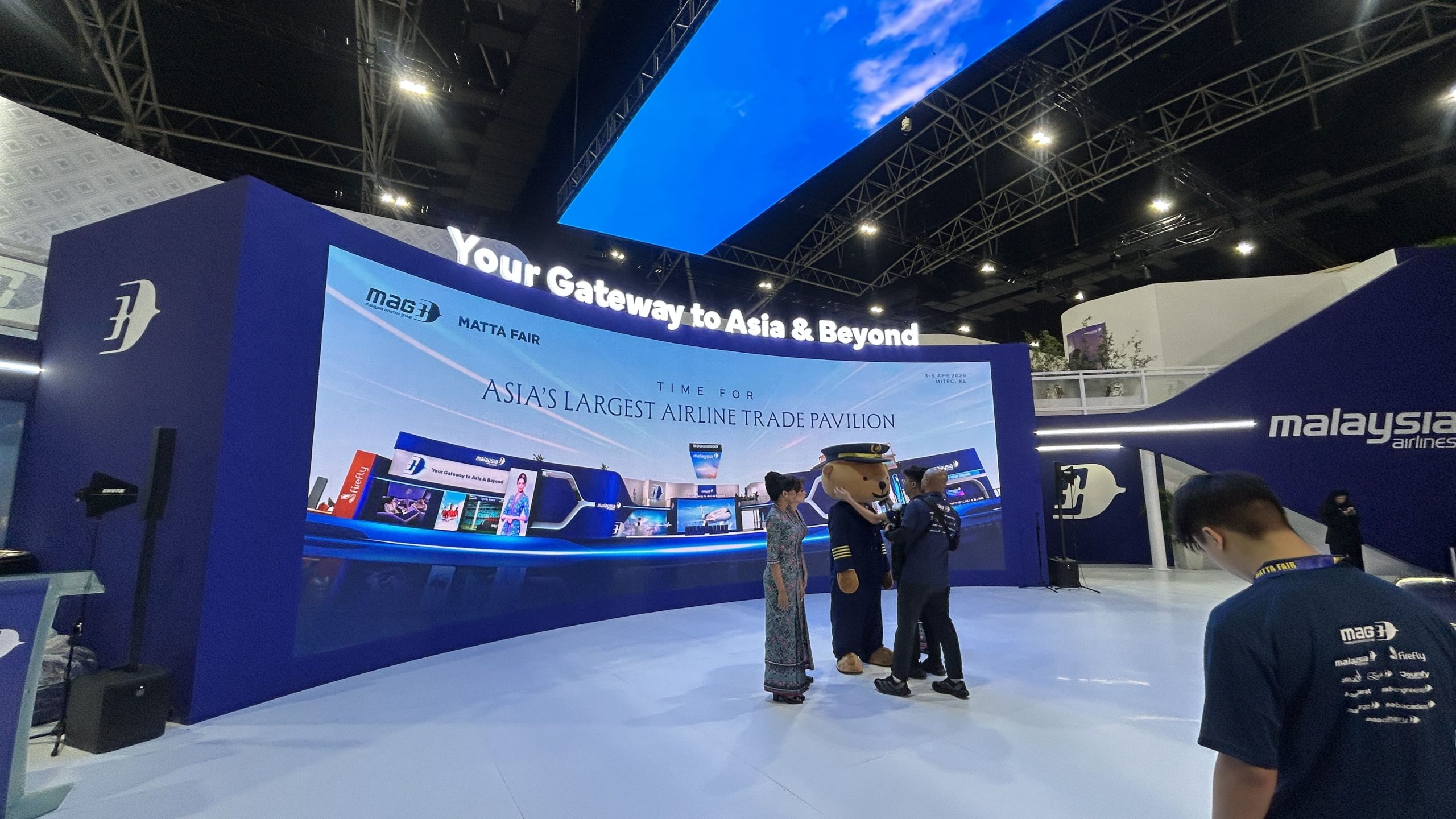
Even a beautifully designed event backdrop can lose its impact if it is placed in the wrong location.
Before installation, consider how guests move through the venue.
A backdrop placed near the entrance can create an immediate branded welcome. A backdrop positioned behind a registration counter reinforces the event identity as attendees check in. A backdrop near the stage can strengthen the visual identity of presentations and official proceedings.
Photography areas require additional consideration.
The backdrop should have enough space in front of it for photographers and guests without obstructing walkways or creating congestion. It should also be positioned where lighting can illuminate the branding evenly.
For high-profile events, the placement should ideally be considered during the overall venue planning process rather than treated as an afterthought.
Size Matters: Designing for the Camera and the Crowd
One of the most common mistakes when selecting event backdrops is choosing a size based purely on the available wall space.
The correct size depends on how the backdrop will be viewed.
A backdrop intended for a single-person photograph has different requirements from one designed for group photographs. Similarly, a media wall for press interviews may require significantly more width than a small photo area.
Consider:
Viewing distance
How far will guests and cameras be from the backdrop?
Number of people
Will the backdrop be used for individual portraits, small groups or large group photographs?
Camera framing
Will photographers capture full-body, waist-up or close-up shots?
Venue scale
A small backdrop can look lost inside a large ballroom or exhibition hall.
Brand visibility
Logos and key messages must remain legible at the expected viewing distance.
The goal is to make the event backdrop large enough to establish visual presence without overwhelming the surrounding environment.
Material Selection: More Than Just Appearance
The material used for an event backdrop affects its appearance, durability, installation and suitability for the venue.
Depending on the application, backdrop solutions may use printed fabric, tension fabric systems, rigid panels, modular frames or other display structures.
Fabric backdrops are often valued for their lightweight nature, clean appearance and ease of transportation. Tension fabric systems can create a smooth, seamless visual surface that works particularly well for corporate branding.
Rigid panels can provide a more solid architectural appearance and may be appropriate where a premium or structured finish is required.
The choice should take into account:
- Indoor or outdoor use
- Installation duration
- Transportation requirements
- Available floor space
- Surface finish
- Lighting conditions
- Reusability
- Event duration
- Venue restrictions
For event backdrop rental, understanding the installation environment is especially important because the backdrop must be suitable for both the venue and the planned event schedule.
Lighting Can Transform a Branded Backdrop
A backdrop can be perfectly designed and still look underwhelming if it is poorly lit.
Lighting determines how colours, logos, textures and graphics appear in photographs and to the audience.
For example, uneven lighting can create shadows across a branded backdrop, while excessive front lighting may flatten the visual appearance. Coloured lighting can also change how brand colours are perceived.
Depending on the event design, lighting options may include:
- LED uplighting
- Profile lighting
- Wash lighting
- Architectural lighting
- Stage lighting
- Decorative lighting
For photography-heavy events, the lighting should also be considered from the camera’s perspective.
The objective is simple: make the branding visible, consistent and photographically clean.
Event Backdrops and the Bigger Event Environment
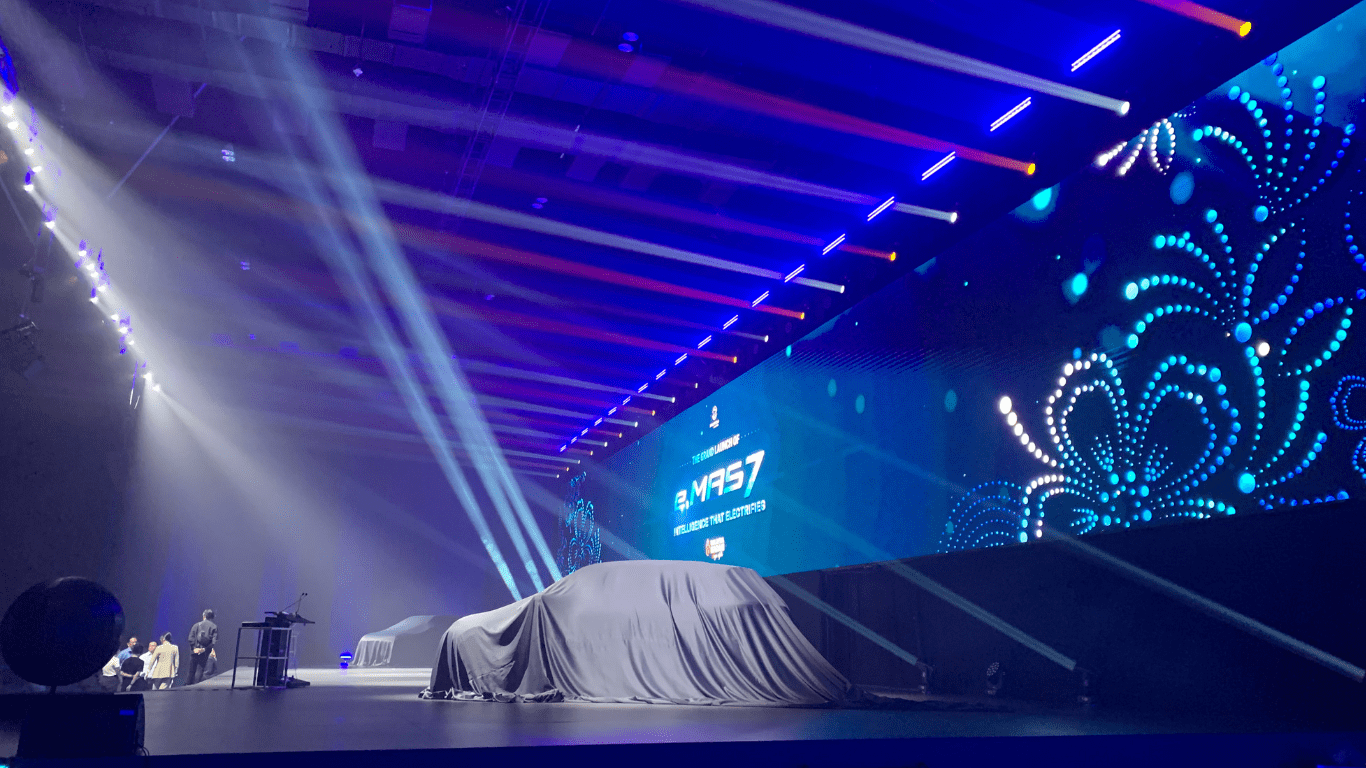
A backdrop should never be designed in isolation.
It needs to work together with the rest of the event environment.
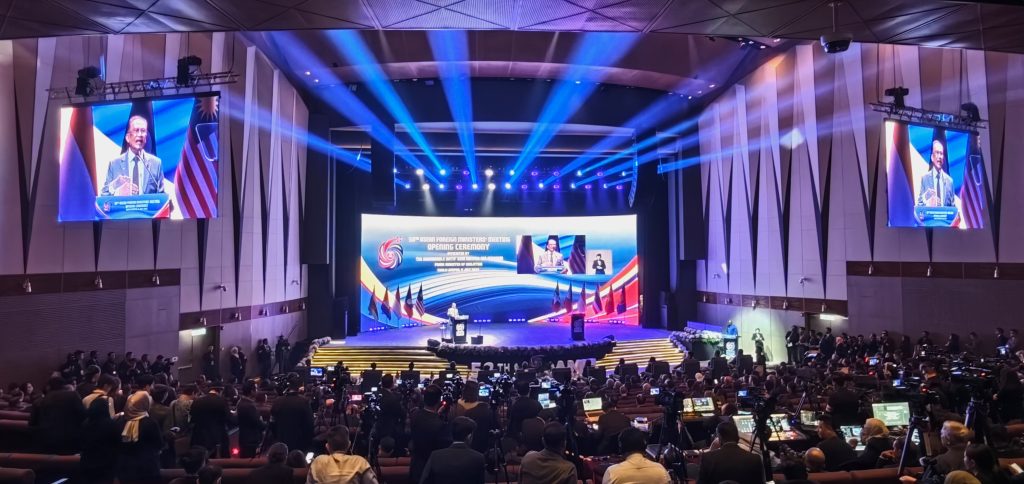
At a conference, for example, the event backdrop may need to complement the stage LED screen, lectern branding, registration area and presentation graphics.
At a product launch, the backdrop may need to align with the product reveal, stage lighting and visual content.
At an exhibition, the backdrop may need to integrate with exhibition walls, counters, displays and visitor flow.
This is where event technology and event production planning become important.
A visually impressive backdrop can lose its effectiveness when surrounding elements use completely different colours, proportions or design styles.
Strong event branding creates one visual language across the venue.
Event Backdrop Rental: What Should You Consider?
For organisations that do not require permanent branding structures, event backdrop rental can provide a practical solution.
However, rental should not mean selecting whatever backdrop happens to be available.
The rental solution should still be matched to:
- Event type
- Venue dimensions
- Branding requirements
- Installation time
- Event schedule
- Lighting conditions
- Photography requirements
- Indoor or outdoor environment
- Expected audience size
For recurring corporate events, reusable backdrop systems can also provide greater flexibility. Graphics can potentially be updated while the supporting structure is retained, depending on the system selected.
This can make event backdrop rental particularly useful for organisations managing multiple events throughout the year.
Common Event Backdrop Mistakes to Avoid
Even relatively simple event branding can create problems when planning is rushed.
Too Much Information
A backdrop is not a brochure.
Trying to include a company’s entire product range, multiple paragraphs of text and numerous logos can make the design difficult to understand.
Keep the visual hierarchy clear.
Poor Logo Placement
Important branding should not sit too close to the floor, edges or areas likely to be covered by people.
Always consider where people’s heads and bodies will appear in photographs.
Incorrect Proportions
A backdrop that is too small for the venue can look insignificant, while one that is excessively large can dominate the event space.
Ignoring Lighting
The appearance of printed colours can change dramatically depending on the lighting environment.
Designing Without Considering Photography
If the backdrop is intended for photographs, the design should be tested from the photographer’s perspective.
The branding needs to remain visible when one, two or several people stand in front of it.
Creating a Backdrop That People Want to Photograph
The most effective event backdrops do something beyond displaying branding: they encourage people to take photographs.
This is particularly valuable for social media-driven events.
A well-designed photo area can become an organic content-generation point, where attendees voluntarily share photographs featuring the event and brand.
The formula is straightforward:
Strong visual design + strategic branding + good lighting + comfortable photography space = shareable event content.
For brands, this creates exposure beyond the physical venue.
The event backdrop becomes part of the digital event experience.
The Role of Professional Event Production
An effective backdrop may appear simple from the audience’s perspective, but professional execution involves several considerations behind the scenes.
The production team may need to coordinate:
Design → Measurement → Printing → Transportation → Installation → Lighting → Positioning → On-site Inspection → Dismantling
Venue access, loading restrictions, ceiling height, floor conditions, installation windows and event schedules can all affect the setup.
For larger productions, the backdrop may also need to coordinate with staging, LED screens, lighting systems and other temporary structures.
This is why backdrop planning is best considered as part of the overall event production process rather than as a standalone decoration item.
Choosing the Right Event Backdrop for Your Event
The best event backdrop is not necessarily the biggest or most expensive option.
It is the one that supports the purpose of the event.
Before making a decision, consider these five questions:
- What is the primary objective?
Branding, photography, media coverage, sponsorship visibility or visual decoration? - Where will it be installed?
Entrance, stage, registration area, exhibition booth or dedicated photo zone? - How will people interact with it?
Will guests stand in front of it for photographs? - How will it be lit?
Will natural light, venue lighting or dedicated event lighting affect visibility? - What needs to happen around it?
Does it need to integrate with staging, LED screens, sound, registration or other event technology?
Answering these questions before selecting the backdrop can prevent costly last-minute changes and ensure the final installation performs as intended.
Event Backdrops as Part of a Complete Event Experience
Branding is most powerful when every element works together.
An event backdrop may occupy only one wall, but its influence can extend across photographs, social media posts, media coverage and guest experiences long after the event has ended.
For businesses organising conferences, exhibitions, product launches, award ceremonies and corporate events, the backdrop should therefore be considered part of the wider event production strategy.
At DOREMi, event technology and production solutions are planned around the requirements of each event—from LED screens and professional sound systems to staging, lighting and event infrastructure.
With more than 45 years of experience and over 45,000 events delivered, DOREMi supports organisations across Malaysia with integrated event production solutions designed to make event technology easier to manage.
Final Thoughts
The best event branding does not simply occupy space—it creates recognition.
A thoughtfully designed branded backdrop can turn an ordinary wall into a focal point. A well-positioned step-and-repeat backdrop can strengthen media and photography coverage. And the right event backdrop rental solution can provide professional branding without the need for permanent infrastructure.
Ultimately, the strongest results come from treating the backdrop as part of the complete event experience.
Because when every wall, stage and visual touchpoint works together, the brand does not simply appear at the event.
It becomes part of the experience.
Further Reading
For more insights into how step-and-repeat backdrops can strengthen brand visibility and create professional photo opportunities at events, explore this guide from Backdropsource. Read: Step and Repeat Event Media Wall Backdrops
Looking for Event Backdrop nd Event Production Solutions?
Whether planning a corporate conference, product launch, exhibition, gala dinner, award ceremony or major brand event, DOREMi can help develop an integrated event production solution around your venue, audience and branding requirements.
Speak with DOREMi’s event specialists to explore the right event backdrop, staging, lighting and AV solution for your next event.