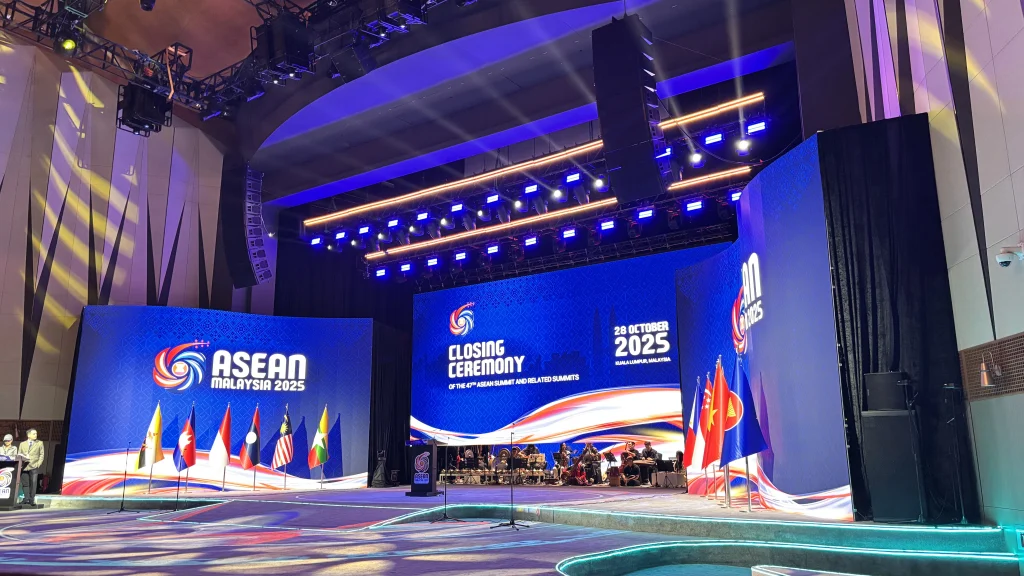
Choosing between an LED wall and a projection screen is one of the most common visual technology decisions in indoor event planning.
At first, the choice can appear simple.
An organiser needs a large screen for a conference, product launch, exhibition, gala dinner or corporate event. A projector and screen may seem like the traditional solution, while an LED wall appears to offer a brighter and more modern alternative.
But the right decision is rarely about which technology looks more impressive on a quotation.
It is about how the display will perform in the actual venue.
How much ambient light is present? How far will the audience sit from the screen? What type of content will be displayed? Does the event require live camera feeds? How large does the image need to be? Is there enough room for a projector and its throw distance? Can the venue lighting be controlled? What does the stage design require?
These questions can completely change the recommendation.
A professional LED Screen Rental solution can be ideal for a bright ballroom, exhibition hall or high-impact product launch. At the same time, a projection system can be an excellent choice for a controlled conference room, theatre-style presentation or darkened ballroom.
Neither technology is automatically better.
The right choice is the one that delivers the required image quality, visibility, flexibility and reliability for the event.
LED Wall vs Projection Screen: What Is the Actual Difference?
Before comparing the two, it helps to understand how they create an image.
An LED wall is a direct-view display made from individual LED modules or panels. The LEDs themselves produce the light that forms the image.
A projection system works differently.
A projector produces an image by projecting light onto a separate surface, such as a projection screen. The audience sees the light reflected from that surface.
That fundamental difference affects almost every other consideration.
With an LED wall, the display generates its own light. This means the image can remain highly visible even when the room contains significant ambient lighting.
Projection depends much more heavily on the environment. The projector has to compete with light coming from windows, chandeliers, stage lighting, room lighting and other sources.
This does not mean projection is outdated.
In a properly controlled environment, projection can produce a large, high-quality image and may be the more practical solution.
The important question is therefore not:
“Is LED better than projection?”
It is:
“Which technology performs better under the conditions of this event?”
Ambient Light Is Often the First Decision
If there is one factor that should be checked before choosing a display system, it is ambient light.
Projection systems rely on reflected light.
When the room becomes brighter, the projected image competes with that ambient light. As more unwanted light reaches the projection surface, perceived contrast can decrease and darker parts of the image can become less visually distinct.
This can become a problem in:
- Hotel ballrooms
- Exhibition halls
- Conference centres
- Rooms with large windows
- Retail spaces
- Daytime corporate events
- Events with active stage lighting
An LED wall approaches the problem differently because the display itself produces the light.
This makes LED particularly useful when the room cannot be darkened sufficiently or when the production requires stage lighting to remain active.
For example, imagine a corporate conference taking place in a ballroom with large windows.
The keynote speaker needs strong front lighting.
The stage needs architectural lighting.
The room needs enough general lighting for audience movement.
A projection system may struggle to maintain the same visual impact under those conditions.
An indoor LED wall can provide a bright, direct-view image without depending on a dark projection surface.
This is one reason ambient light is often the first question a professional AV team asks before recommending LED Screen Rental.
Can the Venue Actually Be Darkened?
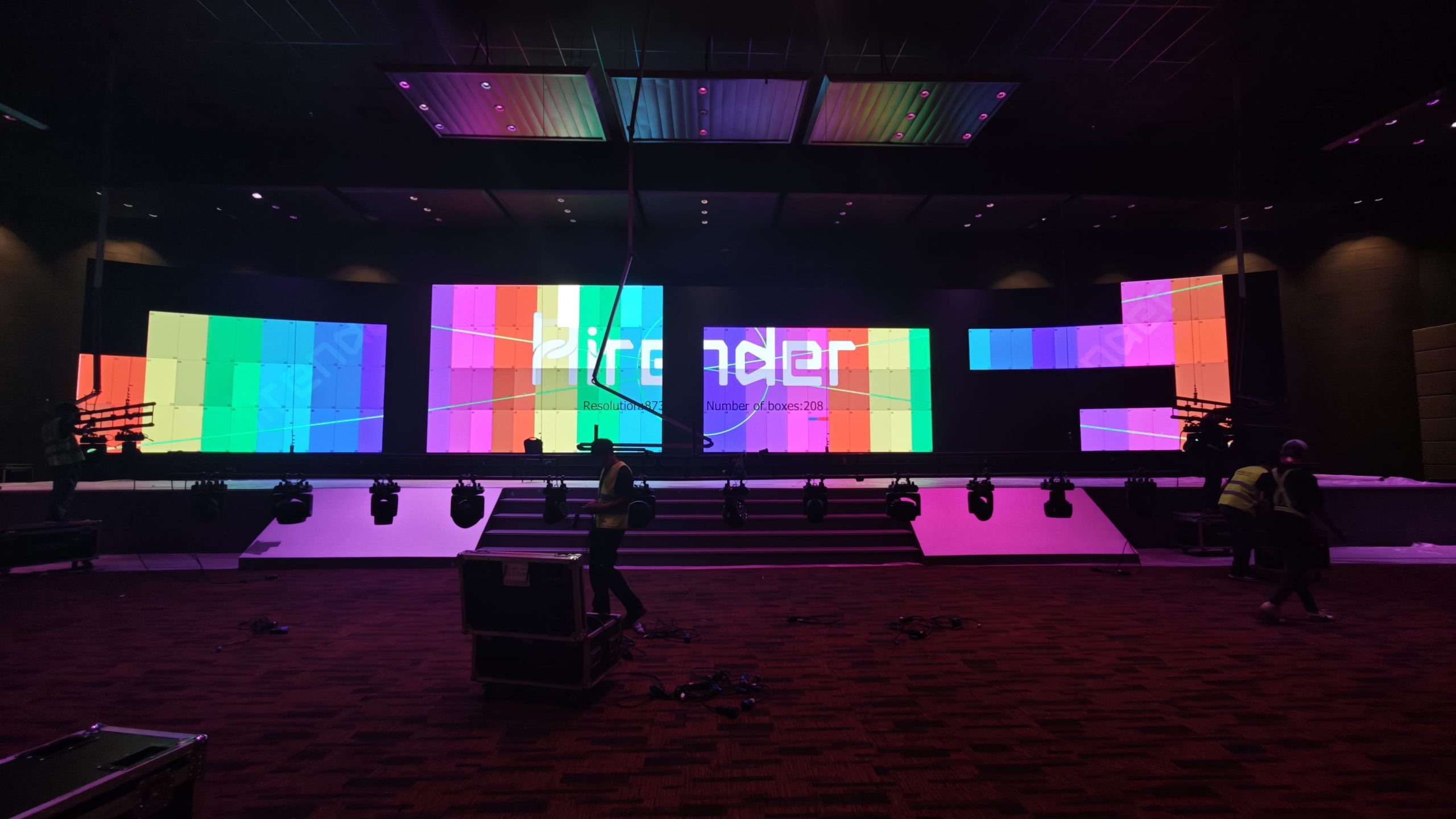
The next question is closely related:
How much control does the venue provide over lighting?
A theatre or purpose-built presentation room may have excellent blackout capability.
A hotel ballroom may have dimmable lighting, curtains and relatively good control.
An exhibition hall, however, may have significant general lighting that cannot simply be switched off.
There may also be practical reasons why the lights need to remain on.
Audience members need to move around.
Catering staff may be operating during a presentation.
Cameras may require controlled lighting.
Exhibitors may need their booths illuminated.
A product launch may require decorative lighting throughout the programme.
If the room can be effectively controlled, projection becomes more attractive.
If it cannot, an LED wall may provide greater visual certainty.
The decision should therefore be made during the site survey, not after the equipment has already been selected.
Viewing Distance Changes the LED Specification
Choosing an LED wall is not simply a matter of selecting the biggest available screen.
One of the most important technical considerations is pixel pitch.
Pixel pitch refers to the distance between individual LED pixels, normally measured in millimetres.
A smaller pixel pitch means the pixels are positioned more closely together.
This can support sharper-looking images when viewers are relatively close to the screen.
A larger pixel pitch can be suitable when the audience is positioned farther away.
For example, an LED wall positioned behind a stage at a large conference venue may be viewed primarily from many metres away. A different specification may be appropriate for an exhibition booth where visitors can stand only a few metres—or even less—from the display.
The key variables include:
- Screen size
- Pixel pitch
- Viewing distance
- Content resolution
- Audience layout
- Camera usage
BigScreen’s indoor LED display guidance similarly highlights viewing distance, screen size and required resolution as important considerations when selecting an indoor LED display.
This means there is no universal “best” pixel pitch.
The correct specification depends on how the screen will actually be used.
Projection Has Its Own Distance Requirements
Projection does not use pixel pitch in the same way as an LED wall, but distance remains extremely important.
The projector needs enough space to create the required image size.
This is where throw distance becomes important.
Throw distance is the distance between the projector lens and the projection surface.
The projector and lens combination must be capable of producing the required image size from the available position.
A room with plenty of depth may make this relatively straightforward.
A compact ballroom may create a problem.
For example, if the event requires a very large projection screen but the room does not have enough distance behind the audience or above the stage to position the projector correctly, the production team may need to consider:
- A different projector lens
- Rear projection
- A different screen size
- A different projector position
- An alternative display technology
This is why room dimensions should be reviewed before committing to projection.
What Content Will Be Displayed?
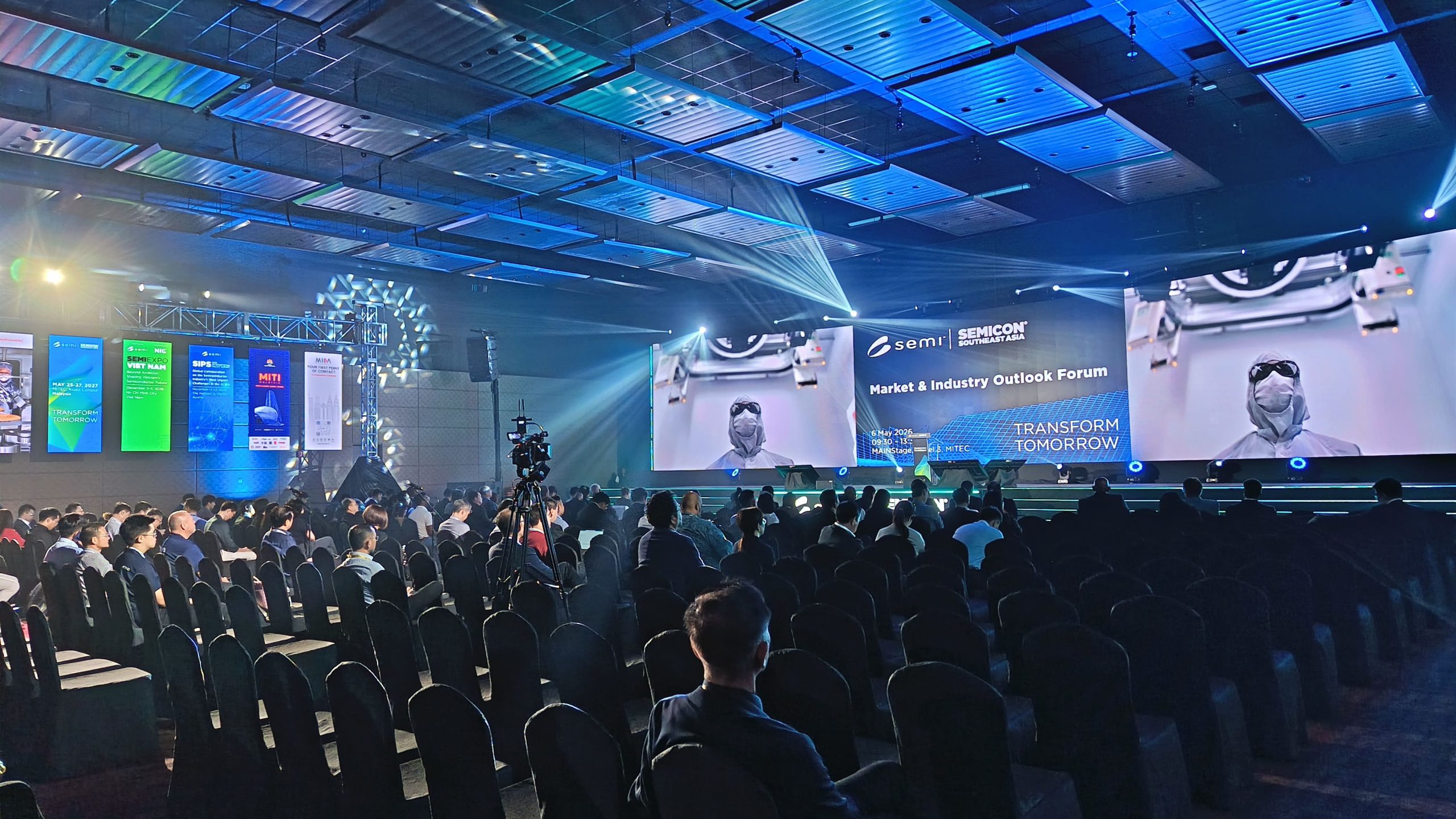
The content itself can influence the decision.
Not every event needs the same type of visual system.
Consider a corporate training session.
The screen may primarily show:
- PowerPoint slides
- Charts
- Text
- Tables
- Speaker presentations
A properly designed projection system can perform very well in a controlled room.
Now consider a product launch.
The screen may need to display:
- High-impact brand videos
- Motion graphics
- Product animations
- Live camera feeds
- Sponsor content
- Dynamic backgrounds
- Social media content
An LED wall may provide greater flexibility and visual impact, particularly when the room lighting cannot be heavily controlled.
The content should therefore be considered before the equipment.
A useful question is:
What exactly needs to be seen on the screen, and under what conditions?
Live Camera Feeds Change the Equation
Live camera feeds, often referred to as IMAG or image magnification, are another important consideration.
Imagine a conference with several hundred attendees.
A keynote speaker is standing on stage.
The audience at the back cannot see the speaker’s facial expressions clearly.
A camera captures the speaker and sends the image to the main display.
Now the screen is not simply showing presentation slides.
It is part of the live event experience.
LED walls can be particularly effective for this type of application because they can remain highly visible while the stage continues to use lighting.
This can be valuable for:
- Conferences
- Award ceremonies
- Product launches
- Corporate town halls
- Concerts
- Live broadcasts
- Panel discussions
The production system must still be designed correctly. Camera exposure, LED brightness, pixel pitch, refresh characteristics, colour settings and signal processing all need to be considered.
But the key point is that the screen becomes an active part of the production rather than simply a presentation surface.
Screen Size Is Not the Same as Visual Impact
It is easy to assume that the largest screen automatically creates the best event experience.
That is not always true.
A screen should be large enough for the audience to comfortably see the content.
But size must be balanced against:
- Viewing distance
- Stage dimensions
- Content format
- Room proportions
- Sightlines
- Camera positions
- Lighting
- Budget
An oversized screen with poor content design can still produce a weak presentation.
Likewise, a smaller but correctly specified display can deliver an excellent experience.
For LED Screen Rental, screen dimensions should therefore be determined as part of the overall stage and audience design.
Aspect Ratio Matters
The screen should also match the content.
A common mistake is selecting a physical screen size first and worrying about content afterwards.
Instead, consider:
- 16:9 presentations
- Widescreen videos
- Custom stage graphics
- Camera feeds
- Sponsor loops
- Social media content
- Split-screen layouts
If the physical display has a different aspect ratio from the content, the production team may need to scale, crop or reformat the source.
This can result in:
- Empty areas
- Cropped information
- Distorted graphics
- Reduced visual impact
For a professional event, the content canvas should be planned around the final display configuration.
This is particularly important when using an LED wall because modular LED panels allow a production to create custom dimensions.
Venue Space Can Decide the Technology
Sometimes the venue—not the event organiser—makes the decision.
Projection requires a clear path between the projector and the screen.
Anything that interrupts this path can create a problem.
A person walking across the beam can cast a shadow.
Stage scenery can block the image.
Rigging structures can interfere with projector positioning.
Lighting fixtures can create conflicts.
Rear projection can solve some of these problems, but it requires sufficient space behind the screen.
LED walls do not require a projection beam.
However, LED walls require their own infrastructure.
Depending on the configuration, this may include:
- Ground support
- Truss
- Structural support
- Power distribution
- Signal cabling
- Processing
- Safe access
- Service space
The production team therefore needs to assess the complete installation footprint.
Stage Design Also Matters
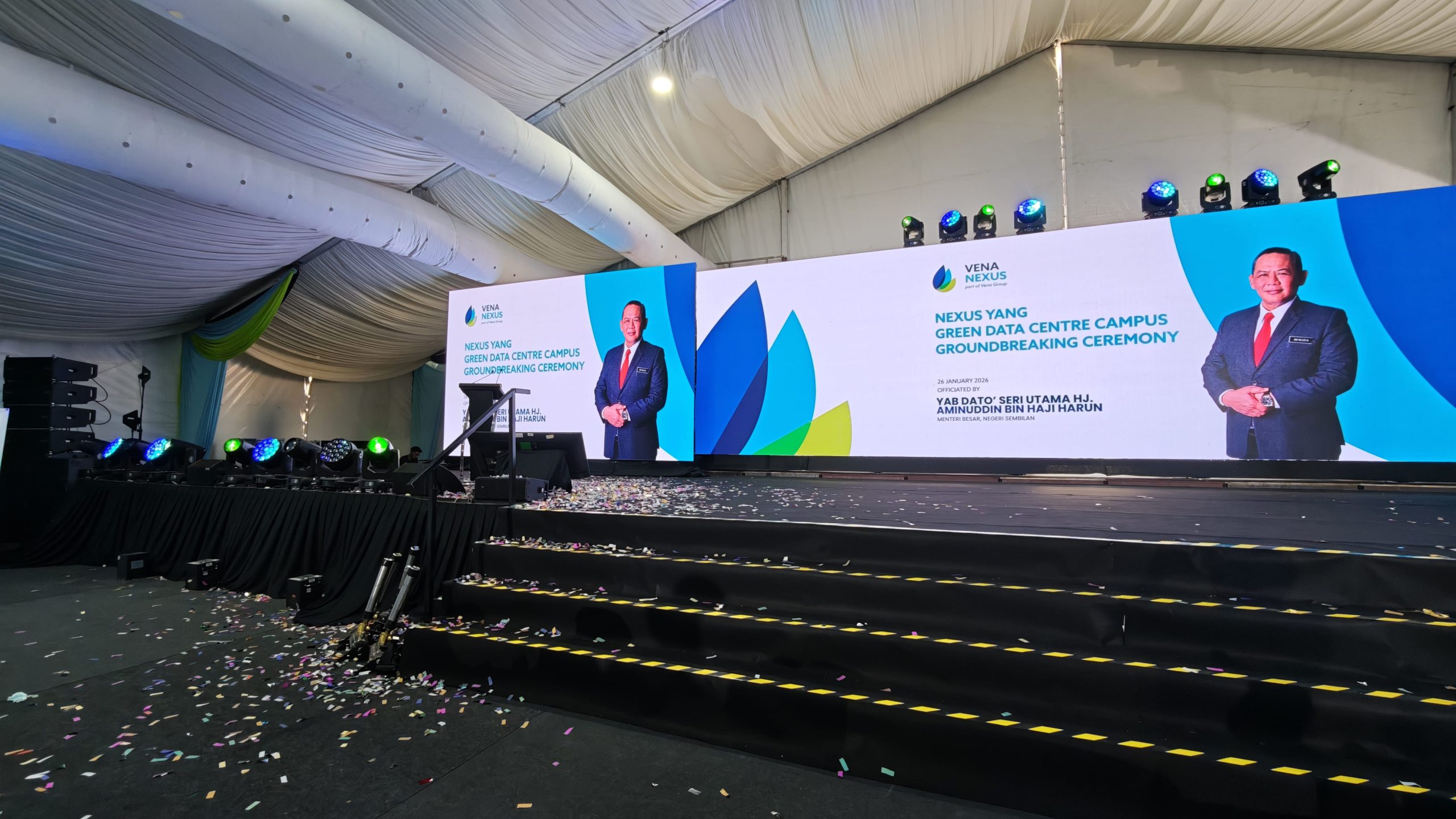
The display should not be treated as an isolated rectangle.
It is part of the stage.
For a conventional corporate conference, a projection screen may fit naturally into a clean stage design.
For a product launch, the LED wall may become a major visual feature.
It can function as:
- A stage backdrop
- A branding surface
- A dynamic scenic element
- A live camera display
- A presentation screen
- A sponsor display
- A video wall
Indoor LED displays are already used in hotel ballrooms, sales galleries and other event-oriented spaces as stage backdrops and dynamic visual surfaces.
The choice therefore depends partly on what role the display plays in the overall event design.
Projection Can Still Be the Smarter Choice
It is important not to turn this into an argument that LED always wins.
Projection remains highly useful.
A projection screen may be the better solution when:
- The venue can be darkened
- The audience is at an appropriate viewing distance
- The content is mainly presentations or video
- There is sufficient throw distance
- The stage design suits projection
- Multiple large screens are required
- The budget needs to prioritise other production elements
For example, an internal corporate seminar in a dimmable ballroom may not require an LED wall.
If the audience needs to read presentations clearly and the room can be controlled, a properly specified projection system may provide an excellent result.
Projection can also be useful when a production requires a very large image across a relatively simple screen surface.
The technology itself is not the problem.
The problem is specifying it for conditions it cannot realistically handle.
When LED Screen Rental Makes More Sense
LED Screen Rental becomes particularly attractive when visual visibility and flexibility are high priorities.
Typical applications include:
Product Launches
Product launches often rely heavily on brand visuals, videos, animations and dramatic reveals.
Conferences
Large conferences may require live camera feeds, presentations, speaker visuals and sponsor content.
Awards Ceremonies
LED walls can support dynamic backgrounds, winner graphics, videos and live camera content.
Exhibitions
Indoor LED displays can become visual attraction points within exhibition environments.
Corporate Events
Town halls, annual dinners, employee events and corporate celebrations can benefit from large dynamic visuals.
Live Productions
Events involving camera feeds, fast content changes and complex show control may benefit from an LED-based display system.
The common factor is not simply event size.
It is the visual requirement.
LED Screen Rental: Pixel Pitch Should Match the Audience
When considering LED Screen Rental, one of the most important questions to ask is:
How close will the nearest viewer be?
This helps determine an appropriate pixel pitch.
If guests are sitting very close to the display, a coarse pixel pitch may make individual pixels more noticeable.
If the screen is positioned farther from the audience, an unnecessarily fine pixel pitch may add cost without creating a meaningful improvement for most viewers.
This is why professional LED Screen Rental should not be specified solely by screen dimensions.
The rental provider should assess:
Audience distance → Pixel pitch → Screen size → Resolution → Content
These factors work together.
LED Brightness and Stage Lighting
Another advantage of an LED wall is its ability to remain visually strong while other production lighting is operating.
Indoor events can involve:
- Stage wash lighting
- Profile lighting
- Moving lights
- Architectural lighting
- Decorative lighting
- Camera lighting
- House lighting
These lights are part of the event experience.
Turning everything down simply to make a projection image visible may compromise the overall production.
An LED wall can provide greater flexibility because the display produces its own light.
However, brightness still needs to be managed professionally.
More brightness is not automatically better.
Excessive brightness can become uncomfortable for audiences and can affect cameras.
The display should therefore be calibrated according to:
- Venue conditions
- Content
- Camera requirements
- Audience comfort
- Stage lighting
Power and Infrastructure
LED walls and projection systems have different infrastructure requirements.
An LED wall consists of multiple display modules and supporting electronics.
A larger LED installation therefore requires appropriate power distribution and cable management.
The production team needs to consider:
- Total power requirements
- Distribution points
- Cable routes
- Equipment access
- Backup requirements
- Structural support
Projection systems also have infrastructure requirements, including projector positioning, power, signal cabling and screen installation.
Neither system should be treated as a simple “plug-and-play” decision for a major event.
The display is part of the event’s wider technical system.
Reliability and Operational Risk
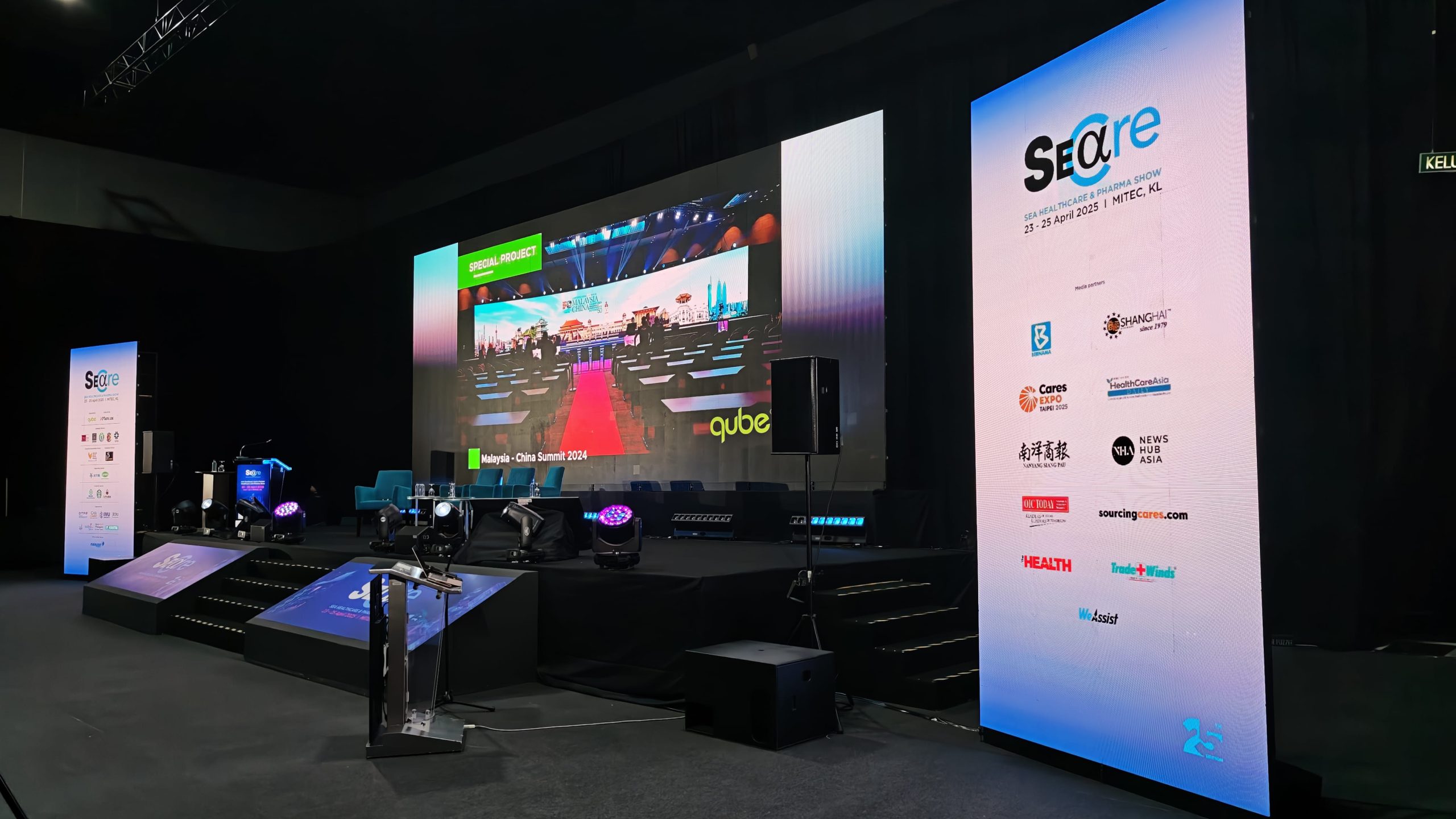
A professional event is different from a normal presentation.
The screen may need to operate continuously for several hours while supporting important programme content.
A failure during a product launch or keynote can become immediately visible to hundreds or thousands of people.
This is why professional planning should consider:
- Equipment condition
- Signal distribution
- Spare equipment
- Backup playback
- Power management
- Technician support
- Content redundancy
- Pre-event testing
The objective is not simply to choose a technology that works under ideal conditions.
It is to choose a system that remains dependable under the actual conditions of the event.
Budget: Do Not Compare Only the Rental Price
This is where many display comparisons become misleading.
An organiser may see a lower projector rental rate and immediately assume projection is cheaper.
But the final production cost can involve much more than the display itself.
Consider:
Projection
Potential requirements can include:
- Projector
- Projection screen
- Lens
- Mounting or rigging
- Projector position
- Additional signal equipment
- Blackout requirements
- Labour
- Alignment
LED Wall
Potential requirements can include:
- LED panels
- Processing
- Structure
- Power distribution
- Signal cabling
- Installation
- Labour
- Technical support
- Backup modules
The complete production scope should therefore be compared.
A lower equipment rate does not necessarily mean a lower total project cost.
The real comparison is:
What does it take to achieve the required visual result reliably?
Consider the Cost of Getting It Wrong
A display decision can become expensive when the technology does not match the venue.
Imagine specifying projection for a ballroom with strong daylight.
The projector is installed.
The screen is large.
The content is ready.
But once the room lights are switched on, the image lacks the required contrast.
The production team may then need to:
- Increase projector brightness
- Change the screen
- Reduce room lighting
- Modify stage lighting
- Reposition equipment
- Adjust the programme
These changes can create additional costs and compromises.
The same principle applies in reverse.
Installing a premium LED wall for a small, controlled presentation may provide little practical benefit compared with a well-designed projection system.
The goal is not to maximise equipment.
It is to match technology to requirements.
The Venue Site Survey Should Come Before the Final Quote
A professional display recommendation should ideally begin with a site survey or detailed venue assessment.
Important information includes:
Room
- Length
- Width
- Height
- Ceiling structure
- Available stage area
Audience
- Seating capacity
- Nearest viewing position
- Furthest viewing position
- Sightlines
Lighting
- Windows
- Natural light
- House lighting
- Stage lighting
- Blackout capability
Technical
- Power availability
- Rigging points
- Load-in access
- Cable routes
- Control position
Content
- Presentation resolution
- Video formats
- Camera feeds
- Sponsor content
- Aspect ratio
Only after these factors are understood can the display be specified properly.
A Simple Decision Framework
If you need a quick way to approach the decision, start with these questions.
Is the room bright?
Yes: Consider LED first.
No: Projection may be suitable.
Can the room be effectively darkened?
Yes: Projection becomes more practical.
No: LED may provide greater visibility.
Will the screen show live camera feeds?
Yes: LED may offer greater flexibility, particularly when stage lighting remains active.
Is the audience sitting very close?
Yes: Carefully assess LED pixel pitch.
Is there sufficient projector throw distance?
No: LED may be easier to deploy.
Is the event highly visual?
Yes: LED can provide strong impact and flexible content presentation.
Is it a straightforward presentation in a controlled room?
Yes: Projection may be the more efficient solution.
Is the screen part of the stage design?
Yes: Compare both systems as part of the complete scenic concept.
This framework is more useful than simply asking whether LED or projection is “better.”
LED Screen Rental vs Projection: The Real Answer
The answer is not found in a product catalogue.
It is found in the venue.
A projection screen can be the perfect choice for a darkened ballroom, theatre-style presentation or conference where the room can be controlled.
An LED wall can be the stronger option for a brightly lit ballroom, exhibition, product launch, award ceremony or high-impact corporate production.
The deciding factors are practical:
Ambient light.
Viewing distance.
Pixel pitch.
Content.
Screen size.
Venue layout.
Throw distance.
Stage lighting.
Camera requirements.
Budget.
Production risk.
Once these factors are understood, the technology decision becomes much easier.
Frequently Asked Questions
Is an LED wall better than a projector for indoor events?
Not always. LED walls generally provide stronger visibility in rooms with significant ambient light, while projection can work extremely well in controlled, darker environments. The correct choice depends on the venue, content, audience distance and production requirements.
Is LED Screen Rental suitable for hotel ballrooms?
Yes. Indoor LED walls are commonly used for hotel ballroom events including conferences, corporate events, launches and celebrations. The appropriate screen size and pixel pitch should be determined based on audience distance, room dimensions and content requirements.
What is the main advantage of an LED wall?
An LED wall produces its own light, allowing the image to remain highly visible under many indoor lighting conditions. It also provides flexible screen sizing and can support dynamic content and live camera feeds.
When is projection better than LED?
Projection can be an excellent choice when the room can be darkened, there is sufficient throw distance and the content does not require the brightness or flexibility of an LED wall.
What is pixel pitch?
Pixel pitch is the distance between individual LED pixels, measured in millimetres. A smaller pixel pitch generally supports closer viewing distances, while larger pixel pitches can be suitable for audiences viewing the screen from farther away.
How do I choose the right LED screen size?
Consider the furthest and nearest viewing positions, audience capacity, stage dimensions, content format and required visual impact. Screen size should be determined together with pixel pitch and viewing distance.
Does stage lighting affect projection?
Yes. Stage lighting and other ambient light can reduce the perceived contrast of a projected image. The room’s lighting conditions should therefore be considered when selecting and positioning a projector.
Can an LED wall display presentations?
Yes. LED walls can display presentations, videos, graphics, live camera feeds, sponsor content and other visual sources when connected to an appropriate video processing and signal distribution system.
Is LED Screen Rental more expensive than projection?
The answer depends on the complete production scope. LED walls can have higher equipment and installation costs, while projection may require additional considerations such as projector positioning, screen installation and room lighting control. The right comparison should consider the total cost of achieving the required result.
Final Thoughts
There is no universal winner in the LED wall versus projection debate.
The best display is the one that performs reliably under the actual conditions of the event.
If the room is bright, LED may provide the visibility required.
If the room can be darkened and the production calls for a traditional large-format presentation, projection may be the smarter option.
If the event depends heavily on live camera feeds, dynamic graphics and high-impact visuals, an LED wall may provide greater flexibility.
And if budget is the main concern, the answer should still be based on the required outcome rather than simply selecting the cheapest line item.
Professional LED Screen Rental is therefore not about choosing the biggest screen or the newest technology.
It is about engineering the right visual system around the venue, audience, content and event objectives.
When that decision is made correctly, the audience does not think about the technology at all.
They simply see the presentation clearly, experience the visuals as intended and stay focused on the event.
Further Reading
For another practical comparison of LED walls and projection screens for events, explore LED Wall Versus Projection Screen for Events from Lexican. LED Wall Versus Projection Screen for Events
For additional information on choosing and applying indoor LED displays, including viewing distance, screen size and pixel pitch considerations, read Where and Why to Use Indoor LED Display from BigScreen. Where and Why to Use Indoor LED Display
Planning Your LED Screen Rental or Projection Setup?
Planning a conference, exhibition, product launch, corporate event, award ceremony or large-scale indoor production?
DOREMi can assess the venue, audience layout, content requirements and production conditions to recommend an appropriate LED Screen Rental or projection solution.
The solution can be integrated with professional sound systems, lighting, staging, truss, video processing and technical operations to ensure the display works as part of the wider event production system.
Speak with DOREMi’s event technology specialists to determine whether an LED wall, projection screen or combination of both is the right visual solution for your event.