A live performance is experienced by the audience in real time. Every vocal, instrumental detail, lighting cue and stage transition contributes to the atmosphere. When the technical production works well, the audience can focus on the performance without thinking about the equipment behind it.
However, creating that experience requires much more than setting up speakers and switching on the lights. A successful live show depends on selecting the right equipment, understanding the venue, configuring the sound system and coordinating the technical elements before and during the performance.
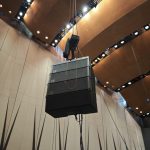
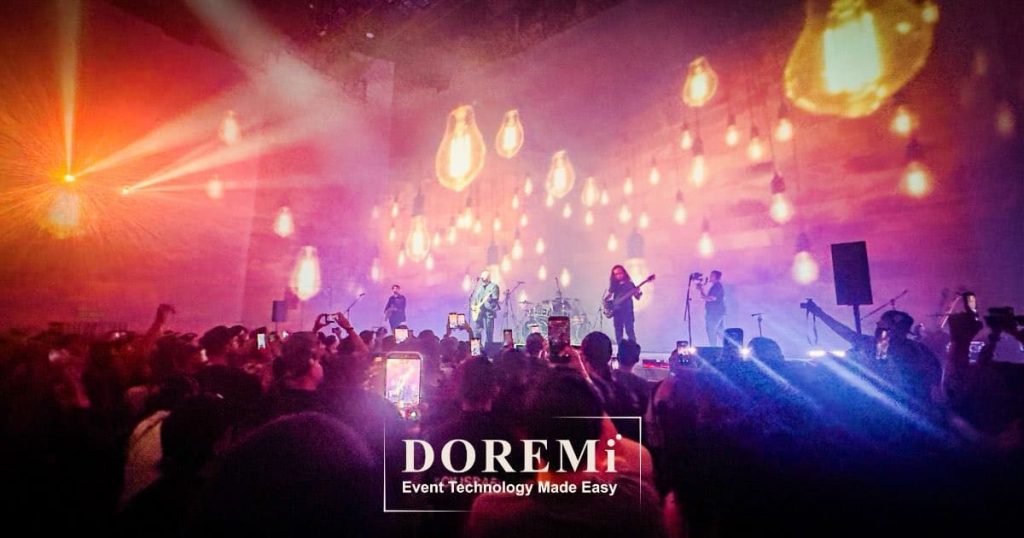
For DISAGREE LIVE at REXKL, DOREMi Services & Rental Sdn Bhd delivered sound reinforcement using a d&b audiotechnik system, featuring Y10P loudspeakers for the left and right positions, Y10P delay speakers, SL-SUB subwoofers and CCL-SUB subwoofers. From system deployment and alignment to live show execution, Team DOREMi supported the technical delivery of the performance.
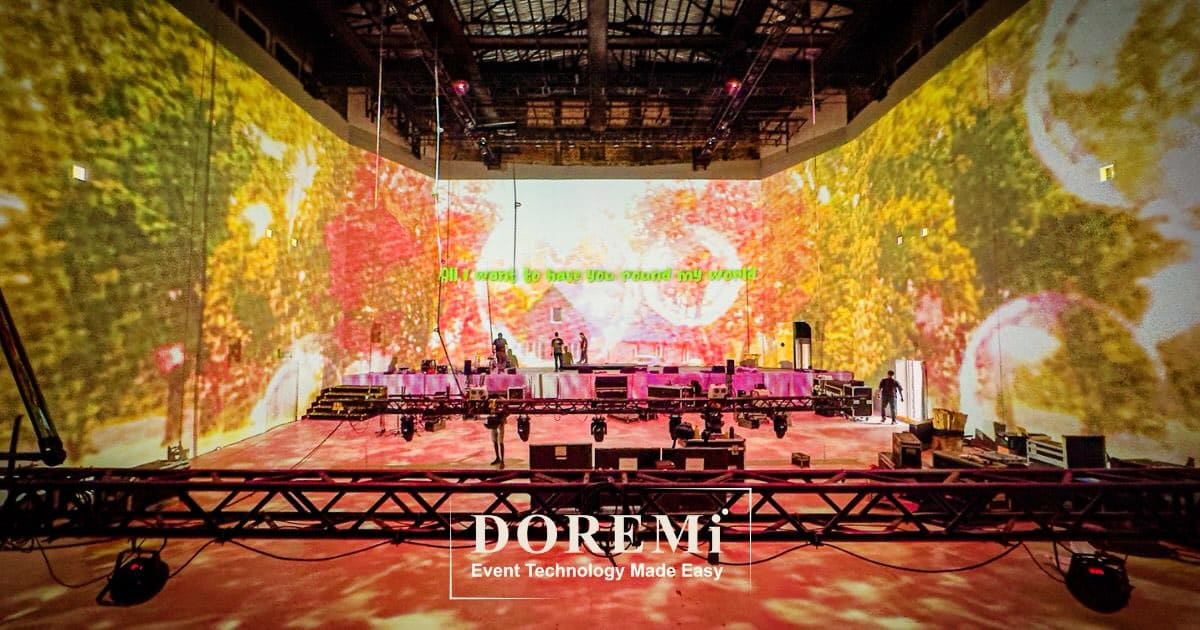
Beyond the sound system, DOREMi also contributed to the wider technical execution involving lighting, staging and backline, helping bring the live production together.
This behind-the-scenes look explores what went into the setup, why professional AV rental services matter for live events, and what event organisers can expect when working with an experienced technical production team.
Behind the Scenes of DISAGREE LIVE at REXKL
Live performances place specific demands on event production. Unlike a conference, where speech intelligibility is usually the main audio priority, a live music show needs to reproduce vocals and instruments with clarity, energy and a balanced sense of impact.
The audience may be listening to vocals, drums, bass and other instruments at the same time. These sound sources need to work together without one overpowering the others. The sound system must also suit the performance space and provide a consistent listening experience for the audience.
For DISAGREE LIVE at REXKL, DOREMi’s work centred on sound reinforcement and the coordination of the technical setup supporting the performance.
The sound system featured:
- d&b audiotechnik Y10P loudspeakers: Deployed at the left and right positions, with additional Y10P units used for delay coverage.
- d&b audiotechnik SL-SUB subwoofers: Supporting the low-frequency impact required for live music.
- d&b audiotechnik CCL-SUB subwoofers: Providing additional low-frequency reinforcement as part of the overall system configuration.
The system was selected and deployed as a coordinated setup rather than a collection of individual speakers. Each component played a role within the wider sound reinforcement arrangement.
This distinction matters because professional sound is not simply about making a performance louder. It is about delivering the right balance, coverage and impact for the audience and the space.
Why the Right Sound System Matters for a Live Performance
 At a live event, the sound system becomes the connection between the performers and the audience. If vocals are difficult to understand or instruments lack definition, the audience may struggle to appreciate the performance as intended.
An appropriately planned sound reinforcement system helps address these challenges.
Delivering clarity and impact
A live music performance often contains a broad range of frequencies. Vocals and many instrumental details occupy the midrange, while bass instruments and kick drums contribute substantial low-frequency energy.
A well-configured system must reproduce these elements in a way that suits the music and venue.
The Y10P is a point-source loudspeaker in d&b audiotechnik’s Y-Series, designed for professional sound reinforcement. The manufacturer specifies a nominal horizontal and vertical dispersion of 110° by 40° for this model, giving system designers useful flexibility when planning coverage. Learn more about the d&b audiotechnik Y-Series.
At DISAGREE LIVE, the Y10P units formed the left and right main positions, supported by additional delay speakers and subwoofers. The objective of the overall configuration was to deliver clear, consistent sound with the impact appropriate for a live performance.
Supporting the character of the music
Low-frequency sound contributes to the physical energy of live music. Bass lines, kick drums and other low-frequency elements help establish the rhythm and weight of a performance.
However, simply adding more bass does not necessarily improve the listening experience. Excessive or uneven low-frequency energy can make music sound muddy, while insufficient reinforcement may leave the performance feeling less powerful.
Subwoofers allow the system to reproduce low frequencies without requiring the main loudspeakers to handle the entire frequency range alone.
For this event, the combination of SL-SUB and CCL-SUB units formed part of the low-frequency system. Their deployment and integration with the main loudspeakers were important considerations in achieving the intended balance.
The final result depends not only on the equipment itself, but also on positioning, processing, system tuning and the acoustic characteristics of the venue.
Why Y10P Delay Speakers Were Part of the Setup
One of the important elements in a sound system is how audio reaches different parts of the audience area.
The main left and right speakers provide the primary sound coverage. However, depending on the venue’s dimensions and audience layout, the main system may not deliver the same clarity and level to every listening position.
Delay speakers can help extend coverage to areas farther from the main loudspeakers.
Understanding audio delay
Sound takes time to travel through the air. As the distance between a speaker and a listener increases, the sound arrives later.
When additional speakers are used farther into the audience area, their output needs to be coordinated with the main system. If their timing is not configured appropriately, listeners may hear overlapping arrivals that affect clarity and the perceived location of the sound.
A properly designed delay system accounts for the distance between the main and supplementary speakers, their respective positions and the intended listening areas.
For DISAGREE LIVE, DOREMi deployed Y10P units as delay speakers alongside the main left and right positions.
This was part of the broader effort to achieve consistent sound coverage across the performance area. The exact placement and delay settings need to be determined according to the actual venue layout and system design rather than using one fixed configuration for every event.
Why coverage matters as much as volume
An audience does not experience a sound system from one position. People stand or sit at different distances and angles from the speakers.
A setup that sounds impressive near the front may not provide the same experience farther away. Adding more speakers without careful planning can also introduce unwanted overlap.
Professional AV rental services should therefore consider the listening area as a whole. The goal is to deliver an appropriate level of clarity and impact across the intended audience zones, not simply to maximise output near the stage.
The Role of SL-SUB and CCL-SUB Subwoofers
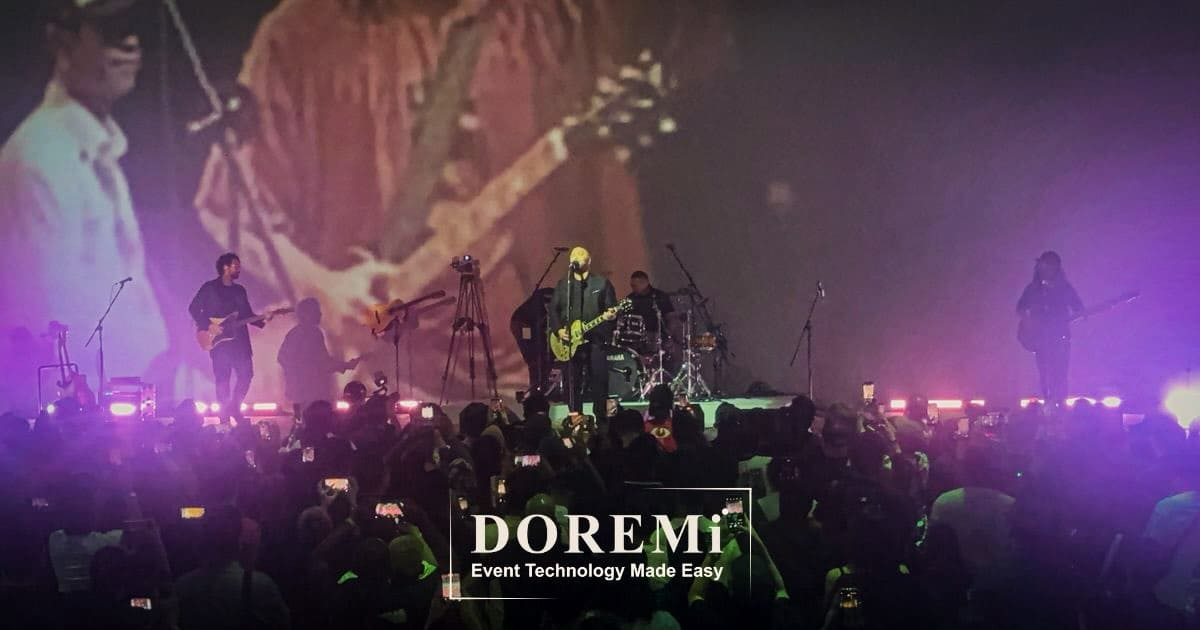 Subwoofers are an important part of many live music systems because they reproduce the low-frequency content that gives a performance weight and physical impact.
For an audience, this can contribute to the feeling of the rhythm, the energy of the music and the overall intensity of the performance.
However, low-frequency sound behaves differently from higher frequencies. It can interact with room boundaries and produce areas where bass energy is stronger or weaker. The location and configuration of subwoofers therefore matter.
SL-SUB: Supporting low-frequency output
The d&b audiotechnik SL-SUB is a large-format cardioid subwoofer designed for professional sound reinforcement. Its manufacturer lists three 21-inch drivers and a cardioid dispersion design. See the official SL-SUB product information.
Cardioid subwoofer designs are intended to help control how low-frequency energy is distributed, including reducing output towards the rear compared with an omnidirectional arrangement under appropriate operating conditions.
This can be useful when planning a system where managing low-frequency energy behind the subwoofers is a consideration.
CCL-SUB: Complementing the system
The d&b audiotechnik CCL-SUB is a compact, cardioid subwoofer designed to complement the CCL system. The manufacturer specifies a configuration using one 15-inch driver and one 10-inch driver. Explore the CCL-SUB.
In a live event setup, using different subwoofer models requires careful attention to system design, processing, placement and alignment. Their integration should be based on the intended performance and the acoustic requirements of the venue.
At DISAGREE LIVE, the SL-SUB and CCL-SUB units were both part of the deployed sound reinforcement system. Their role was to contribute to the low-frequency foundation of the overall setup.
The key takeaway for event organisers is that subwoofer selection should be based on the event’s requirements, not simply on cabinet size or quantity. A well-designed configuration aims to achieve the required impact while maintaining a balanced listening experience.
System Deployment and Alignment Before Showtime
The equipment list is only one part of professional sound production. Before an audience arrives, the system must be positioned, connected, configured and tested.
For a live performance, this preparation helps establish the conditions needed for the sound system to operate as intended.
Equipment deployment
The technical team begins by working with the available venue layout and the planned production arrangement.
Speaker positions, subwoofer placement, delay locations, cable routes and access around the stage all need consideration. Equipment must be deployed in a way that supports the intended coverage while allowing the production team to work safely and efficiently.
The exact arrangement depends on the venue, stage position, audience layout and technical requirements of the show.
System alignment
Once the equipment is in place, system alignment helps ensure that the different elements work together.
Depending on the configuration, this may involve checking loudspeaker processing, relative timing, frequency response, levels and the relationship between the main speakers, delay speakers and subwoofers.
The purpose is to reduce avoidable inconsistencies and establish a suitable starting point for the live mix.
Alignment is not a substitute for listening and making adjustments during rehearsal. It provides a technical foundation that can be refined according to the actual performance conditions.
Sound checks and final adjustments
A sound check allows the technical team to assess the system using the instruments, microphones and content expected during the show.
The team can identify issues such as excessive low-frequency build-up, uneven levels, unclear vocals, unwanted noise or problematic interactions between system elements.
The sound check also provides an opportunity to confirm that the equipment and signal paths are functioning correctly before the performance begins.
For clients, this preparation is one of the most important benefits of professional AV rental services. Equipment needs to be ready for the actual programme, not merely installed and switched on.
Beyond Sound: Coordinating Lighting, Stage and Backline
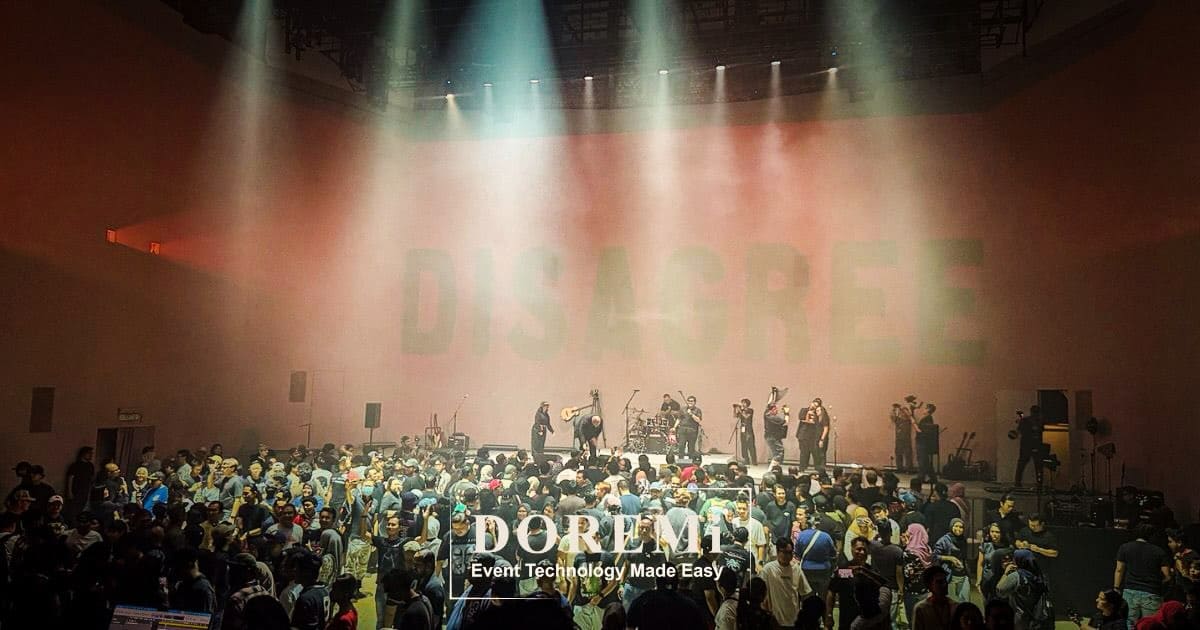 While sound reinforcement was a key part of DISAGREE LIVE, the wider technical production also involved lighting, staging and backline.
These elements have different functions, but they need to work together to support the performance.
Lighting brings the stage to life
Lighting helps establish the visual atmosphere of a live event. It can draw attention to performers, create changes in mood and support transitions between songs or programme segments.
The appropriate lighting design depends on the performance style, stage dimensions, available equipment and creative direction.
For a live show, lighting cues should be coordinated with the performance wherever required. Equipment placement also needs to account for visibility, safe access and the positions of other technical systems.
Staging provides the performance platform
The stage affects how performers are positioned and how the audience views the show. Its dimensions, height, access points and layout need to suit the production requirements.
Stage planning also needs to account for backline equipment, cables, microphones and the movement of performers and crew.
Good coordination helps reduce congestion and makes it easier for performers and technical staff to work within the available space.
Backline supports the musicians
Backline refers to the musical equipment used by performers, such as drum kits, amplifiers and other instruments or supporting equipment, depending on the band’s requirements.
For live music events, backline needs to be coordinated with the stage layout and sound system. Equipment positions influence microphone placement, cable routing and the movement of performers.
Requirements vary from one artist to another, so organisers should confirm the technical rider or equipment list well before the event.
Why coordination matters
When sound, lighting, staging and backline are planned separately, conflicts can arise. A lighting fixture may obstruct a speaker position, a cable route may interfere with performer movement, or an instrument setup may limit access to another part of the stage.
A coordinated production approach considers these elements together.
At DISAGREE LIVE, Team DOREMi delivered the wider technical execution across sound, lighting, stage and backline, helping bring the different production elements together for the performance.
What Clients Can Expect from Professional AV Rental Services
For event organisers, choosing professional AV rental services should involve more than confirming equipment availability. It should mean having a technical partner who understands the event’s objectives and can translate those requirements into a workable production plan.
The specific scope will depend on the quotation and project, but clients should consider the following areas.
Understanding the event requirements
The production provider should understand the type of event, performance format, venue layout, audience arrangement and technical expectations.
A live band performance, for example, may require a different sound system and backline arrangement from a corporate presentation or panel discussion.
The more clearly these requirements are communicated, the easier it is to recommend appropriate equipment.
Equipment planning and deployment
Clients should expect the equipment list and proposed setup to reflect the event’s actual needs.
This includes considering speaker coverage, subwoofer requirements, stage space, lighting positions and other technical elements relevant to the programme.
Equipment quantities alone do not establish whether a system is suitable. The configuration and how it is used are equally important.
Technical setup and testing
Professional AV rental services may include delivery, installation, system configuration, testing and dismantling, depending on the agreed scope.
For live performances, organisers should confirm whether technical staff will remain on-site throughout the show and who will be responsible for operating the systems.
These details should be agreed before the event to avoid misunderstandings about responsibilities and support.
Live execution and coordination
Once the show begins, the technical team may need to monitor system performance, respond to changing conditions and coordinate with the event organiser or stage manager.
A well-prepared team helps ensure that the planned technical setup supports the programme as it unfolds.
Clear communication
Clients should also expect clear communication about the production schedule, equipment requirements, venue access, setup time and any technical limitations.
This is especially important when several suppliers are involved or when the event has a tight setup window.
The objective is to make the technical side easier for organisers to manage, while keeping expectations realistic and responsibilities clear.
How to Prepare for Your Next Live Event
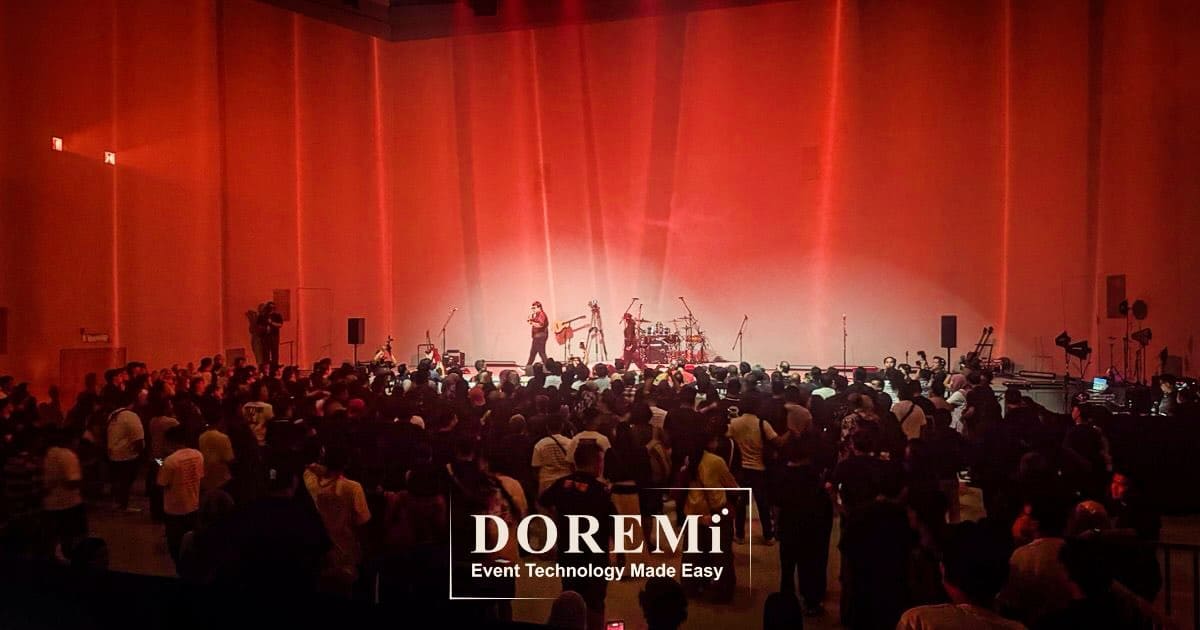 Whether you are organising a concert, a music showcase, a corporate event or a product launch, early technical planning can make a significant difference.
Before requesting AV rental services, prepare the following information:
Event format and programme: Explain whether the event includes live music, speeches, DJ performances, panel discussions or multiple segments.
Venue details: Share the venue name, floor plan if available, stage dimensions, audience layout and any known technical restrictions.
Audio requirements: Provide the number of performers, instruments, microphones and any available technical rider.
Lighting and staging requirements: Explain the desired stage arrangement, visual atmosphere and any specific production elements.
Schedule: Confirm the event date, venue access times, sound-check window, show time and dismantling requirements.
Budget and scope: Clarify whether you need equipment rental only or a broader service that includes delivery, installation, technical operation and other production elements.
This information helps a technical provider assess the project and recommend a suitable approach. It also gives organisers a clearer understanding of what is included in the quotation and what needs to be coordinated with other suppliers.
Frequently Asked Questions
What are AV rental services for live events?
AV rental services provide audiovisual equipment and, depending on the agreed scope, technical support for events. This may include sound systems, microphones, lighting, LED screens, staging, backline and the crew needed to install or operate the equipment.
Why does a live event need professional sound reinforcement?
Professional sound reinforcement helps deliver vocals and instruments at suitable levels and supports clear, consistent coverage across the audience area. The right configuration depends on the music, venue, audience layout and performance requirements.
What is the difference between main speakers and delay speakers?
Main speakers provide the primary sound coverage. Delay speakers are positioned in additional listening areas and configured to complement the main system, helping extend coverage where required. Their timing and levels need to be coordinated with the main speakers.
Why are subwoofers used at concerts?
Subwoofers reproduce low-frequency content, including bass and kick-drum energy. They help provide the low-frequency foundation of a live performance. Their number, placement and configuration should suit the event and venue rather than being selected by quantity alone.
Should sound, lighting, staging and backline be arranged together?
Yes. These elements interact throughout a live production. Coordinating them helps manage stage space, cable routes, equipment positions, performer movement and technical transitions.
What should I ask an AV rental provider before booking?
Ask about equipment suitability, setup and dismantling, technical crew, sound checks, operating hours, backup arrangements, venue requirements and what is included in the quotation. For live music, share the artist’s technical rider and confirm any specific sound or backline requirements early.
Further Reading
Explore the manufacturer’s Y-Series loudspeakers, including the Y10P used in DOREMi’s sound reinforcement setup for DISAGREE LIVE.
Learn more about the SL-SUB subwoofer and its design for professional low-frequency sound reinforcement.
Discover REXKL, Kuala Lumpur’s creative and cultural hub, which hosts events, performances, exhibitions and other community activities.
Planning Your Next Live Event?
A memorable live performance depends on the connection between the performers, the audience and the technical production behind the scenes. The right sound reinforcement system, supported by careful deployment, system alignment and coordination across lighting, staging and backline, helps create an experience that feels cohesive from the first note to the final moment.
At DOREMi Services & Rental Sdn Bhd, we provide AV rental services and event production solutions for live performances, concerts, corporate events and other productions across Malaysia. Our services include sound systems, lighting, staging, truss, LED screens, backline and audiovisual equipment, with technical requirements planned around each event.
Explore our event production services or sound system solutions to discuss your upcoming event with the DOREMi team.