Key Takeaways
- The right event atmosphere shapes how audiences feel, focus and respond.
- Lighting, sound, visuals, staging, layout and timing work together to create an immersive event experience.
- Atmosphere should reflect both the brand character and intended audience response.
- Venue conditions, audience flow and programme transitions influence how the experience works in practice.
- Different event formats require different approaches to mood, energy and engagement.
Introduction
Guests can form an impression of an event before anything happens on stage.
A ballroom may feel polished and premium, energetic and social, or unexpectedly flat despite having an impressive stage and screens. That response comes from the environment surrounding the audience.
For brands and event organisers, atmosphere does more than make a venue attractive. It influences attention, behaviour and how people interpret the wider experience.
When the creative and technical elements support the same direction, the event can feel more immersive while reinforcing how the brand wants to be perceived.
 Quick Answer: How Does Event Atmosphere Create an Immersive Experience?
The right event atmosphere aligns what attendees see, hear and experience around one intended mood or message.
Lighting directs attention, sound influences energy, staging and visuals establish the environment, while layout and programme timing shape how people move through it. Together, these elements create an experience that feels intentional rather than assembled from separate parts.
What Shapes the Atmosphere at an Event?
Event atmosphere design brings together the physical, visual and sensory conditions that determine how a space feels.
Lighting, music and décor are obvious influences, but entrances, sightlines, sound levels, spatial flow and programme pacing also affect the audience experience.
Physical surroundings can influence how people respond within an environment, while a holistic view of servicescapes considers physical, sensory and social dimensions together.
For events, this means individually strong production elements can still feel disconnected if they communicate different moods or priorities.
How to Customise Event Vibes: Designing the Right Atmosphere for Every Event
To customise event vibes, start with the response the event needs to create.
Consider how attendees should feel, where their attention should go and what actions the environment should encourage. Those decisions can then guide lighting, sound, visuals, staging, spatial layout and programme pacing.
The atmosphere can evolve throughout the programme while maintaining a recognisable overall direction.
The framework below shows how event atmosphere design brings strategy, creative direction, technical production and audience experience together as one connected system.
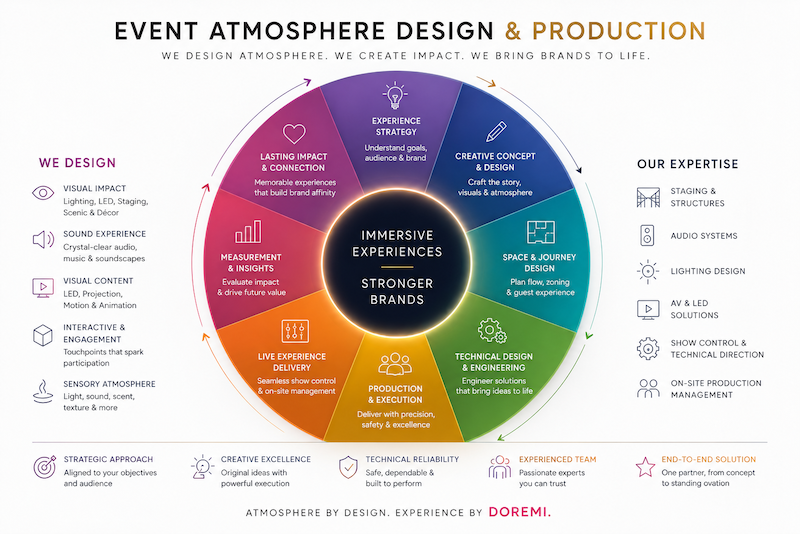 Event atmosphere design framework: how strategy, environment, production and execution work together to create immersive brand experiences.
1. Use Lighting to Shape Focus and Mood
Lighting can quickly change an event mood because it affects both visibility and how the room is perceived.
A conference may prioritise speaker visibility and readable presentation screens. A gala dinner may use softer table lighting with controlled stage highlights. A product launch can keep attention away from the product before shifting sharply at the reveal.
Practical considerations include:
- audience focal points
- screen brightness
- active and quieter zones
- ceiling height and fixture positions
- reflective surfaces
- venue restrictions
An integrated event production approach allows lighting to be planned alongside sound, video, staging and show requirements.
2. Design Sound Around How Each Space Is Used
Sound influences atmosphere even when audiences are not consciously focusing on it.
Registration areas may need background music that creates energy without interfering with conversation. Keynotes depend on clear speech. Networking areas require comfortable sound levels, while launches may use precisely timed audio cues to support reveals.
Professional audio visual production should also consider room acoustics, speaker placement, partitions, ceiling height and audience density. The right soundtrack cannot compensate for unclear or uncomfortable audio coverage.
3. Let the Venue Influence the Production Plan
Every venue already has a character.
Architecture, ceiling height, natural light, wall finishes, entrances and existing décor contribute to the venue ambience before production is added.
A black-box venue provides greater control over lighting. A ballroom may have existing finishes that should be incorporated into the concept. Outdoor events introduce daylight, weather and ambient noise.
A site visit helps identify which venue features can support the concept and which constraints need to be addressed before production is finalised.
4. Use Layout to Guide Movement and Behaviour
An event setting is experienced in motion. Guests arrive, queue, circulate, sit, interact and leave.
An activation may look impressive but perform poorly if its interaction point is difficult to find or the queue blocks a main walkway. A networking area can also discourage conversation if furniture creates barriers or restricts circulation.
Floor-plan and CAD planning should account for:
- audience flow
- stage and screen sightlines
- equipment positions
- queue management
- accessibility
- transitions between programme areas
The best layouts allow guests to understand how to use the space without relying constantly on staff direction.
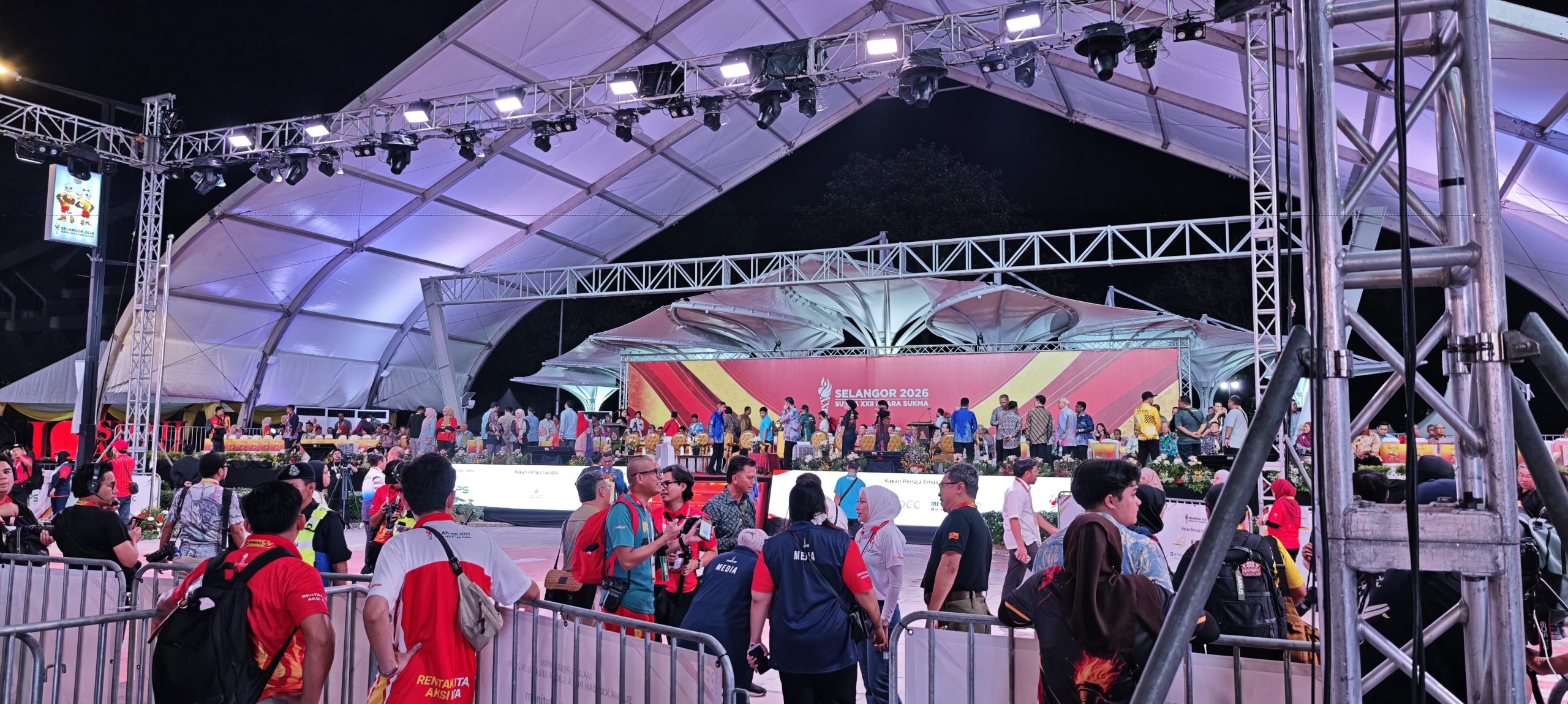 5. Coordinate Screens, Staging and Visual Content
A large LED wall can dominate a venue, but size alone does not create atmosphere.
Stage proportions, screen format, scenic elements and content should follow one visual direction. Highly animated graphics, for example, can feel out of place within a restrained corporate environment.
Corporate events may use controlled motion graphics and clear information hierarchy. Technology launches can support more dynamic content. During a brand activation, screens may also become part of the interaction rather than functioning only as backdrops.
Effective brand activation production services can bring AV, LED displays, sound, lighting, staging and interactive elements together around the campaign objective.
Every screen should have a purpose: informing, directing attention, creating anticipation or supporting participation.
6. Coordinate Sensory Cues to Strengthen Immersion
An immersive event experience does not require every sense to be activated.
Sound and visuals often carry much of the experience, while texture, physical interaction or scent can add value where appropriate.
In sensory event design, complementary cues should reinforce the intended atmosphere. A premium automotive launch, for example, may use controlled sound, restrained lighting and refined scenic materials, while a youth-focused activation may suit stronger colour, movement and interaction.
The choice depends on the audience, brand and purpose of the event.
Explore what a multisensory event experience is and how different sensory cues can work together to understand how this approach can be applied in practice.
7. Plan Transitions Between Event Moments
Atmosphere can lose momentum between programme segments.
A delayed audio cue, premature lighting change or content left on screen while the next speaker prepares can make an otherwise polished event feel disjointed.
Effective atmosphere creation therefore includes the transitions between major moments. Cue-to-cue rehearsals should confirm:
- lighting changes
- music starts and stops
- screen content
- reset timings
- audience movement
These smaller details help maintain the intended rhythm of the programme.
How the Right Atmosphere Supports the Brand?
Atmosphere can communicate qualities that visual branding alone cannot.
A restrained environment with precise transitions may reinforce sophistication and control. A brighter, more responsive environment may communicate energy, accessibility or innovation.
The experience still needs to be relevant to the audience and consistent with what the brand represents. When it is, attendees encounter those brand qualities through the environment itself, rather than only through logos, signage or screen graphics.
Atmosphere is also one part of the wider brand experience. Customised event experience design brings atmosphere, audience journey, content, interaction and production together around the brand objective, helping create a more coherent experience from arrival to exit.
How Atmosphere Changes Across Event Types?
Product Launches: Build Anticipation
Launches benefit from progression. The arrival environment can create curiosity while reserving the strongest lighting, sound and visual changes for the reveal itself.
Starting at maximum intensity leaves little room for the experience to build.
Conferences: Support Focus
Clear sightlines, balanced lighting, readable screens and comfortable sound matter more than constant visual effects.
Networking sessions can then shift into a more relaxed atmosphere through changes in lighting, music and use of space.
Gala Dinners and Awards Nights: Create Progression
Dining, speeches, entertainment and awards require different energy levels.
Lighting, walk-up music, stage focus and screen content can distinguish these moments while maintaining one overall visual identity.
Exhibitions and Activations: Make Participation Clear
High-traffic spaces need to attract attention without disrupting movement.
Visitors should understand where to enter, what the activity involves and how to participate quickly. A successful experiential environment combines visual impact with practical audience flow.
For activations where participation is central, interactive zones and hands-on engagement can give attendees a more direct way to explore products, messages or brand ideas. The interaction should remain simple to understand and practical within the expected audience flow.
Common Mistakes When Customising Event Vibes
Adding Effects Without a Purpose
More movement, louder music and additional screens do not automatically improve an event. Every element should support a specific audience response or programme moment.
Copying References Without Considering the Venue
A concept designed for a dark convention hall may not translate directly to a ballroom or outdoor space. References should guide creative direction, not replace venue-specific planning.
Treating Branding as the Entire Atmosphere
Logos and brand colours establish identity, but atmosphere also comes from pacing, sound, lighting, spatial treatment and audience interaction.
Planning Suppliers Separately
Independent planning can create conflicts between screens, lighting positions, scenic structures, sightlines and equipment.
Early technical coordination helps identify these issues before setup begins.
A Practical Planning Checklist
Before confirming the production plan, check:
- What should guests feel when they arrive?
- Which moments matter most?
- Where should attention be focused?
- How should energy change across the programme?
- What venue features can support the concept?
- Are lighting, sound, staging and visuals aligned?
- Can guests move through the space intuitively?
- Have key transitions been rehearsed?
- Does every major production choice have a clear purpose?
Clear answers make production decisions easier because the team understands the experience it is trying to deliver.
How DOREMi Helps Shape the Right Event Atmosphere?
DOREMi brings creative direction, technical production and on-site execution together around the intended audience and brand experience.
From lighting, sound and AV services to staging services, LED display solutions, floor planning and show coordination, each element can be developed as part of one production plan.
This helps ensure cues, screen content, stage layouts, sightlines, rigging and audience movement work together during live execution.
FAQs
How can I create the right event atmosphere with a limited budget?
Prioritise the moments and areas guests experience most. Strategic lighting, clear audio and strong visual focal points can often make a greater difference than spreading the budget across many smaller effects.
Should the event atmosphere stay the same throughout the programme?
No. It can evolve from arrival and presentations to networking or entertainment, provided each change still supports the overall event direction.
How do outdoor events change atmosphere planning?
Outdoor events require additional planning for daylight, weather, ambient noise, power distribution and visibility. Programme timing and technical choices may need to change accordingly.
What should I include when briefing an event production team?
Share the event objective, audience, programme, venue, brand guidelines and examples of the desired atmosphere. Explain how you want guests to feel at key moments so the production team has a clear creative direction.
Can DOREMi customise an event setup around an existing venue?
Yes. DOREMi can adapt lighting, sound, AV, staging, LED displays, floor layout and show coordination around existing venue features and technical limitations.
How early should I involve DOREMi in event planning?
Early involvement allows creative and technical decisions to be coordinated with the venue and programme before major production choices are fixed.
Conclusion
The right event atmosphere shapes how audiences experience key moments and interpret the brand behind them.
Lighting, sound, staging, visuals, spatial planning and timing become more effective when they support one clear direction. This is what turns individual production elements into an immersive event experience with a stronger and more consistent brand impression.
Planning an event where atmosphere matters to the brand experience? Partner with DOREMi to bring the creative, technical and production elements together.