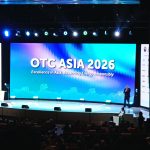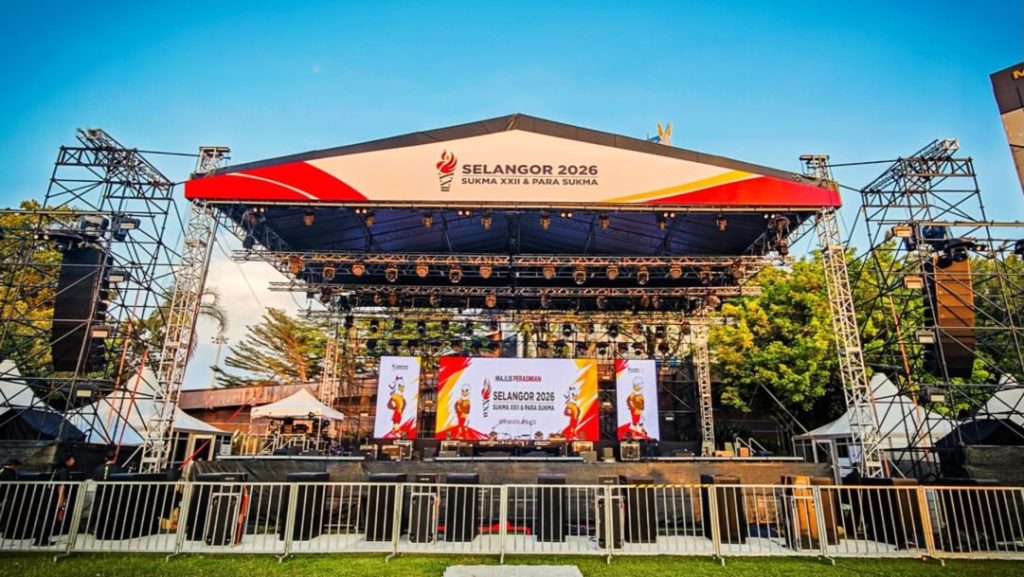
The stage is often the focal point of an event. It is where speakers deliver important messages, performers entertain audiences, award recipients receive recognition and brands present their products. A well-designed stage helps the event look professional, keeps the programme organised and gives the audience a clear view of what is happening.
However, choosing the right stage involves more than selecting a platform that looks good. The stage must suit the event format, venue, audience size, performers, equipment requirements and available budget. A platform that works for a corporate presentation may not provide enough space for a live band, while a large concert stage may be unnecessary for a small seminar.
This is why stage rental should be considered during the early planning stage. Understanding the available options helps event organisers make better decisions, coordinate technical requirements and avoid costly adjustments closer to event day.
In this guide, we explain how to choose the right stage, what types of staging are available, which technical and safety factors to consider, and how to work with a stage rental provider to prepare for a successful event.
Start With the Purpose of Your Event
Before deciding on dimensions, height or stage design, identify what will happen on the stage. The programme determines how much space is needed and which features should be prioritised.
Corporate conferences and seminars
For conferences, seminars and annual general meetings, the stage usually needs to accommodate speakers, a lectern, panel seating and presentation equipment. The design should look professional without distracting the audience from the content.
The right stage should provide enough room for speakers to enter and exit comfortably. If several panelists will be seated together, organisers should allow space for chairs, side tables, microphones and movement between positions.
LED screens or projection displays may also be incorporated into the stage design. Their position should allow delegates to view the presentation without the screen obstructing speakers or creating an overcrowded stage.
For these events, stage rental planning should focus on visibility, accessibility, presentation requirements and a clean overall appearance.
Product launches and corporate celebrations
Product launches often require a stage that supports both presentations and visual moments. A product may need to be unveiled, demonstrated or photographed, while brand messaging and multimedia content appear on surrounding screens.
The right stage should accommodate the product, presenters, launch mechanism and any supporting equipment. If a large LED screen forms the backdrop, the design should allow enough clearance and ensure that speakers do not block important visuals.
For gala dinners and award ceremonies, the stage may also need dedicated entry and exit routes for recipients, presenters and performers. These movements should be considered when planning the stage layout and programme.
Concerts and live performances
Concerts require more consideration of performers, instruments, sound equipment and lighting. A stage must provide sufficient room for musicians to perform without overcrowding, while leaving practical working space for technicians and crew.
Drum kits, keyboards, amplifiers, monitor speakers and other backline equipment all occupy valuable space. Multiple performers may also need separate areas to move safely during the show.
For larger productions, stage rental may involve additional platforms, wings, risers or supporting structures. The final arrangement should be based on the performers’ requirements and the technical production plan.
Exhibitions, fashion shows and community events
Exhibitions may require a compact presentation platform for product demonstrations or announcements. Fashion shows often benefit from runway-style staging that allows models to move along a defined route. Community events may need a flexible platform for speeches, cultural performances and award presentations.
The key principle is to select the right stage for the activities taking place, rather than choosing a standard configuration simply because it is available.
How to Choose the Right Stage Size
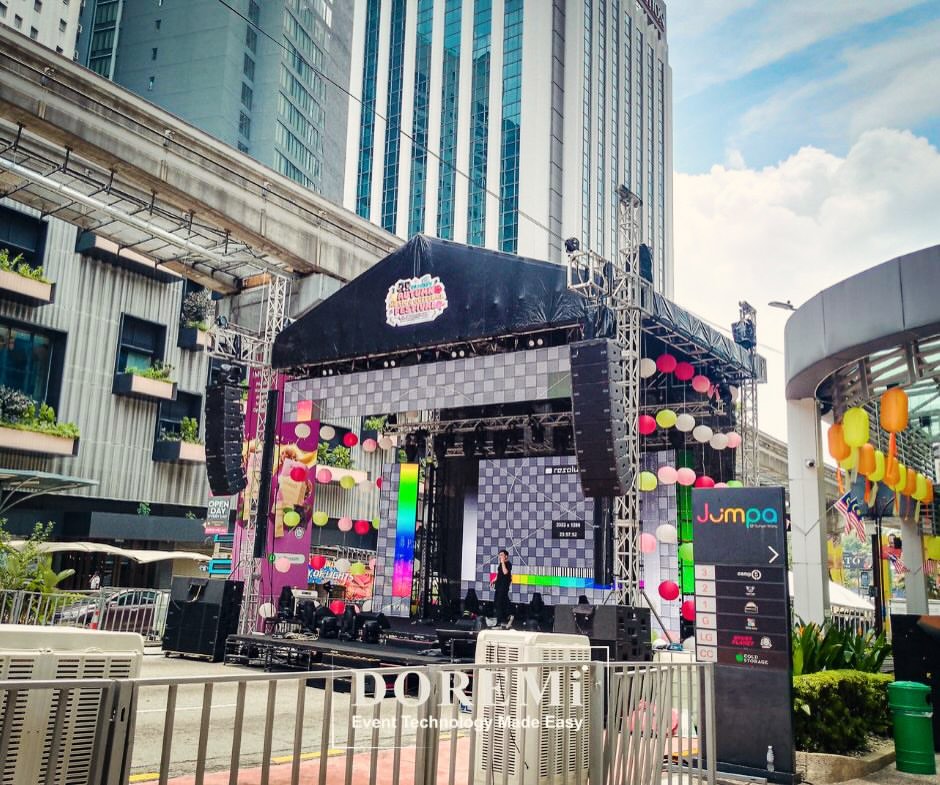
Stage size is one of the most important decisions in stage rental planning. A stage that is too small can restrict movement, crowd performers and limit equipment placement. A stage that is too large may consume valuable venue space and increase costs unnecessarily.
The dimensions should be determined by the number of people on stage, their activities, equipment requirements and the audience’s viewing needs.
Width and depth
Stage width refers to the measurement from left to right when viewed from the audience. Stage depth measures how far the platform extends from the front edge toward the back.
Both dimensions matter, but depth is particularly easy to underestimate.
A panel discussion may require enough width for several chairs and side tables, while a live band needs additional depth for drums, amplifiers, monitors and performer movement. A dance performance may require a wide, unobstructed surface to accommodate choreography.
When planning the right stage, sketch the positions of every person and major equipment item. This helps reveal whether the proposed dimensions will work in practice.
A practical starting point
The following dimensions are illustrative planning references, not fixed specifications. Actual requirements depend on the venue, programme, equipment and technical assessment.
| Event format | Example starting dimensions |
|---|---|
| Small speech or presentation | 3 m × 2 m |
| Small panel or corporate presentation | 4 m × 3 m |
| Corporate event with several speakers | 6 m × 4 m |
| Small live band | 6 m × 4 m or larger |
| Larger performance or concert | 8 m × 6 m or larger |
| Large-scale production | Determined by production design and site requirements |
These examples should not replace a proper assessment. A four-person panel may need a different layout from four performers standing in a line, even if the number of people is identical.
When requesting stage rental, share the programme, performer numbers, equipment list and venue dimensions. A technical provider can then recommend a suitable configuration.
Allow space beyond the main performance area
The usable stage should not be measured only by the space occupied by performers. Crew members may need to access instruments, replace equipment or move props during the programme.
Depending on the event, the layout may also require wings, backstage access, stairs, ramps or separate equipment areas. These features need to be considered when determining the overall footprint.
Choosing the right stage means providing enough room for the event to operate comfortably, not simply enough room for everyone to stand.
Consider Stage Height and Audience Sightlines
Stage height affects how clearly the audience can see performers and speakers. A platform that is too low may make it difficult for guests seated at the back to see the action, especially when the audience area is deep or standing.
However, raising the stage does not automatically improve every event. The appropriate height depends on the venue, viewing distances, seating arrangement and accessibility requirements.
Small indoor events
For a small meeting, workshop or presentation, a low platform may be sufficient. It creates a defined presentation area without making the speaker feel unnecessarily distant from the audience.
The stage should remain proportionate to the room. An oversized platform can make a small venue feel crowded and reduce available space for seating.
Large audiences and outdoor events
For outdoor festivals and public events, audience members may stand across a large area. Stage height and design should be considered alongside screen placement, speaker positioning and the expected crowd layout.
The right stage should help maintain visibility without creating unnecessary access difficulties or structural complications.
Check sightlines before confirming
Ask the venue or technical team to review the stage from different audience positions. Consider whether people at the sides can see the presenters, whether cameras have suitable views and whether LED screens will be visible from the back.
A simple floor plan or visual layout can help identify obstructions before the stage rental configuration is finalised.
Understand the Different Types of Event Stage
There is no single stage type that suits every event. Modular platforms, performance stages and custom layouts each serve different purposes.
Modular staging
Modular staging uses individual platform sections that can be assembled into different sizes and configurations. It is often suitable for corporate presentations, panel discussions, awards ceremonies and indoor events.
Its flexibility makes it useful when organisers need a particular platform width, depth or shape. Additional sections may be incorporated where the system and design allow.
For stage rental, modular staging can be a practical option when the event requires a clean, adaptable platform rather than a large custom-built structure.
Outdoor performance stages
Outdoor events introduce considerations such as ground conditions, weather exposure, wind and access for delivery vehicles.
A suitable outdoor stage may include a roof or weather protection system, depending on the event and site conditions. The structure must be selected and installed according to the relevant load requirements, design specifications and environmental conditions.
A stage intended for an indoor ballroom should not automatically be assumed suitable for an exposed outdoor site.
Runway stages
Runway staging is designed for events where models, products or performers move along an extended platform. Fashion shows, brand activations and certain product presentations may benefit from this layout.
The width, length and audience arrangement should be planned together. Guests need a clear view of the runway, while models and crew require safe entry and exit routes.
Custom stage configurations
Some events need a combination of platforms, steps, risers, branded fascia and supporting structures. A product launch, for example, may require a central presentation platform alongside an LED backdrop and a dedicated product display area.
Custom designs can create a distinctive visual identity, but they also require closer coordination between staging, lighting, audio, video and event operations.
When comparing stage rental options, consider which configuration best supports the programme rather than selecting solely on appearance.
Indoor vs Outdoor Stage Rental
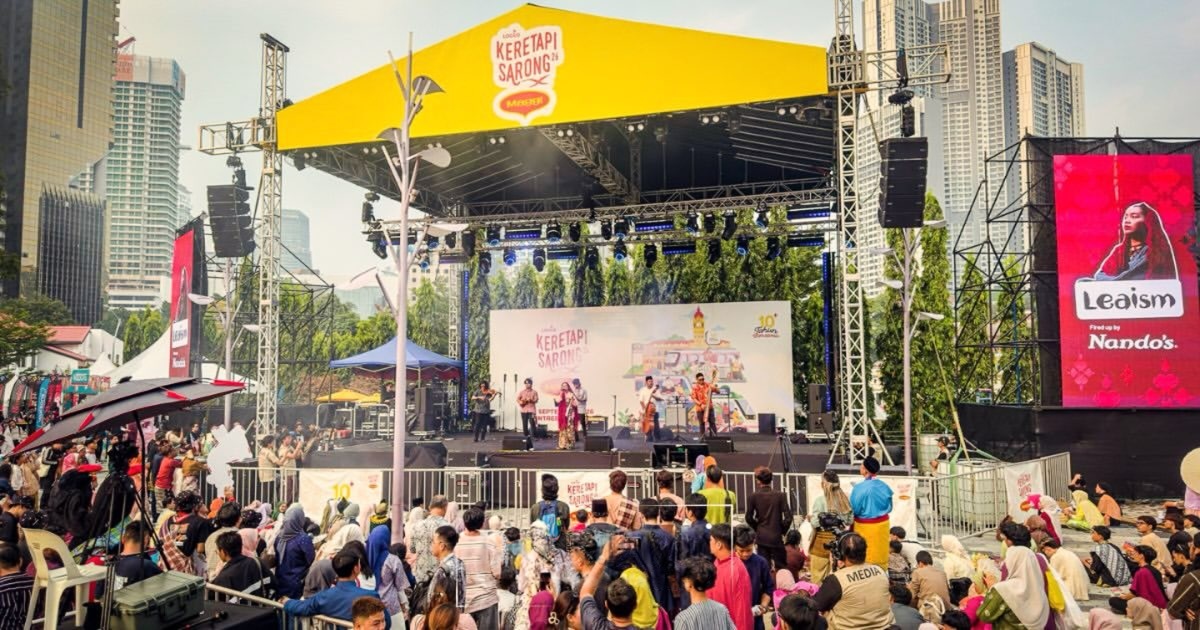
The venue environment influences the stage structure, installation method, access arrangements and technical setup.
Indoor stage requirements
Indoor staging must fit within the venue’s physical and operational limits. Ceiling height, loading access, lift dimensions, floor capacity and the location of fire exits can all affect the proposed design.
A stage that fits the room on paper may still be impractical if large components cannot pass through the venue’s access routes.
Organisers should also confirm whether the venue has restrictions on floor loading, rigging, fixing points or equipment movement. These details are particularly important when the stage will be used with heavy technical equipment.
Outdoor stage requirements
Outdoor staging requires additional attention to ground conditions and weather.
Grass, gravel, sloping surfaces and uneven ground may affect the installation. The technical team should assess whether the location can support the proposed structure and what levelling, support or anchoring arrangements are required.
Wind and rain also matter. Roof structures, banners, LED screens and other large surfaces may be affected by wind exposure. Outdoor staging should be designed and managed according to suitable engineering requirements and the conditions at the site.
For events in Malaysia, organisers should plan for tropical rain, humidity and changing weather conditions. A contingency plan should address what happens if severe weather affects the setup or event schedule.
The right stage for an outdoor event is one that suits the programme and site conditions, with appropriate arrangements for weather, safety and operational control.
Structural Load Capacity and Stage Safety
A stage must safely support the people, equipment and materials placed on it. This is a fundamental requirement, not an optional feature.
The total load may include performers, furniture, instruments, amplifiers, display equipment, decorative structures and other items. Some equipment may create concentrated loads in specific areas rather than distributing weight evenly across the platform.
Share the full equipment requirements
When requesting stage rental, provide the technical supplier with the equipment list and intended layout. Do not assume that a platform suitable for people is automatically suitable for every combination of equipment.
The stage configuration should be assessed against the relevant load capacity and structural specifications. Additional structures, such as lighting truss or suspended equipment, require appropriate planning and support arrangements rather than being attached to a stage without verification.
Plan safe access and movement
Stairs, ramps, handrails, edge protection and non-slip surfaces may be necessary depending on the stage height, intended use and site requirements.
Cable routes should also be planned to reduce trip hazards and prevent cables from obstructing performer movement or emergency access.
During installation, the stage should be assembled and inspected by competent personnel in accordance with the system’s requirements. Any concerns about stability, damage or changing site conditions should be addressed before use.
A professional stage rental arrangement should make safety requirements part of the planning conversation from the beginning.
Coordinate the Stage With LED Screens, Sound and Lighting
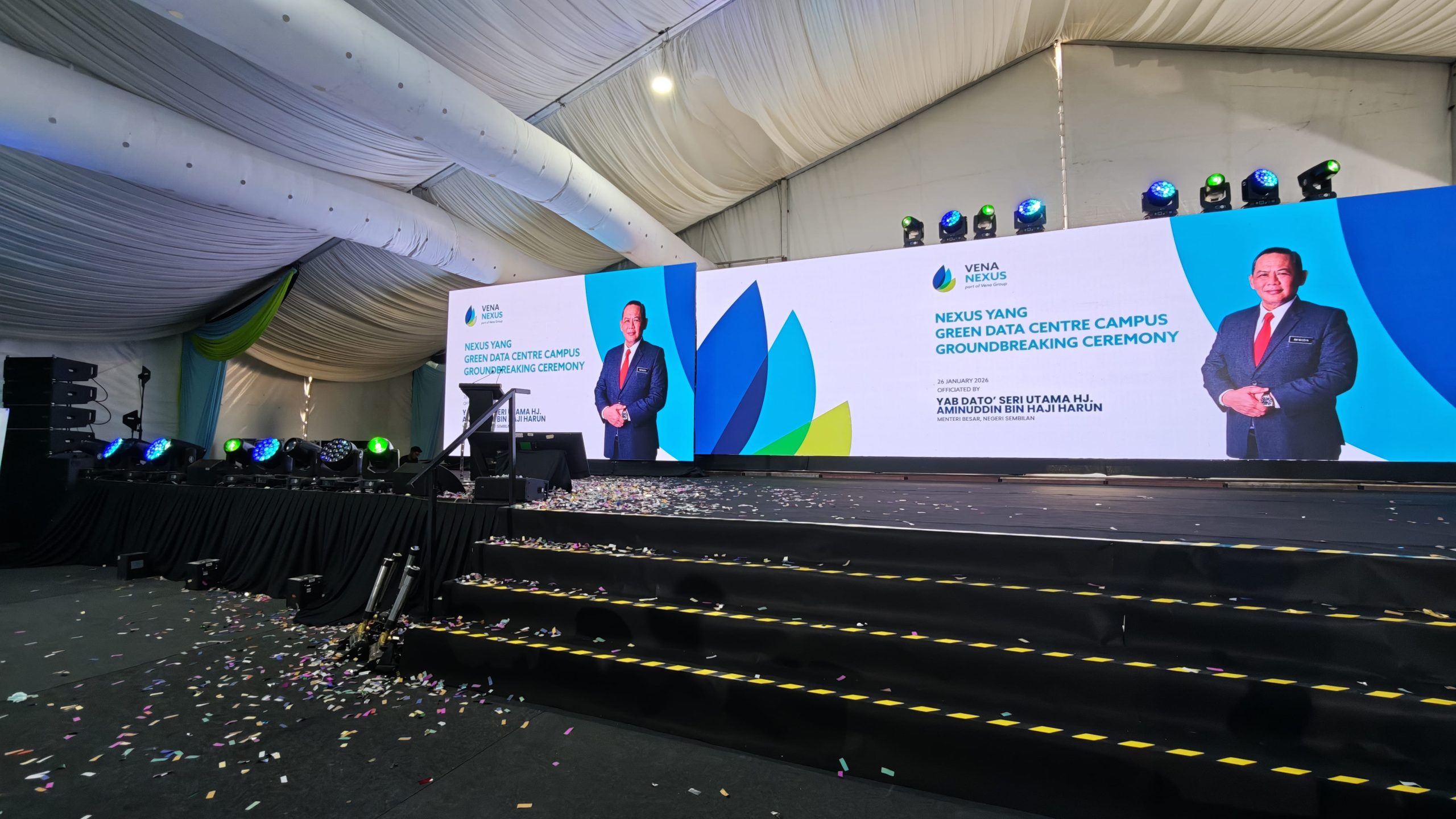 A stage rarely operates as an isolated structure. Its design influences the placement of LED screens, speakers, lighting equipment, microphones and other production elements.
If these requirements are considered too late, organisers may discover that equipment blocks sightlines, cables cross walkways or the stage does not provide enough usable space.
LED screens and backdrops
LED screens can display presentations, brand visuals, live camera feeds and performance content. Their size and position should complement the stage dimensions and audience viewing distances.
A screen that is too large for the stage can dominate the design, while a screen that is too small may be difficult to see from the back of the venue.
The stage layout should also allow sufficient space for screen support structures and safe access for technical personnel.
Sound system placement
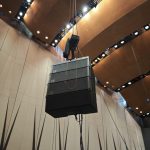
Speakers need to be positioned to deliver suitable coverage without obstructing the audience’s view. For larger productions, the sound system may include speakers positioned on either side of the stage or additional coverage equipment elsewhere in the venue.
The stage design should allow the technical team to position equipment appropriately while preserving audience sightlines and access routes.
Lighting and truss
Lighting helps performers remain visible, supports the event atmosphere and draws attention to key moments. Depending on the production, lighting equipment may be positioned on the stage, on suitable stands or on properly designed truss structures.
Suspended equipment requires an appropriate support design and load assessment. The stage deck should not be treated as a substitute for a properly engineered overhead rigging system.
When planning stage rental, discuss the entire production setup with the technical team. Coordinating these elements early can create a cleaner design and reduce the likelihood of last-minute changes.
Accessibility and Audience Experience
A well-designed stage should work for both the people using it and the audience watching it.
If speakers, performers or award recipients have mobility requirements, access arrangements should be discussed during planning. Depending on the event, this may involve a suitable ramp, accessible route, appropriate platform layout and sufficient manoeuvring space.
The audience layout also matters. Seating, aisles, camera positions and technical equipment should be arranged so that guests can move through the venue safely and maintain clear views.
For events with standing audiences, organisers should consider how people will enter and leave the viewing area. For seated events, the stage should be positioned to minimise blocked sightlines and accommodate the intended seating arrangement.
Accessibility should be incorporated into the initial stage rental brief rather than added as an afterthought. Early planning gives the technical team more options for integrating access features without compromising the event layout.
Budgeting for Stage Rental
The cost of stage rental depends on more than the platform’s dimensions. The overall price may vary according to the stage type, hire duration, site location, installation requirements and additional equipment.
When comparing quotations, check what is included and what is priced separately.
Possible cost factors include:
- Stage dimensions, height and configuration.
- Delivery, transport and collection.
- Installation and dismantling labour.
- Roof structures, stairs, ramps and handrails.
- Backdrop, fascia and branding requirements.
- LED screens, sound, lighting and other production equipment.
- Site access restrictions and installation time.
- Additional requirements for outdoor conditions.
A low initial quote may not represent the full cost if essential equipment, crew or installation services are excluded.
Request an itemised quotation and confirm the scope of work. If the programme or layout changes, discuss the implications with the supplier before making assumptions about cost or availability.
Choosing the right stage is about balancing visual impact, practical requirements, safety and budget. The cheapest option may not be suitable if it cannot accommodate the programme, while an unnecessarily large setup may spend money without improving the audience experience.
When Should You Book Your Stage?
Stage rental should be considered as soon as the venue and general event format are known, especially for large productions or events with complex technical requirements.
Early booking gives organisers more time to compare suitable configurations, review venue restrictions, coordinate equipment and arrange installation schedules.
It is particularly important to plan ahead when the stage requires a custom design, outdoor roof structure, multiple platforms or integration with large LED screens and lighting systems.
Before confirming the arrangement, prepare the event date, venue address, site plan, programme, expected audience size, stage requirements and technical equipment list. Photographs of the venue or proposed installation area can also help clarify access and site conditions.
Confirm delivery and installation times, access arrangements, dismantling schedules and the responsibilities of each supplier. These details help the staging team coordinate with the venue and other production crews.
The right stage is easier to deliver when the technical requirements are clear well before event day.
Frequently Asked Questions
1. How do I choose the right stage for my event?
Start with the programme, number of people on stage, equipment requirements, audience size and venue conditions. Consider stage dimensions, height, sightlines, access and safety. A stage rental provider can help recommend a suitable configuration based on these details.
2. What size stage do I need?
There is no single size that suits every event. A solo speaker may need only a compact platform, while a live band or large award ceremony may require a wider and deeper stage. Consider how much space people and equipment need, then confirm the dimensions with the technical provider.
3. Is stage rental better than buying a stage?
For many one-off or occasional events, stage rental avoids the need to purchase, store and maintain staging equipment. Hiring also allows organisers to choose a configuration that suits each event. The best option depends on how frequently the stage will be used and the organisation’s long-term requirements.
4. Can I use the same stage for indoor and outdoor events?
Not necessarily. Indoor and outdoor environments have different requirements relating to ground conditions, weather, access, structural support and venue restrictions. Confirm that the proposed stage system and configuration are suitable for the actual site.
5. Does stage rental include sound, lighting and LED screens?
Not automatically. The inclusions vary by provider and quotation. Ask whether the price covers only the stage structure or also includes installation, dismantling, roof systems, sound, lighting, LED screens and technical crew.
6. How early should I arrange stage rental?
Arrange it as early as possible once the venue and event format are known. Larger or more complex events benefit from early coordination because stage dimensions, technical equipment, access and installation schedules may affect one another.
Further Reading
For more practical guidance on selecting a suitable stage, explore these resources:
- Stage Hire Guide: Choosing the Right Stage for Your Event — A practical overview of stage types, sizing, outdoor requirements and planning considerations.
- How to Choose the Right Stage for Your Event: A Comprehensive Guide — Further advice on matching stage design, dimensions and structural requirements to different event formats.
Planning Your Next Event Production?
Choosing the right stage early helps create a professional event environment, supports the programme and makes it easier to coordinate the technical setup. From a corporate presentation to a live performance, the stage should be planned around the people, equipment and audience experience it needs to support.
At DOREMi Services & Rental Sdn Bhd, we provide event production services and event technology solutions for corporate events, conferences, exhibitions, product launches and live performances. Our services include stage rental, LED screens, sound systems, lighting, truss and audiovisual equipment, with technical requirements tailored to each project.
Explore our event production services or discuss your requirements with the DOREMi team to plan the staging and technical elements of your upcoming event.