If you’ve ever attended a large event where the people in the front could hear perfectly while those at the back struggled to catch every word, you’ll understand this immediately—bad audio can ruin even the best event.
Most guests will never compliment the sound system after an event—but they will definitely remember if they couldn’t hear properly.
No matter how stunning the stage looks, how sharp the LED screens are, or how important the speaker is, none of it matters if the audience cannot hear clearly and consistently.
One of the biggest challenges in modern live event production is ensuring that every attendee—from the VIPs in the front row to the guests seated at the very back of the ballroom—receives the same audio experience.
In conferences, exhibitions, gala dinners, concerts, and large-scale corporate events, professional sound design is no longer just about volume. It is about clarity, coverage, balance, consistency, and audience experience.
This article explores how professional AV teams achieve consistent sound coverage across large venues, why audio engineering matters more than most people realise, and the strategies used to ensure every seat in the room sounds just as good as the next.
Why Audio Quality Matters More Than Ever
In live events, audio is the primary way audiences receive information. Poor sound can quickly lead to audience frustration, reduced engagement, miscommunication, event fatigue, and a loss of professionalism.
Even the most visually impressive event can fail if attendees struggle to hear speeches, presentations, or performances clearly.
Today’s audiences also expect more because they are accustomed to high-quality streaming platforms, cinema-grade audio, and professional broadcast standards. As a result, live events must now deliver a more polished and immersive audio experience than ever before.
The Biggest Audio Challenge in Large Events
The biggest challenge in large venues is simple: sound behaves differently depending on distance and environment.
Without proper planning:
- Front rows may become too loud
- Back rows may sound weak or unclear
- Certain areas may experience echo or delay
- Speech intelligibility may drop significantly
This becomes especially challenging in ballrooms, convention centres, exhibition halls, outdoor venues, and large hotel event spaces where acoustics can vary dramatically.
Understanding How Sound Travels
Before solving the problem, it’s important to understand how sound behaves in live environments.
When speakers produce sound:
- Audio waves spread outward
- Volume decreases over distance
- Reflections bounce off walls, ceilings, and floors
In large venues, this creates delays, echoes, and uneven sound distribution. Professional audio engineering focuses on controlling these variables to create a balanced listening experience throughout the venue.
Why “Louder” Is Not the Solution
One common misconception is that increasing volume solves coverage problems.
It doesn’t.
Turning the system louder often creates distortion, audience discomfort, microphone feedback, and poor speech clarity.
The goal is even sound distribution, clear vocal intelligibility, and controlled frequency balance across the venue.
The Role of Professional Sound System Design
A proper audio setup starts long before the event begins. Professional AV teams carefully analyse venue dimensions, ceiling height, audience capacity, seating layout, and surface materials because these factors directly affect how sound behaves in the room.
Key Technologies Used for Consistent Audio Coverage
1. Line Array Speaker Systems
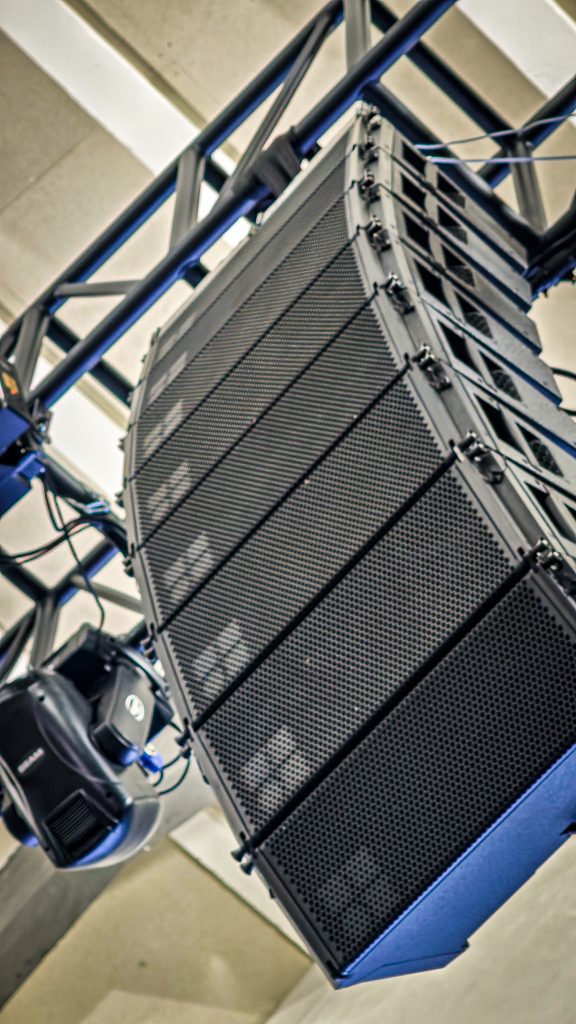
Modern large-scale events commonly use line array speakers because they distribute sound more evenly, project audio further, and reduce unwanted reflections compared to traditional speaker systems.
This helps maintain consistent sound levels across long distances while improving clarity and audience coverage. Line arrays are widely used in conferences, concerts, exhibitions, and corporate summits.
2. Delay Speakers
In large venues, sound from the main speakers may take longer to reach audiences at the back. To solve this, AV teams use delay speakers positioned further back in the venue.
These speakers are digitally timed so audio reaches all sections simultaneously, dramatically improving clarity and listening comfort.
3. Digital Audio Processing (DSP)
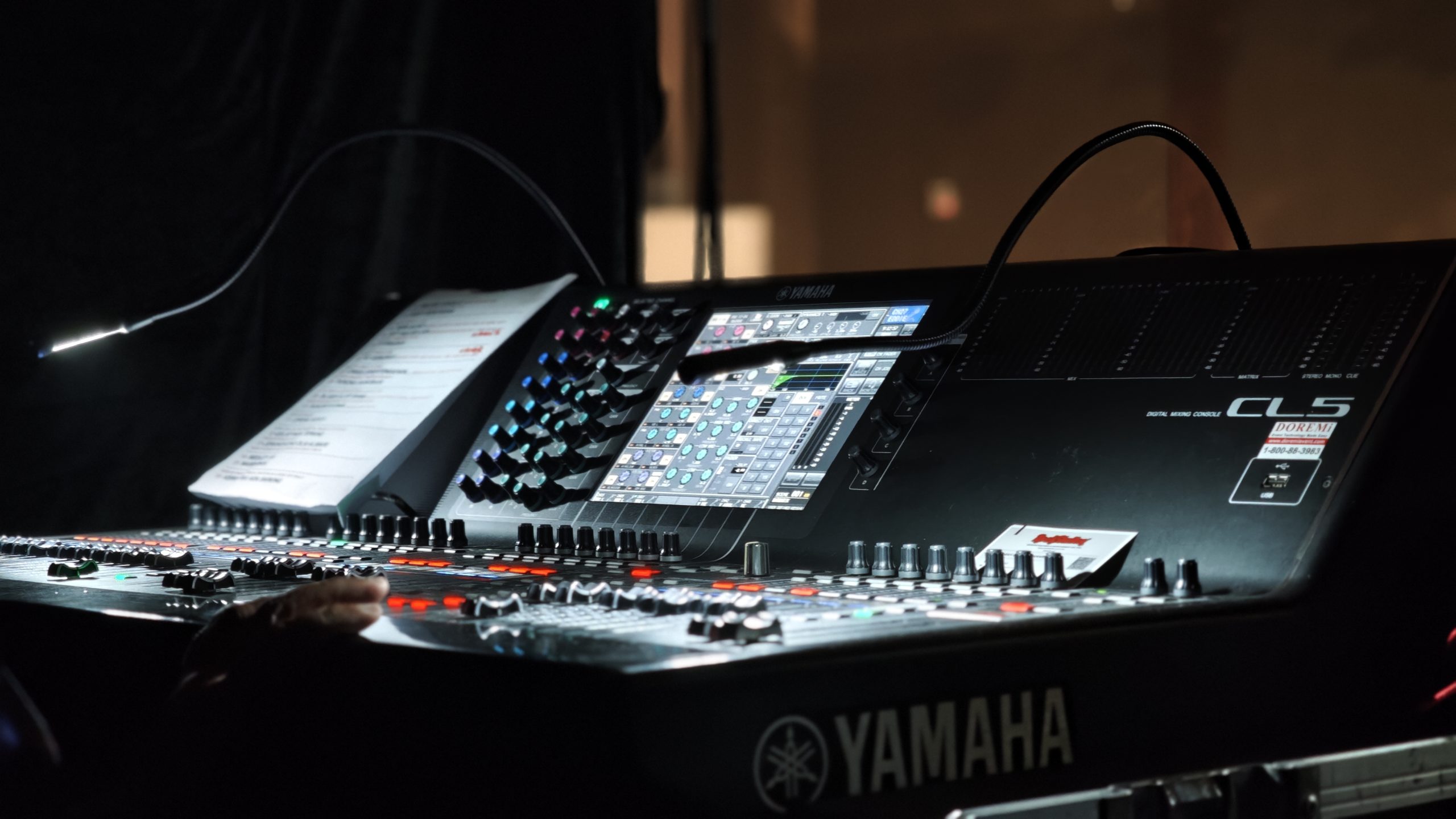
Digital signal processors help fine-tune audio systems by controlling equalisation, timing, frequency response, and volume levels.
DSP technology helps maintain balanced sound throughout the venue while reducing feedback and improving speech intelligibility.
4. Wireless Microphone Management
Large events often use multiple microphones simultaneously. Professional systems carefully manage frequency coordination, signal stability, and interference prevention to ensure reliable performance.
This is especially important in exhibition halls and conference environments with many wireless systems operating at the same time.
5. Acoustic Treatment & Venue Considerations
Some venues naturally produce excessive echo due to hard walls, glass surfaces, and high ceilings. AV teams minimise these issues through strategic speaker positioning, audio tuning, and coverage optimisation.
Why Speech Intelligibility Is Critical
In conferences and corporate events, audiences must clearly understand spoken content. This is known as speech intelligibility.
It refers to how clearly words, consonants, and syllables can be understood throughout the venue.
Poor intelligibility can occur even if the sound is technically loud enough. Professional audio systems therefore prioritise vocal clarity, controlled reverberation, and proper mid-frequency balance.
Audio Zoning: Different Areas, Different Needs
Not every part of an event requires the same sound level. Modern systems can divide venues into zones such as:
- Main ballroom
- VIP seating
- Exhibition areas
- Registration counters
- Breakout rooms
Each zone receives customised audio control to improve comfort, communication, and overall audience experience.
The Importance of Sound Checks
No professional event should begin without proper testing.
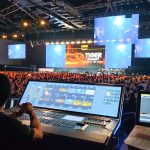
Comprehensive sound checks involve walking through the venue, testing every seating area, and adjusting levels in real time.
Experienced engineers listen from the front rows, side sections, and rear seating areas—because every audience position matters.
Common Audio Problems at Events
| Audio Problem | Professional Solution |
|---|---|
| Feedback Noise | Proper microphone placement, speaker alignment, and frequency tuning |
| Dead Zones | Additional speakers, improved system design, and venue-specific tuning |
| Echo & Reverberation | Directional speakers, DSP tuning, and delay adjustments |
| Uneven Volume Levels | Line array optimisation and strategic delay speaker integration |
Why Hybrid Events Raise the Stakes
Hybrid events add another layer of complexity because audio must now work for live audiences, online viewers, recording systems, and streaming platforms simultaneously.
This requires separate audio mixes, broadcast-quality processing, and real-time monitoring. A system designed only for in-room audiences may not sound good online.
Audio Priorities Across Different Event Types
Conferences & Summits
Priorities include clear speech, low listener fatigue, and consistent room coverage to ensure every attendee receives the message clearly.
Gala Dinners & Award Ceremonies
Balanced music playback, smooth speech transitions, and ambient atmosphere are essential to maintain audience comfort and event prestige.
Exhibitions & Trade Shows
Directional coverage, controlled sound spill, and multi-zone management are important in busy exhibition environments.
Concerts & Entertainment Events
These events prioritise high energy, immersive coverage, and deep low-frequency performance while maintaining clarity across large crowds.
Large-Scale Event Experience Matters
Managing audio for major events requires more than equipment—it requires experience.
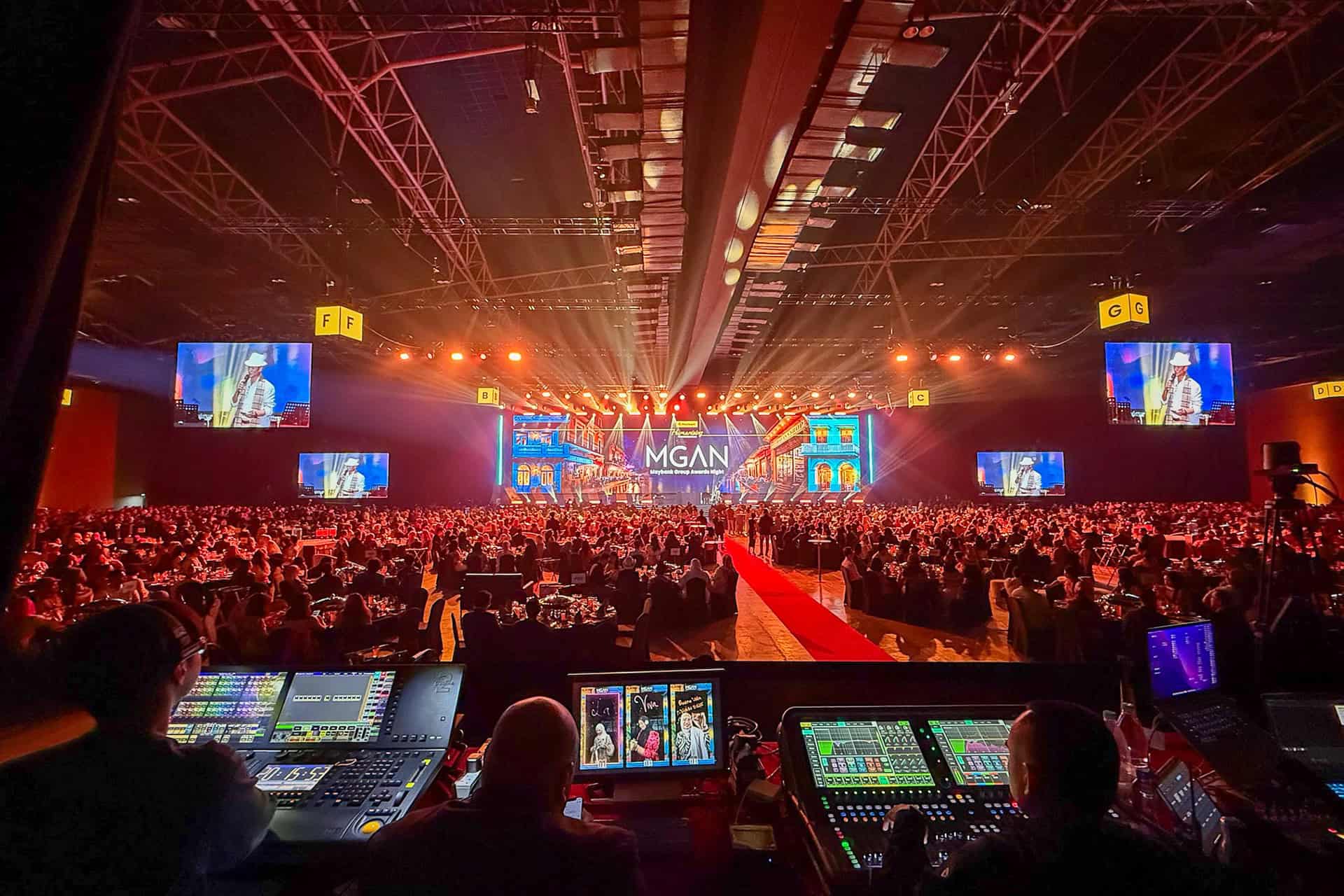
Large-scale productions at venues such as MITEC, MAEPS, major hotel ballrooms, and exhibition centres often involve thousands of attendees, multiple speaker zones, and highly complex wireless environments.
Experience supporting events such as the DSA Exhibition at MITEC, SEMICON at MITEC, MAHA at MAEPS, Manchester United Legends Meet-Up at MITEC, Maybank Annual Dinner, and Allianz Dinner at Sunway Resort demonstrates the level of coordination and technical expertise required to maintain professional audio standards across demanding event environments.
The Future of Event Audio
Audio technology continues evolving rapidly with innovations such as AI-assisted audio mixing, immersive spatial audio, networked audio systems, and smarter wireless technologies.
These technologies improve speech clarity, automate system optimisation, enhance reliability, and provide more immersive listening experiences for audiences.
Best Practices for Event Organisers
- Choose experienced AV teams for large-scale events
- Prioritise clarity over excessive volume
- Conduct full rehearsals and sound checks
- Plan seating layouts early for optimal speaker positioning
- Prepare redundancy plans with backup microphones and audio systems
Final Thoughts
Great event audio is something audiences rarely notice—because when it works perfectly, it feels completely natural.
But achieving that seamless experience requires careful planning, advanced technology, skilled audio engineering, and real-time adjustments throughout the event.
From the front row to the very back of the room, every attendee deserves the same clear, immersive, and professional sound experience.
Planning a Large-Scale Event?
Our professional AV team delivers clear, balanced, and immersive audio solutions designed to ensure every guest experiences consistent sound—no matter where they are seated.