Key Takeaways
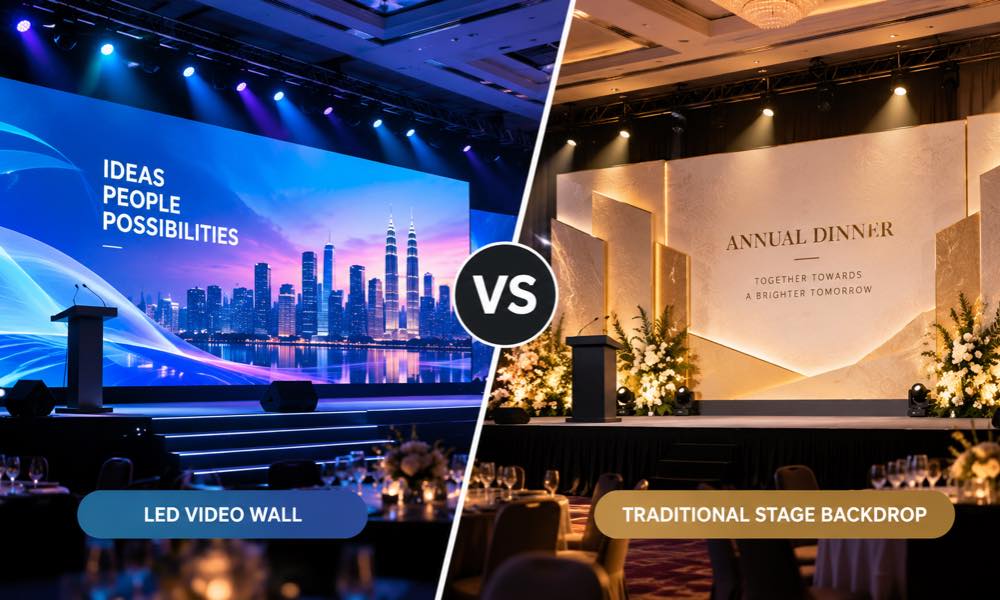
- An LED video wall offers greater immersive potential through changing visuals, while traditional backdrops suit fixed branding, textures and physical scenery.
- Immersion depends on coordination. Screen content should work with lighting, sound and stage activity to support the programme rather than distract from it.
- Clarity requires more than size or brightness. Consider pixel pitch, viewing distance and content quality to help attendees see images and read presentations.
- Compare complete production setups, including any separate presentation screen needed with a traditional backdrop, rather than comparing LED rental with printing alone.
- Both options offer reuse opportunities. Digital assets and physical scenery can serve future events, but neither automatically guarantees savings or a smaller environmental footprint.
- Choose around your event’s needs. The programme, audience, venue and production budget matter more than the biggest screen or most elaborate design.
Planning an annual dinner, conference or gala night? Your stage backdrop needs to do more than look good. It should support the programme, reflect your brand and suit your budget.
An LED video wall offers greater immersive potential through moving visuals and content that changes with each segment, from speeches to performances. Traditional backdrops offer a fixed design, with opportunities to add texture and physical depth.
The better choice depends on what your audience needs to see and experience. Here’s how the two compare in visual impact, clarity, flexibility and cost, and when each option makes sense for your event.
LED Video Wall vs Traditional Stage Backdrops: What Is the Difference?
An LED video wall is a large digital display assembled from connected LED panels. It can show graphics, videos and presentation slides, with content changed through a playback system.
Traditional stage backdrops use physical materials, such as printed fabric, banners or wooden panels. Custom event backdrops can also incorporate layered scenery to add depth. Here, “traditional” refers to these physical designs, not projection screens.
The main differences are:
| Comparison Area | LED Video Wall | Traditional Stage Backdrop |
|---|---|---|
| Content | Digital graphics, videos and presentation slides. | Printed designs and physical scenic elements. |
| Programme Changes | Content can switch between segments. | Usually stays fixed unless physically altered. |
| Visual Character | Movement, changing colours and digital scenes. | Textures, dimensional elements and consistent branding. |
| Production Requirements | Screen installation, power, playback equipment and technical support. | Design, printing or fabrication, installation and suitable lighting. |
Table: LED video wall vs traditional stage backdrop
Both approaches require planning, but LED involves managing digital content alongside the physical setup, while traditional backdrops centre on the materials and design installed.
For planners, the question is whether a consistent branded setting is enough, or whether changing visuals would contribute meaningfully to the audience’s experience. That is where the difference in immersive potential becomes important.
How Does an LED Video Wall Create a More Immersive Experience?
To create immersion, the screen should support what is happening on stage, not just to display your company logo.
Dynamic Content Flexibility
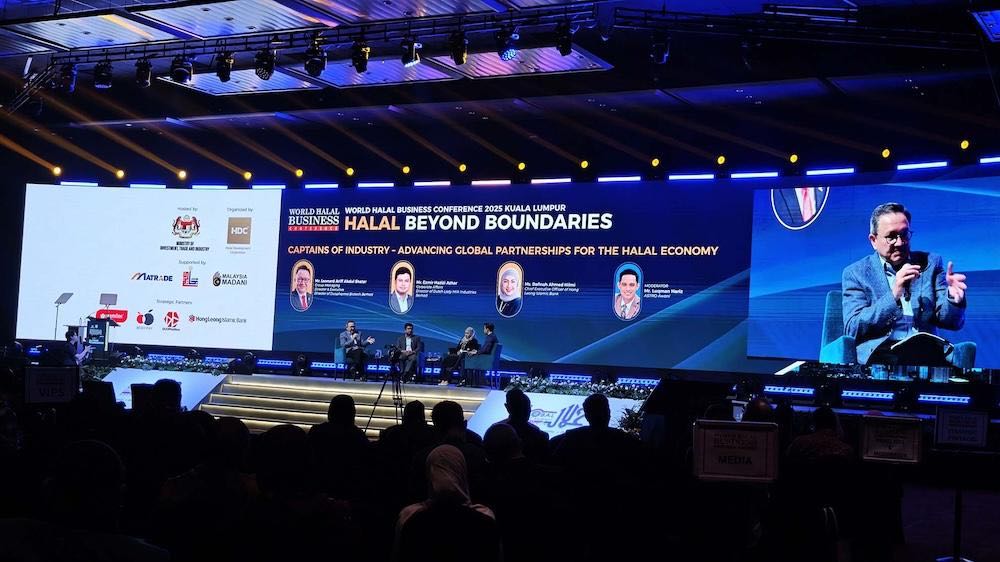
An LED backdrop for events allows the stage visuals to change with the programme. Unlike a printed design, digital content can move between branding, speaker information, videos and performance graphics without replacing the physical backdrop.
Imagine an annual dinner opening with a short film celebrating the team’s achievements. As the awards begin, the screen switches to each recipient’s name and photograph. Later, colourful graphics provide a different setting for the entertainment.
Rather than asking one fixed design to suit every moment, you can give each segment its own visual treatment while retaining the same brand colours and style.
The benefit is not constant movement. During a speech, a simple background may be more appropriate than animation. Plan content around what the audience should focus on, and agree on the playback sequence with the production team before the event. Changing visuals should support the programme, not distract from it.
Superior Visibility and Brightness With the Right Resolution
An LED display produces its own light, while a printed backdrop relies on ambient or stage lighting. Adjustable brightness helps match the display to the room, but turning it up unnecessarily can create glare.
Clarity also depends on pixel pitch: the distance between the centres of neighbouring pixels. A smaller pitch packs more pixels into the same screen area, allowing finer detail, particularly for viewers sitting close. Screen dimensions and pixel pitch together determine resolution; physical size alone does not.
For a conference, the practical test is whether attendees can read the slides. Check text size, contrast and source content quality rather than relying on brightness to compensate for an overcrowded presentation.
When considering large format LED screen rental, discuss the nearest and furthest seats with your supplier. Ask how the proposed size, placement and specification will serve both.
Our guide to LED screen viewing distance and pixel pitch explains how to approach this balance without automatically choosing the largest screen or finest pitch.
An Immersive Atmosphere Through Coordinated Visuals
Picture a gala opening where a countdown reaches zero as the music peaks, the lights change and the evening’s theme appears across the screen. The intended effect comes from those elements working together, rather than from the display alone.
Planning the screen alongside sound, lighting and staging is central to event experience design and production. An immersive LED display should contribute to the scene, with its colours, content and timing coordinated around the action on stage.
Traditional scenery still has a place. Consider framing the screen with textured panels or dimensional décor, combining physical depth with changing digital imagery.
Rehearse how the visuals connect with lighting, music and entrances. Aim for a well-timed reveal, not an animation that finishes before the action begins. Give effects a purpose, so the screen contributes to the atmosphere without competing with the people on stage.
LED Video Wall vs Traditional Backdrops: Cost vs Impact
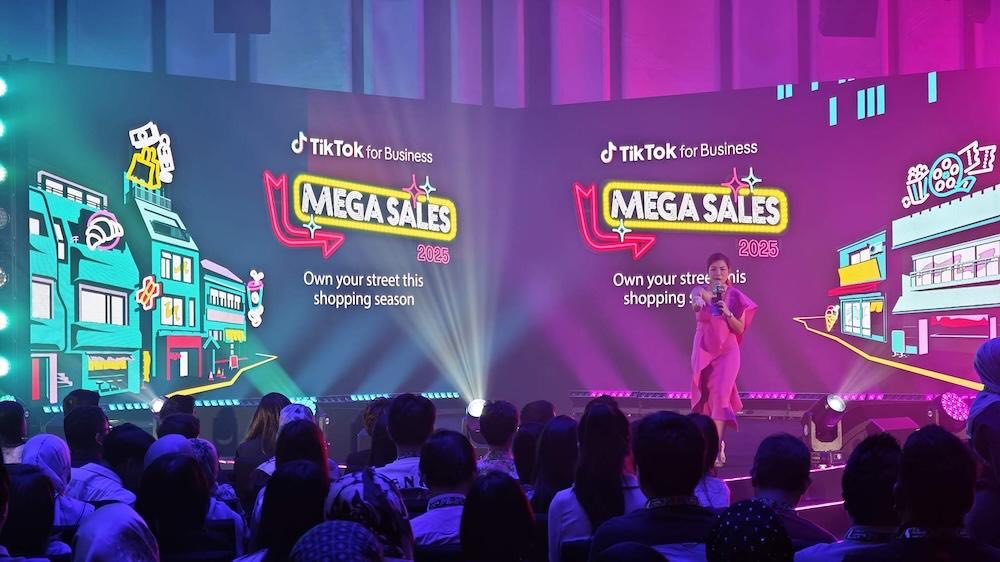
The better investment is the setup that supports your programme. Compare what each option delivers, not just its rental or printing price.
Compare the Full Production Cost
For a conference with slides and videos, compare an LED video wall serving as both backdrop and presentation display with a traditional backdrop plus a separate screen or projection system. Otherwise, you are pricing two different solutions.
When reviewing event production services, request an itemised quotation. For LED, check screen specifications, installation, content preparation, playback and technical support. For a physical backdrop, include design, printing or fabrication, installation and lighting.
Then consider how much of the programme will use the display. A screen supporting presentations, award announcements and performances has more opportunity to justify its cost than one showing an unchanged logo.
Ask which requirements each setup meets and what remains extra. A lower starting price is only useful when the quotation covers what your event actually needs.
Potential for Long-Term Value and Less Wastage
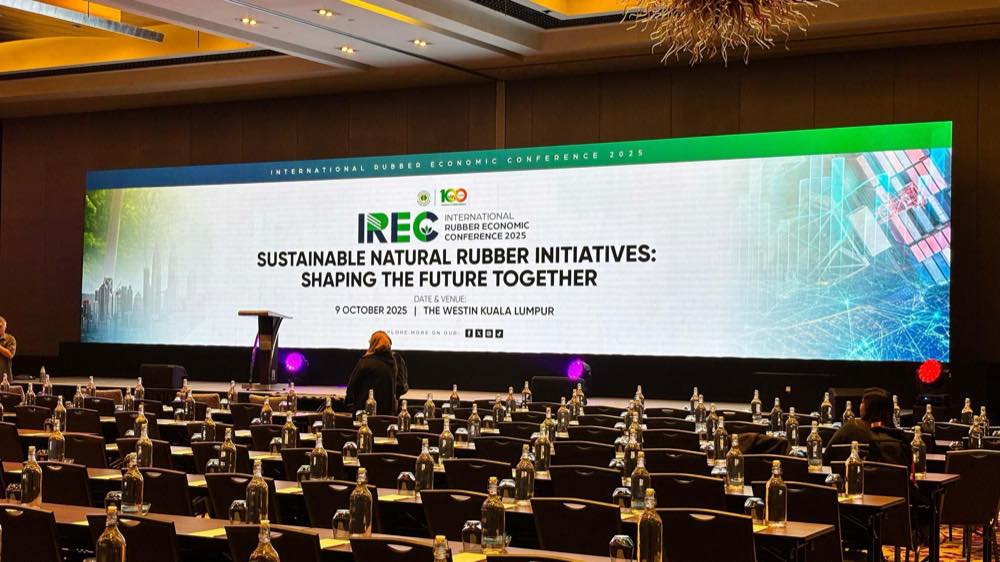
For recurring events, digital graphics can be updated without printing a new backdrop each time details change. Consider retaining a reusable design template, then adapting names, dates and imagery for the next programme.
This can reduce the need for event-specific printed materials, but traditional backdrops are not necessarily single-use. Reusable frames, scenic panels and undated branding can also serve future events.
Neither approach automatically guarantees savings or a smaller environmental footprint. For LED, account for repeat rental, content updates, transport and power. For physical backdrops, consider storage, refurbishment and replacement materials.
Ask your supplier what can realistically be reused across your event calendar. The strongest value comes from a design that meets the brief today without unnecessarily starting from scratch next time.
When Should You Choose an LED Video Wall or a Traditional Backdrop?
Before deciding, confirm what the venue can accommodate. Review stage space, power, support requirements and setup access with your production partner. Allow time for installation, content testing and rehearsal where needed. Use our corporate event production checklist to check these practical requirements before committing to a design.
Choose an LED Video Wall When Visuals Drive the Programme
Choose LED when removing the screen would make the programme harder to follow or weaken an important stage moment. Consider it when:
- Content changes matter: Your conference needs presentation slides, or your annual dinner needs individual award graphics.
- Timing shapes the experience: A gala opening or reveal calls for visuals coordinated with lighting and sound.
- Production resources are available: Your budget and schedule cover content preparation, technical operation and rehearsal, not just equipment rental.
A large guest list alone is not a reason to choose LED. Identify the specific moments the screen will support before deciding its size or specification.
Choose a Traditional Backdrop When a Fixed Design Meets the Brief
A physical backdrop can provide branded graphics and dimensional scenery without needing changing digital content. Consider it when:
- The branding stays consistent: One event identity or sponsor arrangement suits the whole programme.
- Physical detail matters most: Your concept centres on textured materials, layered panels or scenic structures.
- The screen has no clear role: You do not need stage visuals to change, and any presentation requirements are already addressed separately.
This may suit a dinner centred on conversation and short speeches rather than screen-led segments. Still, confirm installation, support and lighting requirements; a physical design is not automatically simpler.
FAQ
Can an LED video wall be combined with traditional stage décor?
Yes. An LED video wall can sit within a physical stage design, combining changing visuals with printed panels or dimensional scenery. Plan the screen, décor and lighting together.
Discuss the layout with your event backdrop supplier so decorative elements complement the display without obstructing it.
Will an LED video wall look good in event photos and videos?
It can, but a display that looks clear in person may show visible lines on camera. Ask your production and filming teams to test the actual screen, content and cameras together before the event. Adjustments may be needed to the display and camera settings for clean photos and video.
Is an LED video wall suitable for a small corporate event?
Yes, provided the screen suits the room, viewing distance and content. Guest numbers alone should not decide the choice. Ask your supplier to assess the available space and seating layout before recommending a setup. Choose LED for a clear purpose, such as showing product demonstrations, rather than simply filling the stage.
Can an LED video wall show live footage of speakers or performers?
Yes. With a connected camera system, an LED wall can show close-ups of speakers, award recipients or performers, helping guests further from the stage follow the action. Confirm whether cameras, video switching and operators are included in the quotation rather than assuming screen rental covers them.
What happens if an LED video wall has a technical problem?
The response depends on the fault and the backup arrangements. Before booking, confirm who handles on-site troubleshooting and what spare equipment or alternative playback is available.
Our event-day technology checklist covers backup planning to help reduce disruption, although no setup can guarantee uninterrupted operation.
LED Wall Rental in KL: Plan an Immersive Event With DOREMi
For your next annual dinner, conference or gala night, start with the moments you want guests to remember. An LED video wall offers greater immersive potential through changing content and coordinated visuals, while a traditional backdrop remains a suitable choice for fixed branding and physical scenic design.
The decision should come down to the programme, not which option looks more impressive on paper. Consider what the audience needs to see, what the venue can accommodate and what the full production budget covers. A purposeful setup matters more than the biggest screen or most elaborate design.
Explore DOREMi’s LED screen rental options and share your venue, audience size and programme. Discuss how the display can support key moments, work with the surrounding stage design and bring your event concept to life.
You might be interested: